The moment it became obvious
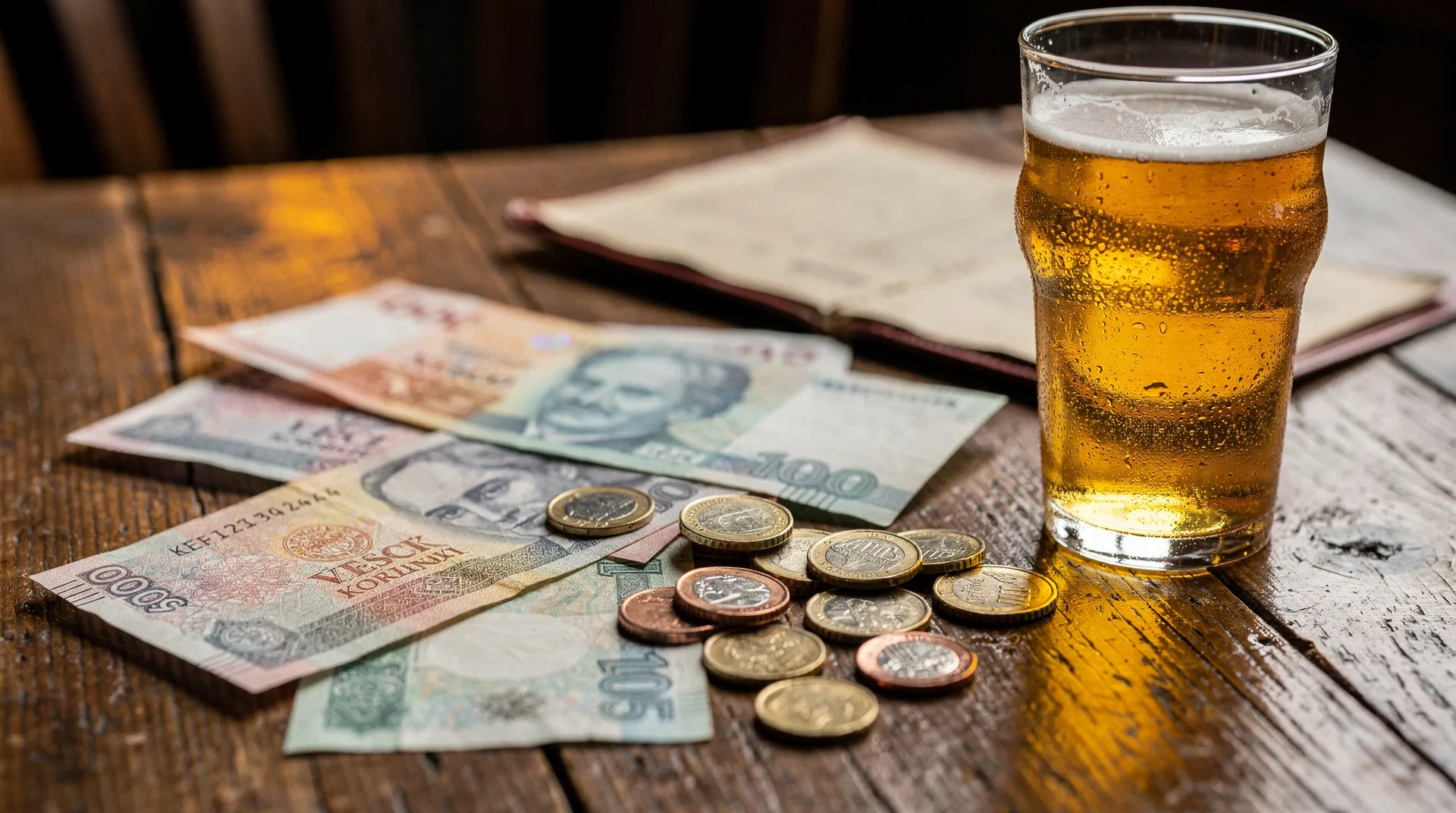
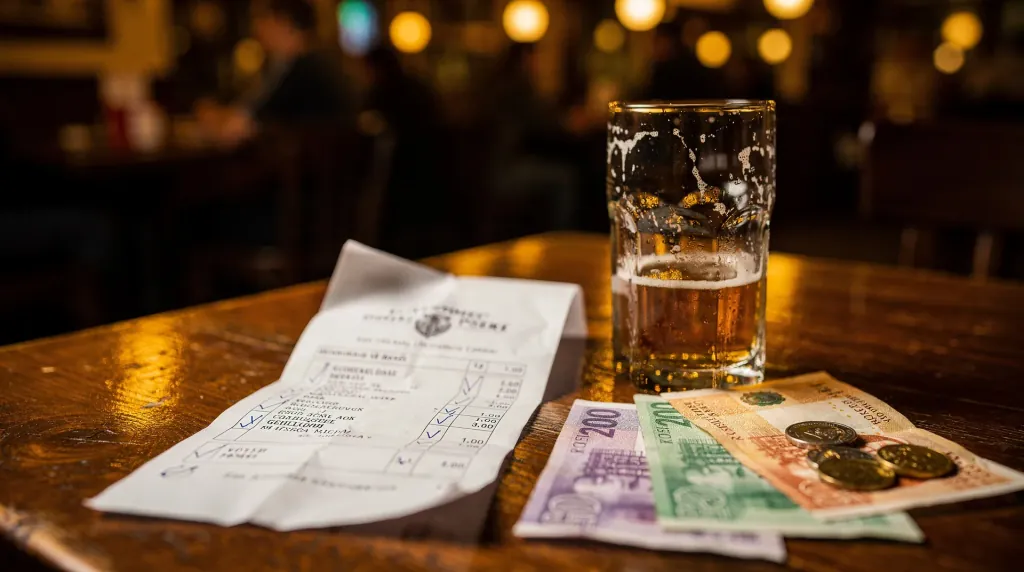
It is a Wednesday afternoon in April and we are sitting in a bar on Dlouhá — specifically not on Old Town Square, specifically not a tourist terrace, specifically a place where Czech office workers come for a half-litre after work. The price board behind the bar says Pilsner Urquell 0.5L: 82 CZK. We take a photo of it. In 2019, the same bar, the same beer, the same glass: 52 CZK.
That is a 58% increase in five years. Czech annual inflation averaged about 7.5% in that period. Beer inflation has run ahead of general inflation.
This is not the beer’s fault. The bar’s rent has gone up. The brewer’s energy costs went up. The staff’s wages went up, and this is correct — Czech wages have grown significantly, which is good for Czech workers and mildly bad for visitors who had budgeted on the 2019 price structure.
Prague’s cheapness is not a myth. It is a moving target.
| At a glance | |
|---|---|
| Where the value survives | Local pubs and restaurants away from Old Town Square, Vinohrady, Žižkov, Holešovice |
| Where it doesn’t | Old Town Square terraces, Malá Strana’s main restaurant strip, central 3-star hotels in summer |
| Typical local beer | around €2–2.50 for a half-litre |
| Typical tourist-zone beer | around €6–7.50 for the same |
| Best months for value | October–March, especially outside Christmas market weeks |
For current exchange and cash tips, see the currency and money guide; if you’re weighing whether a city pass pencils out at 2026 prices, the pass comparison has the underlying numbers.
Prague’s cheapness is real, but it’s not the same cheapness it was
When people say Prague is cheap, they are usually referring to a reality that was most accurate somewhere between 2005 and 2015. The accession to the EU in 2004, the tourism boom of the 2010s, and two rounds of post-pandemic repricing have moved Prague significantly along the European price spectrum.
It is still cheap relative to Western Europe. A half-litre of beer in a local pub still costs €1.80–2.20. A pub lunch (roast pork, dumplings, soup) at a non-tourist restaurant still costs €7–10. These prices do not exist in Amsterdam or Paris.
But the cheap Prague of legend — where you could stay in the historic centre for €40 per night and eat dinner for €5 — no longer exists in any meaningful form. And the tourist-zone pricing around Old Town Square has always been an exception that visitors mistake for the rule.
Here are the actual numbers.
Price comparison: 2019 vs. 2024
We used our own records and publicly available data for both years. All prices converted to EUR at the relevant annual CZK/EUR rate.
Hotels — central, 3-star equivalent
| 2019 | 2024 | Change | |
|---|---|---|---|
| Double room, central 3-star (peak summer) | €65–85 | €95–130 | +45–55% |
| Hostel dorm (central) | €12–15 | €17–22 | +40–45% |
| Mid-range 4-star (Vinohrady) | €90–110 | €140–180 | +55–65% |
The hotel price increase is the single largest change in Prague’s cost structure. It reflects both post-pandemic demand and the explosion of Airbnb-driven tourism pressure in the city centre. Prague’s historic centre hotel stock has essentially sold out on summer weekends, and prices have responded accordingly.
Food and drink
| 2019 | 2024 | Change | |
|---|---|---|---|
| Beer (half-litre, local pub) | €1.30–1.60 | €1.80–2.20 | +35–40% |
| Beer (Old Town Square café terrace) | €4–5 | €6–7.50 | +45–50% |
| Pub lunch (local restaurant) | €5–7 | €7–10 | +40–45% |
| Restaurant main course (mid-range) | €10–14 | €14–20 | +40–45% |
| Coffee (espresso, kavárna) | €1.80–2.20 | €2.80–3.50 | +55–60% |
Beer prices have risen substantially. The Czech beer paradox: at a local hospoda, beer is still the cheapest in the EU — but a beer that cost €1.40 in 2019 now costs €2.00. That is a 43% increase. Czech wage growth over the same period was approximately 35% in nominal terms — meaning beer has become very slightly less affordable for Czech residents.
Attractions and transport
| 2019 | 2024 | Change | |
|---|---|---|---|
| Prague Castle Basic ticket (adult) | €13 (325 CZK) | €18 (450 CZK) | +38% |
| Prague Castle Basic ticket (reduced) | €7 (175 CZK) | €12 (300 CZK) | +71% |
| Metro/tram single ticket (30 min) | €0.88 (22 CZK) | €1.20 (30 CZK) | +36% |
| 24-hour transport pass | €3.30 (82 CZK) | €4.40 (110 CZK) | +33% |
| Petřín Tower + Mirror Maze | €3.60 (90 CZK) | €12 (300 CZK) | +233% |
Transport has risen in line with inflation. The Castle’s price increase reflects significant post-pandemic investment in the complex and the Castle’s increasingly independent financial position (it is funded partly by its own revenues, not purely state-subsidised).
What this means practically
The “backpacker-cheap” era is over for accommodation. €40 per night for a private room in a central hostel does not exist in 2024. Dorms are still €17–22. For budget travelers, the math still works — Prague remains the cheapest major tourist city in Central Europe for accommodation relative to the experience on offer.
The food situation depends entirely on where you eat. A €10 lunch and a €2 beer at a local restaurant are still fully available — you just have to be three streets away from the tourist drag. The majority of visitors who report Prague being “not that cheap” have spent their meals at restaurants targeting tourists, where the pricing is Western European.
The tourist-price zone has expanded. In 2015, the tourist-premium restaurants were concentrated on Old Town Square and Václavské náměstí. By 2024, the tourist-pricing zone extends further into the surrounding streets of Staré Město and now encompasses most of Malá Strana’s restaurant strip. The gradient still exists but it is steeper and requires more navigational effort to exploit.
Prague is still significantly cheaper than Vienna and Budapest (for food and beer). In Vienna, a beer in a café costs €5–6. In Budapest, tourist-zone pricing has grown similarly to Prague. Prague remains the cheapest major capital city for beer and pub food in Central Europe.
Where the value case is still strong
Beer in local pubs. Unchanged in relative terms — still the cheapest in the EU.
Day trips by train. Kutná Hora return train ticket from Praha hlavní nádraží: €6–8 / 150–200 CZK. This is extraordinarily cheap access to one of the most remarkable historic sites in Europe.
Classical music concerts. Chamber concerts at the Mirror Chapel, Spanish Synagogue, and similar venues: €15–25 / 375–625 CZK. Equivalent concerts in Vienna: €45–80. The cultural density-to-cost ratio in Prague remains exceptional.
Restaurants in Vinohrady and Žižkov. A dinner with two courses and wine at a quality Vinohrady restaurant: €30–45 per person. The same quality in Vienna: €65–90. The gap is still substantial.
The verdict
Prague is no longer cheap in the absolute sense. It is meaningfully less expensive than Western European capitals, and within the Czech Republic it represents the premium end of the local cost scale. For travelers who navigate away from the tourist-price zones — which requires about 5 minutes of research — the value case remains strong. For travelers who eat on Old Town Square every meal, Prague will feel like Vienna prices for mediocre food.
The shift is primarily in accommodation (genuinely expensive now, especially summer weekends) and in the extent of tourist-zone pricing. The underlying food-and-drink costs in local establishments have risen with inflation but from a very low base.
The counterpoint: Prague is still dramatically cheaper than comparable cities
The rebuttal to any “Prague is getting expensive” article is obvious, and it is largely correct. Consider the comparison in 2026:
| Category | Prague (local area) | Vienna | Amsterdam |
|---|---|---|---|
| Half-litre beer, local pub | €2–2.50 / 50–63 CZK | €4.50–6 | €5–7 |
| Pub lunch, main course | €8–12 / 200–300 CZK | €18–26 | €20–30 |
| Metro single ticket | €1.60 / 39 CZK | €2.40 | €4.10 |
| 3-star hotel per night (central) | €90–135 | €140–200 | €160–250 |
| Museum entry (major) | €10–20 | €16–22 | €20–30 |
On these metrics, Prague remains the cheapest major tourist city in Central and Western Europe. The argument that Prague is “just like everywhere else now” is not supported by the numbers — the gap is smaller than it was in 2010, but it is still substantial.
What has changed is which parts of Prague still carry the value. The tourist core — Old Town Square and the streets within 400 metres of it — has converged towards Western European pricing in a way that was not true in 2015. The local areas — Vinohrady, Žižkov, Holešovice, Smíchov — have risen with Czech wage growth (from a low base) and remain genuinely cheaper than equivalent neighbourhoods in Vienna or Amsterdam.
Reader questions
“I’m coming in August. Is it still worth the trip on a budget?”
Yes, but August is the worst month for the budget case. Hotels are at peak prices and book out. The tourist-zone premium is at its maximum. If your budget is genuinely tight, the value case is stronger in October, November, or March — hotels are 30–40% cheaper, tourist queues are shorter, and the local pricing is unchanged.
“I keep reading that Prague is ‘the most expensive it’s ever been.’ Is that true?”
In nominal terms, yes. In real purchasing power terms for visitors earning in EUR or GBP, the picture is more nuanced — the CZK/EUR rate has shifted in ways that partially offset Czech price increases. A euro still buys more in Prague than in 2019 adjusted for inflation. The “most expensive ever” framing is technically correct in CZK terms but misleading for the visitor’s actual experience.
“What’s the biggest hidden cost that catches visitors?”
Airport taxis, reliably. A legitimate Bolt from the airport to Old Town costs €22–30 / 550–750 CZK. An unlicensed taxi from the arrivals hall quotes €40–60 and delivers €60–80. On a tight budget, the difference between these options is a full day of food and beer in a local pub.
2026 update: where the value case still holds
The strongest value-for-money in Prague in 2026:
Czech classical music. Chamber concerts at the Klementinum Mirror Chapel (one of the most beautiful rococo interiors in Europe): €18–25 / 450–625 CZK per person. The equivalent concert in Vienna: €50–80. The cultural experience-to-cost ratio for Prague classical music remains extraordinary.
Day trips by train. Kutná Hora return: €6–8 / 150–200 CZK. Plzeň (Pilsen, home of Pilsner Urquell brewery) return: €8–10 / 200–250 CZK. Both are world-class destinations accessible for less than the cost of a single beer in Amsterdam.
Neighbourhood restaurants. A full dinner with wine at Eska or a Vinohrady neighbourhood restaurant: €30–45 per person. The equivalent quality level in Berlin: €45–65. In London: €70–100.
The budget case for Prague in 2026 is real. It just requires 10 minutes of navigation away from the tourist drag. For an evening that skips the restaurant bill entirely, a private night tour of the Castle, Charles Bridge and Old Town shows the main sights after dark.
Where to actually eat and drink to keep the case strong
The single highest-leverage move for a budget-conscious trip is choosing where you eat over what you eat. A pub lunch in Vinohrady or Žižkov costs the same roast pork and dumplings as one on Old Town Square, at half to a third of the price, a five-to-ten-minute tram ride from the centre. If you would rather have someone steer you to the right tables, a private Czech food tour of the Old Town takes the guesswork out of ordering. The best beer halls guide and traditional Czech dishes guide both flag which venues sit in genuinely local pricing versus which have drifted into tourist territory.
Transport is the other lever worth pulling. A metro and tram pass bought for your visit length removes the temptation to take an airport taxi or a Bolt for short central hops, both of which erode a tight budget faster than any restaurant bill. And if hotel prices are the biggest line item, shifting a trip a few weeks off peak summer — see our Prague in June dispatch for how that month sits just before the price spike — recovers more money than any single dining decision.
Frequently asked questions about Is Prague still cheap in 2024?
Is Prague still cheaper than Vienna or Budapest?
Yes, for beer and pub food specifically — Prague remains the cheapest major Central European capital in those categories as of 2026. Hotel prices have converged more, especially for central summer stays.
What’s the fastest way to tell if a restaurant is tourist-priced?
Check whether the menu is posted only in English with photos of the dishes, and whether prices are listed with no koruna symbol (just a round number). Genuinely local restaurants price in CZK and rarely need photo menus.
Related reading
Detailed current price information for specific categories is in the currency and money guide. If you’re deciding between city passes and individual tickets, the pass comparison tool has updated 2026 numbers.