| At a glance | |
|---|---|
| Where | West Bohemia, 130 km west of Prague |
| Cost (DIY) | around €20–40: bus + colonnade (free) + Becherovka museum + Moser factory |
| Cost (tour) | around €45–75 including transport and often Moser or Becherovka entry |
| Time needed | a full day (8–10 hours door to door); a rushed half-day is possible if you skip Moser |
| Getting there | express bus from Prague Florenc (RegioJet/Flixbus), around 2 hours; avoid the train |
| Best time | May–September for the outdoor promenade; avoid early July unless you want KVIFF |
Four centuries of healing water and European aristocracy
The thermal springs at Karlovy Vary have been documented since the 14th century; Holy Roman Emperor Charles IV reportedly discovered them while hunting in 1358. By the 17th century, the town (known as Carlsbad in German) had established itself as a destination for Central European nobles seeking mineral water cures. The 18th and 19th centuries brought the famous guests: Peter the Great visited twice (1711, 1712), Goethe came 13 times between 1785 and 1823, Beethoven, Brahms, Chopin, Paganini. The list reads like a who’s who of European intellectual and aristocratic history.
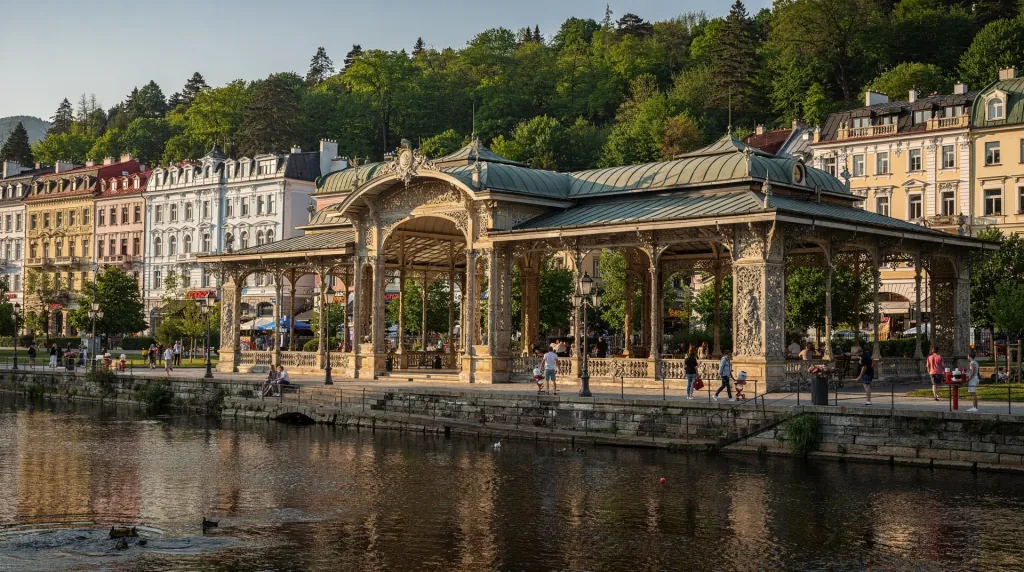
The 19th century produced the colonnades — grand iron and stone promenades built to house the springs and allow visitors to drink the waters in shelter. The Mill Colonnade (Mlýnská kolonáda, 1871–1881) by the Viennese architect Josef Zítek is Neo-Renaissance, 132 metres long, with 124 Corinthian columns. The Vřídlo Spring (Vřídelní kolonáda), rebuilt in Brutalist glass-and-steel in 1975, feels entirely out of character — but the 12-metre geyser it houses is spectacular enough to forgive the architecture.
After the 1948 Communist takeover, the German-speaking population (which had historically been a majority in Karlovy Vary) was expelled, the grand spa hotels were nationalised, and the town entered a period of managed decline. Since 1989, a significant Russian-speaking community has settled here, and Russian-language signage is ubiquitous — a consequence of both the Soviet-era connections and post-1991 Russian wellness tourism. The Karlovy Vary International Film Festival (KVIFF), founded in 1946, has survived all political shifts and is now one of the most respected film festivals in Europe.
Why Karlovy Vary is unlike any other Czech day trip
Every other destination on this day trip list is defined primarily by castles and medieval history. Karlovy Vary is defined by something entirely different: the 19th century, hot water, and the idea that curing yourself through mineral springs is a perfectly reasonable way to spend a fortnight.
The town exists because of 79 thermal springs — the hottest, the Vřídlo, reaches 72°C and shoots a 12-metre column of water into the air every few minutes. For several hundred years, the European aristocracy and intelligentsia came here to drink the waters (apparently unpleasant but supposedly medicinal), stroll the colonnaded promenades along the Teplá river, and socialise. The architecture they left behind — grand hotels, Baroque churches, Belle Époque colonnades — is legitimately beautiful and surprisingly well-preserved.
Today, Karlovy Vary is part Russian wellness resort (a significant Russian-speaking expat community), part film festival town (the KVIFF international film festival every July is one of Europe’s oldest), and part Czech day-trip destination for anyone who wants something architecturally opulent and genuinely different from Prague’s medieval Gothic.
It’s also the birthplace of Becherovka, the herbal bitter liqueur you’ve probably tried in Prague, and home to the Moser crystal glass factory — both of which have tours available.
Hour-by-hour day plan (10 a.m. to 6 p.m.)
10:00 a.m. — Arrive at Karlovy Vary bus terminal (Tržnice). Buy a ceramic spa cup (lázeňský pohár) from the shop immediately inside the terminal — about 80–120 CZK (€3–5). Walk 10 minutes south along the Teplá river to the colonnades.
10:15–11:30 a.m. — Mill Colonnade (Mlýnská kolonáda) and promenade. Fill the cup at the public spring taps. The five springs here range from tepid to 60°C — the hottest tap is marked. Taste all five if you’re curious; you’ll quickly decide how seriously you take the spa ritual. Walk north to the Market Colonnade (Tržní kolonáda) — a Victorian cast-iron structure from 1883, more delicate than the Mill Colonnade.
11:30 a.m. — Vřídelní kolonáda. The Vřídlo geyser spring — 72°C, shoots to 12 metres every few minutes, visible through the glass walls. Free entry. This is the most dramatic single sight in Karlovy Vary.
12:00 noon — Walk uphill to the Orthodox Church of Sts. Peter and Paul. The Russian Orthodox church (1898) with gold onion domes sits on the hillside above the colonnades. Five minutes of climbing; the view back over the colonnade promenade is excellent. The church is small but genuinely beautiful inside.
12:30 p.m. — Lunch at Embassy Restaurant (Nová louka 21). Make a reservation in summer. Svíčková na smetaně or the game dishes. Around €15–20 (375–500 CZK) for a main.
2:00 p.m. — Becherovka Jan Becher Museum. Walk 10 minutes to the Becherovka museum on T. G. Masaryka street (near the bus terminal). 1-hour tour, ends with tasting. ~200 CZK (€8).
3:30 p.m. — Moser Glass Factory (take bus line 1 or taxi, 3 km west, 10 minutes). Factory tour + museum: ~250 CZK (€10). Tours run at set times — check moser.com before departure. Allow 90 minutes.
5:30 p.m. — Walk along Stará Louka (the historic spa promenade on the west bank) back to the bus terminal. Pick up warm oplatky (spa wafers) from a bakery near the Grandhotel Pupp. RegioJet return buses to Prague depart approximately every 2 hours — check regiojet.cz for the last evening bus.
Photography notes
Mill Colonnade from the river bank (morning for best light): Shoot from the opposite (east) bank of the Teplá river looking west. The colonnade fills the frame. Best before 10 a.m. when tourist traffic is light.
Vřídelní geyser in action: Set the shutter speed above 1/500s to freeze the water column. The geyser fires continuously; wait for a clear moment without visitors walking into the frame.
Orthodox Church of Sts. Peter and Paul from the promenade below (noon when the gold domes catch direct sun): The contrast of Byzantine gold against forested hillside is the most visually surprising shot in Karlovy Vary.
Grandhotel Pupp facade (late afternoon, golden hour): The Belle Époque hotel facade lit by western light. Shoot from the Dvořák park bridge across the river.
How to get there
By bus
The best option. Student Agency (RegioJet) and Flixbus both run express coaches from Prague Florenc to Karlovy Vary. Journey time: 1h 55min to 2h 15min. Price: €8–13 one way (200–325 CZK). RegioJet’s coaches are comfortable and well-scheduled — book online at regiojet.cz.
The bus drops you at the Karlovy Vary bus terminal (Tržnice), which is a 10-minute walk along the river from the Mill Colonnade.
By train
Not recommended for a day trip. The rail connection from Prague to Karlovy Vary requires a change (usually at Chomutov or Ústí nad Labem), takes 3–3.5 hours, and isn’t significantly cheaper than the bus. The bus is better in every meaningful way.
By car
Prague to Karlovy Vary via D6 motorway and Route 6: about 1h 45min in light traffic. Parking near the colonnades is limited and can be expensive in peak season; the paid car parks at the town outskirts and a short walk in are more practical.
By organised tour
The guided day trip option makes most sense if you want the Moser factory tour built into your itinerary, want a guide to explain the spa culture and mineral spring rituals, or simply want transport handled. Most tours from Prague include entry to key sites and a guide.
These tours from Prague cover the town, the colonnades, and often the Moser factory or Becherovka distillery:
What to see, realistically, in a day
The colonnaded promenade (1–1.5 hours). Start at the Mill Colonnade (Mlýnská kolonáda) — the grandest of the five colonnades, a 132-metre Neo-Renaissance hall opened in 1881 that houses five thermal springs. Pick up a ceramic spa cup (lázeňský pohár) from any gift shop — you’ll need it to drink the waters from the public taps. They taste like warm, slightly sulphurous mineral water: medicinal rather than pleasant. Try all five if you like. The Vřídelní kolonáda at the top of the promenade is a more modern glass-and-steel building housing the main Vřídlo geyser spring, worth seeing for the geyser spectacle alone.
The Old Town above the colonnades (1 hour). Walk up from the river to the Church of Sts. Peter and Paul — a Russian Orthodox church built for the aristocratic Russian visitors in 1898, with gold onion domes that look startlingly out of place in Bohemia and are entirely charming for exactly that reason. Continue to the viewpoint above the church for the panoramic view over the colonnades and spa hotels.
Becherovka Distillery — Jan Becher Museum (1 hour). Located near the bus terminal in the town centre. The tour covers the history of the herbal bitter, the original recipe process, and ends with a tasting of the original and the rose-and-orange Becherovka Lemond variant. Entry: around 200 CZK (€8). No pre-booking needed for walk-ins outside peak season. Recommended.
Moser Glass Factory (1.5 hours). Located 3 km outside the town centre — take a taxi or bus (line 1). The factory tour shows live glassblowing and glass engraving in the working production facility. The Moser Museum adjacent to it has the finest collection of Czech art glass in existence. Factory tour + museum: around 250 CZK (€10). This is the highlight most people remember most vividly. Some Prague tours, like the Karlovy Vary day trip with Moser factory visit, build this into the itinerary specifically.
Spa house thermal experience (optional, 2 hours). If you want to actually use the thermal waters rather than drink them, several of the grand spa hotels open their thermal pool facilities to day visitors. Hotel Thermal (the modernist monolith near the colonnades, also the KVIFF festival venue) has a large public pool. Prices vary: around €15–25 for a day entry. Worth booking ahead in summer.
What to skip: the funicular up the hill (nice view, not essential), the Grandhotel Pupp bar (overpriced, lives on reputation alone), any restaurant on the main colonnade promenade.
Where to eat
Embassy Restaurant (Nová louka 21): The most respected restaurant in town for traditional Czech-European cooking. Svíčková na smetaně, game dishes, beef tartare. Around €15–22 (375–550 CZK) for a main course. Make a reservation in summer.
Kavárna Elefant (Stará louka 30): Historic café in a Belle Époque building. Famous for its cake display — the spa wafers (oplatky) are the local snack specialty. Go for coffee and an oplatka or two, not for a main meal.
Restaurace Promenáda (Tržiště 31): Mid-range Czech restaurant with a terrace near the Mill Colonnade. Goulash, roast pork, trout. Prices honest for the location — around €10–15 (250–375 CZK).
Common mistakes and what we’d do differently
Skipping the Moser factory. It’s 3 km from the town centre and most day-trippers never make it there. That’s a mistake — it’s the most distinctive thing you’ll see in Karlovy Vary and a genuine cultural asset, not a tourist trap.
Spending too long drinking the waters. You’ve tasted them once — you don’t need to try all 12 springs. Budget 20 minutes for the colonnade ritual and move on.
Eating on the promenade. The colonnade restaurants are expensive and mediocre. Walk two streets back from the river.
Arriving without a plan. Karlovy Vary spreads up multiple valleys and along the river. Without a loose itinerary — Becherovka, Mill Colonnade, Moser — the day can dissolve into aimless wandering. The town is beautiful but doesn’t organise itself intuitively for visitors.
Tour vs DIY — which to choose for Karlovy Vary
Book a guided tour if:
- You want the Moser factory built into the day without managing the local bus
- You want a guide to explain the spa culture, the Russian aristocracy history, and the Becherovka story
- You’re travelling with a group where a shared vehicle is more practical
Go on your own if:
- You enjoy exploring at your own pace and might want to linger at the Moser museum
- You’re interested in an afternoon thermal spa session (which tours usually don’t include)
- You’re comfortable with the bus from Prague Florenc
Our recommendation: Karlovy Vary is very manageable independently. The bus from Prague is easy, the town is walkable (mostly), and the main sites (Becherovka, colonnades, Moser) are findable without a guide.
If you’re pressed for time and want to maximise what you see, the full-day guided tour from Prague or the Karlovy Vary day trip with guide are both good options.
The Karlovy Vary day trip with Moser factory visit specifically builds the 3km-from-centre factory into the day without requiring you to navigate local buses — worth it if the glassmaking is a priority.
Season-specific notes
January–February: The colonnades are quiet; the Becherovka museum and Moser factory operate year-round. Some outdoor spa facilities close. Hotel Thermal’s indoor pool is open. The town has a melancholy winter beauty. Fewer visitors means you can have the colonnades largely to yourself on a grey Tuesday morning.
May–June: The outdoor promenade comes alive. Hotel Thermal’s outdoor pool opens. The spa hotels are at full operation. Best period combining comfortable weather with manageable crowd levels.
July (KVIFF): The Karlovy Vary International Film Festival in early July brings the town to capacity. Hotels book out months ahead. The atmosphere is electric if you’re a film enthusiast; slightly chaotic if you just want the colonnades. Check kviff.com for dates.
September–October: Excellent. Spa season extends through October. The hillside forest around the town turns amber. Crowds drop significantly after the KVIFF summer.
Pairing with Loket Castle: The village of Loket (Elbogen), 12 km south of Karlovy Vary, has a Gothic castle above a river meander that is often compared to Český Krumlov in miniature. If you have a car, adding 90 minutes at Loket makes the Karlovy Vary day significantly richer. Goethe visited Loket multiple times and wrote about it extensively.
Karlovy Vary versus other West Bohemia day trips
Karlovy Vary is often booked alongside — or instead of — nearby West Bohemia destinations. Here’s how it compares for someone deciding between them:
| Destination | Character | Time from Prague | Best for |
|---|---|---|---|
| Karlovy Vary | Spa architecture, thermal springs, Becherovka/Moser | ~2h by bus | Spa culture, glassmaking, elegant strolling |
| Plzeň (full guide) | Industrial beer heritage, Pilsner Urquell brewery | ~1h by train | Beer enthusiasts, brewery tours |
| Karlštejn (full guide) | Gothic castle, Crown Jewels history | 40min by train | Castle/medieval history in a half-day |
If you’re weighing bus versus train versus tour for any of these, the dedicated train vs bus vs tour comparison breaks down the trade-offs, and the full day-trip comparison table lines up every option from Prague side by side.
Currency and practical notes for Karlovy Vary
The Czech Republic uses the koruna (CZK), not the euro, and Karlovy Vary’s spa-town setting attracts more aggressive currency-exchange operations than most Czech towns — the same scams covered in the currency and money guide for Prague apply here, arguably more so given the international spa clientele. Pay in CZK where possible and use a card or ATM withdrawal rather than a street exchange booth.
If you want to understand Becherovka before tasting it at the museum, the Czech spirits guide covers the wider landscape of Czech herbal liqueurs and spirits, of which Becherovka is the most famous export. And if you’re building out a longer Prague stay around this trip, the Prague destination guide and the weekend Prague itinerary are useful starting points for the days either side.
Frequently asked questions about Karlovy Vary
How far is Karlovy Vary from Prague?
130 km west of Prague. By express bus: about 2 hours. By car: 1h 45min in light traffic. There is no convenient direct train.
Is Karlovy Vary the same as Carlsbad?
Yes — Carlsbad (or Karlsbad) is the German name for the same town. The Czech name (Karlovy Vary) translates roughly as “Charles’s baths” after Holy Roman Emperor Charles IV, who according to legend discovered the springs while hunting in the 14th century.
What are the spa wafers (oplatky)?
Oplatky are thin, round wafer biscuits — about 15 cm in diameter — filled with a sweet hazelnut, cinnamon, or vanilla cream. They’re the edible souvenir of Karlovy Vary, sold everywhere. The best are warm and fresh from bakeries near the colonnades. They’re genuinely good.
Can I drink the thermal spring water?
Yes — this is the point. The springs have public taps built into the colonnades with free access. You fill your ceramic spa cup (sold in every gift shop for €3–6) from the taps. The water is safe, warm (from tepid to near-boiling depending on the spring), and tastes distinctly of minerals. Traditional spa treatments prescribe drinking up to three cups per day.
Is Karlovy Vary worth visiting in winter?
Yes, actually. Winter (November–February) sees far fewer visitors, the spa hotels are accessible, the Becherovka tour runs year-round, and the town has a genuinely atmospheric quality in the cold. The colonnades are heated. Some outdoor spa facilities close.
When is the Karlovy Vary International Film Festival?
The KVIFF runs in early July (usually the first or second week). The town fills significantly during this period — book accommodation and tours well in advance if visiting then. The festival is worth attending if you’re a film person; ticket access is broader than most people assume.
Is there a direct train from Prague to Karlovy Vary?
No direct service. All rail routes require at least one change and take 3–3.5 hours. The express bus is faster and more convenient. Use the bus.
Is Karlovy Vary walkable from the bus terminal?
The bus terminal (Tržnice) is at the northern edge of the spa centre. The Mill Colonnade is 10 minutes on foot south along the river. The Moser factory is 3 km west — too far to walk comfortably; take bus line 1 or a taxi (approximately 100–150 CZK / €4–6).
Are there public toilets in the colonnades?
Yes — toilets are located in each colonnade building and near the Vřídlo spring. Most charge a small fee of 5–10 CZK. The spa hotels (Grandhotel Pupp, Spa Hotel Imperial) have public restrooms accessible to non-guests in their lobby areas.
Is Karlovy Vary accessible for wheelchair users?
The main colonnade promenade along the Teplá river is largely flat and accessible. The hillside church and viewpoints require significant climbing and are not wheelchair-accessible. The Becherovka museum has elevator access to all floors. The Moser factory tour involves standing on the production floor — contact moser.com for current accessibility information.
Can you visit Karlovy Vary and Plzeň in the same trip?
Not comfortably in one day — they’re in opposite directions from Prague and each deserves a full day on its own. If you have two days for West Bohemia day trips, pair Karlovy Vary with the Plzeň brewery day trip on separate days rather than trying to combine them.
Do I need cash in Karlovy Vary, or are cards accepted?
Cards are widely accepted at restaurants, museums, and the Moser factory. Cash (CZK) is more useful for the public spa cup purchase, wine stalls, and smaller bakeries selling oplatky. Avoid exchanging money at booths directly on the colonnade promenade — rates there are consistently worse than banks or ATMs.
Practical info
- Distance from Prague: 130 km west
- Travel time: ~2h by express bus from Prague Florenc
- Bus booking: regiojet.cz or flixbus.com
- Becherovka Jan Becher Museum entry: ~200 CZK (€8); open daily
- Moser factory tour + museum: ~250 CZK (€10); tours run at set times (check moser.com)
- Mill Colonnade: free entry, open daily
- Thermal spa day entry (Hotel Thermal): ~€15–25
- Best time: May–September for outdoor atmosphere; year-round for spa culture