Why Prague in 2026
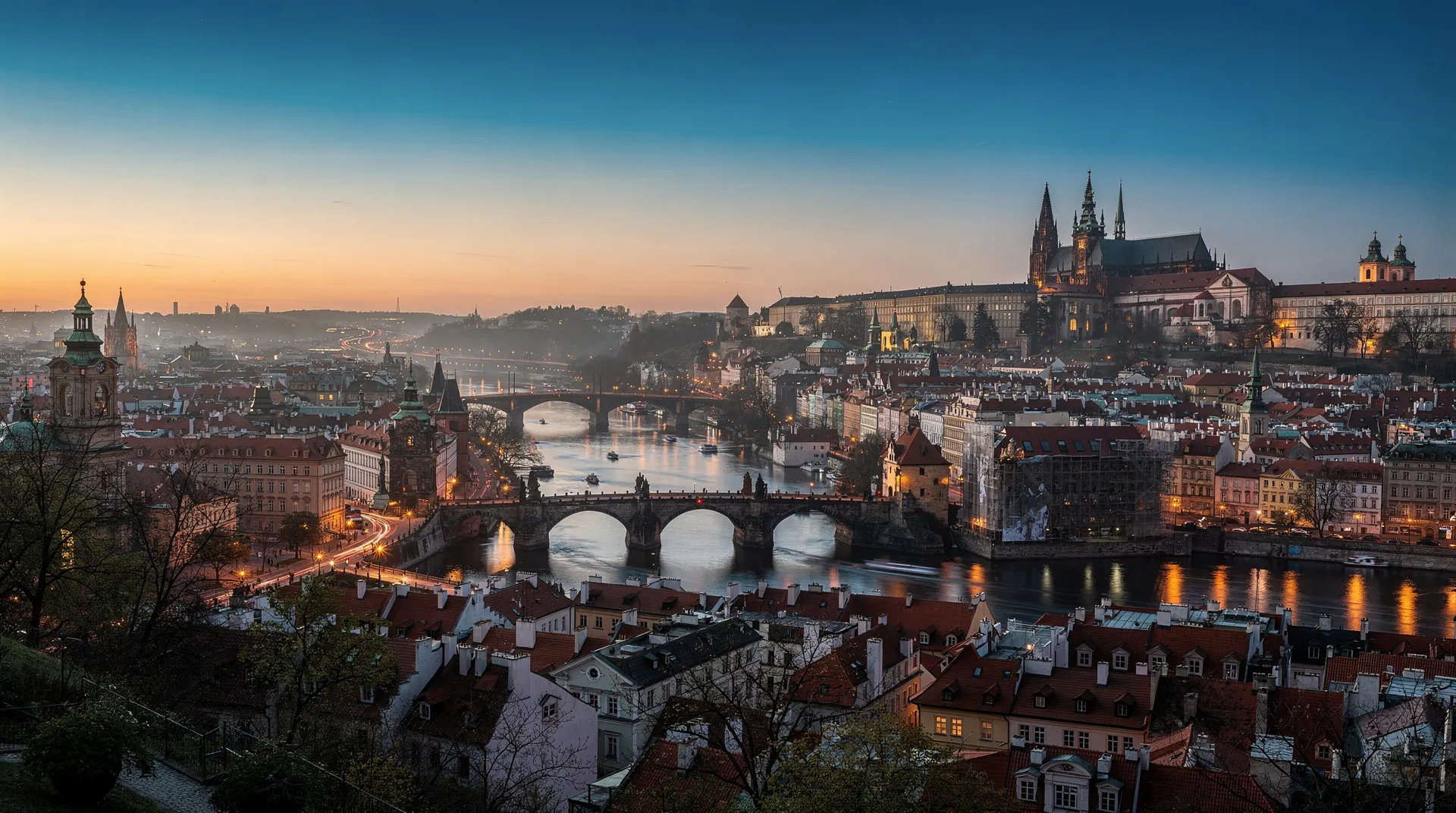
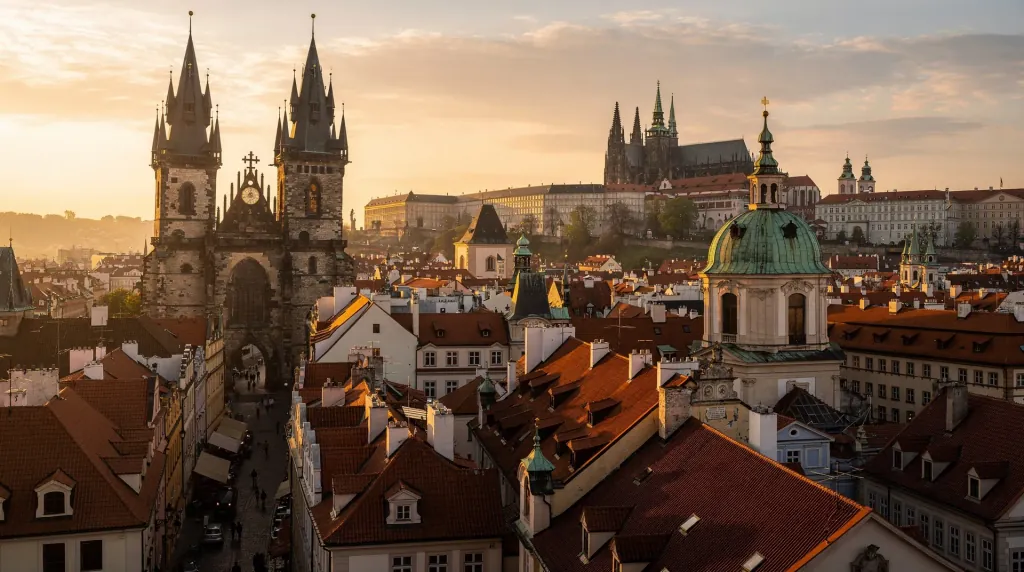
Prague is one of the most visually intact Gothic and Baroque cities in Europe. It was not significantly bombed in the Second World War, and the Communist-era urban planners, whatever their other failings, left the historic centre largely alone. The result is an Old Town where buildings from the 12th to the 19th century stand side by side in a density and coherence that surviving European cities rarely match.
That physical completeness is not the whole story. Prague in 2026 is also a functioning, evolving European capital with a genuinely excellent food scene, some of the best beer in the world, a strong live music and classical culture, and neighbourhoods beyond the tourist core that most short-stay visitors never discover. The city is increasingly expensive by Czech standards — the wave of international tourism since the 1990s has pushed Old Town restaurant prices toward Western European levels — but it remains significantly cheaper than Paris, Amsterdam, or Vienna for comparable quality.
Two honest caveats: the Old Town between June and September is extremely crowded between 10:00 and 18:00, and some areas around the Astronomical Clock have been colonised by the tourist economy in ways that undermine the experience. Both problems have the same solution: go early, and take 20 minutes to walk off the main tourist circuit into the streets behind the famous views.
| At a glance | |
|---|---|
| Where | Central Bohemia, Czech Republic, on the Vltava river |
| Days needed | Around 3–5 for a satisfying first visit (2 at a minimum) |
| Budget | Roughly €40–50/day backpacker; €120–180/day combined for a mid-range couple |
| Getting there | Václav Havel Airport (PRG), ~17km from Old Town; or train from Vienna (~4h), Berlin (~4.5h), Kraków (~6h) |
| Best time | Late May–June or September for mild weather and thinner crowds; December for Christmas markets |
| Currency | Czech koruna (CZK) — not the euro |
First-timer orientation — how the city fits together
Prague is built on both banks of the Vltava River, which bisects the city from south to north. The historic centre divides naturally into several areas:
Staré Město (Old Town) — the east bank, the historic commercial and civic core. Prague’s medieval street plan, the Astronomical Clock, Old Town Square, the Jewish Quarter (Josefov), and Charles Bridge. Where most first-time visitors spend most of their time.
Malá Strana (Lesser Town) — the west bank, at the foot of Prague Castle Hill. Baroque palaces and gardens, embassies, the grand houses of 17th-century Catholic aristocracy. Quieter than Old Town, architecturally magnificent, one of the best areas for an evening walk.
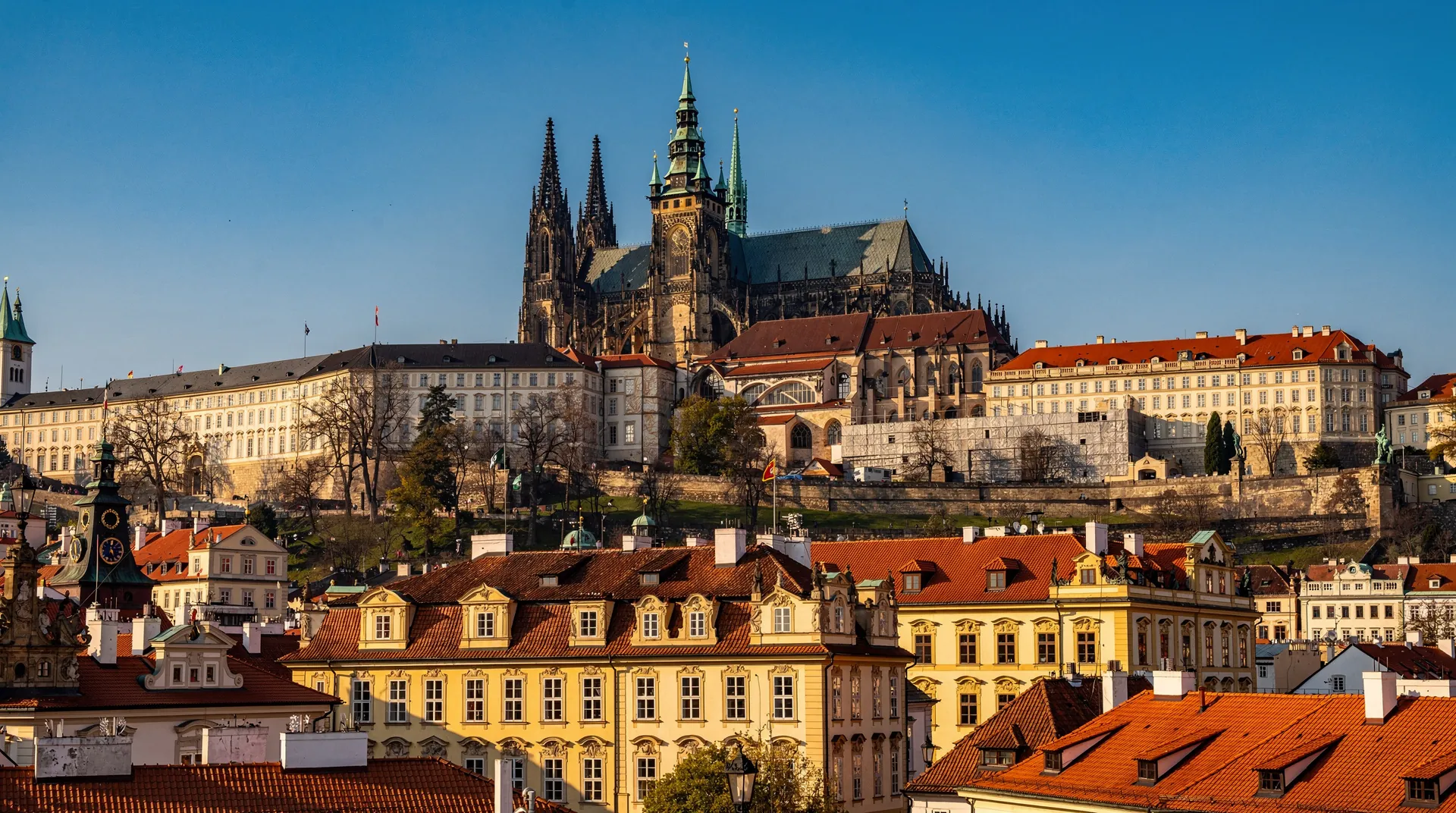
Hradčany (Castle District) — the hill above Malá Strana, dominated by Pražský hrad (Prague Castle) and the Strahov Monastery. Technically a separate city quarter annexed to Prague in 1598.
Nové Město (New Town) — the 14th-century expansion east and south of Old Town, founded by Charles IV. Wider streets, Wenceslas Square (the commercial boulevard), the National Theatre, and the Dancing House on the embankment. Mixes tourist and working-city energy.
Josefov (Jewish Quarter) — officially part of Staré Město, but clearly a distinct historic zone. The six monuments of the Jewish Museum, on the western edge of Old Town toward the river.
Vyšehrad — the older fortress on the south bank, quieter, historically significant, beloved by residents. About 3km south of Old Town.
Vinohrady and Žižkov — the late 19th-century residential districts east of Nové Město. Art Nouveau apartment buildings, local restaurants and cafés, the Žižkov TV Tower (with David Černý crawling babies), and where a large share of Prague’s younger residents actually live. Worth a dinner evening.
The Vltava is crossed by multiple bridges; Charles Bridge is the most famous and pedestrianised, but Nusle Bridge, Palacký Bridge, and Jiráskův most are all useful.
How long do you need?
1 day: Possible but a genuine rush. Cover Charles Bridge, Old Town Square, the Astronomical Clock, and Prague Castle in one day if you start early and move efficiently. You will see the headlines without any depth.
2 days: The standard minimum for a satisfying first visit. Day 1: Old Town, Jewish Quarter, Charles Bridge. Day 2: Prague Castle, Malá Strana, Petřín or Strahov. You leave with a solid sense of the city.
3 days — the sweet spot: Adds the room to be less efficient. On day 3 you can visit Vyšehrad, explore Vinohrady for dinner, do a boat cruise on the Vltava, or take the Petřín funicular at sunset. Three days is the visit most visitors who return wish they’d had the first time.
4–5 days: Adds at least one day trip (Kutná Hora or Český Krumlov) and deeper exploration of Nové Město and Žižkov. The right length for a city break that doesn’t feel rushed.
1 week: Prague comfortably plus a multi-city combination — Vienna is 4 hours by train, Bratislava is 3 hours, Dresden is 2 hours, Kraków is 6 hours. Prague as a base for regional travel makes excellent sense.
Top 10 things to do in Prague
A curated shortlist — each has its own detailed guide page:
- Prague Castle — the world’s largest ancient castle complex: St Vitus Cathedral, Old Royal Palace, Golden Lane. Allow half a day.
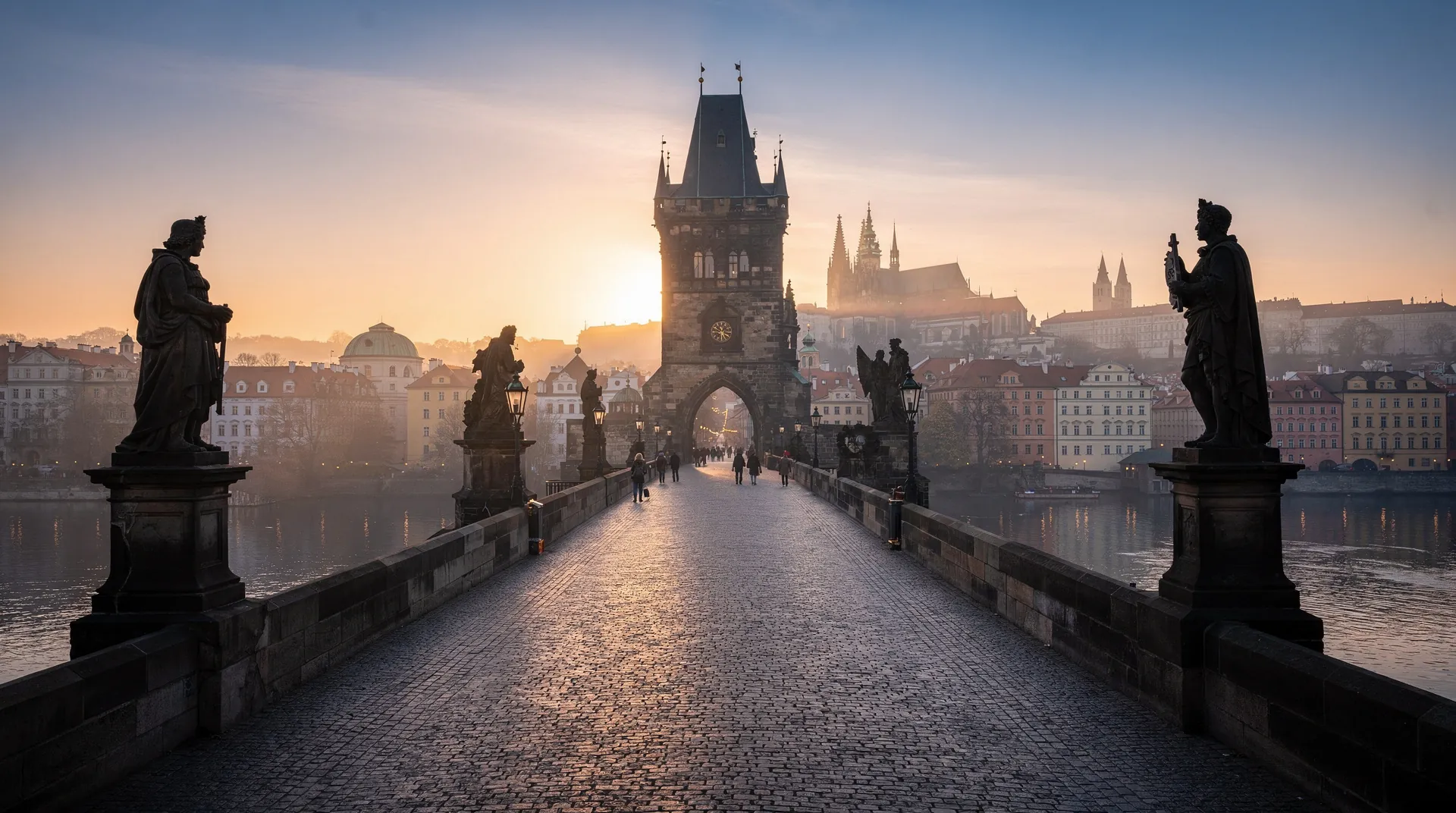
- Charles Bridge — the Baroque statue-lined bridge between the Old Town and Malá Strana. Go at sunrise.
- Old Town Square and Astronomical Clock — medieval square with Gothic, Baroque, and Renaissance buildings and the 1410 clock.
- Prague Astronomical Clock deep dive — the tower interior, the mechanism, and why it’s genuinely remarkable.
- Jewish Quarter (Josefov) — six monuments on one combined ticket: synagogues, the Old Jewish Cemetery, Pinkas Memorial.
- Petřín Hill — the green hill above Malá Strana: funicular, miniature Eiffel Tower, mirror maze, best sunset view in the city.
- Wenceslas Square — Prague’s great boulevard, the Velvet Revolution’s stage, Art Nouveau facades.
- Vyšehrad — the older, quieter fortress with the national cemetery and river views. The undervisited essential.
- Dancing House — Frank Gehry’s deconstructivist masterpiece on the Vltava embankment. A 30-minute detour, worth it.
- Strahov Monastery — two of Europe’s finest Baroque library halls plus a working monastery brewery.
For guided experiences that cover the headline sights:
Prague top sights and historic centre introduction tour Essential Prague walking tourWhere to stay — a quick neighbourhood summary
Full neighbourhood guides live at Prague neighborhoods. Here’s the orientation:
Staré Město (Old Town) — most convenient for sightseeing; most expensive; noisiest (some streets are genuinely loud at night). Best for first-timers who want to be central.
Malá Strana — romantic, relatively quiet, beautiful Baroque streets. A little further from some New Town attractions. Good for couples on a second or third trip.
Nové Město (New Town) — excellent transport links, wider choice of price points, closer to the train station. Less atmospheric than Old Town but more honest as a city neighbourhood.
Vinohrady — the residential favourite: well-preserved Art Nouveau apartment buildings, quiet parks, excellent local restaurants and cafés, easy metro access. Best for visitors who want a local experience alongside tourist sightseeing. Genuinely recommended.
Žižkov — younger, rougher edges, more affordable, great nightlife and cheap restaurants. For visitors comfortable navigating a less polished neighbourhood.
Hradčany/Dejvice — residential and quieter; ideal if your main interest is the Castle district and you don’t mind slightly longer commutes to Old Town.
| Neighbourhood | Vibe | Best for | Trade-off |
|---|---|---|---|
| Staré Město | Central, historic, busy | First-timers wanting everything on foot | Most expensive, loudest at night |
| Malá Strana | Romantic, Baroque, quiet | Couples, return visitors | Fewer transport options after midnight |
| Nové Město | Practical, well-connected | Budget-conscious visitors | Less atmospheric |
| Vinohrady | Residential, local | Visitors wanting a lived-in feel | 10–15 min metro to the sights |
| Žižkov | Gritty, nightlife-heavy | Younger travellers on a budget | Rougher edges, less polished |
| Hradčany | Quiet, residential | Castle-focused stays | Longer commute to Old Town |
Best time to visit
May–June: Peak spring. Mild temperatures (15–22°C), long days, gardens at their best (Petřín orchards, Vrtba Garden in Malá Strana). Crowds are growing but manageable. The best combination of good weather and reasonable tourism density.
September: Often the best month. Summer heat has passed (18–23°C typically), summer tourist peak is fading, and the city is fully operational. Wine harvest season in Moravia and Bohemia.
October: Cooler, beautiful autumn colours on Petřín and in the parks. Good for walking. Tourism drops noticeably in mid-to-late October.
December: Christmas market season. Staroměstské náměstí and Václavské náměstí host markets from late November to 23 December. Beautiful but extremely crowded and expensive — book accommodation 3–4 months in advance.
January–February: The quiet season. Cold (0–5°C average), some tourist services reduced, but the city is genuinely uncrowded, hotel prices drop significantly, and the light on the buildings can be extraordinary. For visitors willing to dress appropriately, Prague in winter has a quality the summer crowds don’t.
July–August: Peak. Hot (25–32°C), packed, expensive. Every major sight is at maximum crowd density between 10:00 and 18:00. Still manageable with early starts and tactical timing, but not the optimal season.
More detail at Prague by season. For a month-by-month breakdown, see Prague in June, Prague in September, or Prague Christmas markets.
What most first-timers get wrong about pacing
The single biggest planning mistake isn’t a scam or a wrong neighbourhood — it’s underestimating how much walking and queuing the headline sights actually take. Prague Castle alone (grounds, St Vitus Cathedral, Old Royal Palace, Golden Lane) realistically eats half a day once you include the walk up from Malá Strana and the security queue at peak season. Old Town Square to the Jewish Quarter to Charles Bridge is a compact loop on a map but a full morning in practice once you factor in the Astronomical Clock crowd and the narrow streets of Josefov.
A useful rule: plan one “anchor” experience per day (the Castle, a day trip, the Jewish Quarter) and leave the rest of the day loose for wandering, food, and the neighbourhood you’re staying in. Visitors who schedule three major sights per day in Prague tend to remember the queues more than the city. See 3 days in Prague for a pacing that works.
Prague passes, cards, and tickets
Prague Visitor Pass (official city card) — includes entry to 70+ attractions and public transport. Available for 48h (2,700 CZK), 72h (3,300 CZK) and 120h (3,900 CZK) for adults. Only useful if you plan to visit multiple paid attractions on consecutive days.
Prague official city pass with public transportPrague CoolPass — alternative pass covering 90+ attractions with slightly different inclusions; €96 for 2 days or €116 for 3 days (adult).
Prague CoolPass — 2, 3, or 4 daysPractical note: Both passes require you to visit enough paid attractions to break even. A rough calculation: if you plan to visit Prague Castle (€18), the Jewish Quarter (€22), Petřín Tower (€10), and the National Museum (€14), you’re already at €64 in individual tickets. Even with public transport added, that is far below the price of a 48h Visitor Pass (2,700 CZK) or a 2-day CoolPass (€96), so paying individually is usually better value. Use the calculator at Prague Card calculator to check your specific itinerary.
For more analysis, see Prague Visitor Pass vs CoolPass vs pay-as-you-go.
Food and beer in Prague
The Czech food scene in 2026 is in a better state than most visitors expect. The old clichés — heavy, starchy, brown — apply to some tourist-facing restaurants but not to the city as a whole.
What to eat:
- Svíčková na smetaně — beef sirloin in cream sauce with bread dumplings, cranberry, and whipped cream. The Czech national dish done properly at U Modré Kachničky or Lokál.
- Vepřo-knedlo-zelo — roast pork, dumplings, sauerkraut. Irreducibly good in the right kitchen.
- Knedlíky (dumplings) — bread or potato, used as the vehicle for sauce-based dishes. Essential rather than optional.
- Trout and carp — Czech freshwater fish, well-prepared in better restaurants.
- Czech charcuterie — particularly at wine bars (vinotéky) in Vinohrady.
Beer: Czech lager is genuinely the best in the world at this style. Pilsner Urquell (from Plzeň) is the original; Budvar (from České Budějovice) is the other major brand. In Prague, tank Pilsner Urquell — served via pressurised tank, unfiltered, at specific establishments licensed by the brewery — is the benchmark experience. The Lokál chain (multiple branches, most famous at Dlouhá 33) is the reference point. A half-litre of tank Urquell costs roughly €1.50–2.50 / 40–65 CZK.
What to avoid:
- Restaurants directly on Old Town Square or Charles Bridge — price inflated 2–3× over neighbourhood equivalents with no corresponding quality gain.
- “Czech food” tourist menus at the castle area — often reheated, overpriced, and not representative.
- Trdelník (chimney cake) — it tastes fine but is not a Czech tradition, regardless of what the vendors imply.
For food tours combining tastings with city walking:
Prague award-winning Old Town food tour with four drinksFull food guide at Food and beer in Prague.
Day trips from Prague
The Czech Republic within a 2-hour radius of Prague offers some of the best day-trip options in Central Europe.
Kutná Hora (70km, 1h by train) — UNESCO World Heritage silver-mining town with the Sedlec Ossuary (the “Bone Church” — 40,000 human skulls used as decorative elements) and the magnificent Gothic St Barbara’s Cathedral. A near-perfect day trip.
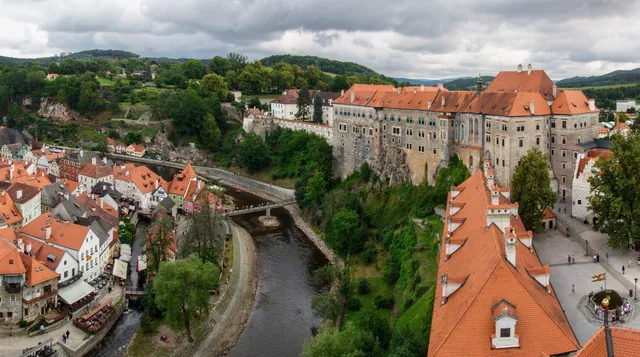
Kutná Hora, St Barbara’s Church, and Sedlec Ossuary from PragueČeský Krumlov (170km, 3h by bus) — UNESCO-protected small town in South Bohemia, dominated by a Baroque castle. One of the most photogenic towns in Europe; crowded in summer, extraordinary in autumn or spring.
Český Krumlov full-day tour from PragueKarlovy Vary (130km, 2h by direct bus) — the great 19th-century spa town. Colonnades, mineral springs, Moser glass factory. Works as a day trip but a night’s stay is more comfortable.
Terezín (60km, 1h by bus) — the Nazi concentration camp and ghetto, now a national memorial. Heavy subject matter, important visit. Well-managed site with clear explanations. Not suitable for every visit, but significant.
Full day trip guides at Day trips from Prague.
Getting around Prague
Metro: Three lines. Line A (green) covers Old Town (Staroměstská), Malá Strana (Malostranská), and extends east and west. Line B (yellow) connects Smíchov (west) through Můstek to Florenc and Vysočany. Line C (red) runs north-south, useful for Florenc (main bus station) and Vyšehrad. Trains run 5:00–midnight, every 2–4 minutes at peak.
Tram: The most useful surface transport. Tram 22 is essential for reaching Prague Castle and Strahov. Historic tram 42 runs a circular tourist route. Trams run 4:30–midnight; night trams (lines 91–99) operate midnight–4:30.
On foot: The historic centre is almost entirely walkable. Old Town to Charles Bridge is 8 minutes; Old Town Square to Wenceslas Square is 10 minutes; Charles Bridge to Malostranské náměstí is 5 minutes. Wear comfortable shoes — the cobblestones are uneven and can be slippery in wet weather.
Tickets: A 30-minute single ticket (39 CZK / ~€1.60) is valid for metro, tram, and bus connections within the time limit. A 24h pass (150 CZK / ~€6) or 72h pass (350 CZK / ~€14) is better value for a full day. Buy at yellow DPP ticket machines in every metro station.
Uber/Bolt/Liftago: Widely available and reasonably priced. More convenient than flagging street taxis, which continue to be a scam risk. From the airport to city centre, Bolt or Uber typically costs €12–16 (300–400 CZK).
Transport guides: Prague metro guide and Prague airport to city.
Common first-visit mistakes
Currency exchange on Wenceslas Square. The exchange offices with “0% commission” signs use terrible exchange rates. Use a bank ATM with your home card, or exchange at a proper bank. Never exchange at airport kiosks directly before passport control.
Street taxis hailed at Charles Bridge or Wenceslas Square. These are almost invariably overpriced — €20–40 for a 5-minute journey has been documented repeatedly. Use Bolt, Uber, or Liftago exclusively, or book a licensed car through your hotel.
Eating directly on Old Town Square. A perfectly decent goulash costs €6–8 at a pub in Vinohrady. The same dish on Staroměstské náměstí costs €15–22, and the quality is often lower. The rule is simple: the closer to the Astronomical Clock, the worse the value.
Assuming the Prague Castle visit is quick. Visitors who allocate 90 minutes for “the castle” often miss St Vitus Cathedral or leave feeling rushed. Allow a minimum of 2.5 hours for the Basic ticket.
Not validating transport tickets. DPP (Prague public transport) inspectors conduct plain-clothes checks on trams and the metro. Fines for unvalidated tickets are €20 (500 CZK) on the spot, non-negotiable. Validate your ticket in the yellow machine at the platform or at the tram/bus door before boarding.
Visiting Charles Bridge at midday. The bridge at 14:00 in July is nearly impassable at human pace. See it before 7:30 or after 21:30. This single adjustment transforms the experience.
Missing the Jewish Quarter because it looks like a “neighbourhood.” Josefov covers about 4 blocks. Everything important is within 400 metres. It requires 2–3 hours, not a cursory walkthrough.
Frequently asked questions about Prague
Is Prague expensive in 2026?
Relative to Western Europe: no. Relative to where it was 10 years ago: yes. A budget traveller (hostel, supermarket meals, public transport) can manage on €40–50/day. A mid-range couple spending on hotels, restaurants, and entrance fees will spend €120–180/day combined. A good restaurant meal without wine costs €12–18 per person; a hotel in the Old Town starts around €90–140 for a double.
Is Prague safe?
Generally yes — Prague has a low violent crime rate by European standards. Pickpocketing is the primary risk, concentrated around Charles Bridge, Wenceslas Square metro, and Old Town Square during peak tourist hours. Taxi scams and currency exchange manipulation are still common. Beyond that, Prague is a safe European capital city.
Do I need a visa for Prague?
Prague is in the Czech Republic, a Schengen member. EU/EEA citizens: no visa, no passport check at Czech borders. Citizens of the US, Canada, Australia, UK, and most other Western nations: no visa required for stays up to 90 days. Check your specific nationality at mzv.cz/english.
Do people speak English in Prague?
In the historic centre, tourist areas, hotels, and restaurants catering to visitors: yes, broadly. English is the practical working language of Prague tourism. Away from the tourist core — local pubs, outer neighbourhoods, older residents — Czech is the baseline. Some German and Russian are also common in service contexts.
What is the currency in Prague and should I bring cash?
The Czech koruna (CZK). In 2026, approximately 25 CZK per 1 EUR. Major hotels, restaurants, and tourist services accept cards widely. Local markets, smaller pubs, and tram ticket machines (older ones) may be cash-only. Carrying 500–1,000 CZK (~€20–40) in cash is practical.
Is it worth hiring a guide or taking tours in Prague?
A guided walking tour of Old Town (2–3 hours) is genuinely useful for contextualising the architecture and history — the visual density of Prague rewards explanation. Prague Castle specifically benefits from a guide who can explain the ticket options and the history of each space. Beyond that, self-guiding with good preparation is entirely viable.
Prague city tour with Prague Castle and Charles BridgeHow do I get from the airport to the city centre?
Václav Havel Airport (PRG) is 17km from the Old Town. Options in 2026: the Airport Express (AE) bus runs directly to Praha hlavní nádraží (main train station, metro Line C) in about 40 minutes for ~€8 / 200 CZK one way (standard PID tickets are not valid). Uber/Bolt typically costs €12–16 to city centre. Metro access requires two bus changes and takes around 50–60 minutes. Full guide at Prague airport to city.
What language do menus use in tourist-area restaurants?
Most tourist-area menus are in Czech and English; many also include German. Photo menus are common. If you’re outside the tourist area, Google Translate’s camera function handles Czech menus well.
How many days is too few for Prague?
A single day covers the headlines (Charles Bridge, Old Town Square, a rushed look at the Castle) but leaves no room for a day trip, a neighbourhood dinner, or the slower pleasures — a beer hall, a walk through Vinohrady, an evening on Petřín. Two days is the practical minimum for a first-time visitor who wants more than a checklist; see how long to stay above for the full breakdown by day count.
Book your Prague experience
Whatever your interest in Prague — the castle, the Jewish heritage, the food, the music, the river — there’s a guided experience that improves the visit.
A castle tour with an expert local guide, to cut through the ticket complexity:
Prague Castle small-group tour with local guide and admissionA Jewish Quarter walking tour with entrance tickets:
Prague Jewish Quarter walking tour with admission ticketsAn evening on the Vltava — the panoramic river cruise is one of Prague’s genuinely relaxing experiences:
Prague panoramic Vltava River cruiseThe best day trip from Prague — Kutná Hora and the Bone Church:
From Prague: Kutná Hora and Sedlec Ossuary full-day tourA Czech food tour to understand what Prague actually eats:
Prague food tour with 10 tastings of classic Czech dishesFor the most flexible multi-day experience, the city pass covers the major paid attractions plus transport:
Prague official city pass with public transport included