At a glance
| Where | Underground, three lines (A/B/C), covers Old Town, Malá Strana, Vinohrady, main station |
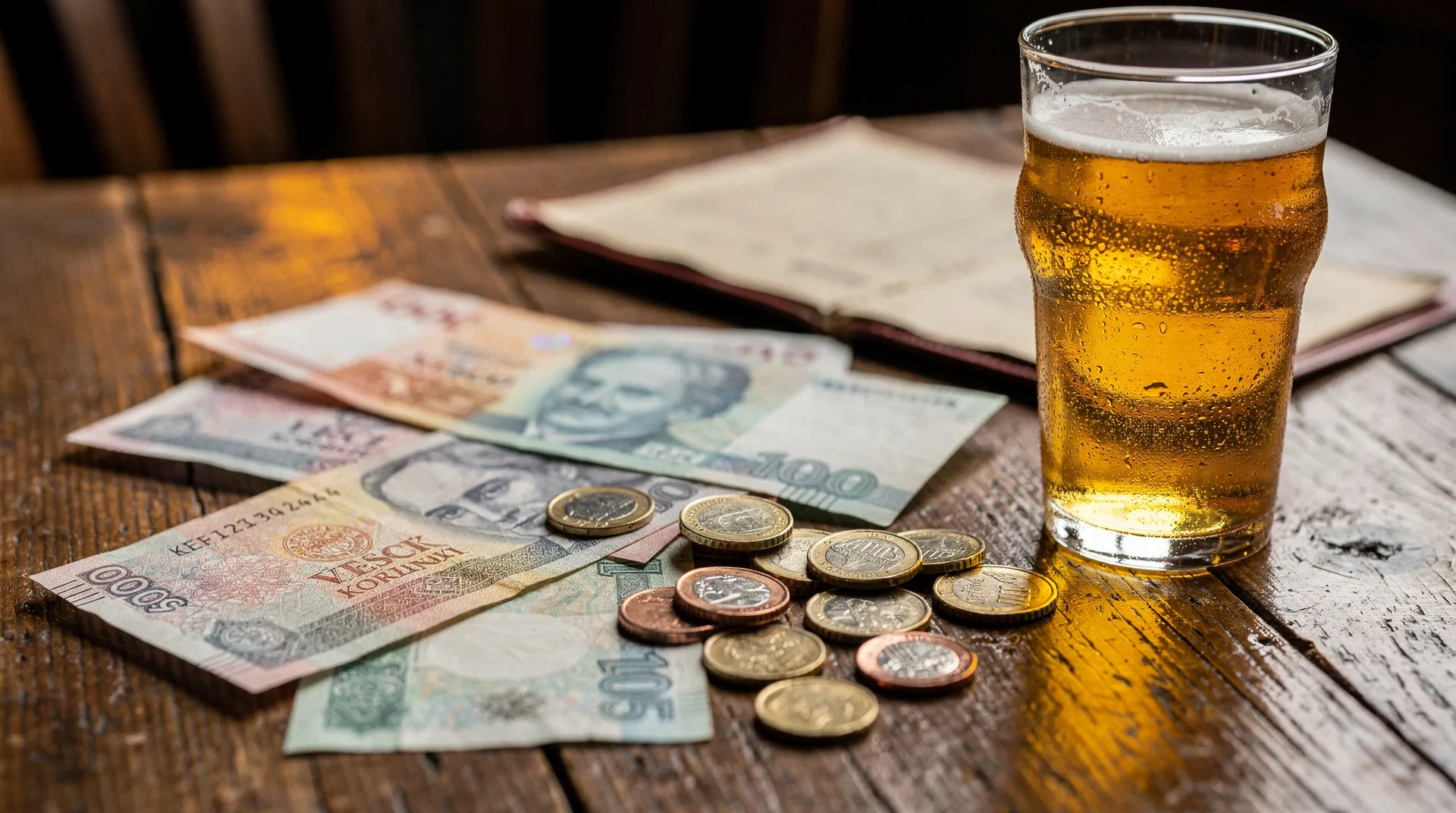
| Cost | Around 39–350 CZK depending on ticket (30-min to 72-hour) |
| Time needed | A few minutes to learn the system; most rides under 15 minutes |
| Getting there | Same DPP ticket covers metro, trams, and buses — see the trams and buses guide for surface transport |
| Best time | Off-peak (10:00–15:00, evenings) for a calmer ride and easier validation at quiet stations |
Three lines, one city — understanding Prague’s metro
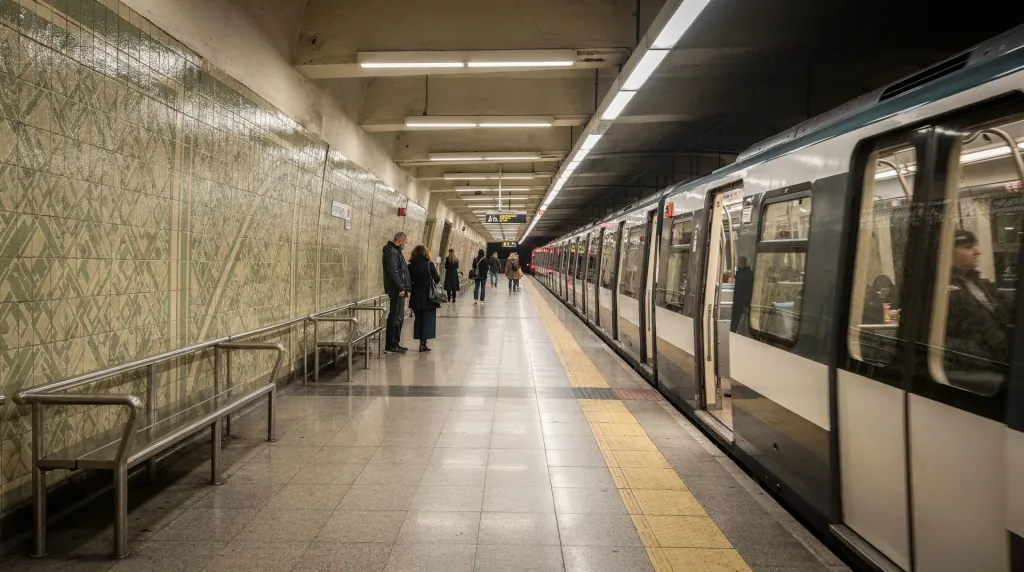
Prague’s metro (Dopravní podnik Praha, DPP) is small by European capital standards — three lines, 61 stations — but it covers every major tourist destination and connects seamlessly with trams and buses. Opened in 1974 under communist rule, the stations are deep, the escalators are fast, and the trains are frequent enough that you rarely wait more than 3 minutes during the day.
The system is easy to learn in a day. Line A (green) runs east-west through the tourist core. Line B (yellow) runs northeast to southwest. Line C (red) goes north-south and connects to the main train station. All three lines meet in the city centre within a 10-minute walk of each other.
The three lines in detail
Line A — green (the tourist line)
Line A is the one you’ll use most. It runs from Depo Hostivař in the east to Nemocnice Motol in the west, passing through the heart of historic Prague.
Key stops for visitors:
- Staroměstská — Old Town, Charles Bridge (5-minute walk), Jewish Quarter (Josefov)
- Můstek — Wenceslas Square (bottom end), transfer to line B
- Náměstí Míru — Vinohrady, good hotels, restaurants
- Jiřího z Poděbrad — Vinohrady cafés, Žižkov TV Tower nearby
- Malostranská — Lesser Town (Malá Strana), Prague Castle (15-minute uphill walk)
- Hradčanská — Prague Castle area (flat approach from north)
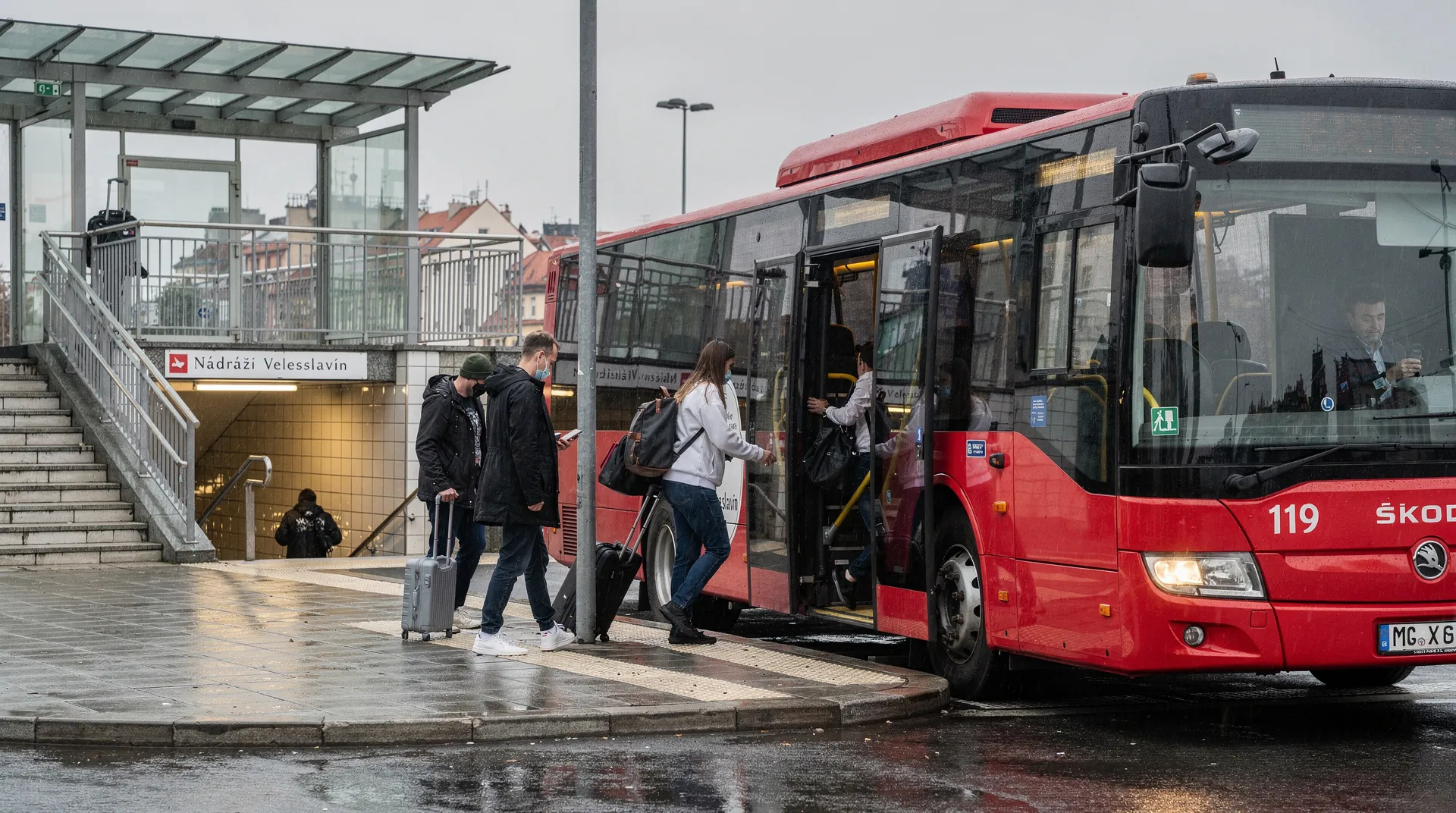
- Nádrží Veleslavin — Transfer to bus 119 for the airport
Line B — yellow
Line B runs from Zličín (west, near IKEA) to Černý Most (east). Useful stops for visitors:
- Národní třída — Národní třída street, National Theatre area
- Náměstí Republiky — Municipal House (Obecní dům), Powder Tower
- Florenc — Main bus station (Florenc Bus Terminal), transfer to line C
- Můstek — Central junction with line A, Wenceslas Square top
- Anděl — Smíchov district, cinemas, shopping
Line C — red
Line C runs from Háje (southeast) to Letňany (north). Visitors use it mainly for:
- Hlavní nádraží — Prague Main Train Station, connections to Vienna, Bratislava, Berlin
- Muzeum — National Museum, top of Wenceslas Square, transfer to line A
- Florenc — Transfer to line B, bus station
- Nádraží Holešovice — International trains (some services), riverboat stop
Tickets — prices and types (2026)
All DPP tickets cover metro, trams, and buses interchangeably within the validity period. You do not need a different ticket for each mode of transport.
| Ticket | Price | Valid for |
|---|---|---|
| 30-minute | 39 CZK paper, 36 CZK in the PID Lítačka app (~€1.60) | 30 min from validation, unlimited transfers |
| 90-minute | 50 CZK paper, 46 CZK in the app (~€2) | 90 min from validation, unlimited transfers |
| 24-hour pass | 150 CZK paper, 140 CZK in the app (~€6) | 24 hours from first validation |
| 72-hour pass | 350 CZK paper, 340 CZK in the app (~€14) | 72 hours from first validation |
| Monthly pass | 550 CZK (~€22) | Calendar month, requires registration |
Which ticket to buy:
- For a single journey (e.g., hotel to Old Town): 30-minute ticket if your hotel is close; 90-minute if you’re more than 4 stops away or need to change lines.
- For a full day of sightseeing: 24-hour pass. It pays for itself after 4 single rides.
- For 3+ days: 72-hour pass is almost always better value than buying individual tickets.
Children: Under 6 travel free. Ages 6–15 pay half price. Under 15 with valid ID travels free on Prague public transport since January 2023 (confirm current rules at DPP website before travel).
Seniors 65+: Prague residents over 65 travel free. Tourists still pay standard fares.
Where to buy tickets
Metro station machines: Every station has yellow vending machines near the entrance. They accept cash and cards (contactless works). Instructions available in English.
DPP app (Lítačka): Download the official DPP app to buy and store tickets on your phone. Works well, and the 24h and 72h passes activate from first scan, not purchase.
Tabák / newsagents: Kiosks in metro stations often sell paper tickets. Useful if machines have queues.
Prague CoolPass and Prague Card: Both include unlimited public transport during validity. Worth it if you’re also visiting paid attractions — check our tickets comparison guide.
How to validate
This is the step that catches tourists. In Prague, tickets are not checked at barriers — the metro has no turnstiles in most stations (a few newer ones do). The onus is entirely on you to validate before or immediately upon boarding.
On the metro: Yellow pillar-shaped validators stand at the top of every escalator leading to platforms. Push your paper ticket into the slot — it gets time-stamped and punched. For the app, hold your phone’s QR code to the reader. A green light and beep confirms validation.
On trams and buses: Validate in the orange or yellow box immediately after boarding, before the tram moves. Every door has a validator.
Inspectors: Plain-clothes (and sometimes uniformed) inspectors work metro cars and trams regularly. They carry ID and handheld readers. If your ticket is not validated or expired, the on-the-spot fine is 1 500 CZK (~€60). They accept card payment. There is no “tourist discount” or second chance.
Key navigation tips
Escalators: Prague’s metro escalators are among the steepest in Europe and move fast. Stand on the right, walk on the left — this is taken seriously by locals.
Direction boards: Platforms are signed by the terminal station name, not the direction word. For example, on line A towards Old Town from the west, the sign says “Depo Hostivař,” not “city centre.” Know which terminal is in which direction before you descend.
Station maps: Every platform has a full system map. The DPP website has PDF versions; Google Maps works reliably for navigation including real-time tram connections.
Operating hours: Metro runs 05:00–24:00 every day. After midnight, a network of night trams and night buses covers the city on 30-minute intervals.
Frequency: Line A and C: every 2–3 minutes during peak hours, 4–6 minutes off-peak. Line B: similar. All lines reduce to 10-minute frequency evenings and weekends.
Metro vs tram vs walking — when to actually use it
The metro is fastest for long east-west or north-south hops (say, Vinohrady to Josefov), but it runs underground, so you see nothing and it doesn’t serve every corner of the historic core. For short hops within Old Town, Malá Strana, or between adjoining neighbourhoods, walking or a tram is usually more pleasant and barely slower once you factor in stairs and escalators. Use the trams and buses guide to compare surface options, and check airport transfer options since the metro alone doesn’t reach the airport.
Accessibility on the metro
Prague’s metro is a mixed bag for step-free access. Newer stations (built or renovated since the 2000s) generally have working lifts; older central stations sometimes have lift access only on one side or none at all. If you use a wheelchair or have limited mobility, check the DPP accessibility map before relying on a specific station, and see our accessibility guide for a fuller picture of getting around Prague. Trams are a more reliable step-free option on some routes since newer low-floor trams are common.
What we’d actually do
For a 3-day visit, buy the 72-hour pass on arrival (350 CZK / ~€14) and forget about tickets for the rest of the trip. Validate once at the metro on day 1 and that’s it. The savings over buying individual tickets are significant, and you can jump on trams spontaneously without worrying about whether you have a valid ticket.
Line A is your home line. Learn Staroměstská and Malostranská and you can walk to 90% of what tourists want to see — see the 3-day itinerary for how that plays out over an actual visit.
Common mistakes
Not validating: The most common error by far. “I didn’t know I had to” is not accepted by inspectors. The validator is always near the entrance — look for yellow pillars on the metro or orange boxes on trams.
Buying a 30-minute ticket for a long journey: Bus 119 to the airport + metro can take 40–45 minutes. A 30-minute ticket will expire mid-journey. Buy the 90-minute version.
Confusing Můstek and Muzeum: Both are on line A but 2 stops apart. Muzeum (line A + C interchange) is at the top of Wenceslas Square, near the National Museum. Můstek (line A + B interchange) is at the bottom, near the pedestrian zone. Know which end of Václavské náměstí you want.
Expecting airport metro access: There is no metro to the airport. Bus 119 to Nádrží Veleslavin is the correct route.
Questions people actually ask
Do I need a separate ticket for each metro line?
No. One DPP ticket covers unlimited transfers between metro, trams, and buses during its validity window. You can switch lines, board a tram, get back on the metro — all on one ticket within 30 or 90 minutes.
Can I use a credit/debit card to tap in?
Not yet in 2026. Prague’s metro does not accept contactless bank card tap-in at barriers (unlike London or Amsterdam). You still need to buy a ticket from a machine or app. Some newer trams have contactless card readers, but it’s not universal.
Is the metro safe at night?
Yes, Prague metro is very safe by European standards. The stations are well-lit and usually have other passengers even late at night. Standard urban awareness applies — keep bags in front of you, be aware of who’s around. Petty theft (pickpocketing) is more common on tourist trams like line 22 than on the metro.
Which station is closest to Prague Castle?
Malostranská (line A) puts you at the bottom of Malá Strana, from where it’s a 15-minute uphill walk through Nerudova ulice to the castle gates. Hradčanská (line A) is on the other side — the castle approach is flatter but slightly longer. Most visitors prefer Malostranská for the scenic route.
Are there luggage storage facilities at metro stations?
No left-luggage lockers at metro stations. Prague’s main luggage storage is at Hlavní nádraží (line C) and Florenc Bus Terminal. Some hotels will hold bags before check-in and after checkout.
Does the metro run on Christmas Day?
The metro runs on all public holidays in Prague, but with a reduced Sunday schedule. On major holidays (Christmas Day, New Year’s Day), expect 10-minute intervals rather than 3-minute peak frequency.
What is the Lítačka app?
Lítačka is the official DPP mobile ticketing app. You can buy and store tickets on your phone, including 24h and 72h passes. The QR code is scanned at the metro validator. It works offline once the ticket is downloaded. Available on iOS and Android.
Is the metro wheelchair accessible?
Partially. Newer stations generally have working lifts; some older central stations have limited or no step-free access. Check the DPP accessibility map before your trip if you rely on lifts, and see our accessibility guide for wider Prague transport advice.
Can I combine a metro ticket with the Prague Visitor Pass or CoolPass?
Yes — both the Prague Visitor Pass and Prague CoolPass include unlimited public transport for their validity window, so you don’t need a separate DPP ticket while the pass is active. Compare passes in our pass comparison guide before buying.