The triangle every Central Europe planner faces
Someone at a dinner table in Munich is planning a two-week trip to Central Europe. They want to see Prague and Budapest. Their partner wants to add Vienna because it’s only 2.5 hours from Budapest by train. The question — which city do you spend the most time in, which do you cut if the budget is tight, which one goes first — is the most common Central Europe planning question we receive. After visiting all three cities a combined 40+ times, we have a clear opinion.
You have 10 days. Maybe 12. You want to see Central Europe properly. The obvious question presents itself: Prague, Budapest, and Vienna — do all three, or choose?
If you do all three in 10 days, you’re spending 3–4 nights in each and a significant portion of your time on trains. The cities are real enough cities that 3 nights each barely scratches the surface. But 3 nights in each city is dramatically better than not going at all.
This comparison is for people who need to prioritise. Maybe you only have 7 days and can’t do all three. Maybe you’re trying to decide which to visit first on a future trip. Maybe you’re wondering which city best suits your specific travel style. No hedging — we’ll say directly which city wins each category and why.
| At a glance | |
|---|---|
| Best for a first Central Europe trip | Prague — highest sight density in the smallest, most walkable footprint |
| Cheapest of the three | Prague for beer/transport, Budapest often cheaper for accommodation |
| Minimum time to feel each city | around 3 nights each if doing all three |
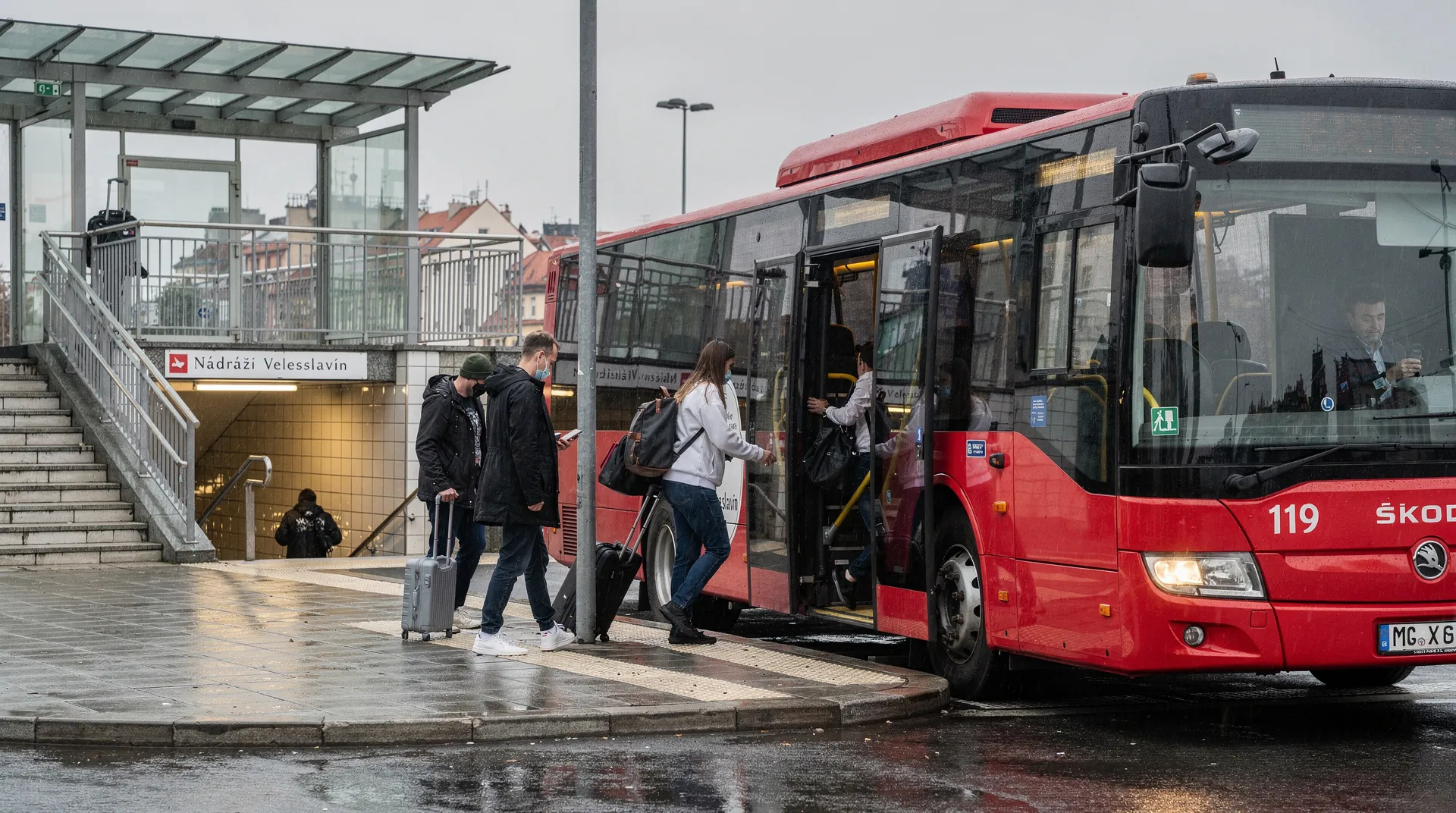
| Getting between them | train — Prague–Vienna around 4 hours, Vienna–Budapest around 2.5 hours |
| Best time to visit any of the three | shoulder season (April–May, September–October) for smaller crowds and better prices |
Architecture and visual impact
Winner: Prague
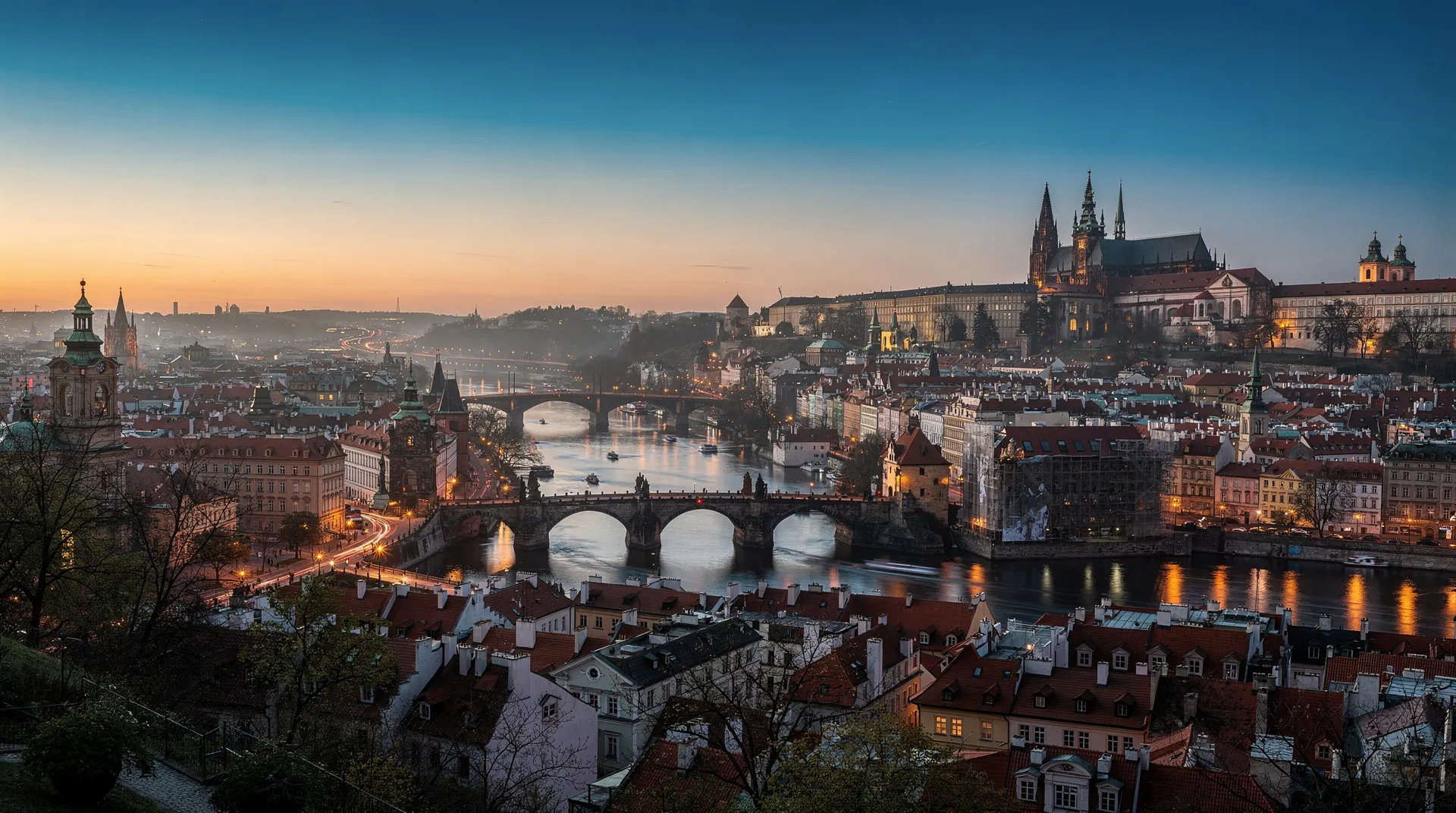
This is not even close. Prague has the highest concentration of unrenovated medieval and baroque architecture of any major European capital. The reason is historical accident: Prague was not significantly bombed in World War II (unlike Warsaw, Berlin, or Rotterdam), was not subject to Haussmann-style urban renewal (unlike Paris or Vienna), and its Communist-era planners, though destructive in some respects, left the historic core largely intact.
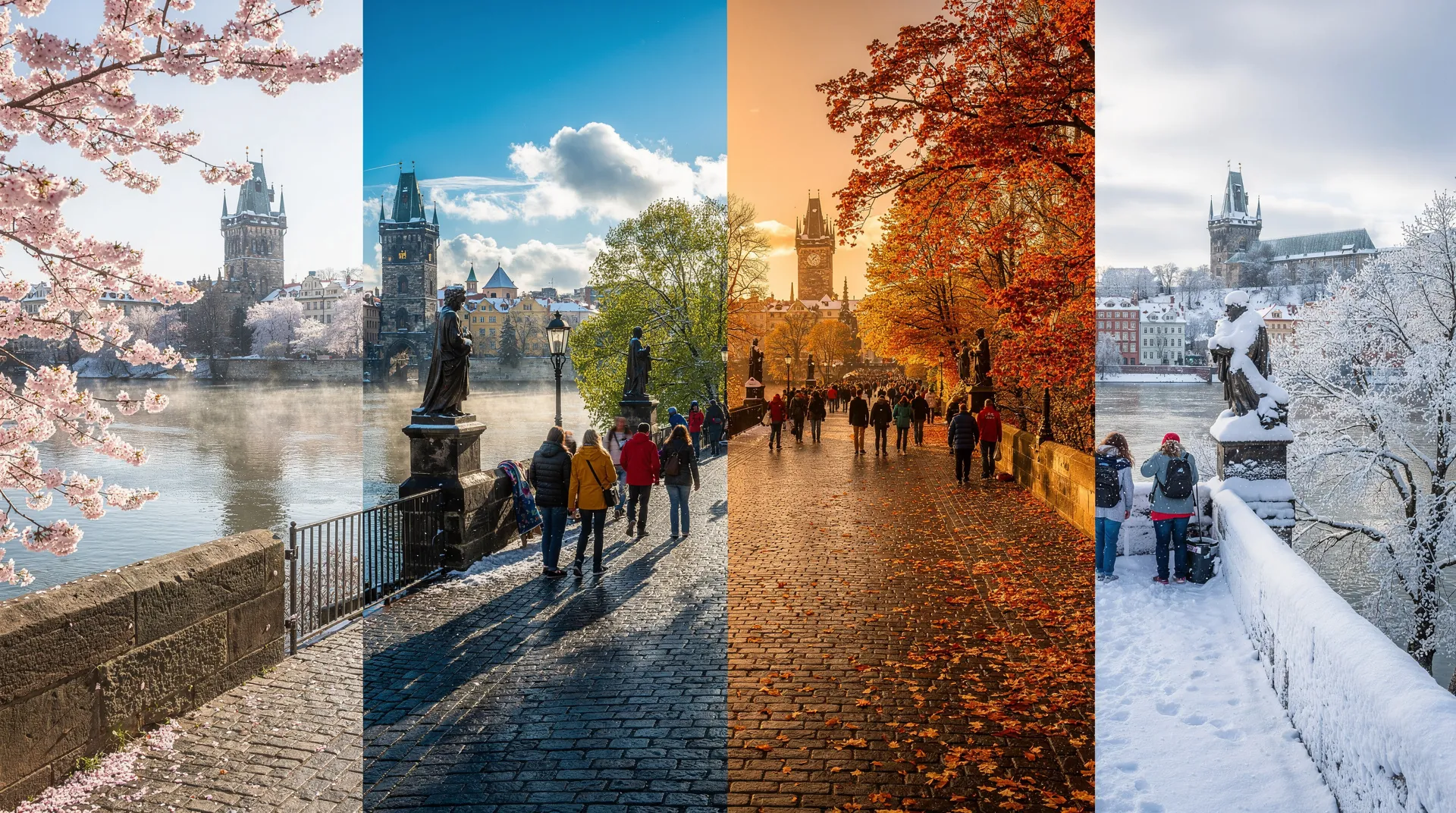
The result is a city where you can stand on Charles Bridge and look in any direction and see something built before 1800. The Gothic churches, the baroque palaces, the Renaissance burghers’ houses, the Art Nouveau department stores — it is visually extraordinary.
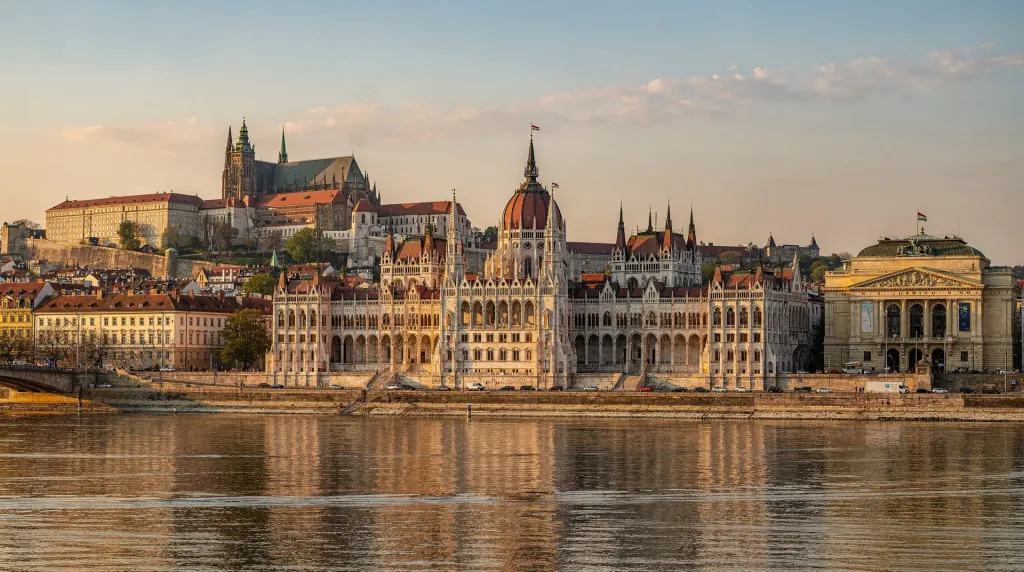
Vienna has magnificent architecture — the Ringstrasse boulevard, the Opera, the Kunsthistorisches Museum — but it is a curated, planned architectural statement, not an organic medieval layering. Budapest has the Parliament building and the Chain Bridge, which are world-class, and a more eclectic architectural mix. Prague’s overall streetscape is more consistently beautiful.
Nightlife
Winner: Budapest (for volume); Prague (for value)
Budapest’s ruin bar scene — particularly in the Jewish Quarter of Erzsébetváros — is genuinely one of the more creative nightlife environments in Europe. The large abandoned buildings converted into labyrinthine bars (Szimpla Kert is the original and still the best) have spawned an entire aesthetic that has influenced nightlife design globally.
Prague’s nightlife is more conventional but cheaper and better-organised for group tourism. The pub crawl circuit, the river boat parties, the underground clubs (our guide to the best clubs in Prague covers the scene) — it is efficient entertainment rather than the organic creative weirdness of the Budapest ruin bar scene. If you would rather see the city lit up than stand in a club queue, a private evening tour of Prague’s landmarks is a calmer way to spend a night.
Vienna’s nightlife is good but expensive and primarily oriented towards its local population rather than tourists.
Food
Winner: Vienna (high end); Prague (value)
Vienna is the undisputed leader for café culture and pastry (Sachertorte, Apfelstrudel, the Kaffeehaus tradition), and has a very strong fine dining scene. The Naschmarkt is one of the better food markets in Central Europe.
Budapest has one of the most genuinely interesting food scenes in the region — Hungarian cuisine (gulyás, lángos, paprikash, the wine of Tokaj) is underrated internationally, and Budapest’s restaurant scene has developed significantly since 2015.
Prague’s traditional Czech cuisine — svíčková, roast pork with dumplings, guláš, smažený sýr — is comfortable rather than sophisticated. Prague’s food scene at the independent restaurant level (Eska, La Degustation) is excellent, but the city’s food reputation internationally is weaker than its architecture reputation. The food is good; the Czech culinary tradition is not a reason to choose Prague over the other two.
Cost
Winner: Prague (slight edge over Budapest; clear edge over Vienna)
All three cities have expensive tourist zones. If you eat only in the tourist restaurant districts, the prices are broadly comparable — tourist-zone prices in all three have converged towards Western European levels.
In local restaurants and pubs: Prague beer is the cheapest of the three. Budapest is the cheapest overall for accommodation (especially in the outer districts and up-and-coming areas like Józsefváros). Vienna is significantly more expensive across all categories. If you plan to visit several paid sights in Prague, our Prague Visitor Pass vs CoolPass comparison shows whether a pass saves money.
Rule of thumb: budget €60–80/day in Prague (with hostel), €70–90/day in Budapest, €100–130/day in Vienna for comparable experiences.
Accessibility from Western Europe
Winner: Vienna (connections), Prague (price)
Vienna has the best flight connections from Western European hubs, the most Eurail-connected rail station, and the most frequent services from London, Paris, Frankfurt, Amsterdam, and Zurich.
Prague has excellent budget airline connections (Ryanair, Wizz Air) that make it the cheapest to reach from much of Western Europe. The direct train from Frankfurt (via Nuremberg) has improved significantly.
Budapest is well-connected by Ryanair and Wizz Air but slightly less so than Prague from some markets. The rail connection from Vienna (Budapest–Keleti, 2.5 hours) is one of the more scenic and comfortable short rail journeys in Central Europe.
History and cultural depth
Winner: Vienna (breadth); Prague (specificity)
Vienna was the capital of the Habsburg Empire for centuries — the cultural, administrative, and intellectual centre of a multinational state that at its height governed 50 million people. The breadth of cultural material in Vienna is unmatched in Central Europe: Mozart, Beethoven, Freud, Klimt, Schiele, Wittgenstein — the Habsburg capital attracted or produced most of the defining intellectual and artistic figures of the late 19th and early 20th centuries.
Prague has its own extraordinary cultural density — Kafka, Dvořák, Mucha, the Czech New Wave cinema, the Prague Spring, the Velvet Revolution — but in a more nationally specific form. Prague’s cultural history is Czech (and Jewish Czech, and German Czech) history in a way that Vienna’s is not purely Austrian.
Budapest has the traumatic 20th century history of a country that was on the losing side of both World Wars and spent 40 years under Soviet-aligned Communism, and its cultural heritage reflects this complexity in interesting ways.
Who should go where
Choose Prague if: you want the best medieval and baroque streetscape in Europe, you’re interested in Czech/Central European history, you’re on a budget, or you want the strongest value-for-money experience in Central Europe.
Choose Budapest if: you want creative nightlife, a less polished but more energetic urban experience, Hungarian cuisine, and a city that feels less tourist-managed than Prague in places.
Choose Vienna if: you want the full classical European capital experience (music, museums, café culture at the highest level), you’re interested in Habsburg history, or you’re willing to pay a premium for the most consistently sophisticated city of the three.
All three in 10 days? Prague 4 nights, Budapest 3 nights, Vienna 3 nights. Take the train between all three (Prague–Vienna: 4 hours, Vienna–Budapest: 2.5 hours). It is tight but completely feasible and one of the classic Central European itineraries for a reason.
Price comparison: what you actually spend in 2026
| Category | Prague | Budapest | Vienna |
|---|---|---|---|
| Mid-range hotel (3-star, central, per night) | €80–140 | €70–120 | €130–200 |
| Local pub beer (0.5 litre) | €2–2.50 | €1.80–2.50 | €4.50–6 |
| Restaurant main course (local, mid-range) | €10–16 | €9–14 | €18–28 |
| Public transport (single ticket) | €1.60 | €1.10 | €2.40 |
| Major museum entry | €10–20 | €10–18 | €16–30 |
The pricing gap between Prague and Vienna is still real but has narrowed since 2019. The tourist-zone prices in all three cities have converged toward Western European levels; the local restaurant prices still show significant differentiation.
What changed since our last full comparison (2022)
Budapest has become more expensive for accommodation. The short-let boom (Airbnb, Booking.com) has reduced central apartment stock and pushed hotel prices up 35–45% since 2020. Ruin bars have become partially more expensive, partly more tourist-oriented. The core experience is still excellent but the “cheap Budapest” era is fading.
Prague’s tourist-zone pricing has continued to expand geographically. What was concentrated on Old Town Square in 2019 has spread into surrounding streets and most of Malá Strana’s main tourist corridor. Prague is still cheaper than Vienna at every tier, but the gap is smaller than it was.
Vienna has remained expensive and has shown little price increase — it was already priced at Western European levels and inflation there has been similar to the European average.
Choosing where to sleep in Prague if it’s your base
If Prague ends up being the city you give the most nights to, where you stay changes the trip noticeably. Staying in Staré Město puts you in the middle of everything but at the highest tourist-zone prices; Vinohrady is a quieter, more residential option a short tram ride from the centre with better local restaurant value. For the practical logistics of the first day — SIM cards, transport passes, currency — the Prague practical basics hub links out to the specifics.
If Prague is only a stop, not the base
Some readers doing the full triangle treat Prague as the middle leg rather than the anchor. In that case, a tight 1-day Prague itinerary or the fuller 3-day version both work as drop-in plans — the 3-day version is the one we’d recommend if Prague is getting 3–4 nights as suggested above.
Reader questions
“If I can only do one, which?”
Prague, without significant reservation, for a first-time visitor to Central Europe. The concentration of medieval and Baroque architecture in a compact, walkable area, the price-to-experience ratio, and the cultural density of the Jewish Quarter, the Castle, and the river are unmatched by any single comparable area in Budapest or Vienna.
“What about Bratislava? Can it replace one of the three?”
Bratislava is worthwhile as a half-day stop between Vienna and Budapest (2 hours from Vienna by train, 1 hour from Budapest). As a replacement for one of the three main cities: only if you have strong specific interest in Slovak culture or want a genuinely quiet, uncrowded city-centre experience. The old town of Bratislava is charming but small; the cultural and sightseeing content is substantially thinner than any of the three main cities.
“Which city should go first on the itinerary?”
Start with whichever city has the cheapest or most convenient flight into it, then travel by train the rest of the way — the trains between all three are comfortable and scenic enough that the order matters less than making sure you’re not wasting a day on a bad connection. Most Western European flyers find Prague or Vienna the easiest first stop.
2026 booking note
All three cities are significantly more heavily booked in summer than they were pre-2020. Budapest’s ruin bars have 30–60 minute queues on summer Saturdays. Prague Castle in July has 40–60 minute ticket desk queues by 10:00. Vienna’s major museums are sold out on peak summer days. Book accommodation and key attractions at least 3 weeks in advance for any July–August Central Europe trip.
For the Prague portion: the Prague city highlights private walking tour is particularly good for visitors arriving from Budapest or Vienna who have already seen a lot of Central European sights and want a guide who can speak to what’s specifically distinctive about Prague’s architectural and historical tradition.
Related reading
The Prague 3-day itinerary gives the best structure for the Prague portion of a Central Europe trip. The getting to Prague guide covers the train options between the three cities.