At a glance
| Where | 90 km west of Prague, West Bohemia |
| Cost (DIY) | around €20–35 per person including brewery tour and lunch |
| Cost (tour) | around €50–75 for a guided day trip with transport |
| Time needed | a full day if you want the brewery plus the old town and synagogue |
| Getting there | direct train from Prague hlavní nádraží, about 1h 20–35min |
| Best time | year-round; book the English brewery tour ahead April–September |
The invention of pilsner — what actually happened in 1842
The story of pilsner beer begins with a civic crisis. The city of Pilsen (Plzeň) had its own municipal brewery producing dark, top-fermented ale using traditional Czech methods. By 1838, the quality had deteriorated to the point where a group of citizens publicly destroyed an entire shipment in front of the town hall — 36 barrels of undrinkable beer emptied into the street in protest.
The response was institutional: the citizens’ cooperative commissioned a new brewery and hired a Bavarian master brewer named Josef Groll. Groll brought two innovations from Bavaria: bottom-fermentation lager technique (which requires cold cellars and longer conditioning) and pale malting. Plzeň contributed the soft local water (very low in minerals, essential for pale lager) and the Saaz (Žatec) hops from 70 km north — still considered among the finest hops in the world.
The first batch was brewed on 5 October 1842 and served to the public on 11 November 1842. It was clear, golden, and sparkling — an entirely new category of beer. Within a decade, the style was being imitated across Bavaria and Austria. Within a century, it had become the dominant beer style globally. The Pilsner Urquell brand (Plzeňský Prazdroj, “the original source from Plzeň”) has been brewed continuously on the same site since 1842.
Groll himself left after only three years — relations with management were reportedly poor — and returned to Bavaria. He died in obscurity. The beer that made Plzeň famous carries no trace of his name.
Why Plzeň is more than just the birthplace of lager
In 1842, a Bavarian brewer named Josef Groll brewed the first pale golden lager in the city of Pilsen (Plzeň). Before that, lager was dark. The combination of soft Plzeň water, local Saaz hops, and Groll’s bottom-fermentation technique produced a beer that became the most copied beer style on the planet. Every “lager” you’ve ever drunk — Heineken, Budweiser (American), Corona, Stella Artois — traces its lineage directly to what was brewed in Plzeň in October 1842.
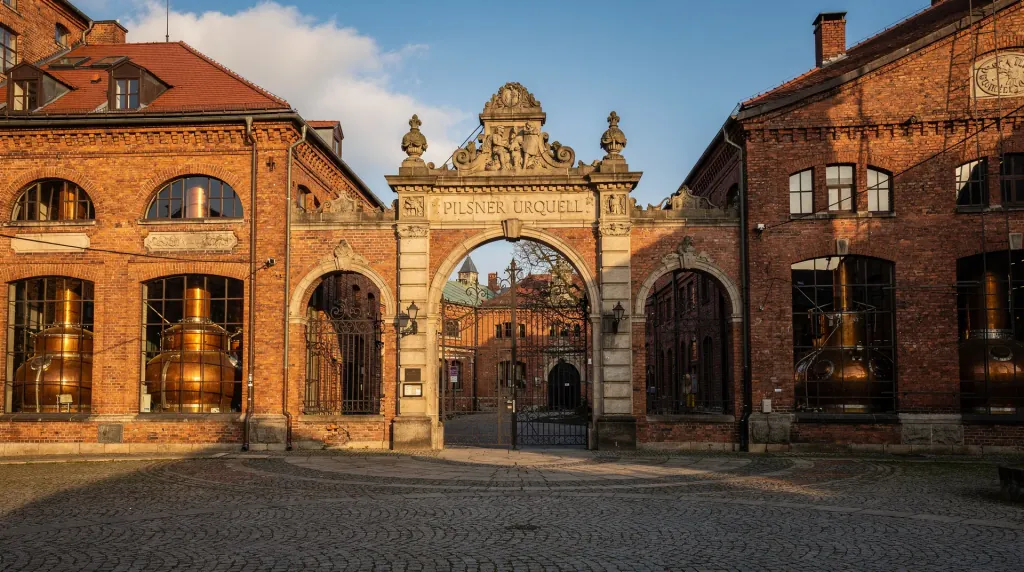
Pilsner Urquell (Plzeňský Prazdroj, “the original source from Plzeň”) is still brewed on the same site, in a complex of red-brick Victorian brewery buildings that are frankly beautiful. The brewery tour takes you through the brewing hall, the historic cellars, and ends with unfiltered, unpasteurised lager drawn directly from a wooden barrel — the closest thing to what the 1842 beer tasted like. This is the primary reason to come to Plzeň.
That said, Plzeň is also a genuine Czech city (fourth largest in the country) with a handsome medieval centre, the second-largest Romanesque rotunda in Bohemia, the Great Synagogue (third largest in the world, often overlooked), the Underground Plzeň tunnel network, and a Puppet Museum that is characteristically Czech in the most delightful way.
How to get there
By train
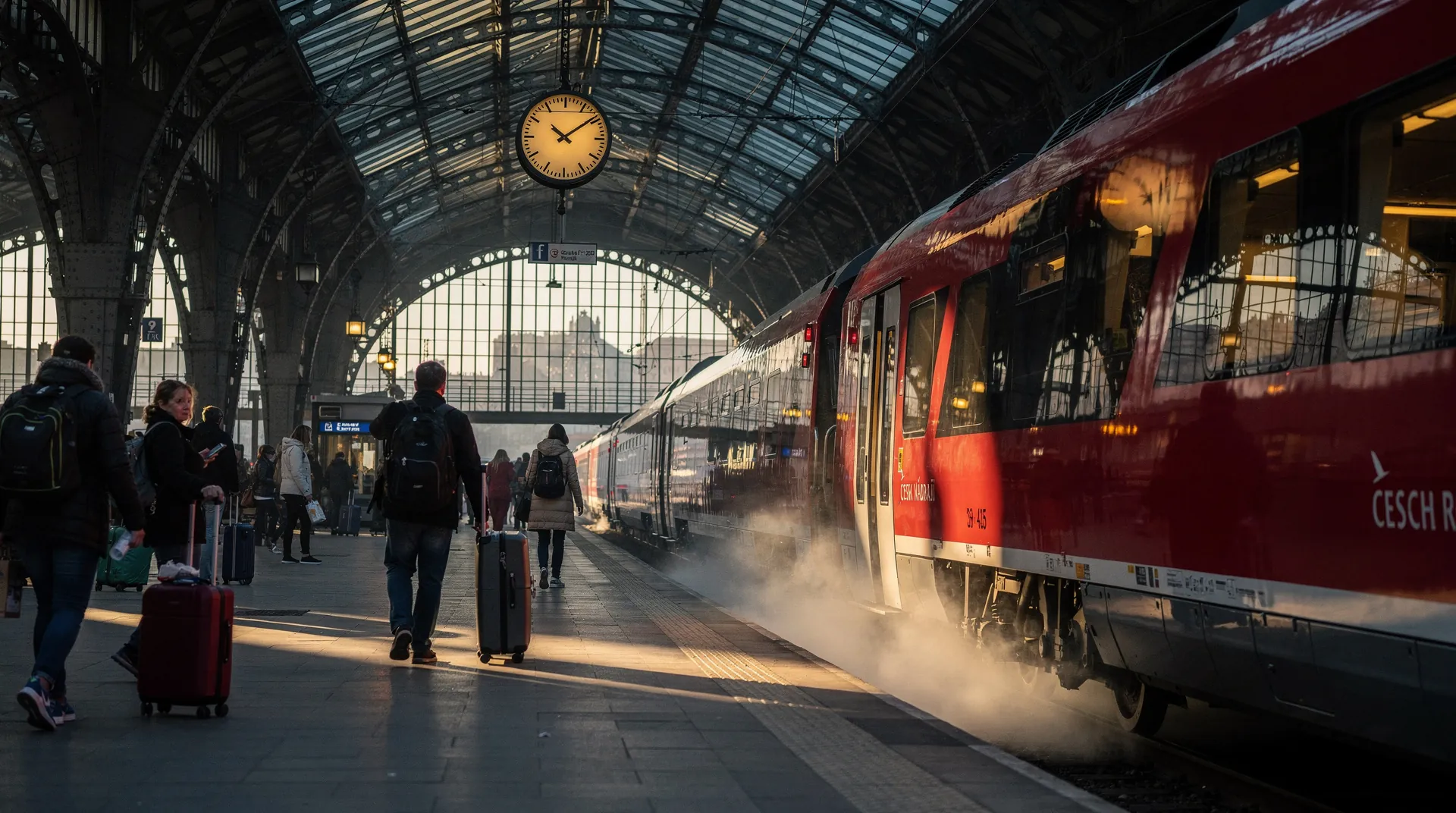
Direct trains from Prague hlavní nádraží to Plzeň hlavní nádraží run frequently (roughly every hour). Journey time: 1h 20min to 1h 35min. Price: about 180–250 CZK one way (€7–10) depending on ticket type and booking time.
The Pilsner Urquell brewery is 15 minutes’ walk from Plzeň main station, or a short tram ride. The brewery is the reason most people come; the old town centre is another 15-minute walk from the brewery.
By bus
RegioJet and Flixbus both run to Plzeň from Prague Florenc. Journey time: 1h 30min–1h 50min. Slightly cheaper than the train but not more convenient. Either works.
By car
Prague to Plzeň via D5 motorway: about 1h 15min. Easy drive with convenient motorway access. Parking near the brewery.
By organised tour
Several operators run Prague-to-Plzeň day trips specifically around the brewery tour. These typically combine the brewery tour, a walk through the town centre, and sometimes the Underground Plzeň tunnels. The advantage: the guide handles the brewing history and context that makes the brewery tour richer.
Guided brewery tours and day trips from Prague to Plzeň:
Hour-by-hour day plan (9:30 a.m. to 5 p.m.)
9:30 a.m. — Arrive at Plzeň hlavní nádraží. Walk 15 minutes northwest along Husova street to the Pilsner Urquell Visitor Centre, or take tram 4 for two stops (10 CZK / €0.40).
10:00 a.m. — Pilsner Urquell Brewery Tour (2 hours). The standard tour departs at 10:00 a.m., 12:30 p.m., and 14:00 in English (check prazdrojvisit.cz for current times). If you’re on the 10:00 a.m. tour, you’ll be first into the cellars and the tasting is fresher. The tour: brewing hall with the copper vessels, historic granary, and sandstone cellars where the beer conditioned in oak barrels until 1993. The unfiltered barrel tasting at the end (approximately 200 ml, golden and unpasteurised) is the payoff. Tour + tasting: ~350 CZK (€14).
12:00 noon — Lunch at Pivnice Prazdroj (within the brewery complex). The brewery’s own restaurant, serving Pilsner Urquell from the brewery tap alongside roast pork, goulash, and smoked meat platters. Around €10–14 (250–350 CZK) per main. This is genuinely the best beer you will drink in Plzeň, served in the best context.
1:00–2:00 p.m. — Walk 15 minutes to the old town. Náměstí Republiky (the main square) is one of the largest in Bohemia. St. Bartholomew’s Cathedral spire (102 metres, the tallest in the Czech Republic) is visible from the brewery. Climb the tower for the view: approximately 100 CZK (€4).
2:00–3:00 p.m. — Underground Plzeň. The entrance is at the tourist information centre on Náměstí Republiky. The 40-minute guided tour (Czech with English audio) takes you through medieval storage passages dug from the 14th century. ~180 CZK (€7). Not claustrophobic — the passages are 2+ metres high. One of the most underrated experiences in Plzeň.
3:00–3:45 p.m. — Great Synagogue (Smetanovy sady, 5 minutes’ walk from the square). The third-largest synagogue in the world, rarely crowded. Moorish interior with Art Nouveau stained glass. ~100 CZK (€4). Worth 30–45 minutes.
4:00 p.m. — Train back to Prague hlavní nádraží (1h 20–35min). Check cd.cz — trains run approximately every hour.
Photography notes
Pilsner Urquell gate and red-brick towers (morning, 9–10 a.m.): The Neo-Romanesque brewery gate on U Prazdroje street is the signature image. Morning light from the east catches the brick facade.
Sandstone cellars during the tour: Dark, high-contrast environment. A wide-aperture lens and high ISO will capture the cellar atmosphere without flash (which disturbs the barrel tasting). The barrel vault arches make excellent frame elements.
St. Bartholomew’s from Náměstí Republiky: The cathedral spire from the square corner, with the Renaissance town hall (1558) in the foreground. Best in afternoon light (west-facing facade of town hall lit 2–5 p.m.).
Great Synagogue interior: The Moorish arches, painted vaulting, and Art Nouveau windows. Available natural light is best — photography without tripod is challenging but achievable.
What to see, realistically, in a day
Pilsner Urquell Brewery Tour (2 hours). The main event. The standard brewery tour runs from the visitor centre, through the 19th-century brewing hall (copper brewing vessels still in use), down into the network of sandstone cellars where the beer lagered for 90 days in wooden barrels until the early 1990s. The tour ends in the cellars with unfiltered, unpasteurised Pilsner Urquell direct from the barrel — significantly different from what you drink in the bottled version. Tour + tasting: around 350 CZK (€14). Book on the brewery’s website (prazdrojvisit.cz) — tours in English run at specific times and sell out in summer.
The Brewery Museum ticket with a glass of beer is a more self-guided option if the main brewery tour is fully booked.
Old Town Square (Náměstí Republiky) and St. Bartholomew’s Cathedral (1 hour). Plzeň’s main square is one of the largest in Bohemia. St. Bartholomew’s Cathedral has the tallest spire in the Czech Republic (102 metres); you can climb it for views. The town hall dates from 1558 and is a good example of Renaissance Czech civic architecture.
Underground Plzeň (1 hour). A network of underground passages dug from the 14th century onwards beneath the old town — originally used for storage, escape routes, and refuge during sieges. Tours run from the tourist information centre on Náměstí Republiky. Around 180 CZK (€7). Interesting for the claustrophobic-tolerant.
Great Synagogue (30–45 minutes). Built in 1892, it’s the third largest synagogue in the world and one of the most impressive pieces of architecture in Plzeň. Often missed by day-trippers. Entry ~100 CZK (€4). Worth it for the Moorish interior alone.
Puppet Museum (45 minutes). Plzeň has one of the country’s best puppet-making traditions. The Museum of Puppets in the old town documents the history of Czech and Slovak puppet theatre with an excellent collection. Around 120 CZK (€5).
Where to eat
Pivnice Prazdroj (within the Pilsner Urquell brewery complex): The brewery’s own restaurant, with beer served straight from the brewery. Traditional Czech food — roast pork, goulash, smoked meat — at reasonable prices given the setting. Around €10–14 (250–350 CZK) per main. The best beer you’ll drink in Plzeň for obvious reasons.
Restaurace NA PARKÁNU (Veleslavínova 4, near the brewery): A historic Czech restaurant in a 19th-century townhouse. Excellent svíčková and game dishes. Around €10–15 (250–375 CZK) per main.
Café/Bistro around Náměstí Republiky: Several good coffee options around the main square for a quick stop between the town sights.
Common mistakes and what we’d do differently
Not booking the brewery tour in advance. English-language tours run at specific times (10:30, 14:00, 16:00 approximately — confirm at prazdrojvisit.cz) and sell out in summer. Book online before you go.
Spending the whole day only in the brewery complex. The Great Synagogue and Underground Plzeň are genuinely good and most people don’t visit them. Allow time.
Leaving without tasting the unfiltered beer. Pilsner Urquell in the barrel is materially different from the bottled version — creamier, more complex, less carbonated. This is the thing that justifies coming here rather than just drinking the bottled version in Prague.
Going purely for the beer if you don’t drink. The brewery tour is engaging even for non-drinkers (the history and the cellars are interesting), but Plzeň’s non-brewery sightseeing is modest. Non-drinkers might prefer Kutná Hora or Český Krumlov as day trips.
Tour vs DIY — which to choose for Plzeň
Book a guided tour if:
- You want the brewing history and context explained by a guide
- You want transport from Prague included
- You’re going with a larger group
Go on your own if:
- You’ve booked the brewery tour directly and are comfortable navigating independently
- You want to include the Great Synagogue and Underground Plzeň at your own pace
- You’re a beer person who wants to choose your own pace in the brewery
Our recommendation: Plzeň is easy independently. Train from Prague main station, 1h 30min, walk to the brewery, book the standard tour, walk to the old town for the synagogue and underground. The Pilsner Urquell brewery tour with tasting is the core of the visit either way.
Add a brewery tour that includes the town walk if you want more context.
The Prague day trip with Pilsner Urquell brewery tour and old town walk is the most complete packaged option — transport from Prague, brewery tour, and a guided walk through the old town in one booking.
Season-specific notes
January–March: The brewery operates year-round. The old town and the Great Synagogue are open. Plzeň in winter is quiet and unhurried — genuinely pleasant if you want the brewery experience without summer crowds.
April–June: Good weather and manageable visitor numbers. The brewery’s English tours book up less quickly than in peak summer. Outdoor seating at the brewery restaurant is open from May.
July–August: Busiest period. The brewery’s English tours can be fully booked by the morning of a popular weekend day. Book online at prazdrojvisit.cz at least a few days ahead.
September–October: Excellent. Fewer tourists, full operation at all sites. The Plzeňský Prazdroj autumn festivals (check the brewery website for specific events) can add atmosphere in October.
Combining with other West Bohemia destinations: Plzeň sits 90 km west of Prague on the main motorway to Germany. If you have a car, you can combine Plzeň with Karlovy Vary in a single day by continuing northwest on Route 6 (additional 100 km, about 1h 15min). This makes for a long day but covers both main West Bohemian destinations at once.
Plzeň by season, at a glance
| Season | Weather | Crowds | Notes |
|---|---|---|---|
| Jan–Mar | cold | quiet, brewery unhurried | good for the brewery without the summer queue |
| Apr–Jun | mild, warming | growing, still manageable | outdoor brewery restaurant seating opens from May |
| Jul–Aug | warm | English tours can book out by morning | reserve online days ahead |
| Sep–Oct | mild, crisp | quiet again | brewery-linked autumn festivals sometimes on |
Frequently asked questions about Plzeň
Do I have to like beer to enjoy a Plzeň day trip?
The brewery tour is interesting for its history and architecture even without drinking. The underground cellars, the Victorian brewing hall, the process — all of it is genuinely fascinating. That said, the climactic moment (unfiltered lager from the barrel) is clearly better experienced by beer drinkers. Non-drinkers might enjoy Plzeň for its other sights but should weight their day trip priorities accordingly.
Is Plzeň the same as Pilsen?
Yes — Pilsen is the German name for Plzeň. Both are used internationally. The beer style “Pilsner” or “Pilsener” takes its name from the city.
What’s the difference between Pilsner Urquell and other Czech beers?
Pilsner Urquell is the original pilsner-style beer — first brewed in 1842. It’s the template for the style. Kozel (brewed near Konopiště), Budvar (from České Budějovice), and Staropramen (Prague) are all Czech lagers but different breweries with different recipes and histories.
Can I visit the Pilsner Urquell brewery without a tour?
The brewery museum can be visited independently, but the cellar tour (the main draw) is only available as part of the guided tour experience. Book at prazdrojvisit.cz.
How long is the Pilsner Urquell brewery tour?
Approximately 1 hour 30 minutes to 2 hours, including the cellar tasting. Tours run at set times in Czech and English.
Is Plzeň worth visiting if I’ve already been to a Czech brewery in Prague?
The Prague brewery tours (Staropramen, Budvar pop-ups) are decent, but Pilsner Urquell is a different scale — 180-year-old cellars, working Victorian brewing equipment, and the unfiltered barrel beer. If you’re interested in Czech beer seriously, Plzeň is the pilgrimage.
Is the brewery walkable from Plzeň main train station?
Yes — approximately 15 minutes on foot (1 km) heading northwest along Husova street. Or tram 4 from the station (Hlavní nádraží stop) to the brewery (U Prazdroje stop), about 5 minutes. The old town centre is another 15-minute walk east from the brewery.
Are children allowed on the Pilsner Urquell brewery tour?
Children are allowed on the tour, but obviously cannot participate in the beer tasting at the end. The tour itself — the brewing hall with its copper vessels, the sandstone cellars — is genuinely interesting for older children (10+) regardless of the tasting. Some tour operators note an age restriction of 12+; check the specific booking terms.
Is there a private brewery tour option?
Yes — the private Plzeň and Pilsner Urquell brewery tour from Prague provides dedicated transport and a private guide for the brewery and town. Worth it for groups or anyone who wants to control the pace of the cellar tasting section.
Practical info
- Distance from Prague: 90 km west
- Travel time: 1h 20–35min by train from Prague hlavní nádraží
- Pilsner Urquell brewery tour + tasting: ~350 CZK (€14)
- Brewery Museum entry: ~180 CZK (€7) with a glass of beer
- Underground Plzeň: ~180 CZK (€7)
- Great Synagogue entry: ~100 CZK (€4)
- Brewery tour booking: prazdrojvisit.cz
- Best time: Year-round; book brewery tours in advance April–September