Why Prague works for remote work
Prague has been on the nomad radar for about a decade, and for good reason. The cost of living is 30–40% below Berlin, Vienna, or Amsterdam. The café culture — the kavárna tradition — is genuinely conducive to working: long opening hours, good coffee, fast WiFi, and a social norm of lingering. The coworking infrastructure has expanded significantly since 2020. Vinohrady and Žižkov in particular have become recognisably expat/nomad neighbourhoods.
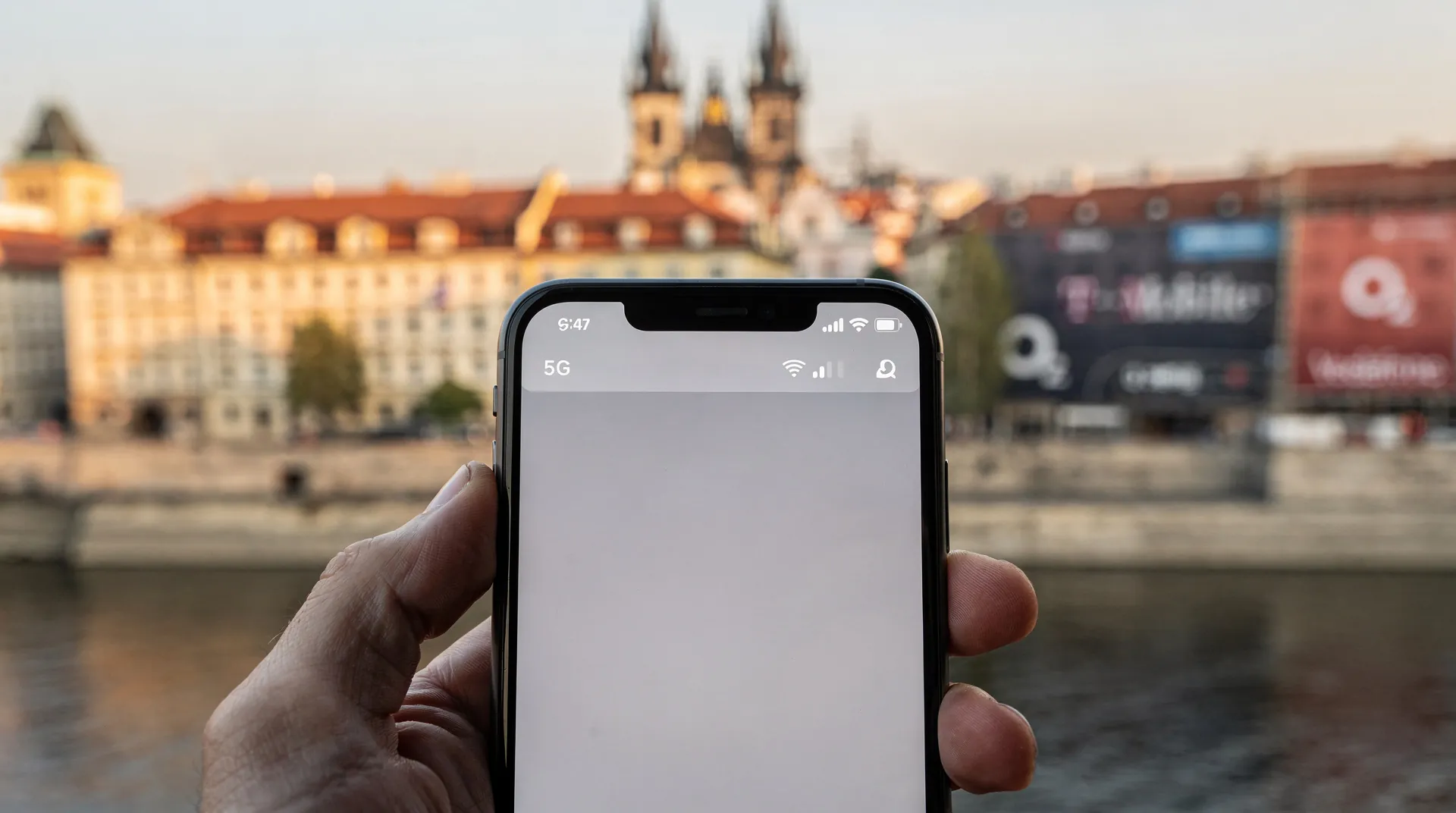
The internet infrastructure is excellent. Czech broadband penetration is high; LTE coverage in the city is comprehensive. A SIM from Vodafone CZ, T-Mobile CZ, or O2 (available from €10 / 250 CZK for a 30-day data plan at any Kaufland supermarket or telecoms shop) gives reliable 4G/5G throughout the city. Most cafés have functional WiFi, though for video call reliability a coworking space or a pocket SIM hotspot is recommended.
The Schengen 90/180-day rule applies to most non-EU nationals. EU citizens can stay indefinitely. For longer stays (3–12 months), the Czech Republic offers the Živnostenský list (trade licence) as the most accessible route — used by many freelancers and self-employed nomads. This is a tax registration, not a standard “nomad visa,” and requires working with a local accountant. The Prague expat community on Facebook groups has extensive first-person guides to the process. For getting a local number and data plan sorted on day one, see our SIM and eSIM guide.
At a glance
| Where to base yourself | Vinohrady (default), Žižkov (cheaper/edgier), or Holešovice (bigger apartments) — see the Vinohrady neighbourhood guide |
| Comfortable monthly budget | Around €1800–2500 all-in (apartment, food, coworking, transport) |
| Visa-free stay | 90 days in any 180-day period for non-EU citizens (Schengen rule) |
| Getting a SIM | Vodafone/T-Mobile/O2 from ~€10 for 30 days — see SIM and eSIM |
| Best time to arrive | Spring or early autumn, both for weather and for the farmers’-market rhythm of the city |
Coworking and work cafés
Node5 (Anděl, Smíchov) — one of Prague’s most established coworking spaces, originally associated with the tech and startup community. Open plan, private offices, meeting rooms. Metro B, Anděl station. Monthly memberships from €180 / 4500 CZK.
Spaces Prague (Wenceslas Square area and several other locations) — international coworking chain with hot-desking, dedicated desks, and day passes. Central locations, good amenities. Day pass around €20–25 / 500–625 CZK.
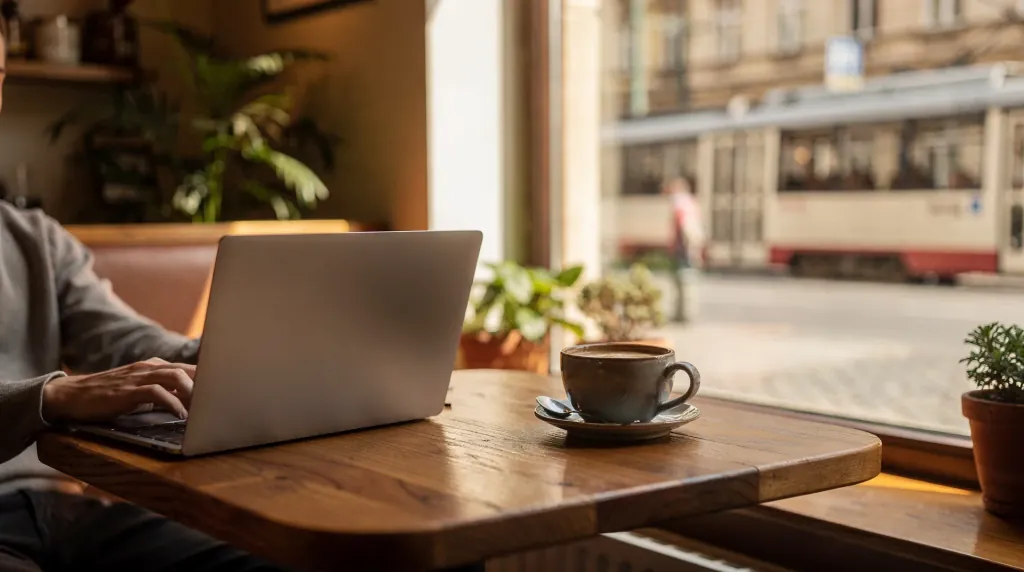
Cafe Bezva (Vinohrady) — a café specifically set up for working: tables designed for laptops, power sockets at each seat, fast WiFi, long opening hours. Popular with local freelancers and nomads. Good coffee.
Kavárna Neklid (Žižkov) — another working-friendly café, smaller and quieter. Good oat flat whites.
Café Louvre (Nové Město) — the historic grand café works surprisingly well for longer sessions: spacious, good WiFi, reliable service, no pressure to turn tables. Power sockets near the walls.
Impact Hub Praha (Holešovice, Náměstí Kinských area) — impact-focused coworking with a community of social entrepreneurs and international freelancers. Strong events calendar.
Top picks for nomads in Prague
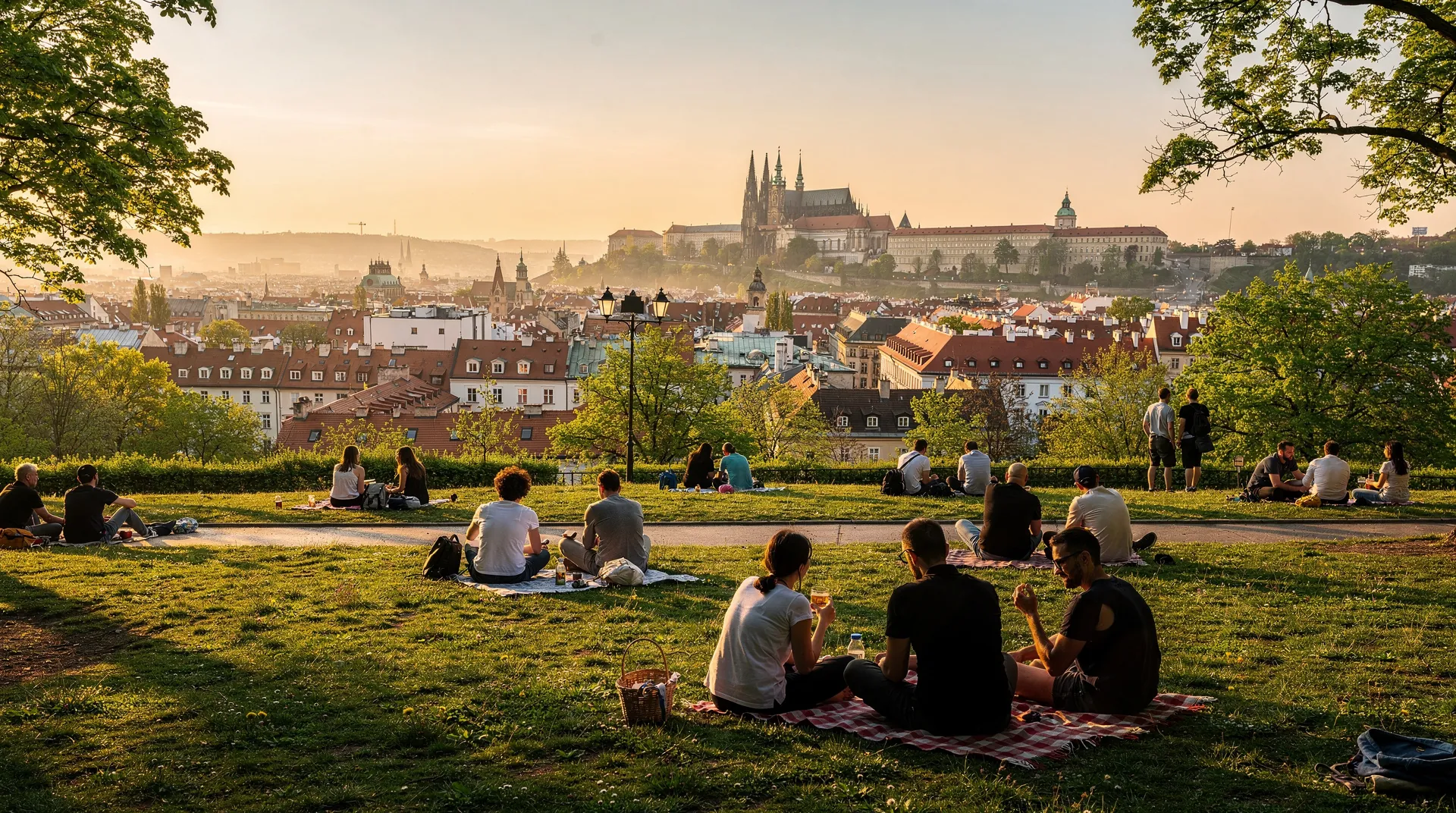
Vinohrady residential life. Vinohrady is the neighbourhood for nomads who want to feel like a resident rather than a tourist. Grocery stores, farmers’ market at Tylovo náměstí on Saturdays, independent coffee shops on every corner, mid-range apartments on Airbnb and Booking.com from €800–1200 / month (20,000–30,000 CZK). The metro is 3 stops from Old Town.
E-bike city tour. When work is done, an e-bike tour (t437079) is an excellent way to understand Prague’s geography as a resident rather than a visitor — the Czech guide covers the parks, viewpoints, and neighbourhoods that don’t appear in standard tourist itineraries.
Alternative Prague walking tour. The alternative tour (t42172) is the best single activity for a nomad new to Prague — it explains the city’s post-communist social geography, the neighbourhoods, and the cultural context in a way that makes the city legible for longer-term living.
Czech language basics. Czech is genuinely difficult (complex case system, alien phonology) — don’t expect to be functional in it within a few weeks. Most Praguers under 40 speak good English. The effort of learning 20–30 Czech phrases (greetings, please/thank you, ordering food) is noticed and appreciated.
Day trips as decompression. Kutná Hora by train is 1 hour and completely changes your mental state after a heavy work week. Bohemian Switzerland national park is 2 hours and has Europe-class sandstone rock formations. Both are manageable as standalone day trips.
Where to stay (for stays of 1 week to 3 months)
Vinohrady is the default for 2-week+ stays. Mid-range apartments, good residential infrastructure, metro line A to everywhere. Budget €800–1500 / month for a furnished 1-bedroom.
Žižkov is adjacent, slightly cheaper, edgier atmosphere. Good for nomads who want local texture. The TV Tower area has affordable apartments and independent coffee bars.
Holešovice suits nomads who want a bigger apartment at lower cost, proximity to the river, and access to the farmers’ market and creative-class infrastructure. Tram-dependent but trams are reliable.
Nusle/Pankrác is a practical option for longer stays at genuinely low cost (€600–900 / month for a 1-bedroom) with metro line C access. Not atmospheric, but functional and quiet.
Where to eat and drink
Prague’s food scene for working residents is vastly better than its tourist reputation suggests. The Old Town Square restaurant trap misleads many first-timers.
Manifesto Market (seasonal, Holešovice/Florenc) — the best street food market in Prague. 20+ stalls, rotating food vendors, craft beer. Open April–October, weekdays and weekends.
Naše Maso (Old Town) — a Czech butcher and deli with excellent sandwiches and ready-to-eat items. One of the best lunch spots in the city for around €5 / 125 CZK.
Lokál (multiple locations) — reliable, affordable, proper Czech food. The Žižkov branch (Lokál U Bílé kuželky) is the least touristy.
Eska (Žižkov) — destination-quality restaurant without the price of equivalent places in Berlin or Amsterdam. Worth the occasional splurge for a dinner after a successful week.
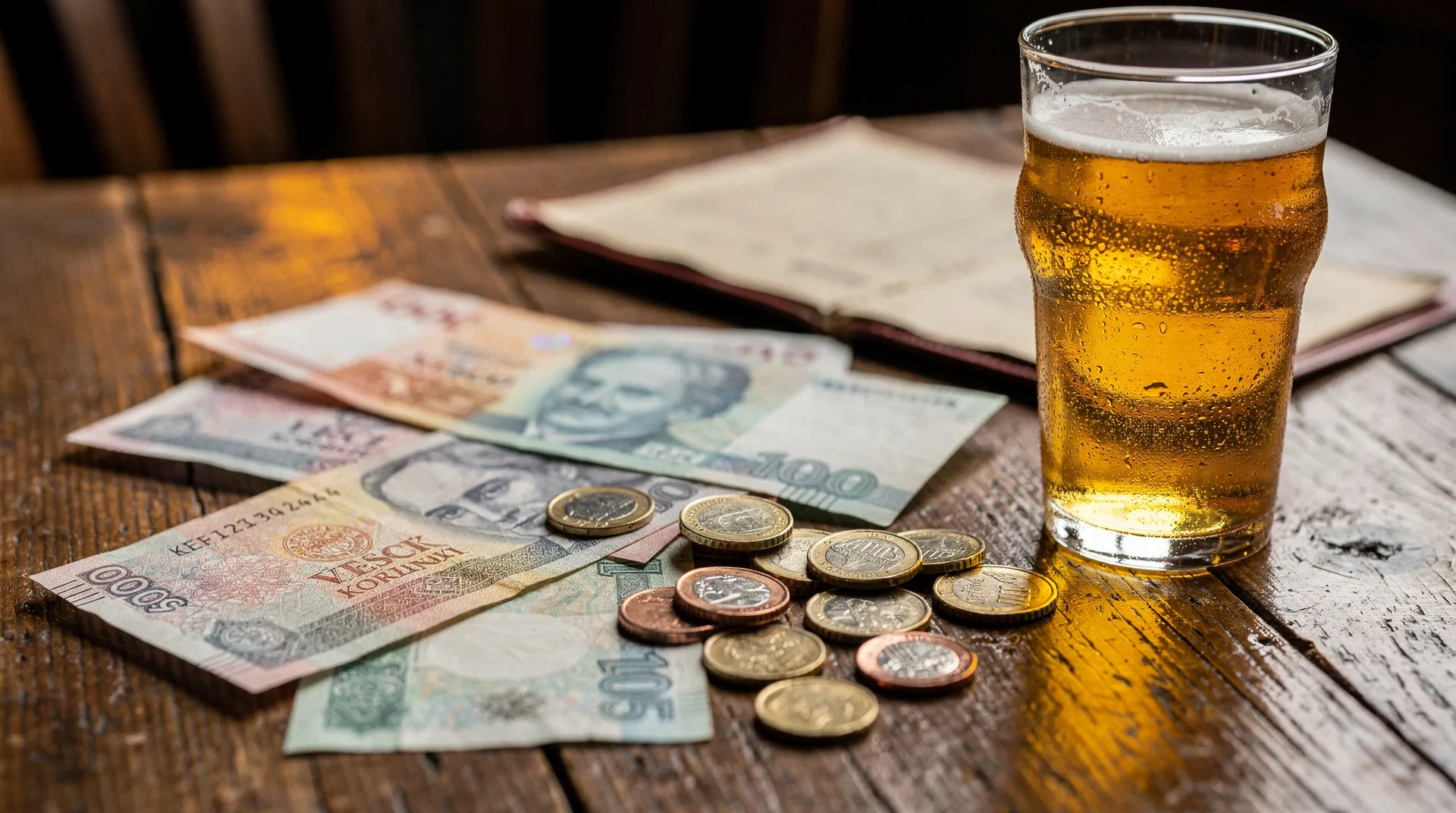
Czechia as a beer culture. Prague has the cheapest beer in the EU in mid-range venues (€1.50–2 / 40–50 CZK for a half-litre in a pub). The craft beer scene has expanded: Zichovec, Raven, Matuška, and Pivovar Únětice are the breweries worth seeking.
What to watch out for
Schengen compliance. Non-EU citizens: the 90/180 rule is enforced. Czech border authorities do check. If you plan to stay 3+ months, sort your trade licence (živnostenský list) before your 90 days are up, or plan a border run (drive to Austria or Slovakia for a day). This is not legal advice — consult an immigration specialist.
Apartment scams on Facebook. Apartment rental on Prague Facebook groups (Prague Expat Housing, etc.) has a scam problem — landlords asking for deposits before viewing. Use Bezrealitky.cz or Sreality.cz (Czech property portals) or verified Airbnb for shorter stays.
Tax obligations. Working remotely from Prague does not automatically make you a Czech tax resident, but if you stay 183+ days in a calendar year you may acquire Czech tax obligations. Get professional advice early.
Czech keyboard layouts. Czech keyboards have different special character placement. Buy an English-layout keyboard locally or bring your own.
Day-by-day sample (first week as a nomad)
Day 1 — Orientation Walk the historic centre to establish geography. Catch the alternative Prague tour (t42172) in the afternoon. Set up SIM card (Vodafone or O2 shop on Wenceslas Square or in any Kaufland).
Day 2–4 — Work from cafés, discover neighbourhoods Test-drive two or three working cafés (Cafe Bezva, Kavárna Neklid, Café Louvre). Walk Vinohrady in an evening. Explore Holešovice on a weekend morning (farmers’ market on Saturday at Holešovice market hall).
Day 5 — Day trip Train to Kutná Hora (České dráhy, direct from Hlavní nádraží, 1 hour). St. Barbora’s Cathedral and Sedlec Ossuary. Train back in the afternoon. Dinner at Eska.
Day 6–7 — Settle into a rhythm Morning coworking at Impact Hub or Node5. Afternoon: walk or e-bike tour to explore more parks and viewpoints. Evening: beer at a local hospoda (pub) rather than a tourist bar.
Questions digital nomads in Prague actually ask
How fast is the internet in Prague cafés?
Most cafés with WiFi offer 20–100 Mbps symmetric connections sufficient for video calls. For critical calls, use a personal SIM hotspot (Czech 4G is fast and consistent) or a coworking space where bandwidth is dedicated.
What does life cost per month in Prague?
A comfortable nomad budget: apartment €900–1200, food/drink €500–700, transport €30 (monthly pass), coworking €150–200, entertainment/misc €200. Total: €1800–2300 / month. Significantly less than Berlin (€3000–4000 equivalent) or London.
Is there a Prague nomad community?
Yes — the Facebook group “Digital Nomads Prague” and “Prague Expats” are active. Nomad events happen at coworking spaces including Impact Hub and Node5. The Nomad List community has Prague highly rated.
What language is everything in?
Czech. Most city-centre services, restaurants, and shops handle English. Government offices, some utilities, and older businesses may not. Google Translate with the camera function is useful for menus and notices.
2026 monthly cost of living for Prague nomads
Detailed breakdown for a comfortable solo nomad life in Vinohrady or Žižkov:
| Category | Budget | Comfortable | Notes |
|---|---|---|---|
| Apartment (furnished, 1BR) | €700–900 / 17,500–22,500 CZK | €950–1300 / 23,750–32,500 CZK | Vinohrady higher; Žižkov/Holešovice lower |
| Food and drink | €350–500 | €500–750 | Local pubs vs mid-range restaurants |
| Transport monthly pass | €28 / 700 CZK | €28 / 700 CZK | DPP monthly pass, all zones |
| Coworking or café WiFi | €100–150 | €180–250 | Node5 / Impact Hub monthly membership |
| Entertainment and misc | €150–200 | €250–400 | Concerts, day trips, beer |
| Health insurance | €80–120 | €120–200 | Travel/expat insurance required |
Total comfortable monthly budget: €1800–2500 / 45,000–62,500 CZK. This is 35–50% below Berlin (€2800–3500) and 50–60% below London (€4000–5000) for equivalent lifestyle quality.
Recommended first week as a nomad
Day 1 — Orientation and city geography
Morning: Alternative Prague walking tour (t42172) — best first-day tour for understanding the city’s social geography. Covers Žižkov and Vinohrady from a post-communist perspective that explains why neighbourhoods are the way they are. Afternoon: Walk Vinohrady independently — Náměstí Míru, Mánesova, Riegrovy sady. Evening: Beer at a Žižkov hospoda (Pivovarský klub near the TV Tower, or any pub on Seifertova).
Day 2–3 — Test-drive coworking and cafés
Morning: Node5 in Smíchov for a day pass (€20–25 / 500–625 CZK) — the established tech coworking. Afternoon: Cafe Bezva in Vinohrady for the late shift (power sockets, good WiFi, long opening hours). Evening: Manifesto Market if open (seasonal, April–October) or a Karlín restaurant (Eska if budget allows, Bistro 8 otherwise).
Day 4 — Segway city tour for geography
Segway Sightseeing Tour (t171330) — a live-guided segway tour of Prague’s main districts, 2 hours. Surprisingly effective as a city orientation tool — you understand how the neighbourhoods connect spatially in a way that walking or metro travel doesn’t give you. Budget: ~€25–30 / 625–750 CZK.
Day 5 — Day trip decompression
Train to Kutná Hora from Hlavní nádraží (1 hour, €4–5 / 100–125 CZK return). St Barbora’s Cathedral (excellent Gothic), Sedlec Ossuary (famous Bone Church, €4 / 100 CZK entry). Lunch in Kutná Hora town centre. Back by 17:00. Dinner at Eska or a Vinohrady restaurant.
Days 6–7 — Find your rhythm
Morning coworking at Impact Hub Holešovice (strong events calendar, social entrepreneur community). Afternoon: 7 Viewpoints E-Bike Tour (t15061) — covers Letná, Vinohrady panoramas, and the river parks; the best two hours for understanding Prague’s topography as a future resident. Evening: Farmers’ market at Holešovice (Saturday) or Jiřák (Vinohrady, Saturday and Wednesday).
Three specific coworking spaces with addresses
Node5 — Jankovcova 1037/49, Holešovice-Holešovice (technically Holešovice-Bubny). Metro: Nádraží Holešovice (C line), then 10 minutes on foot or tram 6 to Dělnická stop. Monthly membership from €180 / 4500 CZK, day pass €20 / 500 CZK. Strong tech and startup community. 24/7 access on monthly plans. The original Prague coworking.
Impact Hub Praha — Drtinova 557/10, Smíchov. Tram: Švandovo divadlo stop (trams 4, 7, 10). Monthly membership from €150 / 3750 CZK. Impact-focused community: social entrepreneurs, sustainability startups, international freelancers. Strong events programme, regular themed meetups. Good for nomads who want more than a desk.
Cafe Bezva — Mánesova 78, Vinohrady. Metro: Náměstí Míru (A line), then 3 minutes on foot. No membership — pay per coffee and snack. Power sockets at most seats, fast WiFi (80+ Mbps symmetric on test days). Opens 8:00, closes 21:00 on weekdays. The default Vinohrady working café for resident nomads. Fills up by 10am — arrive early or take a table before 9:30.
What digital nomads often get wrong
Assuming Czech keyboard layout doesn’t matter. Czech keyboards use a different layout for special characters. If you’re working in a coworking space or café with a loaner keyboard, you’ll lose time. Bring your own keyboard or set Czech keyboard as a secondary input layout on your device and learn the critical shortcuts.
Treating Schengen 90 days as informal. Czech border authorities do occasionally check entry and exit dates. A day trip to Vienna or Bratislava before day 90 resets the clock but creates a pattern that immigration officers are aware of. If you plan to stay 6+ months, get proper legal advice on the živnostenský list process — it is not as complex as it sounds but does require a local address and a bank account.
Missing the best food markets. The farmers’ markets at Jiřák (Náměstí Jiřího z Poděbrad, Wednesday and Saturday morning) and Holešovice market hall (Saturday) are genuinely excellent for groceries. Buying direct from the producers saves 20–30% on organic produce versus supermarkets and feeds you better.
A handful of Czech basics beyond “dobrý den” and “děkuji” go a long way at markets and pubs — our Czech language basics guide covers the phrases actually worth learning.
Expanded nomad FAQ
Can I use my home country’s driving licence to rent a bike or scooter in Prague?
Most EU licences work directly; non-EU visitors typically need an International Driving Permit alongside their home licence for car or scooter rental, though city e-bike and scooter-share apps usually only require a smartphone and card, not a licence check.
What is the fastest internet coworking in Prague?
Node5 and Impact Hub both regularly test at 200–500 Mbps symmetric. Individual café speeds vary: Cafe Bezva and Kavárna Neklid both typically test at 50–150 Mbps, sufficient for video calls. For 4K video uploading or large file transfers, a dedicated coworking space is more reliable.
Is there a co-living option in Prague?
Yes, though the market is smaller than in Berlin or Lisbon. Established co-living operators (Habyt, Quarters, and local operators) have Prague listings. Prices from €900–1400 / 22,500–35,000 CZK per month all-inclusive for a private room with shared common spaces. Useful for a first month before finding an independent apartment.
How do I find long-term accommodation reliably?
For 1–3 months: Airbnb (negotiate a monthly rate, typically 20–30% below the nightly rate calculation) or Booking.com with monthly options. For 3+ months: Bezrealitky.cz and Sreality.cz are the Czech property portals used by landlords directly. The Facebook groups “Prague Expat Housing” and “Prague Apartments and Rooms” are active but require vigilance against scams — never pay a deposit without viewing in person.
What visa do I need for a 6-month stay?
EU/EEA citizens: no visa, no registration required (up to 90 days free movement, and beyond 90 days you can register as an EU resident). Non-EU: 90 days visa-free in Schengen, then you need a long-stay visa or the živnostenský list (trade licence). The Czech Foreign Police office manages registrations. Get local legal advice; the rules are navigable but specific.
Prague Segway Sightseeing Live-Guided Tour — 2-hour live-guided segway tour; excellent spatial orientation tool for new arrivals who want to understand how Prague’s neighbourhoods connect.
7 Best Viewpoints of Prague E-Bike Tour — covers Letná, Vinohrady, and the riverfront parks; the best 2-hour investment for understanding the city’s geography as a new resident.
Book experiences to understand your new city
Alternative Prague walking tour — best first-day tour for someone planning to live here, not just visit.
Bike or e-bike city tour with a local guide — covers the parks, viewpoints, and residential neighbourhoods at speed.
Prague hidden gems tour with local guide — a good complement to the alternative tour, covering the spots that don’t appear in guidebooks.