What Josefov holds and why it matters
Josefov is the smallest of Prague’s historical districts — four city blocks between Staroměstské náměstí and the river, named after Emperor Joseph II who granted Jews civic rights in 1781. It holds more concentrated history than anywhere else in the city, and arguably in Central Europe outside of Warsaw.
The Jewish community in Prague dates to the 10th century. By the 16th century, under the protection of Rudolf II, this was the intellectual center of European Jewry. Rabbi Loew ben Bezalel — the Maharal, creator of the Golem legend — preached here. The cemetery in use from the 15th to 18th century contains somewhere between 100,000 and 200,000 buried dead, stacked up to twelve deep because the community had no space to expand.
In the late 19th century, the slums of the ghetto were demolished and replaced with today’s Art Nouveau apartment buildings. The new owners moved in. The population was entirely Jewish only in legend by 1939. The Nazi administration, with dark irony, chose to preserve the synagogues and the collection of Jewish artifacts — assembling, in Hitler’s words, a “museum of an extinct race.” By the end of the war, 80,000 Czech and Moravian Jews had been murdered. The collection survived. The people largely did not.
That context is what you carry around Josefov. It’s not light tourism.
| At a glance | |
|---|---|
| Where | Four city blocks between Old Town Square and the river, Prague 1 |
| Cost to visit | Single Jewish Museum ticket €24 (600 CZK), Old-New Synagogue included |
| Time needed | 2–3 hours for the museum circuit; a half-day with the Kafka Museum added |
| Getting there | Metro A to Staroměstská, or walk 3 minutes from Old Town Square |
| Best time | Right at opening for the cemetery; avoid midday in June–August when it’s busiest |
A walk through Josefov
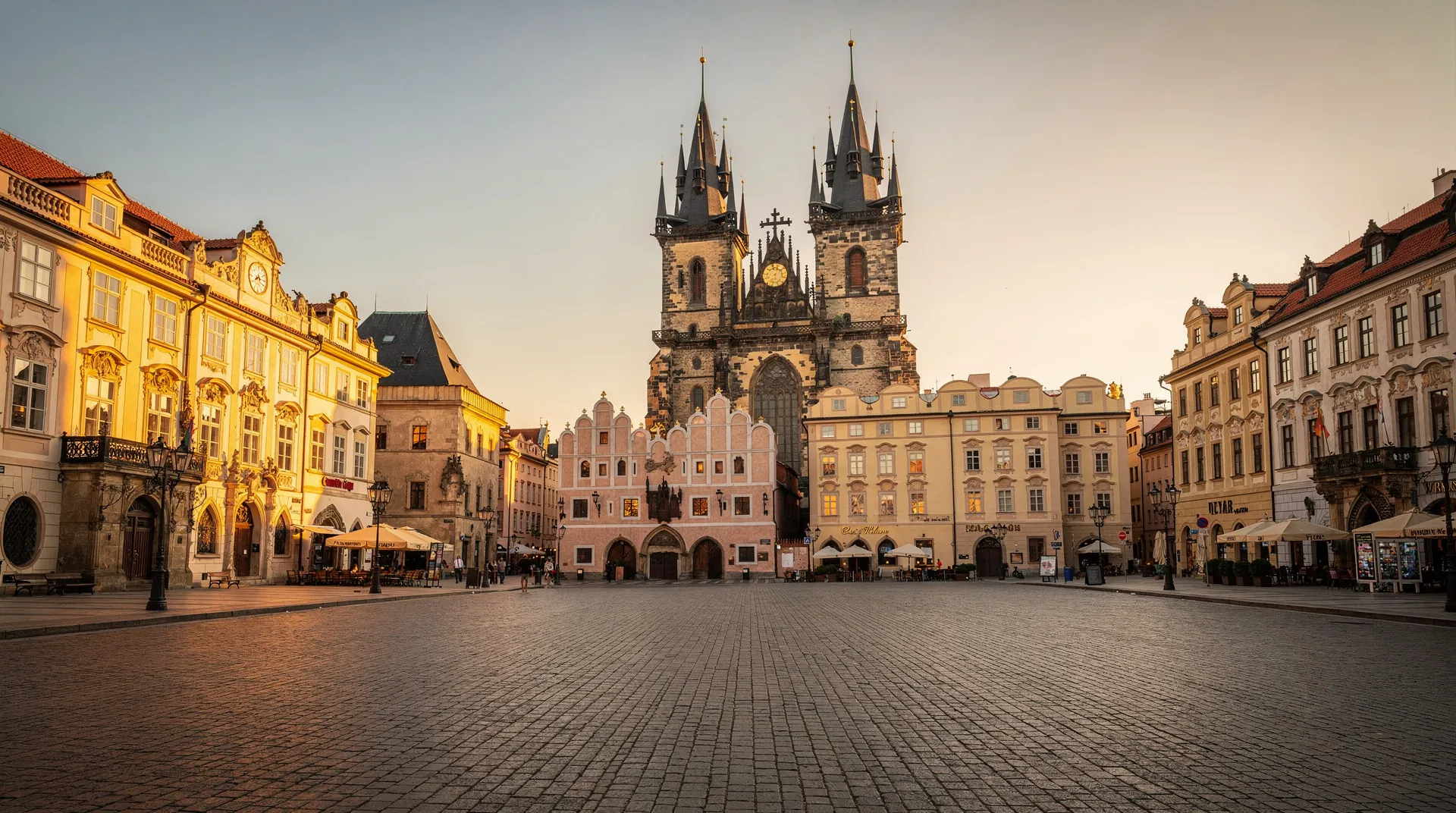
The Jewish Museum operates all the main sites as a combined ticket: for context on how Josefov sits among Prague’s other historic districts, see how it compares to Staré Město and Hradčany below.
How Josefov compares to nearby neighborhoods
| Neighborhood | Vibe | Best for | Distance to Old Town Square |
|---|---|---|---|
| Josefov | Concentrated history, luxury shopping | Jewish heritage, history-focused visitors | Within it |
| Staré Město | Busy, historic core | First-time sightseeing | Adjacent |
| Hradčany | Hilltop, monumental | Castle depth, photography | 30–35 min |
| Vinohrady | Residential, café-dense | Food, quieter evenings | 25–30 min |
Start at the Staronová synagoga (Old-New Synagogue) on Červená — the oldest functioning synagogue in Europe, built around 1270, still in use for services today. The Gothic brick exterior and interior with its distinctive ribbed vaulting are unlike any other synagogue in the world. This is the one building in Josefov that justifies independent reverence regardless of historical or religious context.
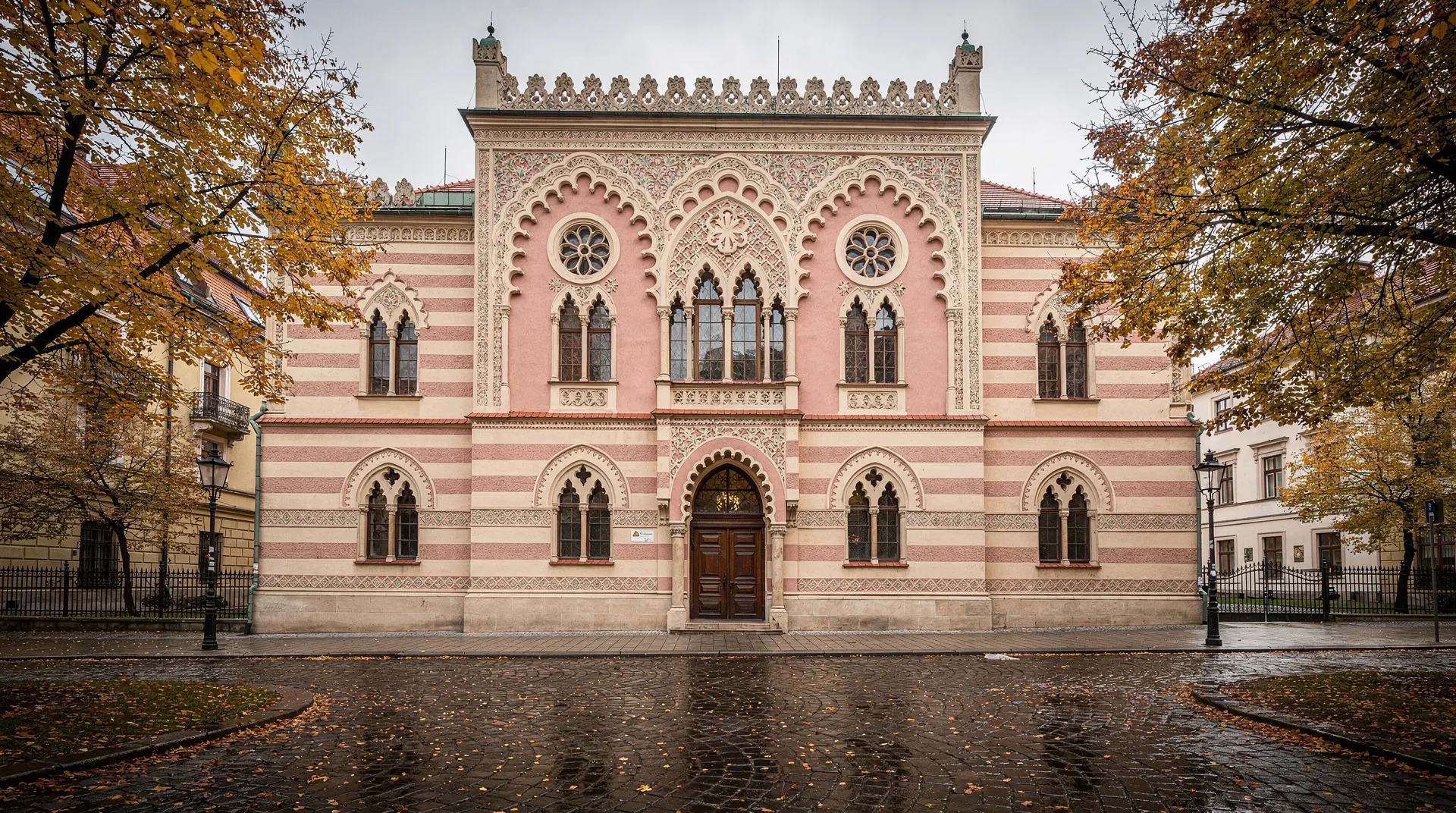
Nearby, the Španělská synagoga (Spanish Synagogue) is visually stunning — a Moorish Revival interior with gilded arabesques covering every surface. It now houses an exhibition on Czech-Jewish history from the late 18th century onward.
The Starý Židovský hřbitov (Old Jewish Cemetery) is the most visited site and the most affecting. Layers of gravestones, some dating to the 15th century, jostle against each other — tilted, sinking, pressed together. In summer the crowd of visitors can feel overwhelming. Arrive right at opening time.
The Pinkasova synagoga (Pinkas Synagogue) is perhaps the most emotionally direct memorial in the city. Its walls are inscribed with the names, birth dates, and dates of deportation of 77,297 Bohemian and Moravian Jews murdered in the Holocaust. The names cover floor to ceiling. Allow time for this.
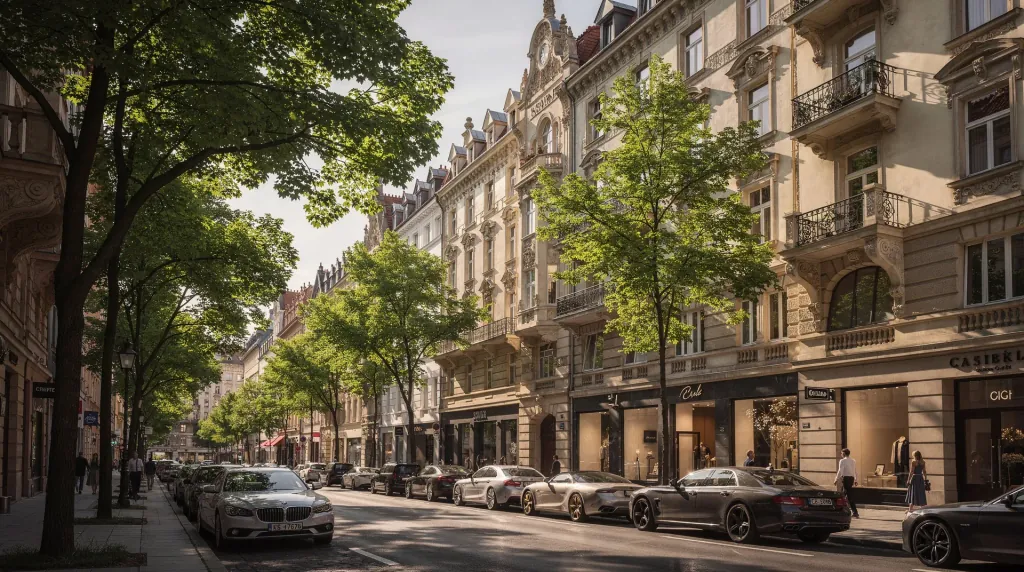
After the museum circuit, walk north on Pařížská — Prague’s luxury shopping boulevard, all Hermès and Bulgari storefronts in Art Nouveau buildings. It’s jarring after the cemetery, but it’s also part of Josefov’s contemporary character. The avenue leads directly to the river and the Nusle Bridge view.
Prague Jewish Quarter walking tour with synagogue admission tickets (2 h, from €20)Where to eat
Quick lunch
Options within Josefov itself are limited and mostly tourist-oriented. King Solomon Restaurant on Široká is the neighborhood’s kosher restaurant — proper kosher certification, generous portions, mains €15–22 (375–550 CZK). Café Franz Kafka next to the Kafka Museum on Cihelná has good sandwiches and coffee for around €6–9 (150–225 CZK), with views of the river.
Dinner
Josefov lacks great dinner options within its four blocks. The nearest good table is either in Staré Město (La Degustation, five minutes south) or in the increasingly interesting restaurant cluster along Dlouhá street, which borders Josefov to the east. Lokál Dlouhááá remains the benchmark for Czech pub food at honest prices. Červená Trnka on Dlouhá is a newer wine bar with small plates sourced from Czech producers — one of the better evenings you can spend in this part of the city.
Cafes and bakeries
Café de Paris on Malé náměstí (just outside Josefov on the Staré Město side) is an old favorite for coffee and pastry in a classic Central European setting. Mistral Café on Valentinská is the neighborhood’s best café for people-watching, with a terrace that faces one of the quieter lanes between the synagogues and the Old Town Square.
Where to drink
Josefov has almost no bars of its own — it’s a museum neighborhood in the evenings. Head to Hemingway Bar (eight minutes on foot) for serious cocktails, or to Lokál Dlouhááá for Czech beer in a proper pub setting. If you want wine and Josefov’s immediate proximity, Červená Trnka on Dlouhá is the nearest option worth entering.
Where to stay
Very few accommodation options exist within Josefov proper, and those that do are at the luxury end — the neighborhood’s tiny footprint and its heritage status mean there’s no mass-market hotel development. The Four Seasons Prague sits at the edge of the neighborhood on the river with a direct view of Charles Bridge. InterContinental Prague is on Náměstí Curieových, just north of the Jewish Museum. Both are excellent and expensive. For most travelers, staying in adjacent Staré Město and visiting Josefov on foot is the practical approach.
Getting here and around
Staroměstská metro (A/green line) is a five-minute walk from the cemetery entrance. The neighborhood is entirely walkable from Old Town Square — it shares its southern boundary with Staroměstské náměstí. No trams run through Josefov itself; the nearest tram stops are on the riverfront (Právnická fakulta) and on Náměstí Jana Palacha.
Common misses in Josefov
The Maisel Synagogue is often the least-attended of the Jewish Museum sites, yet its collection of Jewish ceremonial objects — silver Torah shields, spice boxes, Chanukah menorahs — from the 16th century onward is quietly extraordinary.
The Franz Kafka Memorial on Dušní, a strange bronze sculpture of a headless man carrying a smaller man on his shoulders, is a David Černý piece that most visitors don’t connect to Josefov’s Kafka associations. Kafka was born 100 meters from the Old-New Synagogue.
Pařížská at dusk is a different experience from the same street at noon — the luxury storefronts are lit, the tourists have thinned, and the Art Nouveau building facades catch the evening light in a way that makes the street one of the more atmospheric walks in Prague, regardless of whether you’re shopping.
Synagogues and Jewish Quarter private walking tour (2 h, from €55)Frequently asked questions about Josefov
Do I need to book the Jewish Museum in advance?
Yes, especially in summer (June–August). Entry slots for the Old Jewish Cemetery in particular sell out several days ahead. Book at jewishmuseum.cz. The Old-New Synagogue is included in the same single ticket; it’s open for visits outside of service hours.
Is the Jewish Museum appropriate for children?
The Pinkas Synagogue — with its walls of names of murder victims — is heavy for young children. The cemetery and the older synagogues are manageable at almost any age. Use your judgment: this is a site of profound historical tragedy and it’s presented as such.
What is the Golem legend?
Rabbi Loew ben Bezalel, who served the Prague community in the late 16th century, is associated with the legend of the Golem — a figure of clay brought to life by inscribing the Hebrew word for truth (emet) on its forehead, created to protect the ghetto. The legend has had enormous influence in literature and culture. Whether you visit Josefov through a religious, historical, or literary lens, the story appears everywhere.
Is Josefov worth the ticket price?
For anyone interested in Jewish history, European history, or the Holocaust — without question. The single ticket at €24 (600 CZK) gives you six synagogues and the cemetery, which is a substantial amount for the price. If you have no particular interest in the subject, you can see the cemetery from outside the fence for free, which gives you the visual without the context.
Where was Franz Kafka born?
Kafka was born on July 3, 1883, at the corner of Maiselova and Kaprova, just at the edge of what is now Josefov — the building is marked with a memorial plaque and has a small museum (the Franz Kafka Museum proper is across the river in Malá Strana). His family home was later demolished; the memorial is all that remains.
How do I get from Josefov to the castle?
The most atmospheric route: walk across Old Town Square, down Mostecká, across Charles Bridge, and up Nerudova. About 35–40 minutes on foot. Alternatively, take the A-line metro two stops from Staroměstská to Malostranská, then walk up or take tram 22 to Pražský hrad.
Is Josefov a good place to stay?
Only a handful of hotels sit within Josefov’s tiny footprint, mostly at the luxury end. For most budgets, staying in adjacent Staré Město and walking into Josefov is more practical and gives access to a much wider range of restaurants in the evening.
What should I see if I only have one hour in Josefov?
Prioritize the Old-New Synagogue and the Pinkas Synagogue’s memorial wall — these two sites carry the most historical weight in the shortest visit. If you have more time, the full circuit and a walk down Pařížská toward the river add real depth; see the Jewish Quarter guide for the complete site list.
Full day in Josefov: 9am to 10pm
9:00 — Arrive at the Jewish Museum entrance on Maiselova as soon as it opens (book tickets online in advance — summer slots sell out several days ahead, at jewishmuseum.cz). Start with the Staronová synagoga (Old-New Synagogue, included in the single ticket) — the oldest functioning synagogue in Europe, Gothic brick, 1270. Allow 30 minutes here. 10:00 — Pinkasova synagoga (Pinkas Synagogue) — walls inscribed floor-to-ceiling with the names and deportation dates of 77,297 Czech and Moravian Holocaust victims.
Allow 45 minutes. This is the most emotionally direct memorial in the city. 11:00 — Starý Židovský hřbitov (Old Jewish Cemetery) — arrive now, as it’s less crowded than midday. The 12 layers of burials with tombstones pressing against each other across 500 years are unlike anything else in Europe. 12:00 — Španělská synagoga (Spanish Synagogue) — the Moorish Revival interior with gilded arabesques is visually extraordinary and houses the Jewish history exhibition.
13:00 — Lunch at King Solomon Restaurant (Široká 8, kosher-certified, mains €15–22 / 375–550 CZK) or at Café Franz Kafka (Cihelná 1, sandwiches and coffee €6–9 / 150–225 CZK) near the Kafka Museum across the river. 14:30 — Walk Pařížská boulevard (Prague’s luxury shopping street) from the Jewish Museum to the river — all Hermès, Bulgari, and Art Nouveau building facades in late afternoon light. 15:30 — Franz Kafka Museum (Cihelná 2b, Malá Strana side, 10-minute walk across the river) — comprehensive exhibition on Kafka’s Prague, €8 / 200 CZK.
17:30 — Return to Josefov and walk north along the Vltava embankment at Nusle Bridge viewpoint. The late afternoon light on the bridges from this angle is the best photographic position in the area. 19:00 — Dinner at Červená Trnka on Dlouhá (natural wine, small plates, Czech producers, one of the better evenings in this part of the city, €14–22 / 350–550 CZK per person). 21:30 — Hemingway Bar (Karolíny Světlé 26, 10-minute walk south) for a cocktail in Prague’s most famous bar. Book ahead.
Local daily rhythm in Josefov
09:00–10:00 — The museum complex opens. This is the best time for the cemetery — light, space, before the peak crowds.
10:00–14:00 — Maximum tourist density, particularly around the Old Jewish Cemetery and Spanish Synagogue. Pařížská is busy with luxury shoppers and tourists photographing the facades.
14:00–16:00 — Crowds thin slightly after the midday rush. The Maisel and Pinkas synagogues are less crowded than in the morning peak.
16:00–19:00 — The museum closes (last ticket sales 30 minutes before closing: 18:30 in May–August, 16:00 in winter; closed Saturdays and Jewish holidays). Pařížská at dusk transitions into evening — the lit storefronts and Art Nouveau facades in last light are genuinely beautiful.
19:00–23:00 — Josefov is almost entirely quiet. The neighbourhood’s limited bar and restaurant infrastructure means evenings are best spent at the adjacent Dlouhá street or across the river in Malá Strana.
Where to stay near Josefov
Four Seasons Prague / Embankment Hotel (Veleslavínova 2a) — on the Staré Město riverfront bordering Josefov, with Charles Bridge views from the terrace. The most prestigious hotel address adjacent to the Jewish Quarter. From €350 / 8750 CZK. Pros: views, location, service. Cons: very expensive, city-centre noise.
InterContinental Prague (Náměstí Curieových 43) — directly north of the Jewish Museum, with Vltava views. International five-star quality in a neighbourhood location. From €200 / 5000 CZK. Pros: walking distance to the cemetery, reliable international standard. Cons: less atmospheric than the boutique options.
Hotel Maximilian (Haštalské náměstí 14) — boutique hotel on the atmospheric small square one block from the Jewish Museum. The most characterful option at a mid-range price point. From €120 / 3000 CZK. Pros: excellent location, charming square. Cons: limited facilities.
5 specific food and café recommendations
King Solomon Restaurant — Široká 8. Kosher restaurant, mains €15–22 / 375–550 CZK. The neighbourhood’s only kosher dining. Generously sized plates, reliable kitchen.
Mistral Café — Valentinská 11. Coffee and light meals €5–12 / 125–300 CZK. The neighbourhood’s best café for terrace people-watching. Quiet lane, summer terrace.
Červená Trnka — Dlouhá 30 (adjacent to Josefov). Natural wine and small plates, €14–22 / 350–550 CZK. One of the better wine bar evenings in this part of the city.
Café de Paris — Malé náměstí 4 (Staré Město border). Classic café, coffee and pastry €5–8 / 125–200 CZK. Good for a pause between synagogue visits.
Naše Maso — Dlouhá 39. Butcher sandwiches €3–5 / 75–125 CZK. The best value lunch within walking distance.
Hidden details in Josefov
The Kafka birthplace plaque — corner of Maiselova and Kaprova streets. A small bronze medallion on the wall marks where Franz Kafka was born on July 3, 1883. The building was later demolished; this corner is all that remains. Most visitors walk past without seeing it.
The Franz Kafka sculpture (David Černý) on Dušní street — a headless bronze figure of a man carrying a smaller man on his shoulders (a reference to Kafka’s short story “Description of a Struggle”). Striking, strange, and usually missed because visitors don’t know it’s here.
The Maisel Synagogue’s silver collection — the Josefov museum site least attended, yet its collection of Jewish ceremonial objects (Torah shields, spice boxes, 16th-century Chanukah menorahs) is quietly extraordinary and requires genuine time to appreciate.
Prague City Highlights Private Walking Tour — covers Josefov, Old Town, and Charles Bridge in a fully private format; the guide can dedicate significant time to the Jewish Quarter’s history.
Practical at a glance
- Metro: Staroměstská (A, green line)
- Trams: Právnická fakulta and Náměstí Jana Palacha on the riverfront
- Walking time to Old Town Square: 3 min
- Walking time to Charles Bridge: 10 min
- Vibe: Museum district by day, very quiet evenings, luxury boutiques on Pařížská
- Best for: History-focused visitors, Jewish heritage travel, those combining with Staré Město