Three opera houses in walking distance of each other
Prague has more opera houses per square kilometre than almost any European city, and they are all genuine — not museum pieces, but working lyric theatres with full repertory seasons. The State Opera, the National Theatre, and the Estates Theatre are within 20 minutes’ walk of each other, all in central Prague, all owned by the same institution (Národní divadlo), and all running different programmes simultaneously.
This is the situation: Vienna may have one Staatsoper, but Prague has three opera houses and significantly cheaper tickets. A Verdi production at the State Opera that would cost €120 in Vienna costs €25–50 in Prague. The repertory quality is not the Vienna Philharmonic, but it is proper ensemble opera with skilled singers, full orchestra, and productions that have often been running for decades and been well-refined.
| At a glance | |
|---|---|
| Where | Three venues within 20 minutes’ walk, all in central Prague (Nové Město / Staré Město) |
| Cost | Around €15–60 (CZK 380–1,520) per ticket depending on venue and seat |
| Time needed | A typical performance runs around 2.5–3 hours including one interval |
| Getting there | Metro A/B/C to Muzeum, Národní třída, or Můstek — all within a few minutes’ walk of a venue |
| Best time | September–June for the full resident season; book 3–4 weeks ahead for weekend evenings |
The short list
State Opera — Státní opera Praha
Wilsonova 4, Nové Město | Metro: Muzeum (lines A+C)
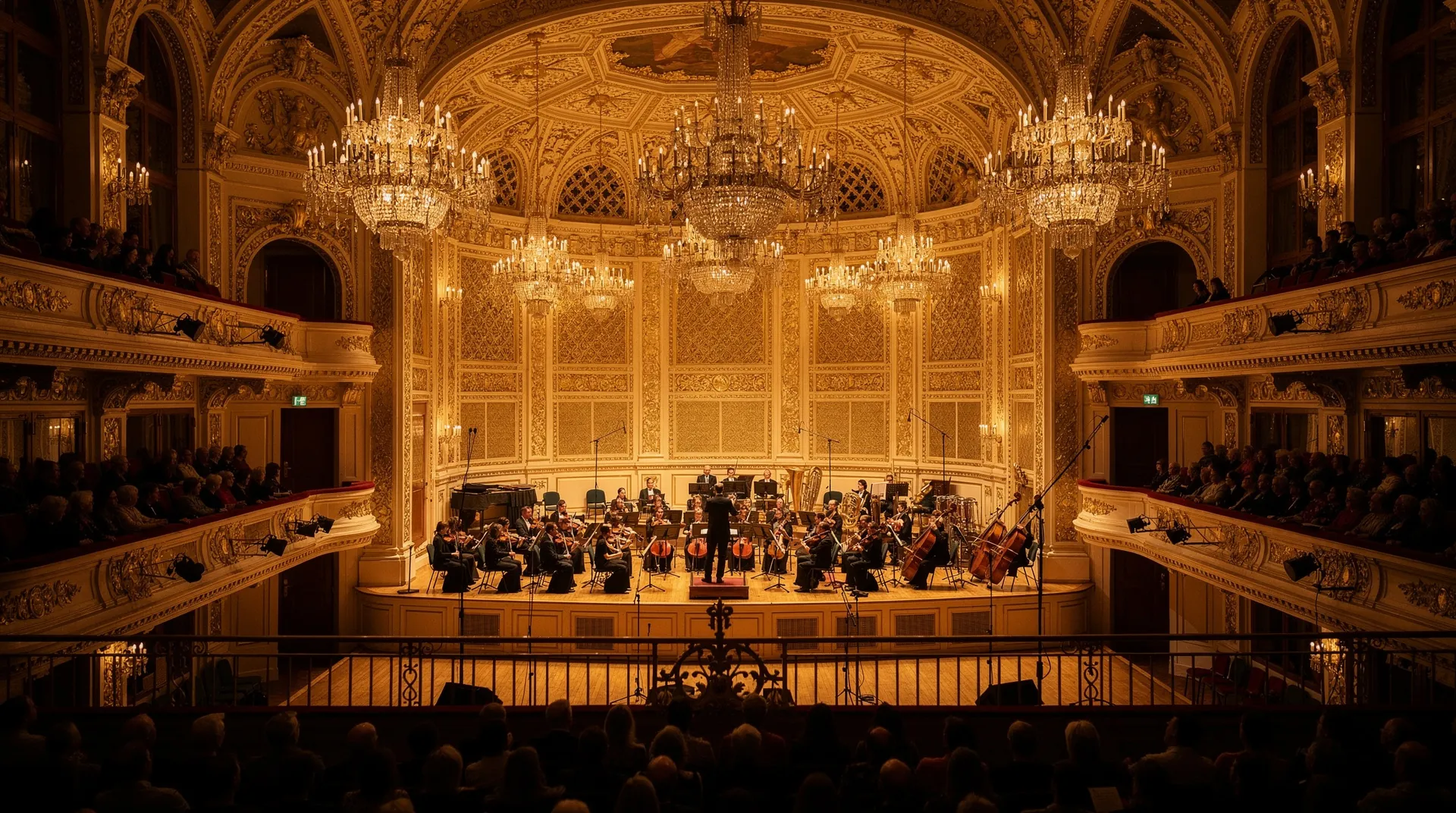
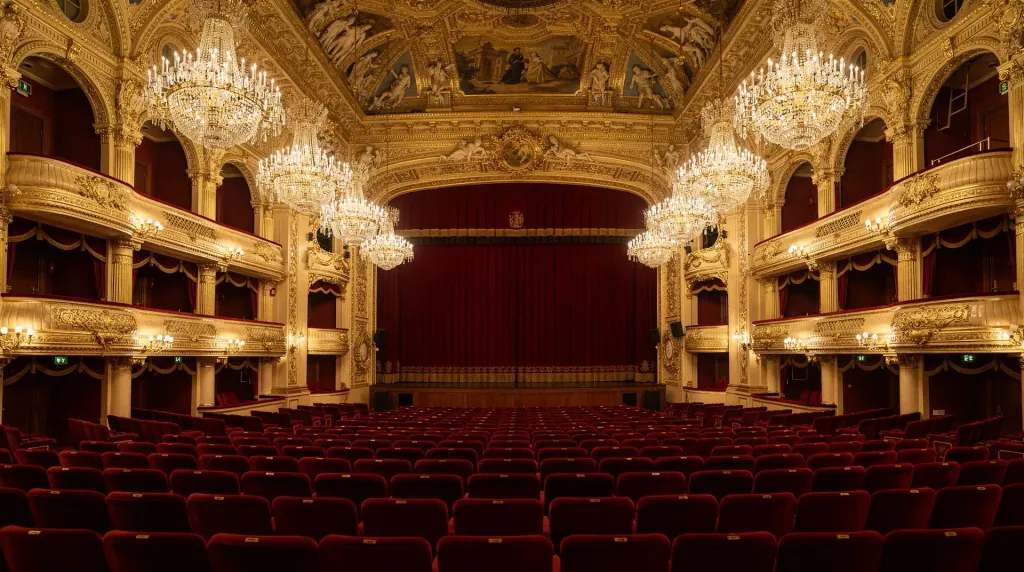
The State Opera is the most palatial of the three venues. Built in 1888 as the New German Theatre — the German community’s equivalent of the Czech National Theatre a few hundred metres away — it is a neo-Rococo jewel: gilded horseshoe interior, oil paintings by Franz Matsch, a stage large enough for full Verdian productions. The building reopened after a thorough restoration in 2020 and is currently in excellent condition.
Programme: international repertory — Verdi, Puccini, Strauss, Mozart, with Czech works in the mix. Ballet has a strong presence at the State Opera; performances alternate opera and ballet evenings throughout the week. Tickets: €15–60 (CZK 380–1,520).
National Theatre — Národní divadlo
Národní 2, Nové Město | Metro: Národní třída (line B)
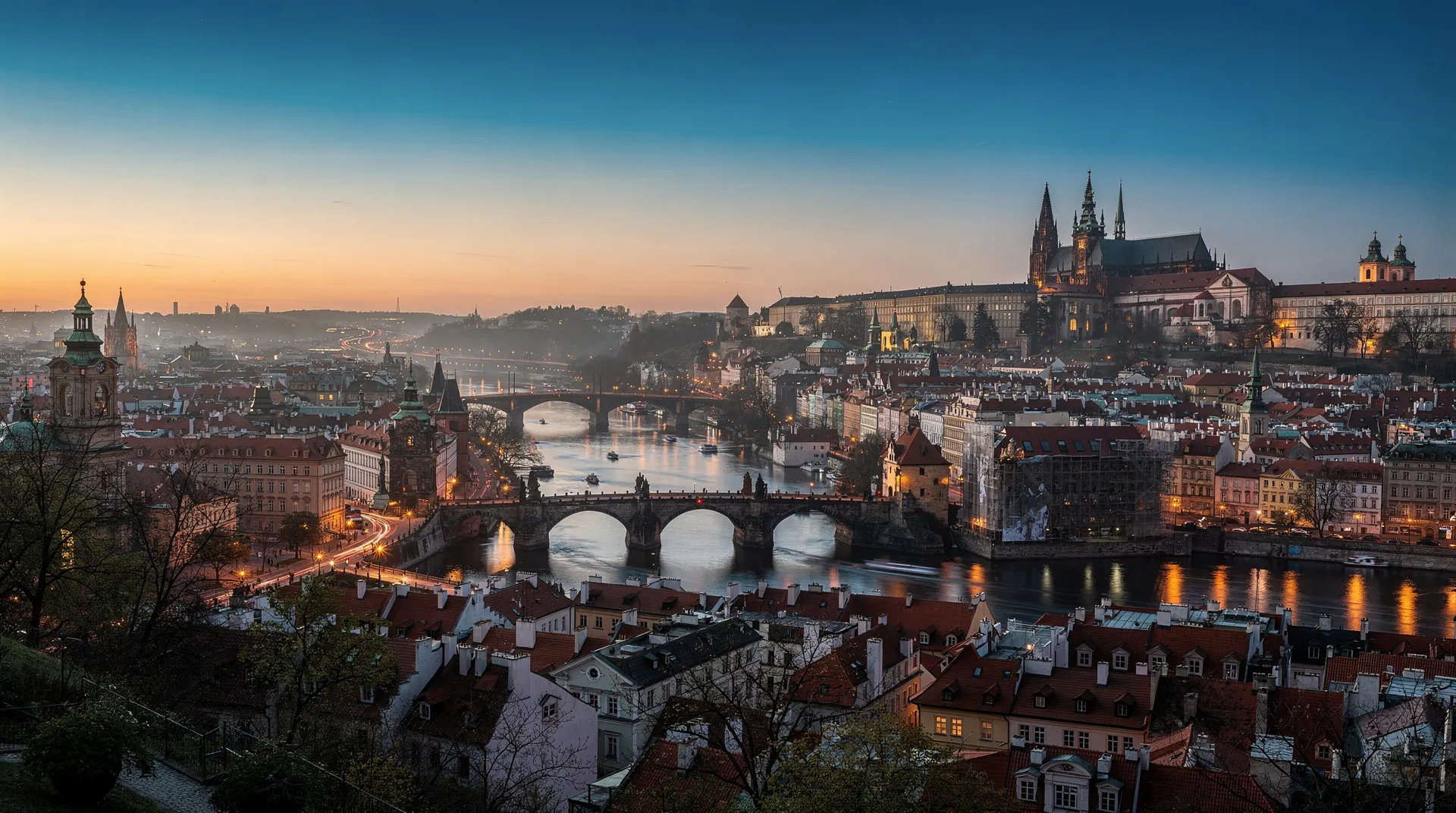
The National Theatre is the symbolic heart of Czech culture — raised by public subscription in the 1880s with the motto “Národ sobě” (the nation unto itself). The building, rebuilt after a fire almost immediately after opening, sits on the Vltava embankment with a gilded roof that catches the evening light from Charles Bridge. The interior is formal, Baroque in spirit, with murals by the generation of Czech painters who formed the national revival.
Programme: the National Theatre deliberately maintains a high proportion of Czech opera — Janáček (Jenůfa, Katya Kabanova), Smetana (The Bartered Bride, Libuše), Dvořák (Rusalka) — alongside the international repertory. If you have any interest in Czech musical culture, an evening at the National Theatre watching Smetana or Janáček is not easily replicated elsewhere.
Tickets: €15–50 (CZK 380–1,265). The building also houses the Laterna Magika — an experimental theatre with its own separate programme.
Estates Theatre — Stavovské divadlo
Ovocný trh 1, Staré Město | Metro: Můstek (lines A+B)
The Estates Theatre is the oldest operating theatre in Prague, built in 1783, and it is the venue with the strongest historical claim on any visitor’s attention: Mozart conducted the world premiere of Don Giovanni here on 29 October 1787. The building has barely changed — the same 800-seat Italian-style horseshoe auditorium, the same proportions, the same acoustic. Mozart knew this room; the notes were written for these dimensions.
The programme at the Estates leans predictably toward Mozart — Don Giovanni, Le nozze di Figaro, and The Magic Flute rotate through the season — plus Italian Baroque and Beethoven. The acoustic is genuinely calibrated for classical opera and chamber music. This is the smallest of the three venues (800 seats versus 1,100+ at the other two) and the one where seats further back still feel connected to the stage.
Tickets: €18–55 (CZK 455–1,390).
By occasion
First opera outing: State Opera for visual impact. The neo-Rococo interior is the right introduction — it makes the experience feel ceremonial. A Verdi evening (Rigoletto, La Traviata, Aida are regular rotation pieces) is the accessible entry point.
Czech culture: National Theatre with a Janáček or Smetana programme. The Bartered Bride (Prodaná nevěsta) is joyful and comprehensible even without the language; Rusalka is hauntingly beautiful and has the famous soprano aria “Měsíčku na nebi hlubokém” (“Song to the Moon”) that even opera novices tend to recognise.
Mozart: Estates Theatre. There is no debate about this — you sit in the same seat where a Prague audience heard Don Giovanni conducted by its composer for the first time. The frisson is real.
Ballet: State Opera runs the ballet programme most frequently. Prague’s ballet company is strong; the Tchaikovsky classics (Swan Lake, Sleeping Beauty, Nutcracker) are well-produced and the tickets are excellent value compared to European capitals.
What to book in advance vs walk-in
Book several days in advance: All three venues for weekend evening performances. The Estates Theatre — small capacity, high reputation — sells out Friday and Saturday regularly. Mozart programmes at the Estates are the hardest tickets in Prague opera.
Reasonable availability on shorter notice: Weekday performances at the National Theatre and State Opera, particularly for less well-known operas (Czech repertory, early-season Baroque evenings).
Booking: Direct from narodni-divadlo.cz (covers all three venues). English-language interface, seat selection, e-ticket delivery. GYG also has select Mozart programmes at the Estates Theatre listed with instant confirmation.
Dress code: Smart casual accepted everywhere; formal dress welcomed. Praguers dress more formally for the opera than for the concert hall. A jacket for men and a dress or smart trousers for women would be appropriately matched to what you see around you.
Which seats actually matter
Seat choice affects the experience more at opera than at a chamber concert, because sightlines to the stage vary sharply by tier in all three historic horseshoes.
Parterre (stalls), rows 5–15: The best balance of sound and sightline at all three venues. Front rows are closer to the orchestra pit than the singers, which can unbalance the sound; very back stalls rows sometimes sit under the overhang of the first balcony.
First balcony, centre boxes: Excellent sound everywhere in all three houses, and the classic “opera house” visual — you see the stage, the chandelier, and the rest of the audience. This is the pick for a first visit, especially at the State Opera where the ceiling itself is part of the show.
Side boxes: Cheaper, but sightlines are genuinely restricted at the Estates Theatre and National Theatre — expect to lean forward for parts of the stage. Fine for the music, less good if staging matters to you.
Upper gallery / balconies further back: The cheapest tickets and, at the Estates Theatre specifically, still an intimate experience because the house only seats 800. At the larger State Opera and National Theatre, the top tier is noticeably more distant.
If you are combining an opera evening with a full day out, a 3-day Prague itinerary can slot an evening performance in naturally after a castle or Old Town day — arrive relaxed rather than rushing straight from sightseeing.
Combining opera with dinner
None of the three venues has a serious in-house restaurant, so plan dinner around the performance rather than at it. For the State Opera and Estates Theatre, the Nové Město and Staré Město neighbourhoods around Wenceslas Square and the Old Town have dense restaurant options within a 5-minute walk — eat before curtain rather than after, since kitchens in the historic centre often stop serving relatively early on weeknights.
For the National Theatre, the riverside restaurants near the embankment work well for a pre-performance dinner with a view of Charles Bridge as the light fades. If beer rather than wine is more your evening, the best beer halls guide has options within walking distance of all three houses for a quick pint beforehand.
Questions about opera and ballet in Prague
Do Prague opera performances have surtitles in English?
Yes — all three National Theatre venues (State Opera, National Theatre, Estates Theatre) provide surtitles. English surtitles are standard for performances not in Czech; Czech-language operas (Smetana, Janáček, Dvořák) typically have Czech and English surtitles simultaneously.
How much do opera tickets cost in Prague?
Between €15 and €60 (CZK 380–1,520) for the main programme at any of the three venues. This compares to €30–250 at the Vienna Staatsoper and €60–300 at Covent Garden. Prague’s opera tickets represent extraordinary value.
What is the season?
September through June. July and August are quieter — the main companies tour and the season schedule thins. Some summer festival programming continues at all three venues, but the full season repertory resumes in September.
Can I visit the interiors without attending a performance?
Yes, for guided tours. The State Opera, National Theatre, and Estates Theatre all offer daytime building tours separately from performances, typically €10–15 (CZK 250–380). The guided tours access parts of the building not accessible during performances (backstage, technical areas). Worth it architecturally.
Is a Mozar concert at the Estates Theatre the same as a Mozart opera?
No. The Estates Theatre hosts both: full opera productions (Don Giovanni, Figaro, Magic Flute with full cast, orchestra, and staging) and chamber concerts of Mozart’s music (smaller ensemble, no staging). The full opera is the more significant experience; the concerts are nonetheless excellent given the acoustic.
What if I don’t speak Czech — can I still enjoy it?
Completely. Opera is primarily a musical and theatrical experience; the surtitles handle the narrative. Czech opera specifically (Janáček, Smetana) is no harder to follow with surtitles than Italian opera. Ballet requires no language at all.
Is opera in Prague better value than a classical concert?
Both are excellent value compared to Western Europe, but they are different products. Opera is a full staged production (2.5–3 hours, cast, orchestra, sets); a classical concert is usually a shorter chamber or orchestral programme, often in a church or historic hall, and is generally cheaper and easier to book on short notice. If you only have one evening and want the full theatrical experience, choose opera; if you want something you can book same-day, a concert is more flexible.
Should I book the cheapest seats to save money?
Only at the Estates Theatre, where the small 800-seat house means even the upper gallery stays connected to the stage. At the State Opera and National Theatre, the cheapest seats can mean genuinely restricted sightlines — a mid-price first-balcony seat is usually better value than the absolute cheapest ticket once you weigh what you can actually see.
2026 prices in detail
| Venue | Cheapest ticket | Mid-range | Premium |
|---|---|---|---|
| State Opera (Státní opera) | €15 (380 CZK) | €30–40 (760–1,013 CZK) | €50–60 (1,265–1,520 CZK) |
| National Theatre (Národní divadlo) | €15 (380 CZK) | €28–38 (709–962 CZK) | €45–50 (1,138–1,265 CZK) |
| Estates Theatre (Stavovské divadlo) | €18 (455 CZK) | €30–42 (760–1,063 CZK) | €50–55 (1,265–1,390 CZK) |
Compare to: Vienna Staatsoper (€30–250), Royal Opera House London (€60–300), La Scala Milan (€40–250). Prague offers world-class opera at approximately one-quarter the price.
Peak and off-peak timing
September–June is the main season at all three venues. The opening weeks of October and the festive period (December) have the highest demand — book 3–4 weeks ahead for weekend evenings.
July–August: The main companies partially tour; guest productions and festival programming continue but the full resident ensemble is not always present. Summer audiences are more tourist-heavy. Tickets are easier to obtain in summer but the house-company quality varies.
January–February: The season is in full swing and ticket availability is good even for popular productions. The best time to see the Estates Theatre (Mozart) without competing for seats.
Wednesday and Thursday evenings in the main season typically have the best seat availability and the most knowledgeable local audience.
Practical venue details
Getting to the State Opera: Metro lines A and C to Muzeum (Václavské náměstí / Muzeum station), 2-minute walk. The building is directly adjacent to the National Museum at the top of Wenceslas Square.
Getting to the National Theatre: Tram 17, 18 to Národní divadlo; Metro B to Národní třída (5-minute walk). The embankment location makes it easy to combine with a pre-performance dinner at one of the Smíchov or Nové Město riverside restaurants.
Getting to the Estates Theatre: Metro A or B to Můstek (1-minute walk). In the heart of the Old Town, easily combined with a pre-opera dinner in Staré Město.
Bar and refreshments: The State Opera has a ground-floor café and bar open before performances and during interval. The National Theatre has a first-floor buffet. The Estates Theatre is smallest and has limited bar space — arrive early.
Best for each occasion
First opera outing: State Opera for visual impact. The neo-Rococo interior is the right introduction — it makes the experience feel ceremonial. A Verdi evening (Rigoletto, La Traviata, Aida are regular rotation pieces) is the accessible entry point.
Czech culture: National Theatre with a Janáček or Smetana programme. The Bartered Bride (Prodaná nevěsta) is joyful and comprehensible even without the language; Rusalka is hauntingly beautiful and has the famous soprano aria “Měsíčku na nebi hlubokém” (“Song to the Moon”) that even opera novices tend to recognise.
Mozart: Estates Theatre. There is no debate about this — you sit in the same seat where a Prague audience heard Don Giovanni conducted by its composer for the first time. The frisson is real.
Ballet: State Opera runs the ballet programme most frequently. Prague’s ballet company is strong; the Tchaikovsky classics (Swan Lake, Sleeping Beauty, Nutcracker) are well-produced and the tickets are excellent value compared to European capitals.
Book this experience
Prague: Mozart ballroom concert with 3-course dinner — a Mozart evening with dinner in a grand Prague ballroom.
Mozart’s Prague: Old Town, Lesser Town and Czech Museum of Music tour — walk Mozart’s Prague before attending an evening performance.
Prague: W. A. Mozart — Requiem at St. Salvator Church — a choral concert in the Clementinum’s baroque church.