| At a glance | |
|---|---|
| Best base for a first trip | Vinohrady (around 20–30% cheaper than Staré Město, 10 min by metro) |
| Typical rookie-mistake cost | Around €40–60 lost to tourist-zone meals and unlicensed taxis over 3 days |
| Metro single ticket | Around €1.60 / 39 CZK; 24-hour pass around €6 / 150 CZK |
| Read before you land | currency and money guide, metro guide |
| Trip length this fits | Works best paired with our 3-day itinerary |
We ate on Old Town Square and it cost us €48 for mediocre goulash
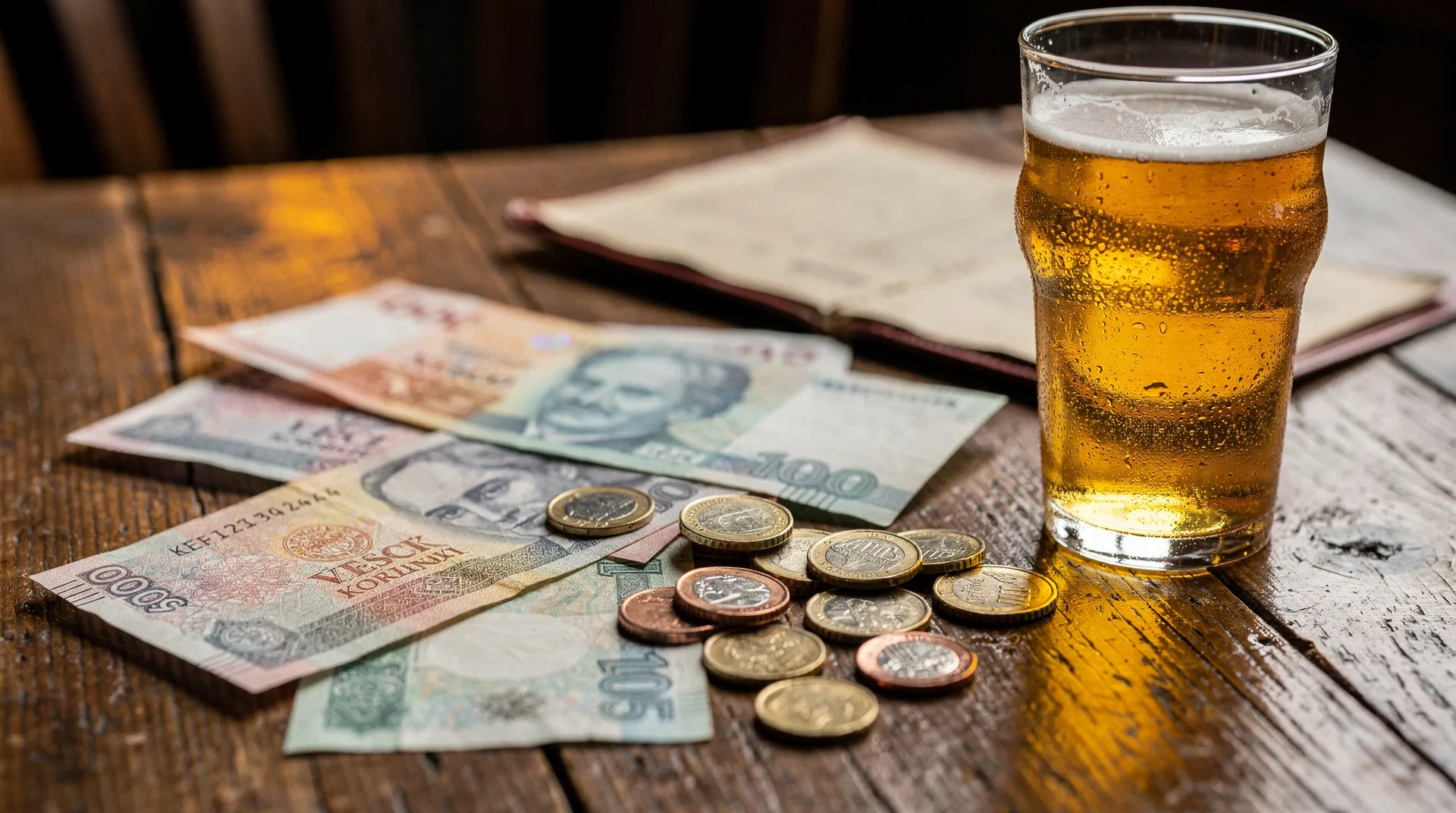
Our first meal in Prague was a mistake that took us years to understand properly. We arrived by train, walked from Hlavní nádraží to Old Town Square, and sat down at the first café with a view of the Astronomical Clock. The beer arrived. It cost €6.50. In a city where the same beer costs €2 in a local pub three streets away.
We didn’t know. There was no reason we would have known. The square is beautiful, the terrace is appealing, and the menus look like any other Prague restaurant. What we didn’t understand is that a significant portion of the historic centre operates as a tourist-price zone that has essentially no relationship to the actual cost of food and drink in Prague.
The lesson took two more years and two more trips to fully absorb: the divide between tourist-zone pricing and local pricing in Prague is one of the sharpest in Europe. Not because Czech businesses are dishonest, but because the tourist infrastructure around the main sights has repriced itself to match visitor expectations from Western Europe. Walk two streets back from Old Town Square and prices drop by 40–60%.
We stayed in the wrong neighbourhood for what we wanted
Our first hotel was in Staré Město, directly because it was “walking distance from everything.” This was true. It was also walking distance from the bar crowd on Dlouhá street, and the noise on Thursday night made sleeping before midnight difficult.
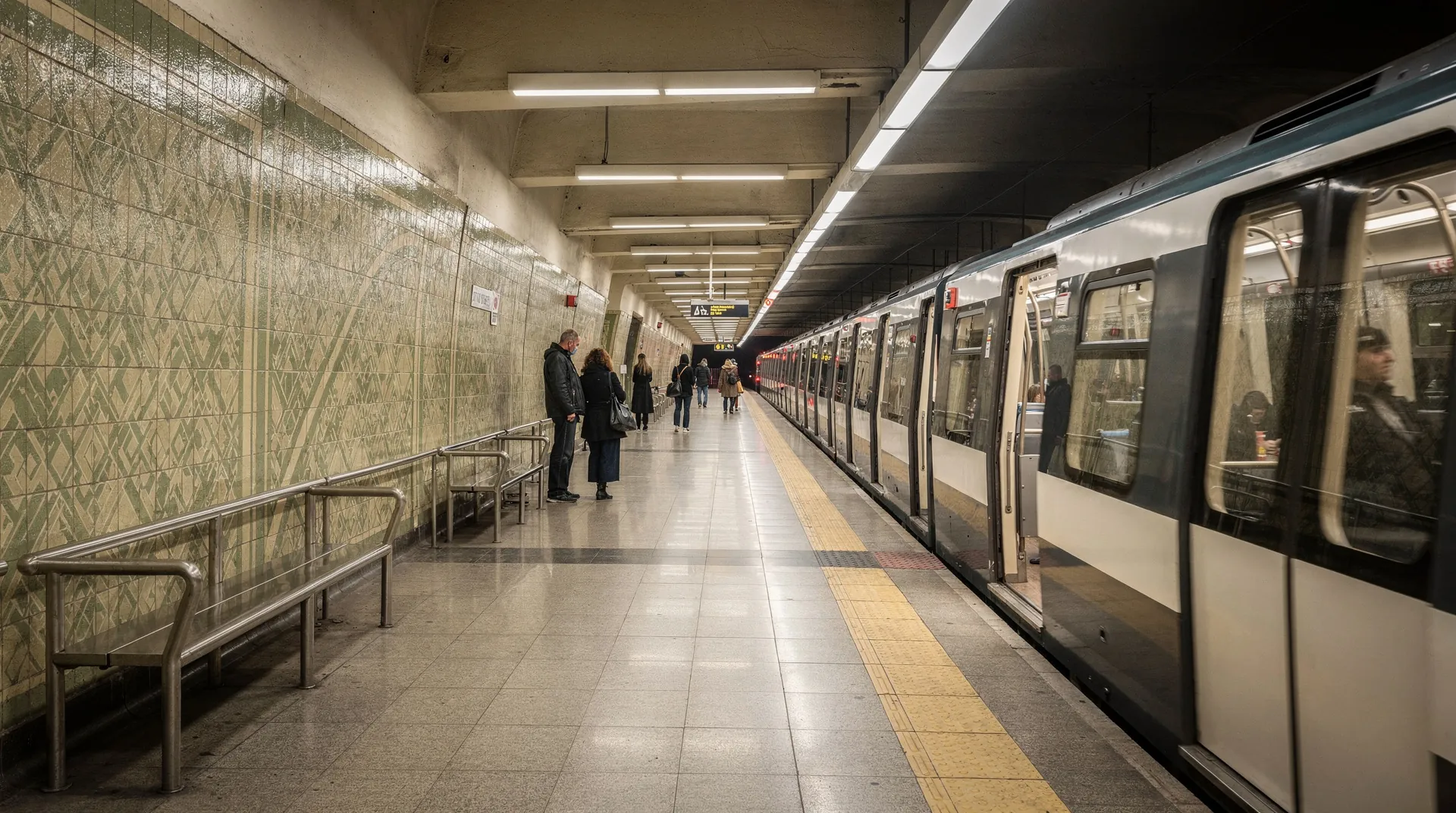
What we should have done: Vinohrady. It is 10 minutes by metro from Old Town — 3 stops on line A, Staroměstská to Náměstí Míru. It is residential, quiet at night, has better restaurants per square metre than the tourist core, and costs 20–30% less for equivalent accommodation.
The trap of “walking distance from everything” is that in Prague, you don’t need to be walking distance from everything. The metro is fast (trains every 2–3 minutes in peak hours) and cheap (€1.60 / 39 CZK per trip, or €6 / 150 CZK for a 24-hour pass). The city is small enough that nowhere feels far.
We didn’t go to Vyšehrad
This is the one we regret most. We spent 3 days in Prague, visited Prague Castle, Charles Bridge, Old Town Square, the Jewish Quarter, and Petřín Hill. We did not visit Vyšehrad.
Vyšehrad is Prague’s second fortress, less visited, equally atmospheric, with the city’s oldest Romanesque church ruins, a cemetery where Dvořák and Smetana are buried, and panoramic views over the Vltava that rival anything at Petřín. It is free to enter the grounds. It is 10 minutes on metro line C from Old Town.
We have visited three times since. It is consistently one of the experiences we recommend most. When Prague feels crowded and over-managed, Vyšehrad is quiet and genuinely affecting.
We didn’t understand Czech beer pricing
We went to a traditional Czech pub on our second night and ordered two beers. The bill came in at something like €7 total — which seemed, from our Western European reference point, very cheap. We thought we had discovered a bargain. We had not discovered anything special; we had simply paid the correct price for beer in a local pub.
What took longer to understand: the price of beer in Prague varies by a factor of 3–4 depending on where you drink it. A half-litre of Pilsner Urquell costs €1.80–2.00 (45–50 CZK) in a Žižkov hospoda, €3.50 in a New Town restaurant, €6–7 on Old Town Square. The liquid in the glass is identical or nearly so. The premium you pay near the sights is purely for the address.
The practical upside: once you know this, it changes how you plan your evenings. You go to the Old Town for a walk, not for dinner and drinks. You go to Vinohrady or Žižkov for dinner and drinks. The city becomes 40–50% cheaper immediately. If you still want the lit-up Old Town after dark, a private night tour of the Castle, Charles Bridge and Old Town lets you see it without the terrace prices.
We spent too long inside Prague Castle
Prague Castle is described, correctly, as the largest ancient castle complex in the world. This creates the expectation that you should spend a full day inside it. We booked 5 hours.
After about 2.5 hours — Cathedral, Old Royal Palace, Golden Lane, the Lobkowicz Palace — we were done. Not because the castle isn’t remarkable, but because the visitor experience inside the buildings becomes repetitive past a certain point, and the grounds are less immediately compelling without a guide to contextualise them.
The better approach: book the Basic ticket (Old Royal Palace, St George’s Basilica, St Vitus Cathedral, Golden Lane and Daliborka Tower; 450 CZK / around €18). Allow 2–3 hours. Have a clear stopping point. The Castle works better as part of a Malá Strana morning than as an all-day destination.
We got the taxis wrong
On our first evening, we took a taxi from Old Town to Vinohrady. The driver had no meter running. We paid €18 for a journey that Bolt prices at €4.50. This is documented, predictable, and entirely avoidable with a smartphone. Use Bolt or Uber. The unlicensed taxi market in Prague operates openly near tourist areas; the fare discussion starts before you get in and ends with you having paid too much.
We have made exactly zero taxi errors since discovering Bolt. The app shows the fare before you confirm. The driver’s details are recorded. The car arrives at your actual location, not the nearest corner convenient for them.
The weather genuinely surprised us
We came in October. We packed for early autumn. The first two days were 18°C. Day three dropped to 6°C with rain and the temperature did not recover. We spent a day in significantly insufficient clothing and retreated to cafés more than we intended.
Prague’s autumn weather is genuinely variable. The shoulder seasons (March–May, September–November) involve real temperature swings. Always pack a waterproof layer and a thermal mid-layer regardless of what the forecast says on day one.
What we would actually do differently
- Eat in Vinohrady or Žižkov, not Old Town. Use Old Town for sightseeing only.
- Stay in Vinohrady. The metro is 10 minutes to anywhere; the neighbourhood is worth the short commute.
- Go to Vyšehrad on the first afternoon. It’s free, quiet, and gives you Prague history context before the Castle.
- Book a local-led walking tour on day one. Not the big tourist walking tours — the alternative or hidden gems style tour that explains how the city actually works.
- Use Bolt from the first minute. The unlicensed taxi problem is real but entirely preventable.
- Visit Petřín in the morning before 10am. The hill is beautiful and quiet in early morning; by noon it’s crowded.
- Spend an evening in a genuine local pub. U Bílé kuželky in Žižkov, or U Sadu in Žižkov. Order the dark lager and the goulash. Eat slowly.
What the counterpoint says — and where it’s right
Travel writers who push back on “avoid tourist restaurants” advice have a point worth acknowledging. The argument: you are on holiday, not conducting a food anthropology project. Sitting on Old Town Square and paying a premium for the view is a legitimate choice. The view is worth something. The convenience is worth something. The experience of watching the Astronomical Clock show from a café table is specifically what some visitors came to Prague to do.
This is correct. The problem is not the premium per se — it is that the premium in Prague’s tourist zone buys you a worse meal than the non-premium option in Vinohrady, not just a more expensive version of the same meal. Paying €8 for a beer because you’re sitting at a famous fountain in Rome is understandable. Paying €7 for a beer at Old Town Square while receiving svíčková from a jar is a different transaction.
If you want the view, have a coffee. The view costs €4. The meal costs €48.
What we’d tell a first-time visitor today (2026 update)
Some of our original mistakes have become harder to make — Bolt is now known enough that most visitors arrive with it installed. The taxi scam is less ubiquitous at the airport because the authorised Bolt/Uber pickup zones are well-signed.
Some have become more common. The tourist-price zone has expanded since our first visit — what was confined to Old Town Square in 2019 now extends further into Malá Strana and along the Charles Bridge approach streets. Walking an extra 400 metres from the tourist drag is more necessary in 2026 than it was in 2020.
The single change that would most improve a first Prague trip in 2026: book a local-guided walking tour for day one. Not the large group “Free Tour Prague” circuit (90 people, a guide in a yellow jacket), but a small-group or private guide who covers the city’s specific history and can answer questions. The context it provides makes everything else you see over the following days significantly richer.
Prague city highlights private walking tour — a private guide, 3 hours, covers Old Town, Jewish Quarter, and Charles Bridge in a small group. Approximately €30–35 / 750–875 CZK per person. The investment in context on day one consistently changes the rest of the trip.
Reader questions
“Is Prague safe for solo female travellers?”
Yes — Prague is one of the safer major European cities for solo travel by any demographic. The specific risks are the same as any tourist city: pickpockets in crowded areas (Charles Bridge, Old Town Square, packed trams — keep valuables out of back pockets), and the unlicensed taxi scam. Beyond these, Prague’s streets are well-lit, public transport is busy until midnight, and the emergency services are reliable. The night tram network covers the city until 05:00.
“How much cash do I need?”
Less than you might expect. Most Prague restaurants, shops, and attractions accept card, and Bolt is card-only. Keep 500–1,000 CZK (€20–40) in cash for emergencies, market purchases, and the rare venue that doesn’t take cards. ATMs are widely available; use those from the airport or your hotel rather than the currency exchange booths on tourist streets (these have poor rates and sometimes charge hidden fees).
“What’s one thing to skip that guidebooks always recommend?”
The Astronomical Clock mechanism. Every visitor watches the clock’s hourly show — the skeleton ringing the bell, the figures of the Apostles appearing in the windows — and most leave feeling that it was somewhat underwhelming for something so famous. The clock facade is beautiful. The hourly show lasts 45 seconds and involves small mechanised figures at a height where they are difficult to see clearly. See it once if you happen to be nearby on the hour; do not plan your morning around it.
Where we’d base ourselves now — a neighbourhood comparison
Looking back, the base choice mattered more than any single sight we saw or skipped. Here’s how the three neighbourhoods we’ve actually stayed in compare for a first trip:
| Neighbourhood | Noise at night | Cost vs Staré Město | Distance to Old Town | Best for |
|---|---|---|---|---|
| Staré Město (Old Town) | High (bar streets, stag groups) | Baseline | Walking distance | Short stays who want zero commute |
| Vinohrady | Low, residential | −20–30% | 10 min, 3 metro stops | Most first-time visitors |
| Žižkov | Moderate (local pubs, not stag bars) | −25–35% | 12–15 min, metro + short walk | Budget stays, genuine local pubs |
A cheat sheet for the mistakes we made
We made every one of these errors at least once, usually in the first 48 hours. A few we didn’t cover above but wish someone had told us:
- Not checking the taxi scam patterns before landing. The meterless-taxi trick works because it happens fast, at the airport or right outside a tourist restaurant, before you’ve had a chance to open Bolt. Install the app before you arrive, not after your first bad ride.
- Assuming the metro map extends further than it does. The three-line network (A/B/C) covers the centre well but Vinohrady, Žižkov, and the airport rely on trams and buses for the last stretch — check the metro guide for the actual interchange points.
- Skipping the safety guide because “Prague felt safe.” It is genuinely safe by major-city standards, but the specific risks (pickpockets on Charles Bridge, packed trams, the taxi issue) are worth five minutes of reading before you go.
- Trying to do Prague Castle and a day trip in the same 48 hours. We rushed both. If a day trip is on your list, our Kutná Hora vs Karlštejn comparison is worth reading first so you don’t split the day badly.
- Not building in a slower half-day. Our weekend itinerary works better with one unhurried morning than with five sights crammed into two days.
Reader questions (continued)
“Is Vinohrady safe and convenient for a first-time visitor who doesn’t speak Czech?”
Yes. Vinohrady is one of the more English-friendly residential neighbourhoods precisely because it’s popular with expats and long-stay visitors as well as tourists. Signage on the metro is bilingual, most cafés and restaurants have English menus, and the walk from Náměstí Míru to a rental or hotel is well-lit and busy well into the evening.
“Should we get a Prague Visitor Pass instead of figuring out the metro ourselves?”
For a 3-day trip focused mostly on the historic centre, a simple 24-hour or 72-hour transport ticket is usually enough — the metro system is genuinely easy to use once you’ve made one journey with a map open. A bundled sightseeing pass can make sense if you’re planning several paid attractions (Castle circuit, museums, a river cruise) back to back; run the maths against buying tickets individually before committing.
Related reading
The practical guides that would have changed our first trip: the money and currency guide explains the pricing geography in detail. The Prague neighbourhoods guide explains why Vinohrady is the right base for most first-time visitors. Our 3-day itinerary is essentially the structure we wish we’d had from the start.