How to use this guide
This is an evergreen rolling calendar of Prague events, structured by month so it stays useful year-round. Each month lists reliable recurring events — things that happen every year on roughly the same dates, at the same venues. A final section covers confirmed one-off events specific to 2026.
For exact current dates on anything listed here, check the official venue or festival website before travelling. Classical concerts in particular sell out weeks in advance in high season — book early.
Prague’s event season has no real off-season. Christmas markets (November–January), Easter markets (March–April), summer festival season (June–August), and autumn classical music season (September–November) all deliver genuinely excellent programmes. The challenge is not finding something to do — it is choosing.
| At a glance | |
|---|---|
| Where | Venues city-wide — Klementinum, Rudolfinum, Municipal House, Old Town Square, Letná Park |
| Cost | Many big-name recurring events (changing of the guard, market atmosphere, folk processions) are free; ticketed concerts and festivals run roughly €15–30 |
| Booking lead time | Weeks ahead for weekend classical concerts and festival closing nights; months ahead for Prague Spring’s opening/closing concerts |
| Best months for culture-dense visits | May–June (Prague Spring), September–October (Dvořák Prague, Designblok), November–December (Christmas markets) |
| Getting around | Most venues are within the compact centre, reachable on foot or by tram/metro — see the metro guide |
For a broader view of how Prague’s calendar interacts with weather and crowds, our best time to visit guide is a useful companion to this month-by-month list, and the pass comparison tool is worth checking if you’re combining several ticketed sights around a festival visit.
Year-round (every month)
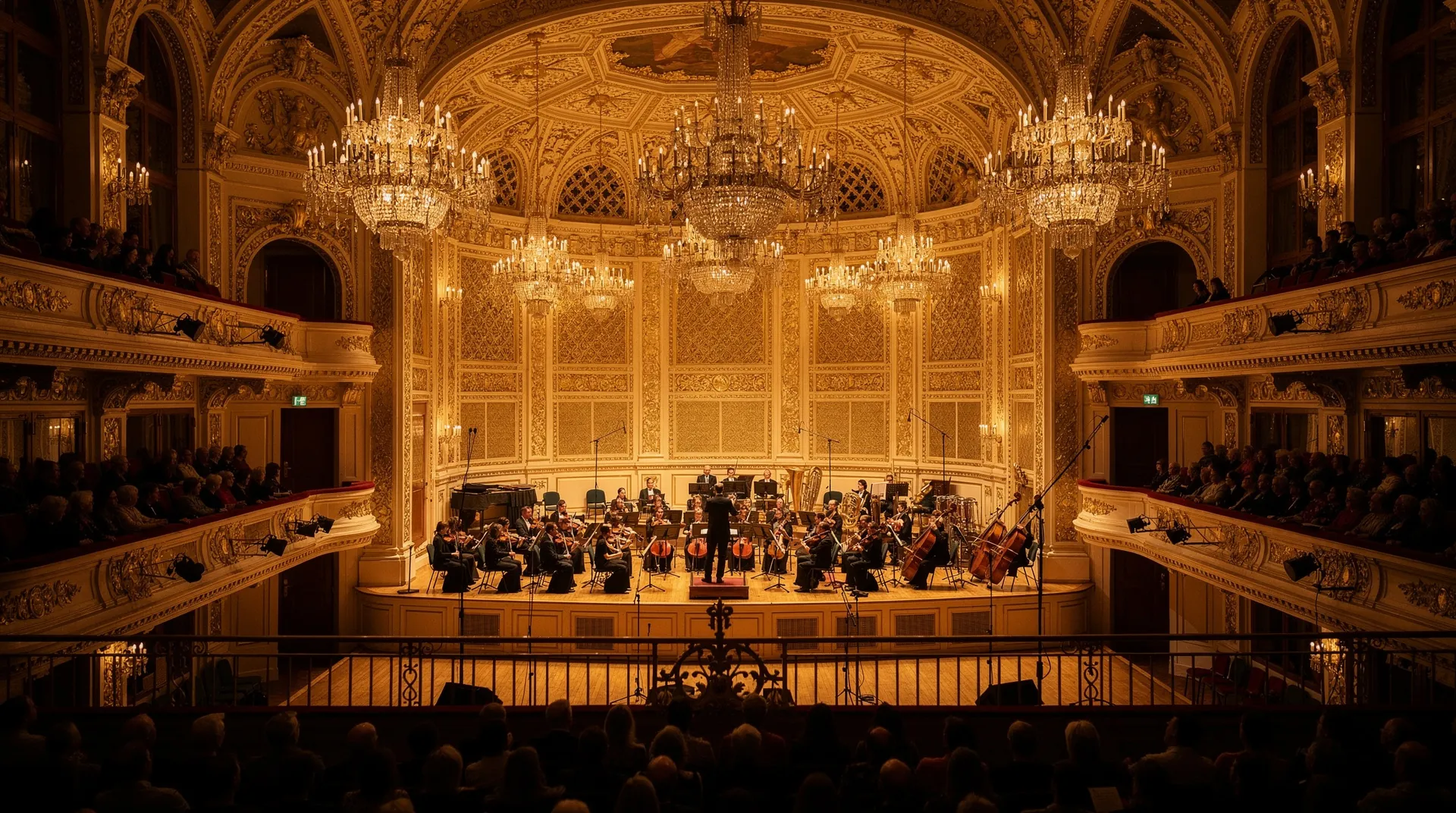
Classical concerts at Klementinum (Mirror Chapel): The Mirror Chapel inside the Klementinum complex hosts chamber concerts almost daily. The Baroque interior with its frescoed ceiling and acoustic warmth makes this one of Prague’s best concert experiences regardless of the programme. Tickets via t498025, t619224.
Classical concerts at Smetana Hall, Municipal House: The Art Nouveau concert hall at Obecní dům hosts orchestral performances throughout the year with Prague Philharmonia and guest orchestras. Dress smart. Tickets via t695797.
Spanish Synagogue classical concerts: Vivaldi Four Seasons and other Baroque repertoire performed in the ornate Moorish interior of the Spanish Synagogue in Josefov. One of Prague’s most atmospheric concert settings. t398029.
Classical concerts at Rudolfinum: The Dvořák Hall hosts the Czech Philharmonic and international orchestras. This is the prestige address of Prague classical music — reserve in advance. t803830, t1108050 (New Year).
Prague black light theatre: Multiple companies perform nightly. HILT (t782105), WOW Show (t197152), Srnec company (t229408), and Phantom (t51591). Year-round; no seasonal variation.
Prague Castle changing of the guard: Daily at noon (extended ceremony with fanfare). Free to observe from the courtyard. No booking required.
Vltava River cruises: Sightseeing cruises (t52534), dinner cruises (t71256, t545309), and jazz cruises (t13460) run year-round with seasonal timetable adjustments.
Communism and Bunker Tour: The fascinating underground bunker tour (t22927 and t15368) runs year-round and is one of Prague’s most original historical experiences. The 70s canteen lunch included in t22927 is a genuinely unusual touch.
Alchemy and Mysteries after-dark tour: The Prague Castle after-dark walking tour (t13533) runs in the evening year-round. Different atmosphere in winter (quieter, colder, more atmospheric) and summer (lighter evenings but bigger crowds).
January
Three Kings Day (Tři králové) — January 6: The traditional Epiphany parade through Old Town, with children dressed as the Three Kings collecting for charity. Quiet by comparison to December festivities, but a distinctive local event.
Winter Christmas market tail-end: Old Town Square market runs until approximately January 6. If you arrive in early January, some stalls are still operating.
Czech Press Photo exhibition: Annual exhibition of the best Czech press photography, typically January–March. Venue varies annually (Old Town Hall, National Museum, or Clementinum). Check current year location.
Ice skating: Ovocný trh (Fruit Market, near the Estates Theatre) and Letná Park both host outdoor ice rinks from late November through February. Skate hire available. Free or nominal entry charge.
Thermal SPA season opening: Outdoor pools at some Prague suburban facilities (Aquapalace Praha in Čestlice) run winter polar plunge events in January.
February
Masopust (Czech Carnival): The Czech equivalent of Mardi Gras — a pre-Lent carnival week with costumed processions, folk music, and traditional pork-based food. Celebrated in specific Prague neighbourhoods: Žižkov (the most traditional), Vinohrady, and Letná. Dates shift annually with Easter calendar. Usually the week before Ash Wednesday.
Shrove Tuesday (Masopustní úterý): The peak day of Masopust. Look for processions in Žižkov starting from Náměstí Jiřího z Poděbrad — homemade costumes, a bear, a symbolic death figure, and considerable drinking of slivovitz.
Czech Carnival Week: The Masopust spirit extends to folk craft markets and traditional food events (smažené koblihy — fried doughnuts — are the canonical Masopust food).
Valentine’s Day events: Prague is a popular Valentine’s weekend destination. Vltava dinner cruises and castle tours sell out quickly for February 14 weekend — book 2–3 weeks ahead.
March
Prague Spring preview concerts: The Prague Spring International Music Festival (which runs May–June) begins its preview programme in late March with chamber concerts at Rudolfinum and Municipal House.
St. Joseph’s Day — March 19: A minor religious feast in Czech tradition, celebrated locally in some areas.
Czech Dream Book Fair (Svět knihy): The full fair is in May, but book-related events and publisher launches begin in March.
Outdoor market season starts: The Naplavka riverside farmers’ market (below the New Town embankment) reopens for the season, typically in March. Czech producers, organic food, artisan goods, and coffee. Every Saturday.
Easter approaches: Easter markets begin setting up in Old Town Square and on the Wenceslas Square side streets in late March. Czech Easter market goods: hand-painted eggs, willow switches, folk crafts, trdelník, and mulled wine.
April
Easter markets — Old Town Square and Wenceslas Square: Prague’s Easter markets are among the best in Central Europe — smaller and more artisan-focused than the Christmas equivalent, but with genuine folk craft content. Egg painting, woodcarving, and traditional food. Run from Palm Sunday through Easter Monday.
Easter Monday (Velikonoční pondělí): In traditional Czech custom, men walk through the streets with braided willow switches (pomlázka) and light-heartedly tap women on the legs, who in return offer painted eggs or shots of slivovitz. This is observed with varying degrees of enthusiasm in the city versus the countryside.
Prague International Marathon: The Volkswagen Prague Marathon runs in late April or early May (date varies). The course passes through Old Town and along the Vltava embankment — if you are in Prague on this weekend, expect street closures in the centre from 8am–noon.
Witches’ Night (Čarodějnice) — April 30: The Czech equivalent of Walpurgis Night. Bonfires are lit (especially in parks and outer Prague) and straw effigies of witches are burned to drive away evil spirits and welcome spring. Not a tourist event but a genuine local folk tradition visible in open spaces.
May
Prague Spring International Music Festival (Pražské jaro): The most prestigious classical music festival in the Czech Republic, running for three weeks in May–June. Opens on May 12 (the anniversary of Smetana’s death) at the Smetana Hall with a performance of Smetana’s Má vlast. Tickets for the opening concert sell out within hours of release. Other concerts at Rudolfinum, St. Vitus Cathedral, and various Prague palaces. Booking essential — 3–6 months in advance for popular dates.
Museum Night (Muzejní noc): One Saturday in mid-May, Prague’s museums open free to the public from 7pm to midnight. The National Museum, Mucha Museum, Military History Museum, and many smaller institutions participate. Very popular — queues at the main venues.
Prague International Book Fair (Svět knihy): International publisher fair at the Prague Exhibition Grounds (Výstaviště, Holešovice). Czech and international publishers, author readings, literary events. Annual.
Labour Day — May 1: Public holiday. Most tourist attractions open; some administrative services closed.
June
Prague Pride: LGBT+ pride festival and parade, typically the second week of August (occasionally in late June depending on scheduling). The parade runs through Old Town and Wenceslas Square. The festival programme includes concerts, exhibitions, and club events across multiple venues.
Prague Food Festival: Three-day outdoor food and wine festival at the Royal Garden of Prague Castle (Královská zahrada). Approximately 50 top Czech restaurants, craft beer producers, and artisan food stalls. Entry ticketed. Usually mid-June.
Midsummer (Svátek Jana) — around June 21–24: St. John the Baptist’s feast, associated with bonfires, flower garlands, and fortune-telling. The longest day in Prague (sunrise ~4:55am, sunset ~9:05pm) creates exceptional photography conditions.
Beats for Love festival: Major electronic music festival at Prague Exhibition Grounds. International DJ lineup, camping available.
July
Summer Shakespearean nights: Prague’s outdoor theatre season peaks in July, with Shakespeare performances in courtyard and garden settings (Valdštejnská zahrada, the grounds of various Malá Strana palaces). Czech-language productions, but the setting compensates for the language barrier.
Letní Letná circus festival: International circus and physical theatre festival at Letná Park. Multiple company performances in large tents on the Letná plateau. Considered one of the best circus festivals in Central Europe. Annual; dates vary.
Prague Open Air concerts: The Špilberk, New Town Hall, and various castle courtyards host outdoor classical and folk concerts through July and August. Check Prague Culture (kultura.cz) for programme.
Peak tourist season: July is Prague’s most visited month. Charles Bridge by 7am, rooftop bars at capacity, dinner reservations needed 48–72 hours ahead. Plan accordingly.
August
Prague Pride parade (if scheduled in August — see June): Main parade Saturday of pride week through Old Town.
Dvořák Prague Festival — August: The Dvořák Prague International Music Festival launches in late August and runs into September, focused on the Czech Romantic repertoire (Dvořák, Smetana, Janáček, Martinů). Concerts at Rudolfinum, Municipal House, and St. Vitus Cathedral. Prestige event; tickets in advance.
Czech National Day preparation: August 28 is Czech Statehood Day (commemorating the creation of Czechoslovakia in 918 AD, more specifically the death of St. Wenceslas). Events at Prague Castle; changing of the guard ceremony extended.
Trutnov Open Air Music Festival: About 2 hours from Prague, this long-running Czech alternative music festival draws international and domestic acts. Some Praguers commute for the day.
September
Dvořák Prague International Music Festival (continued): Runs through mid-September. The most concentrated classical music event after Prague Spring. Rudolfinum and Smetana Hall.
Prague Autumn International Music Festival: A smaller classical music festival running September–October, programming chamber music and song recitals at smaller venues across the city.
Wine Harvest (vinobraní): Prague’s wine culture is less known than Moravia’s, but the city has historic vineyards (Vrtba Garden, St. Wenceslas Vineyard at Grébovka) and harvest events in September. The Grébovka vineyard harvest festival (Vinobraní na Grébovce) in Vinohrady is a neighbourhood street party with wine, food, and folk music.
European Heritage Days (Den otevřených dveří): Buildings normally closed to the public open for one weekend, including some government buildings, private palaces, and embassy interiors. Usually the second or third weekend of September.
Prague Marathon (autumn edition): A smaller half-marathon event, usually September.
October
Designblok Prague: Prague’s international design festival, spreading across multiple venues in the Old Town and design district. Furniture, product design, fashion, interior installations. Ten days in mid-October. One of the strongest design events in Central Europe.
Prague International Jazz Festival: Annual jazz festival at Lucerna Music Bar and other venues. International artists alongside Czech jazz scene names. Usually October.
All Hallows preparations: October 31 sees growing interest in Halloween events in Prague (driven by younger population and tourism). Not a traditional Czech holiday — Dušičky (All Souls’ Day, November 2) is the more established observance.
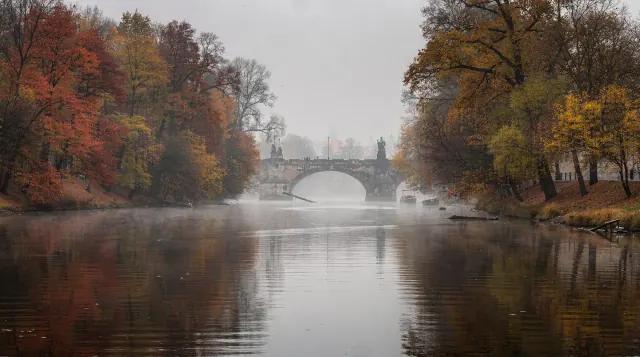
Autumn colours: October brings exceptional colour to Letná Park, Stromovka, Šárka valley, and the Prokop valley in Hlubočepy. Free, obvious, and undervisited.
November
Velvet Revolution anniversary — November 17: National holiday commemorating the 1989 Velvet Revolution that ended communist rule in Czechoslovakia. Ceremonies at Václavské náměstí, Letenské náměstí, and the National Memorial on Vítkov. Candles and flowers at the bronze plaque at 750 Wenceslas Square where students were beaten by police on November 17, 1989.
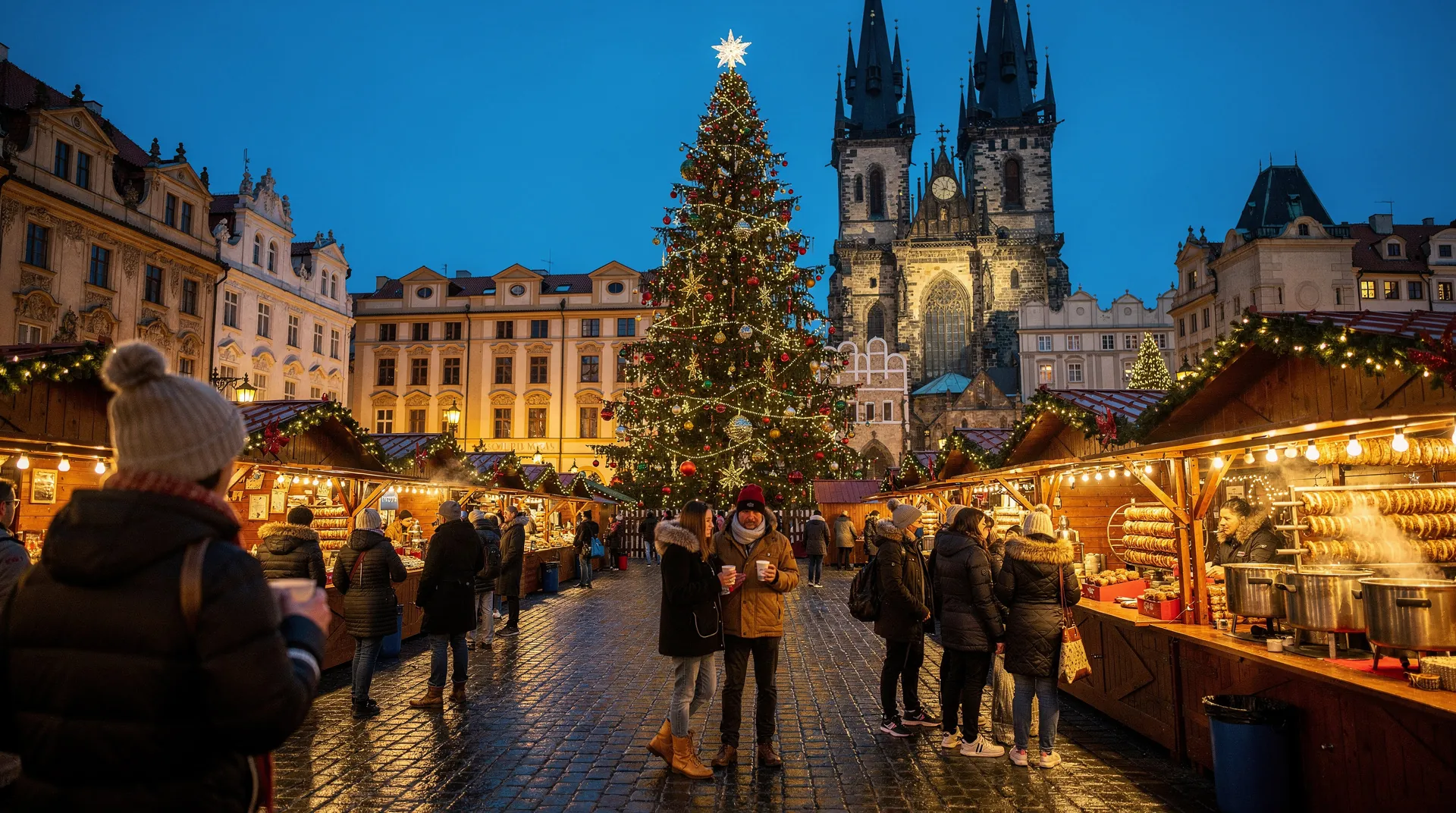
Christmas markets opening: Old Town Square Christmas market opens in late November (usually the last weekend of November). The most famous of Prague’s markets: a large Christmas tree, traditional Czech food, warm mead (medovina), svařák (mulled wine), wooden toys, and hand-crafted decorations.
Wenceslas Square market: A parallel market on Wenceslas Square, more commercial and less atmospheric but central and practical.
New Year concert planning begins: Tickets for the Rudolfinum New Year concert (December 31 / January 1) go on sale in November. Book immediately if this interests you — it sells out.
December
Christmas markets: Old Town Square, Wenceslas Square, and smaller neighbourhood markets in Náměstí Míru (Vinohrady), Náměstí Republiky, and Malostranské náměstí. The Old Town market is the most photographed; the Vinohrady market (smaller, more local) is often preferred by residents for its atmosphere.
St. Nicholas Day (Mikuláš) — December 5–6: In the evening of December 5, trios of costumed figures — Mikuláš (bishop with a golden staff), Anděl (white-robed angel), and Čert (devil in black with chains) — walk the streets and enter buildings to deliver sweets to good children and coal to naughty ones. Old Town Square is the best place to observe this; it is genuinely theatrical and slightly alarming to children who have not met it before.
Christmas Eve (Štědrý večer) — December 24: The main Czech Christmas celebration (not Christmas Day). Restaurants close early; Prague goes unusually quiet in the evening. Carp, potato salad, and schnitzel are the traditional menu items. The week before Christmas Eve, live carp are sold from tanks in the street — a specific Prague December image.
New Year’s Eve: Large crowds at Old Town Square and Wenceslas Square. Fireworks (both official and unofficial). The Rudolfinum New Year concert is Prague’s prestige event for the occasion.
How to plan around the calendar, not against it
The most common mistake visitors make with this list is treating it as a checklist rather than a filter. Trying to catch Prague Spring’s opening concert, the Prague Food Festival, and a day trip to Kutná Hora in the same three-day trip usually means doing none of them properly — concerts require an evening free of other commitments, and festival crowds compound with the general summer crush described in our prague getting expensive piece on tourist-zone pricing spikes during peak events.
A better approach: pick the one or two anchor events that matter to you, then build the rest of the itinerary — neighbourhood exploration, a day trip, the castle — around them rather than the reverse. If your dates are flexible, shoulder-season months (late September, early June) give you strong festival programming — Dvořák Prague, Prague Autumn, Prague Spring’s tail — without July/August’s queue and price pressure.
Booking windows that actually matter: Prague Spring’s opening and closing concerts (early May bookings), Christmas market season hotel availability (book by October for a December trip), and Dvořák Prague’s Rudolfinum evenings (2–3 weeks ahead). Everything else on this list — Klementinum concerts most weeknights, the bunker tour, river cruises — has workable last-minute availability outside of July–August weekends.
One-off events for 2026
These events are confirmed or strongly expected for the 2026 calendar year. This section is updated quarterly (next update: July 2026).
Prague Spring 2026 — May 12: The festival opens as always on May 12. The 2026 programme has not yet been announced at time of writing but the opening Má vlast performance is the fixed anchor. Book immediately when the programme is released (typically January–February).
Dvořák Prague 2026 — late August / September: The festival marks the 125th anniversary of Dvořák’s death (1904). A commemorative programme is expected with expanded international participation. Details to be confirmed from the festival website.
Major renovation reopenings: Several Prague institutions undergoing renovations are expected to reopen in 2026 — check official sources for Smetana Museum and National Theatre extension updates.
UEFA and international sports: Prague’s Eden Arena and O2 Arena host international concerts and sporting events throughout 2026. For specific dates, check their official event pages. O2 Arena international concerts in 2026 include major pop and rock acts (programme not yet fully confirmed at publication).
Frequently asked questions about Prague events this month — 2026 rolling calendar
Is there a genuine off-season for Prague events?
Not really. January and early March are the quietest months for festivals and one-off events, but the year-round recurring programme (Klementinum concerts, the changing of the guard, river cruises) runs regardless. What thins out is the crowd, not the programme.
Do I need to buy event tickets before arriving in Prague?
For weekend classical concerts, Christmas market season hotel rooms, and anything tied to Prague Spring or Dvořák Prague, yes — book 2–4 weeks ahead at minimum, months ahead for festival opening/closing nights. For weeknight concerts and most day trips, walk-up or few-days-ahead booking is usually fine.
Book concerts and festival tours
Prague: Klementinum Mirror Chapel Classical Music Concert — One of the city’s most atmospheric concert settings. Baroque chamber music in the Mirror Chapel. Year-round, multiple dates per week.
Prague: Mirror Chapel — Vivaldi Four Seasons — Specifically the Four Seasons programme in the Mirror Chapel. An excellent standalone concert experience for non-specialist classical audiences.
Prague: Classical Concerts at Smetana Hall, Municipal House — The Art Nouveau Smetana Hall concert series. Prague Philharmonia and guest ensembles in one of Europe’s most beautiful concert halls.
Prague: Classical Music Concert at Rudolfinum — The Czech Philharmonic’s home venue. The prestige address for classical music in Prague. Book well ahead for weekend dates.
Prague: Communism and Bunker Tour with 70s Canteen Lunch — An evergreen experience rather than a seasonal event, but worth mentioning here: the nuclear bunker tour with a Communist-era canteen lunch is one of Prague’s most original half-day experiences. Year-round.