March in Prague: the city shaking off winter
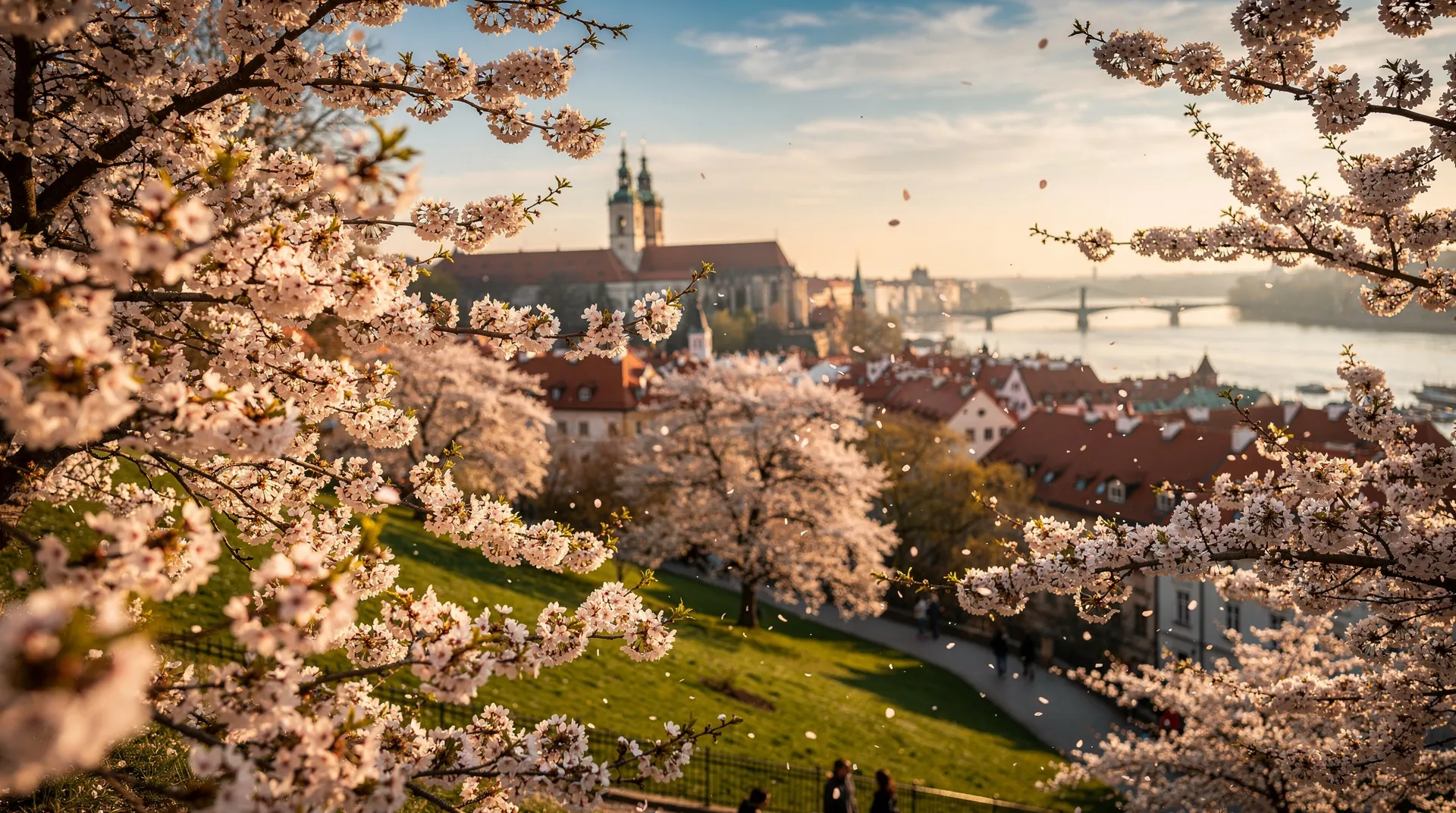
March is the month Prague wakes up. The light returns in earnest — by month’s end you have 12.5 hours of daylight — and with it comes a palpable shift in city energy. Café terraces that spent three months under plastic sheeting reappear with heaters and hopeful baristas. The first Japanese cherry trees on Petřín Hill start to bud (though full bloom is typically April). Joggers reclaim the Vltava embankment. The whole city seems to collectively decide that winter is over, even when the thermometer disagrees.
| At a glance | |
|---|---|
| Where | Old Town Square is at its most architecturally clean in March; Petřín Hill for the first blossoms — see the Staré Město guide |
| Cost | Around €60–80/night for a central 3-star double in early March, rising 15–20% if Easter is close |
| Time needed | 3–5 days covers the main sights comfortably, plus one day trip if the weather cooperates |
| Getting there | Václav Havel Airport, then the airport-to-city transfer; the centre is compact and walkable |
| Best time of day | Mid-morning to early afternoon for outdoor sights; weather is most reliable between 11 AM and 3 PM |
Staroměstské náměstí (Old Town Square) gains a different texture in March. The Christmas-market scaffolding is long gone. Easter-market stalls are either just setting up (if Easter falls in March, as it occasionally does) or being planned for next month. The square itself, clean of both winter and summer crowds, reveals its full architectural splendour: the Týn Cathedral’s twin spires, the pale gold of the Kinský Palace, the dark stone of the Old Town Hall tower all visible without a hedge of shoulders blocking the view.
Weather and what to pack
March averages a high of 10°C (50°F) by month’s end, starting at around 5°C (41°F) in early March. Lows sit between 2 and 4°C (36–39°F). You will get rain — March sees about 10–12 rainy days — along with a mix of bright spring days and overcast grey ones. Snow is still possible in early March.
Pack: A transitional wardrobe works best. Keep the thermal base layer for the first half of the month, but you can swap the heavy winter shell for a lighter waterproof jacket by mid-March. Layering remains key. A compact umbrella is useful. Comfortable waterproof shoes rather than heavy winter boots are fine from mid-month.
Crowds and prices
March is shoulder season in Prague, with crowds building toward the Easter rush in April (if Easter is in April) but still well below summer levels.
- Hotels: Prices in early March mirror late February — €60–80/night for a central 3-star double (1,525–2,035 CZK). Rates climb 15–20% in the second half if Easter approaches.
- Prague Castle: Queues start to appear on sunny weekends but remain minimal on weekdays. Arrive by 9 AM on any day to beat any build-up.
- Restaurants: Walk-in dining possible most places until mid-March. Book ahead for Easter weekend.
What’s on in March
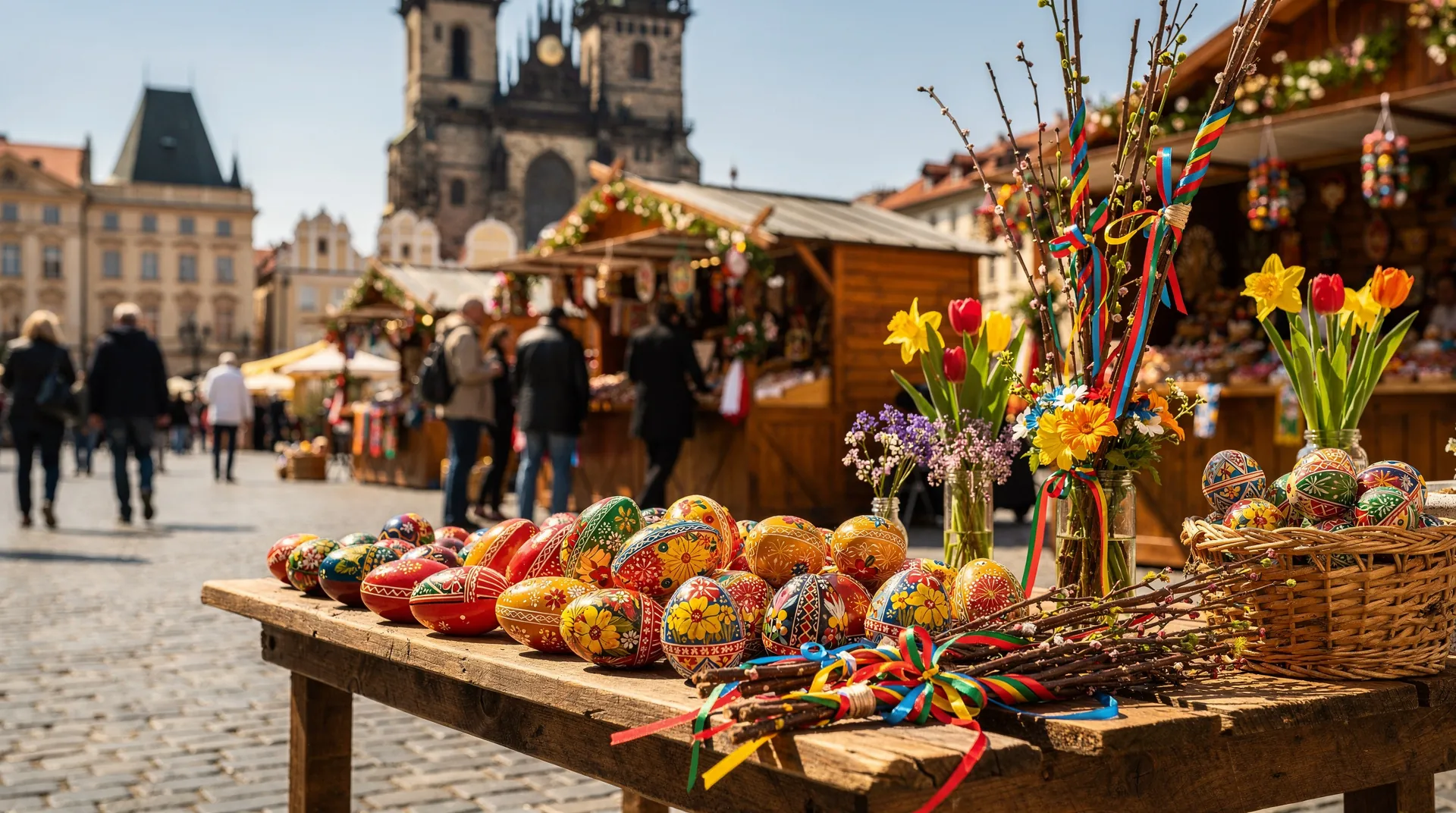
Easter market at Staroměstské náměstí (late March if Easter falls in March/early April): The Old Town Square Easter market is one of Prague’s great seasonal events — see the dedicated easter-markets page for full coverage. In some years it opens as early as late March.
International Book Fair (late March): The Prague Book Fair at the Holešovice Exhibition Grounds draws Czech and international publishers. Mostly Czech-language content, but a good window into local literary life.
Spring film festivals: The Febiofest international film festival typically takes place in late March or early April, screening at cinemas including Světozor (Vodičkova Street) and Bio Oko (Holešovice).
Beer garden season begins (tentatively): The hardiest Prague beer gardens — Riegrovy sady in Vinohrady being the most famous — sometimes open for business on mild March weekends. It’s weather-dependent, but the Riegrovy sady beer garden with its valley view has been known to serve cold Pilsner Urquell in March sunshine to a delighted crowd.
What’s open, what’s closed
- Prague Castle: Open daily, 9 AM–5 PM all year round.
- Petřín: Tower, funicular, and mirror maze all operating. The cherry blossoms are starting to bud.
- Boat cruises: Full schedule of dinner and sightseeing cruises resumes in March.
- Outdoor activities: Bike tours, segway tours, and walking tours all ramp up considerably in March, though weather is still variable.
Best things to do this month
1. Walk Petřín Hill at the first blossom. Even before the full April explosion, a March walk up Petřín through the orchards is rewarding. The funicular runs daily and the tower gives panoramic views.
2. Take a food market tour. March is when Prague’s indoor and outdoor food markets start coming back to life. The Náplavka farmers’ market (Rašínovo nábřeží embankment) opens on Saturdays from March, offering Czech cheeses, charcuterie, and pastries. A cooking class combining a market visit is ideal this time of year.
3. Explore Vinohrady and Žižkov on foot. These adjacent residential neighbourhoods southeast of Wenceslas Square are where Prague’s authentic café scene lives. March is ideal for a leisurely walk through Art Nouveau apartment streets, stopping at Café V lese, Café Jedna, or the Žižkov television tower’s famous baby sculptures.
4. Do a city bike tour. March isn’t peak cycling weather, but the city is manageable — traffic is lighter than summer, and bike-tour operators are running with smaller groups. An e-bike tour gives you the hills without the effort.
5. Visit the National Technical Museum (Národní technické muzeum). Letná Park’s impressive museum — housing vintage trains, cars, aircraft, and a stunning glass-vaulted transport hall — is a March gem: indoors, affordable (entry ~€7 / 180 CZK), and rarely crowded.
Sample day in March
8–10 AM: Breakfast at Café Savoy in Smíchov — one of Prague’s finest Neo-Renaissance café interiors, with excellent pastries. Tram 12 or 20 from Smíchov gives fine river views.
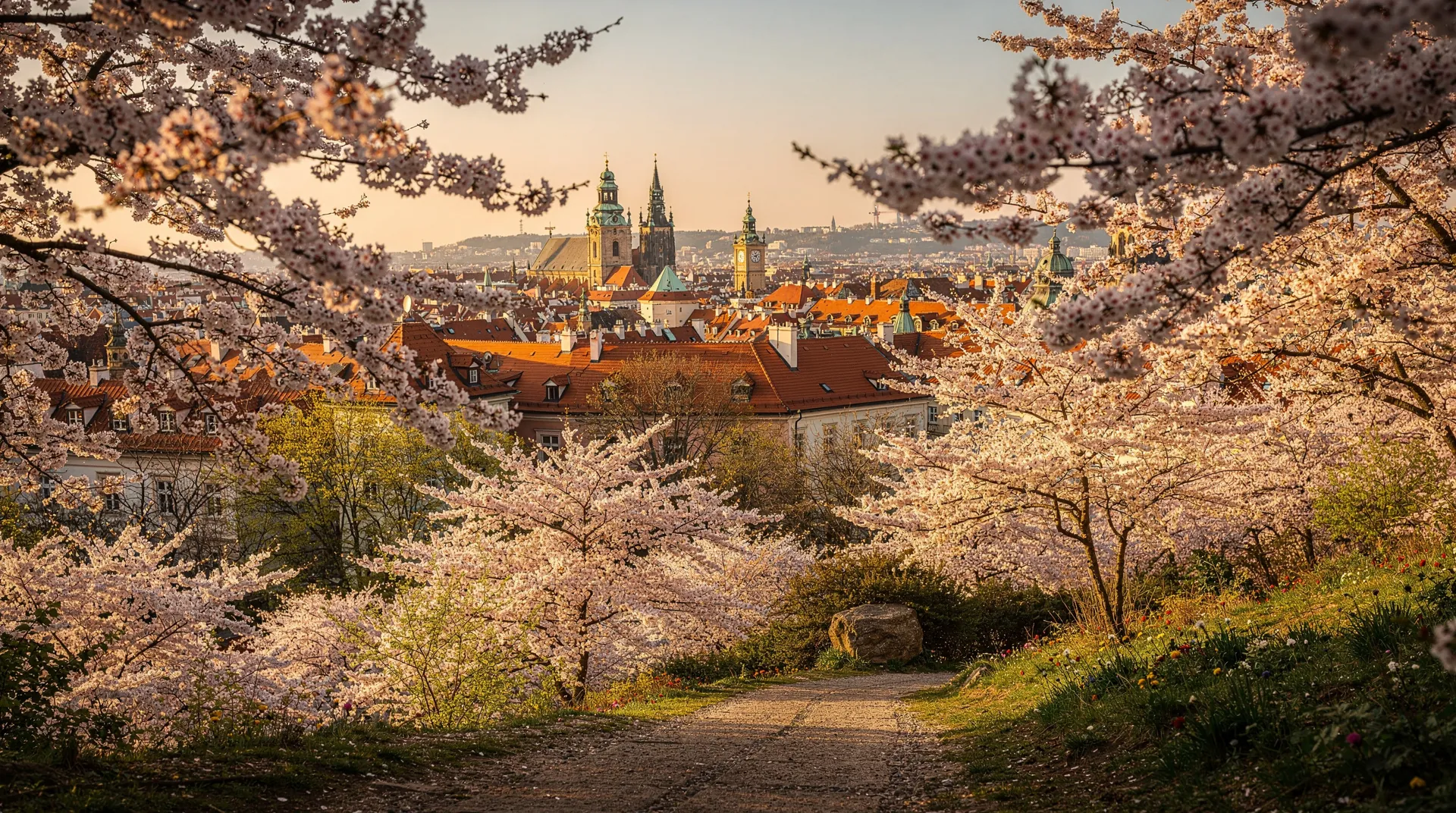
10 AM–12:30 PM: Petřín Hill. Take the funicular (free with a 24-hour or 72-hour PID ticket, not included in 30- or 90-minute tickets) up, visit the Lookout Tower, and walk the orchard path back down through the budding cherry trees.
12:30–2 PM: Lunch in Malá Strana — U Malé velryby (Small Whale) on Maltézské náměstí does excellent Czech classics at honest prices.
2–5 PM: Old Town and Josefov walking tour — still no real crowds, and the late-afternoon light on the Jewish Quarter synagogues is superb.
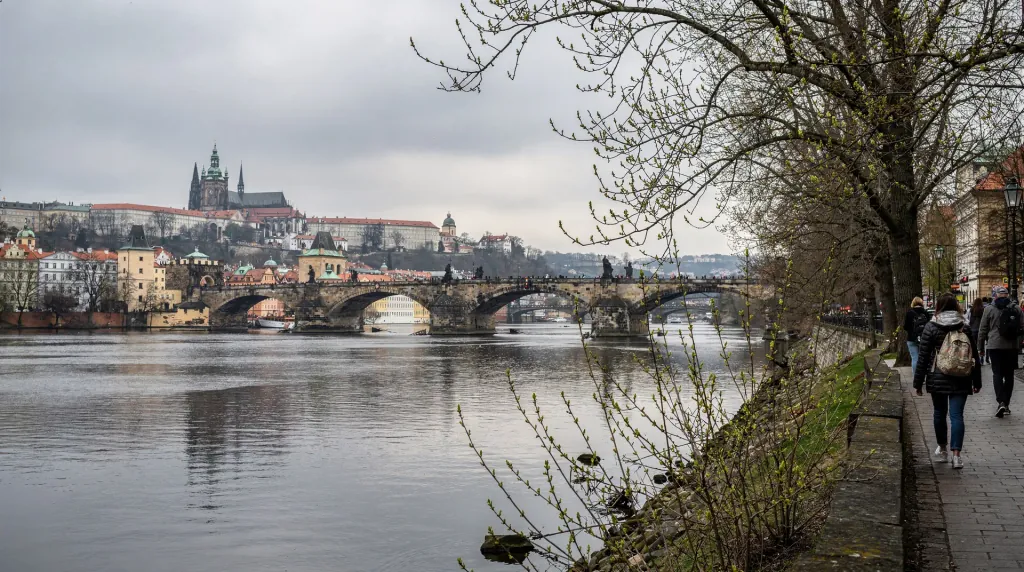
5–7 PM: Walk along the Vltava embankment south from Cechuv Bridge, watching the river traffic. The Náplavka stretch is lively even on March evenings — street food stalls open on weekends.
7 PM onward: Dinner in Vinohrady. Eska on Pernerova Street (Karlín, nearby) is excellent for contemporary Czech cuisine (€20–35 / 510–890 CZK for two courses). Book ahead.
How March compares to the surrounding months
| Month | Avg high | Crowd level | What you gain | What you trade off |
|---|---|---|---|---|
| February | 6°C | Low | Lowest prices of the year | Genuinely cold, no blossoms, shorter days |
| March | 10°C | Moderate | Shoulder-season prices, first blossoms, longer daylight | Weather still unreliable, occasional snow early on |
| April | 15°C | High | Cherry blossom peak, Easter markets | Noticeably more tourists, higher prices |
Travellers who want value over spectacle should choose March; those chasing the blossom peak and Easter atmosphere should wait for April and accept the crowds that come with it.
Getting around Prague in March
March’s mixed weather makes the Prague metro and trams the most reliable way to move around on the wetter days, while the dry, sunny stretches reward walking through Malá Strana and up to Petřín. For evening returns from Vinohrady or Žižkov restaurants, ride-hailing apps are a reasonable backup once the metro stops.
Questions people ask about Prague in March
When do the cherry blossoms bloom in Prague?
Peak cherry blossom (sakura) on Petřín Hill is typically in the first two weeks of April. In March you will see early buds, and a warm spell can push the first blossoms open by late March. The Petřín orchards also have plum and apple trees that bloom before the cherries.
Is March too early for outdoor activities?
Not too early, but dress accordingly. Bike tours and walking tours run throughout March, and many days are fine for outdoor exploration. The odd cold snap or rain day is part of the deal. Check the forecast 48 hours ahead and plan your outdoor days on the good ones.
Are Easter markets open in March?
It depends on the year. Easter moves between late March and mid-April. In 2026, Easter Sunday falls on 5 April — so the Easter markets at Old Town Square and Wenceslas Square will open in late March. Check the exact dates on prague.eu closer to the time.
How does March compare to April for visiting Prague?
March is cheaper and less crowded, but colder and with fewer spring blooms. April has the cherry blossom peak, the Easter markets, and warmer weather — but also noticeably more tourists. If you want value over spectacle, choose March.
Is Prague busy during school holidays in March?
Czech schools have their spring (Easter) break around Good Friday and Easter Monday, which can coincide with March in some years. International visitor numbers also spike around Easter. Outside of this window, March is genuinely quiet.
Is March a good time for a Prague day trip?
Yes, with caveats — Karlštejn and Kutná Hora are both accessible year-round and less crowded in March, but check the weather 48 hours out since outdoor castle grounds are less enjoyable in rain. Indoor-heavy day trips are a safer bet if the forecast is uncertain.
Do I need to book anything in advance for a March visit?
Very little. Hotels 4-6 weeks ahead is plenty, Prague Castle needs no pre-booking on weekdays, and restaurants are walk-in except right around the Easter market opening weekend.
A perfect week in March
Day 1 (Monday): Arrive and settle in. Evening walk to Old Town Square without crowds — the square is at its most architecturally pure in March with no market installations. Dinner at Lokál Dlouhá for tank-conditioned Pilsner and svíčková.
Day 2 (Tuesday): Prague Castle at 9 AM sharp — no queue, golden morning light on St. Vitus. Basic ticket (Cathedral, Old Royal Palace, Golden Lane). Afternoon: Malá Strana streets and the Lobkowicz Palace midday concert if the schedule aligns.
Day 3 (Wednesday): Jewish Quarter (Josefov) — Pinkas Synagogue, Old Jewish Cemetery, Spanish Synagogue. Afternoon: Old Town Hall tower for the 360° view. Evening: Hemingway Bar for cocktails.
Day 4 (Thursday): Petřín Hill — funicular up, tower, mirror maze, walk through budding orchards. Afternoon: Vinohrady neighbourhood walk, Café Jedna, Pivovar Vinohrady for an evening beer.
Day 5 (Friday): Náplavka Saturday market warm-up (the Friday afternoon embankment already has wine stalls open). Book a river dinner cruise for the evening — the 7 PM departure in March gives city views in the winter-end light.
Day 6 (Saturday): Náplavka farmers’ market in the morning (opens 8 AM, closes 2 PM). Afternoon: day trip to Karlštejn Castle (1 hour by train, the castle surrounded by early spring forest). Evening: jazz at Reduta.
Day 7 (Sunday): Stromovka or Divoká Šárka park walk (both beautiful in early spring) for a local neighbourhood morning. Afternoon: National Technical Museum in Letná before departure.
Three must-do events in March 2026
1. Easter market opening (expected 22 March 2026, at Old Town Square and Wenceslas Square): if Easter falls on 5 April, the markets open the week of 22 March. Hand-painted kraslice eggs, grilled klobása, warm medovina. The opening week has the best selection and least crowds before the Easter weekend rush.
2. Febiofest International Film Festival (late March 2026): Prague’s major international film festival screens at Světozor (Vodičkova 41) and other cinemas. Czech and international films; some screenings have English subtitles. Check febiofest.cz for the 2026 programme.
3. Náplavka market season opening (first Saturday of March): The riverside farmers’ market reopens after its winter hiatus. Moravian cheese, local honey, fresh-baked sourdough, artisan jam. Free entry. 8 AM–2 PM, Rašínovo nábřeží embankment.
Best photo spot in March
Petřín Hill at the first blossom, late March afternoon. The plum trees on Petřín Hill bloom before the cherries — a light waterfall of white-pink flowers against bare branches. Walk up the southern slope (tram 22 to Pohořelec, then down through the orchards) on a clear late-March afternoon. The city views through the early blossom are the composition. Best light: 3–5 PM when the low-angle sun illuminates the flowers from the side.
What locals do in March
Náplavka market Saturdays: Prague residents arrive with shopping bags and dogs at 8 AM. The stalls sell things Praguers actually buy: Šumava cream cheese, Moravian wine by the bottle, fresh farm eggs (including already-dyed Easter eggs at the end of March). It is not staged for tourists.
First beer garden Saturday: When the temperature hits 12°C on a Saturday afternoon, the Riegrovy sady beer garden opens and Praguers arrive in force. This is a genuine local event — a cultural declaration that winter is over. Join them.
Sunday cooking classes: Prague’s weekend cooking class market peaks in spring. The approach is market visit (Náplavka or the Manifesto indoor market) followed by a cooking session. Czech dumplings and svíčková are the March repertoire.
Kid-specific activity in March
National Technical Museum (Národní technické muzeum, Kostelní 42, Holešovice). The glass-vaulted transport hall houses full-size historic trains, vintage cars, and a WW1-era biplane hanging from the ceiling. Children respond enthusiastically to the scale. Affordable (adult €7 / 178 CZK, children under 15 free). Tram 12 or 17 from the centre to Strossmayerovo náměstí. Allow 2 hours.
Budget note for March
March remains one of the best-value months in Prague. Central 3-star hotels: €65–85/night (1,645–2,155 CZK) for a double in early March, rising to €80–100 by late March as Easter approaches. Compare to May (€110–140) or July (€140–180). A 4-night March stay saves €100–200 vs the same trip in peak spring or summer. Prague Castle has no April queue problem in March — no skip-the-line booking needed for weekday visits.