Winter in Prague, in brief
Prague’s winter has two completely different personalities, and it is worth understanding which one you are signing up for. The first personality is December: festive, illuminated, Christmas-market fragrant, and genuinely crowded on weekend evenings. The second personality is January and February: the city returned to its residents, the tourist infrastructure dialled back, the hotel rates at their annual minimum, and the experience of Prague as a living Central European capital — rather than a tourist spectacle — available in almost pure form.
Both have their distinct appeal. December Prague is the city that appears on every winter travel wish-list: the medieval square with Advent market, the snow-dusted spires, the mulled wine steam. January Prague is the city that serious travellers quietly prefer: empty cobblestones at 9 AM, castle visits without queuing, restaurants that have time to seat you properly, and hotel prices that make a 5-day trip affordable on any budget.
Winter at a glance
| Where | Old Town Square markets (December), then the whole historic centre near-empty in January/February |
| Cost | Cheapest season overall — January hotels around €55–75/night vs €130–180 in July |
| Time needed | 3–4 days covers the highlights comfortably; add a day for Christmas market season in December |
| Getting there | Václav Havel Airport, then Airport Express bus or taxi — see the airport-to-city guide |
| Best time within winter | January for value and quiet; early December (before the last two weekends) for markets without the worst crowds |
Which winter month suits you
| Month | Weather | Crowds | Best for |
|---|---|---|---|
| December | Cold, -3 to 4°C, occasional snow | High on weekends, calm weekday mornings | Christmas markets, Advent concerts, festive atmosphere |
| January | Coldest, driest | Lowest of the year | Rock-bottom prices, empty castle, serious culture without crowds |
| February | Cold, brightening toward month-end | Low, rising slightly at month-end | Masopust carnival, still-cheap rates, shoulder-season build-up |
Month-by-month within winter
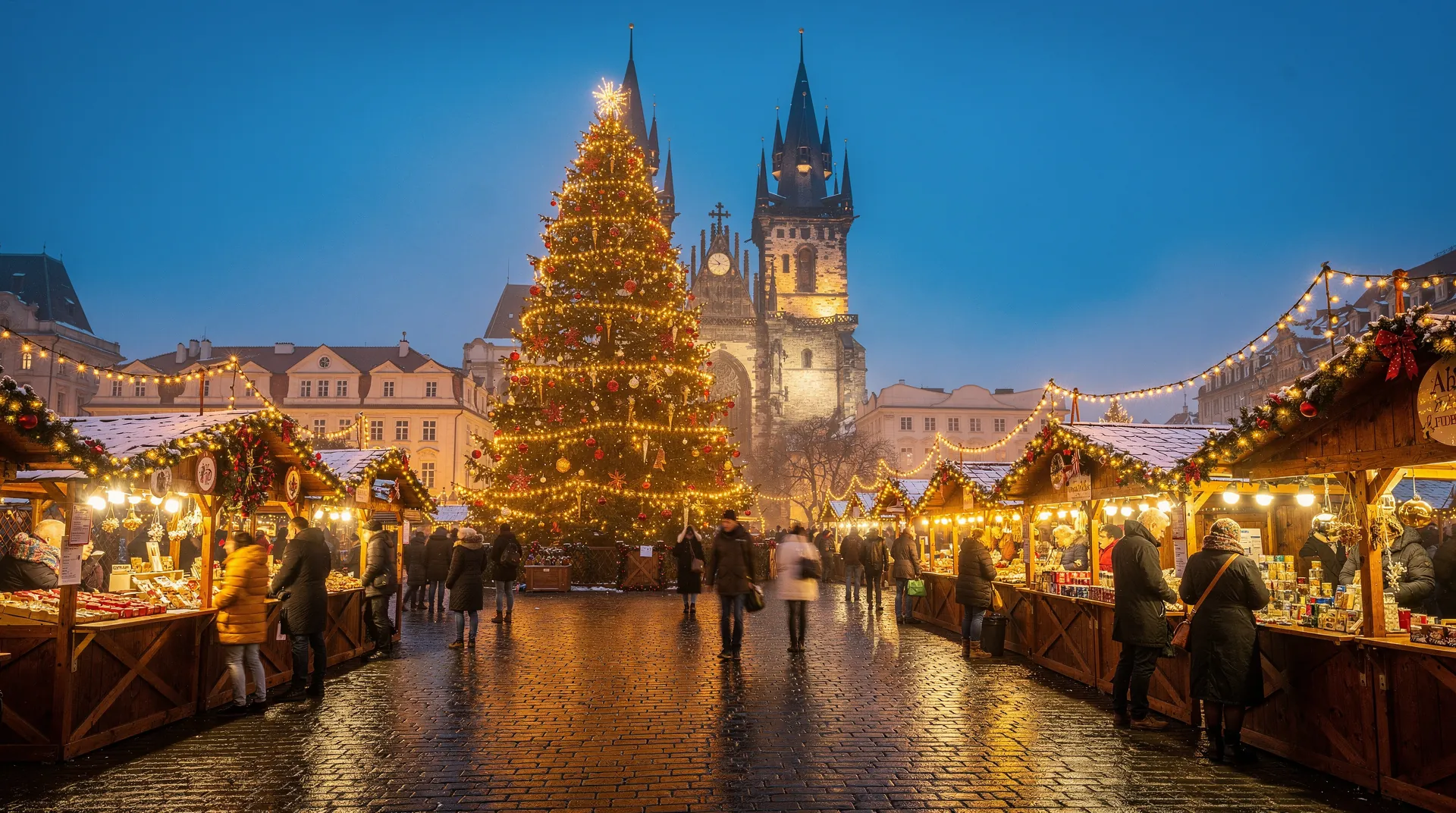
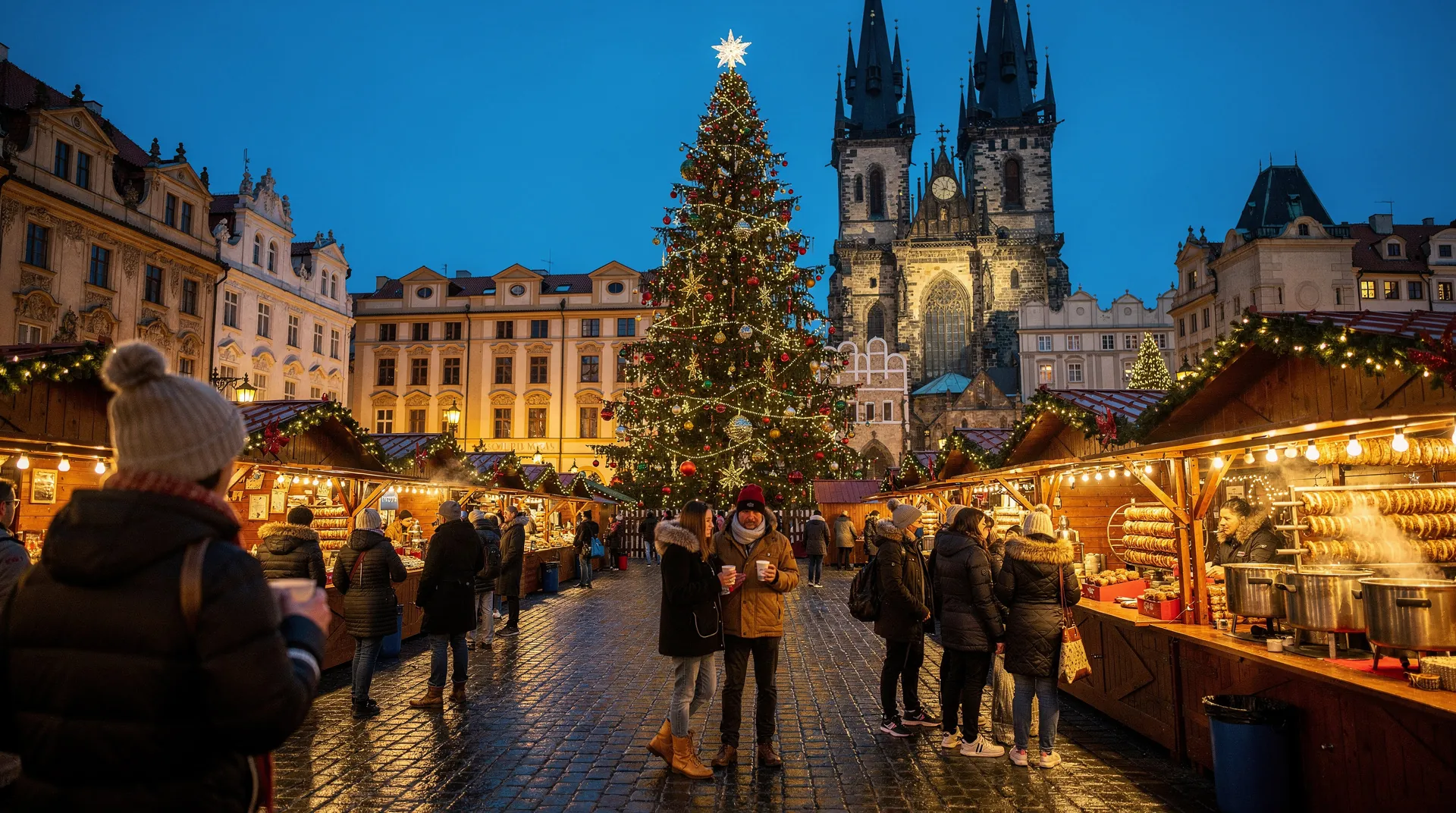
December is Prague’s Christmas-market month and one of the most popular travel months of the year. The Old Town Square market opens in late November and runs to 6 January, with the Prague Castle market, Wenceslas Square market, and Náměstí Republiky market adding options. Advent concerts fill Prague’s baroque churches and concert halls. The Rudolfinum’s Christmas concert sells out months in advance.
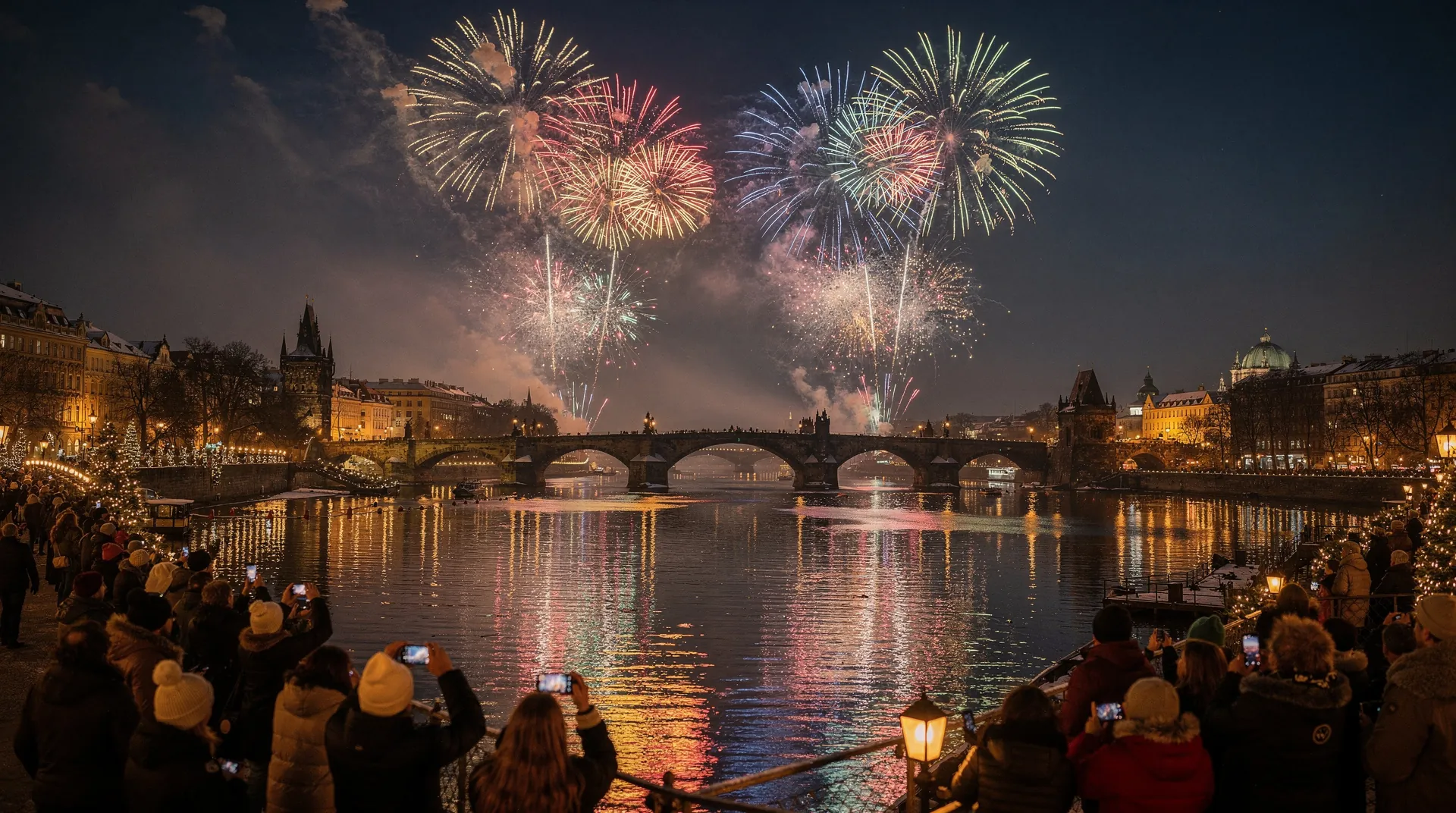
December weekend evenings at the market are very crowded — but weekday mornings are calm, atmospheric, and genuinely beautiful. New Year’s Eve is its own category: enormous crowds, fireworks above the city, and fully-booked central accommodation that requires 3–4 months’ advance planning. Read the full December guide and Christmas markets page for complete coverage.
January is Prague’s best-kept travel secret. The Christmas crowds are gone from 7 January. Hotel rates plummet — a central 3-star double that cost €160 on a December weekend is available for €60 in January. The castle, the synagogues, the museums — all accessible with essentially no queuing on any day of the week. The classical concert season runs actively (Czech Philharmonic, Estates Theatre, Klementinum) and tickets are easy to get. Snow is possible and beautiful; when it comes, the city is extraordinary. Read the full January guide for details.
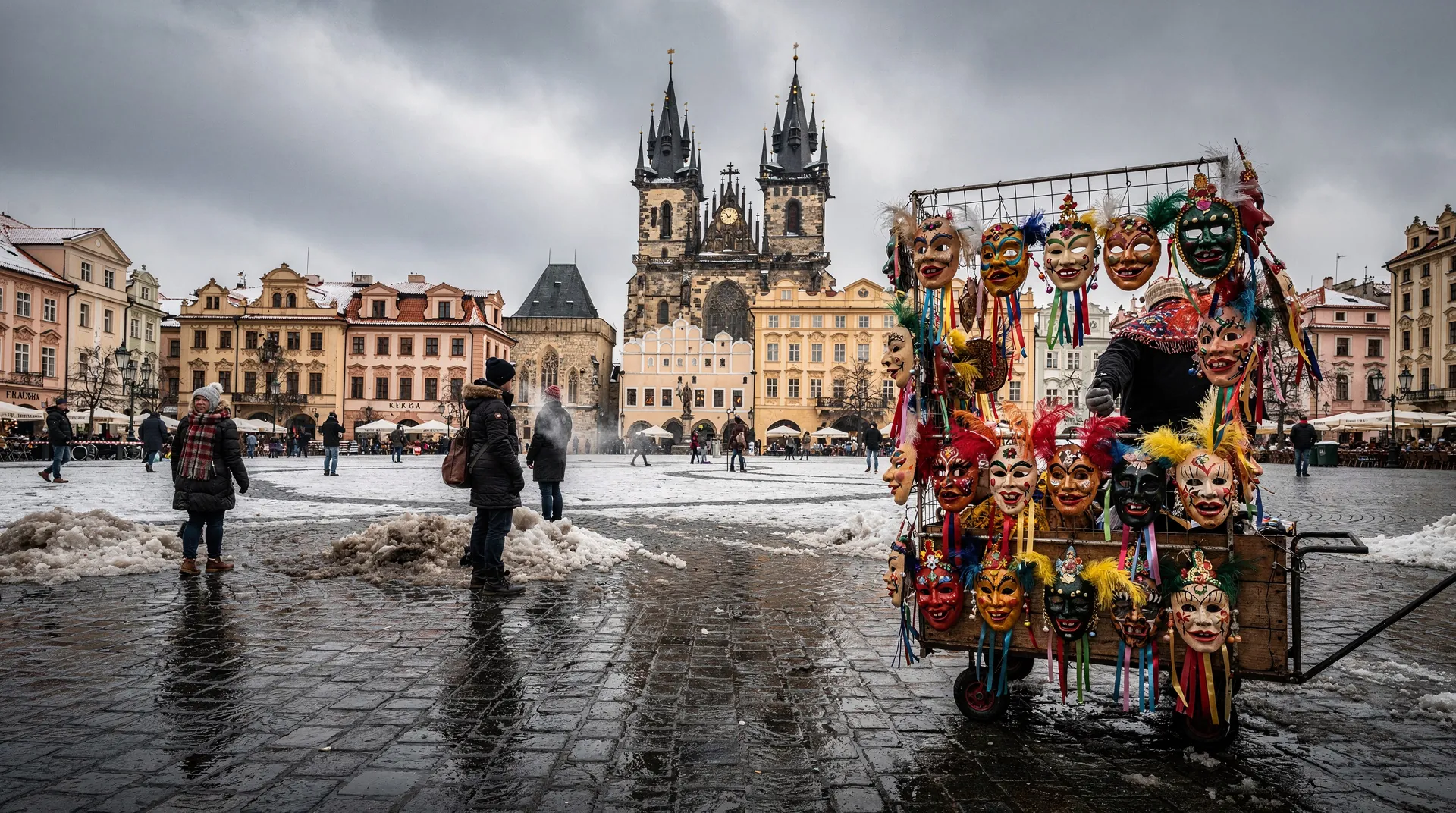
February occupies a sweet spot between January’s absolute quiet and March’s shoulder-season build-up. The Masopust pre-Lenten carnival (dates vary — always the week before Lent) brings costumed parades to Žižkov, Malá Strana, and Vinohrady. This is a genuinely local, neighbourhood-scale celebration rather than a commercialised tourist event. St. Martin’s young wine has given way to the regular Moravian and Bohemian wine offerings at the city’s excellent wine bars. Valentine’s Day weekend pushes prices briefly upward but is otherwise not a significant issue. Read the full February guide for details.
What to pack for Prague in winter
All three months require the same approach: full winter gear. Thermal base layers (tops and bottoms) are non-negotiable. A mid-layer fleece or down jacket. A waterproof, windproof outer shell. Waterproof, insulated boots with grip — the cobblestones are treacherous when icy. Hat that covers your ears. Warm gloves. Scarf.
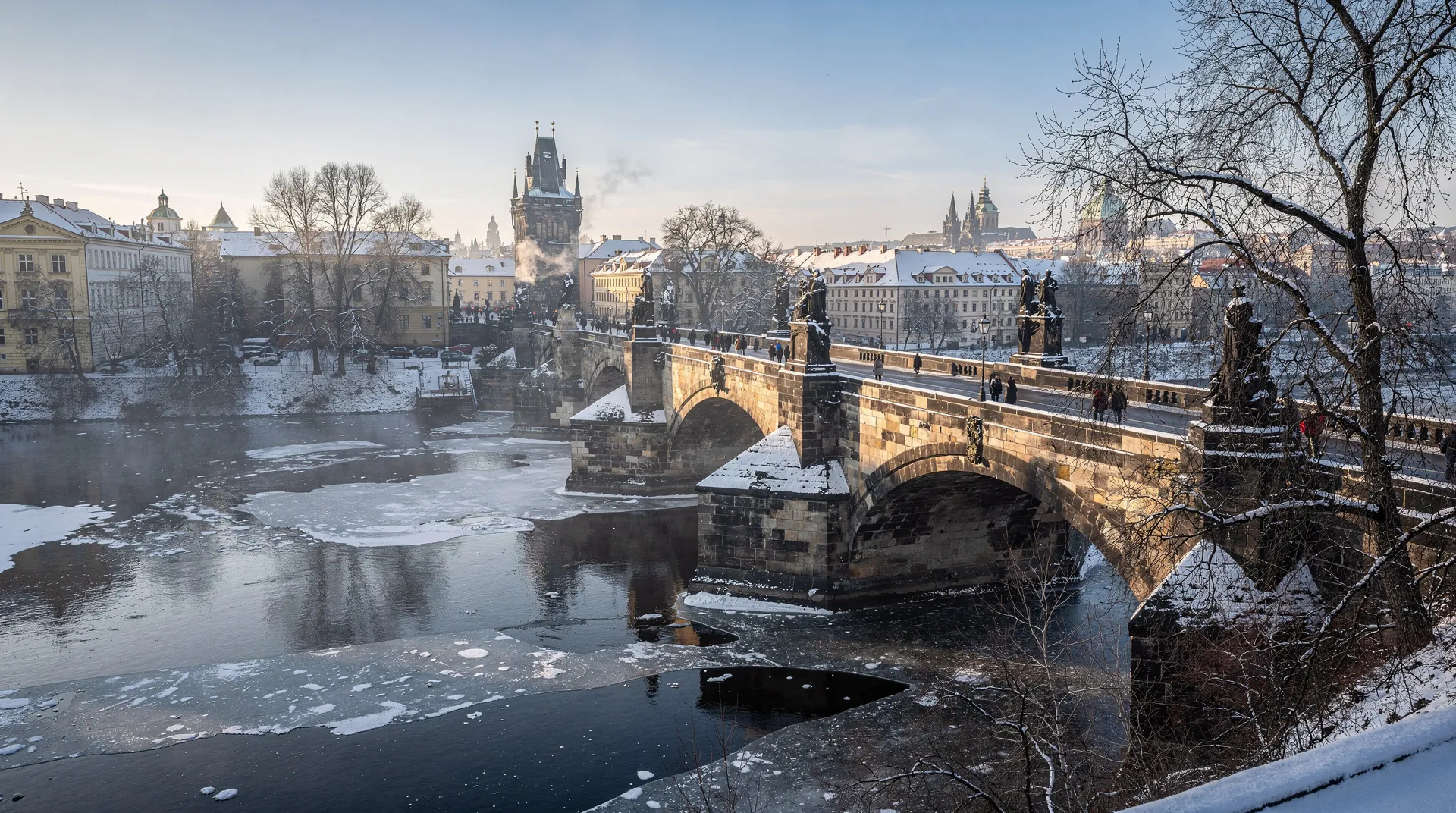
The cold in Prague is not extreme by Central European standards (-3 to 4°C is typical), but standing at a Christmas market stall or on Charles Bridge for 30 minutes in January requires proper protection. Layering allows you to peel off in heated trams, restaurants, and museums.
What’s happening in winter Prague
- Christmas markets (late November–6 January): Old Town Square, Wenceslas Square, Prague Castle, Náměstí Republiky. Peak weekend evenings; calm weekday mornings.
- Advent and Christmas concerts (December): Rudolfinum, Estates Theatre, Klementinum, Spanish Synagogue. Book early.
- New Year’s Eve (31 December): Fireworks above the city, enormous crowds on embankments and bridges.
- Three Kings Day (6 January): Epiphany processions through Old Town neighbourhoods.
- Masopust Carnival (varies, week before Lent — late January to late February): Costumed parades in Žižkov and Malá Strana.
- St. Martin’s new wine (11 November, leading into winter drinking season).
- Czech winter classical music season (all three months): Full concert programmes at all major venues.
Best activities for winter Prague
Prague Castle in winter solitude (January/February): Walk through St. Vitus Cathedral and Golden Lane with almost no other visitors. The medieval atmosphere is never more present than in the bare-tree, cold-air, low-light weeks of January. Allow a full morning and take the time the crowds prevent in summer.
December market on a weekday morning: The Old Town Square Christmas market at 10 AM on a Tuesday is the version to aim for — stalls stocked with hand-painted ornaments and kraslice eggs, the smell of open-fire klobása, and space to actually look at things. Avoid Saturday evenings, which are genuinely crowded.
Advent concert at the Klementinum: The Mirror Chapel’s intimate baroque interior, warm against December cold, holding a string quartet performing Vivaldi or Handel — this is a winter Prague experience that repays the advance booking many times over.
Indoor culture for the coldest days
Winter is the season that rewards Prague’s indoor attractions the way summer rewards its riverside ones. The Astronomical Clock tower climb is genuinely more pleasant in January — no queue for the lift, and the clock room and mechanism room are worth the half-hour regardless of weather. Jewish Quarter synagogues are far less crowded outside summer, letting you actually read the memorial inscriptions rather than shuffle past them.
The Strahov Monastery libraries pair naturally with a warm bowl of soup at the brewery restaurant afterward — see the beer and breweries guide for the full brewery landscape, including which ones are genuinely worth a winter visit versus which are best skipped. And classical concerts run at their fullest programme of the year in these three months, with tickets easier to get than in the touring-heavy summer season.
Winter itinerary recommendation
A 3-day winter visit works best as follows: Day 1 — Old Town Square Christmas market (weekday morning), Josefov synagogues in the afternoon (no summer queues), Klementinum Mirror Chapel concert in the evening; Day 2 — Prague Castle at 9 AM (near-solitude in January/February), Malá Strana lunch and wine bar afternoon, Czech Philharmonic concert at the Rudolfinum in the evening; Day 3 — Wenceslas Square and National Museum, Museum of Communism (perfect indoor-winter activity), Masopust neighbourhood if in late February. Link to the 3-day Prague itinerary for a complete day-by-day version.
Winter packing list
The same packing list applies across all three winter months:
- Thermal base layers (top and bottom) — non-negotiable
- Mid-layer: down gilet or fleece (for layering under your coat)
- Outer shell: waterproof, windproof winter coat
- Hat covering ears (you will be grateful)
- Warm gloves or mittens
- Scarf long enough to wrap twice
- Waterproof insulated boots with grip soles — cobblestones are treacherous when icy
- Layering underlayers for museums (overheated) and then re-adding outside
Carry gloves and hat accessible at all times — you will put them on and take them off dozens of times between heated interiors and cold streets.
Best photo spot this winter
Old Town Square Christmas market, weekday morning before 11 AM (November–January). The Gothic Týn Cathedral spires lit by morning light, the Baroque façades of Staroměstské náměstí, the decorated market tree, and the smell of klobása on open coals — this is Prague’s most photographed winter scene. The photography window: weekday mornings 9–11 AM when light is angled, crowds are thin, and stall-holders are restocking with fresh goods. After 11 AM on weekends it becomes difficult to move. Bring a wide-angle lens (24mm) for the full square with spires, a short telephoto (85mm) for market detail and faces.
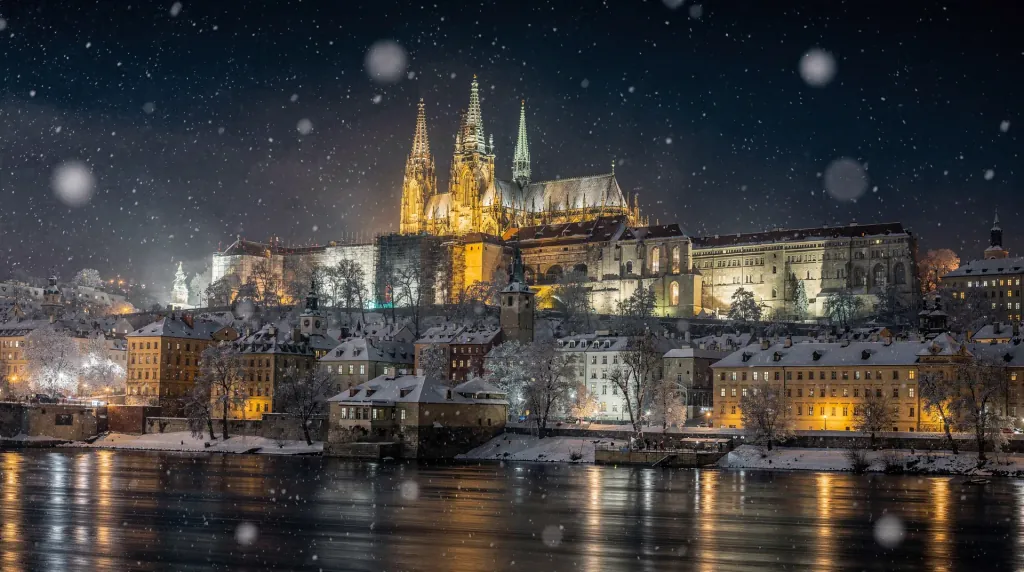
For January/February without the market: the snow-covered Castle at dawn, photographed from the Letná terrace with the mist-filled Vltava valley below, is exceptional.
What locals do in winter
Masopust brunch in Žižkov (February, the week before Lent): The Masopust pre-Lenten carnival is a neighbourhood event in Žižkov and Malá Strana. Costumed processions (bears, devils, horses, witches) parade through the streets on Masopust Tuesday. Neighbourhood restaurants and wine bars run special Masopust brunch menus with pork-heavy dishes (it’s the last feast before Lent). Not a tourist event — follow the noise and find a local café.
Czech Philharmonic season concerts (all winter): Prague’s classical music season peaks in December–February when the international touring circuit slows down and the Philharmonic plays its full home programme. January and February are the best months for last-minute Czech Philharmonic tickets at face value.
Museum of Communism on a grey January afternoon: The Museum of Communism (Muzeum komunismu, Na Příkopě 10) is one of Prague’s most underrated attractions and perfect for a cold grey afternoon. The exhibition traces Czech life under Soviet-era Communism with original propaganda, surveillance equipment, and personal testimonies. Combine with the Communism and Bunker Tour for a full half-day. Prague: communism and bunker tour with 1970s canteen lunch — visit the nuclear bunker and eat a genuine communist-era canteen lunch.
Svařák in a Malá Strana wine bar: Prague’s smaller wine bars serve warm mulled wine (svařák) and hot mulled mead (medovina) all winter. The Café Savoy and the wine bars on Míšeňská Street in Malá Strana are good choices — tucked under the castle, quiet on January weekday evenings, with a local rather than tourist crowd.
Kid-specific activity this winter
Advent concert at the Klementinum Mirror Chapel (December). The Mirror Chapel holds 150 people and seats children alongside adults in a genuinely intimate space. Baroque Christmas music — Corelli, Handel, Vivaldi — in a gold-gilded candlelit interior: this is the version of Prague’s classical concert scene that appeals to children who find the Rudolfinum’s formality intimidating.
Concerts run approximately 60 minutes. Book via GYG 2–3 weeks ahead for December dates. Prague: Klementinum Mirror Chapel classical music concert.
Budget note for winter
January is Prague’s cheapest month. A central 3-star hotel double that costs €160 in peak summer or €120 in October drops to €55–75 in January. A 5-night January stay in a central hotel costs less than a 3-night summer stay at the same property. Restaurant prices stay the same year-round — the savings are almost entirely on accommodation.
December is the exception: Christmas market season pushes central hotel rates up to €120–160/night on December weekends, and NYE is €200–400+. The January gap is immediate — from 7 January, prices reset to near-minimum.
February is slightly above January (Valentine’s weekend applies a small premium) but still 40–50% below summer peak. A 4-night February break from €60–80/night in a decent central location is realistically achievable.
Frequently asked questions about Prague in winter
Does it snow in Prague in winter?
Snow is possible throughout December–February but not guaranteed. Prague averages 40–50 days below 0°C per year, and several snowfall events. When snow comes, the city is extraordinary — the castle in snow is one of the great winter urban images. But visitors planning a trip specifically for snow cannot count on it; plan for cold and possibly wet, and treat any snow as a bonus.
What is Masopust?
Masopust is the Czech pre-Lenten carnival, equivalent to Mardi Gras or Faschng. It runs in the days before Ash Wednesday (date varies — typically late January to late February). Costumed processions parade through Žižkov, Malá Strana, and Vinohrady. Neighbourhood pubs serve pork-heavy Masopust menus. It is a genuinely local tradition and the best winter folk event in Prague.
Are Prague Castle and the Jewish Museum open in winter?
Prague Castle’s buildings are open daily 09:00–17:00 all year round. The Jewish Museum sites are open Sunday–Friday; closed Saturday (Šabbat) and Jewish holidays. Both are dramatically quieter in January and February — this is the best time to visit without crowds.
What is the Klementinum Mirror Chapel concert?
The Mirror Chapel (Zrcadlová kaple) inside the Klementinum Jesuit complex is a Baroque jewel seating 150 people. Classical music concerts run almost every evening year-round, featuring chamber ensembles performing Vivaldi, Handel, Bach, and Mozart. In December, the programme adds Advent and Christmas repertoire. See our classical concerts guide for full details.
Is January too cold to enjoy Prague?
No — the cold is manageable with proper layering (thermal base layers, a windproof shell, insulated boots), and what you get in exchange is a version of Prague that summer visitors never see: empty squares at 9 AM, a castle you can actually linger in, and restaurant tables available without a wait. Most visitors who try January once become repeat January visitors.
What’s better for Christmas markets — Prague or Vienna or Budapest?
All three run good Christmas markets, and the choice usually comes down to overall trip priorities rather than the markets alone. See Prague vs Budapest vs Vienna for a direct comparison — in short, Prague’s Old Town Square setting is the most visually striking of the three, while Vienna’s markets have a slight edge in food variety.