Why Letná is where locals go when they want a view and a beer
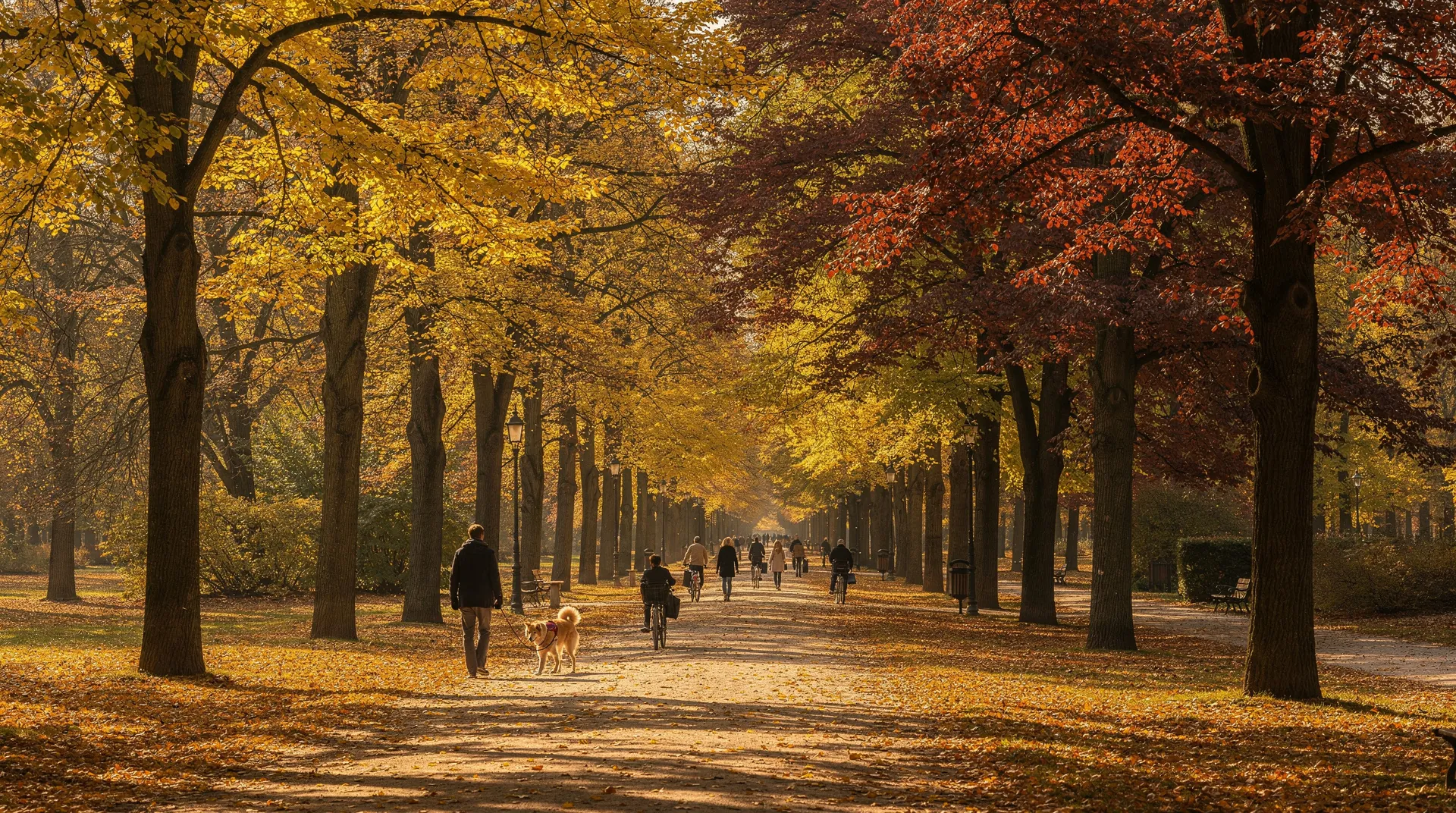
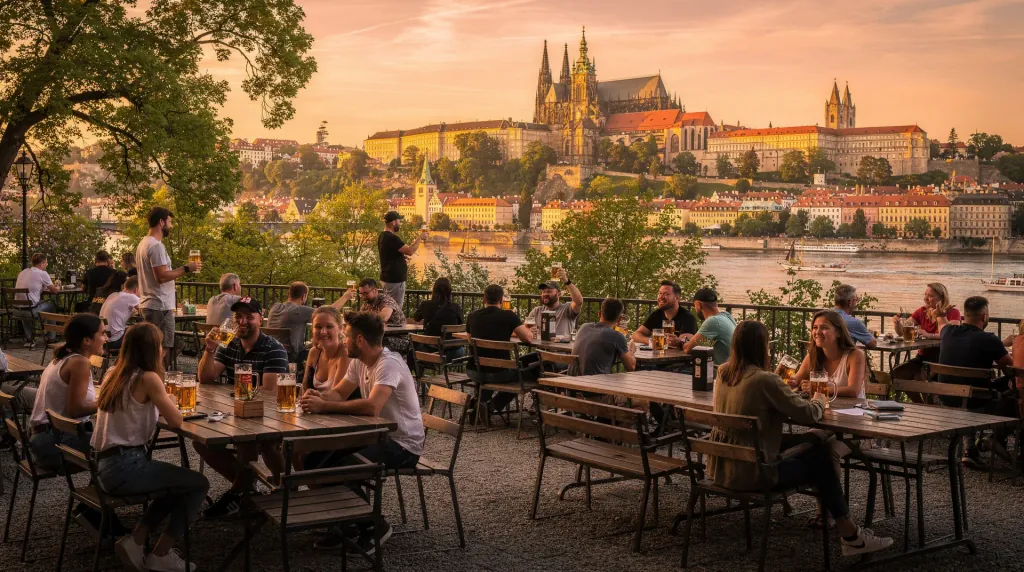
Letná is one of those parks that functions as a social barometer. On a Saturday afternoon in May, the paths above the Vltava are full of people who live in Prague: joggers, cyclists, people walking dogs, families with pushchairs, students with books. At the beer garden on the terrace, tables are crowded and the queue for a half-litre of Kozel is ten minutes long. If you want to see how Prague residents actually spend their free time, this is a better answer than most.
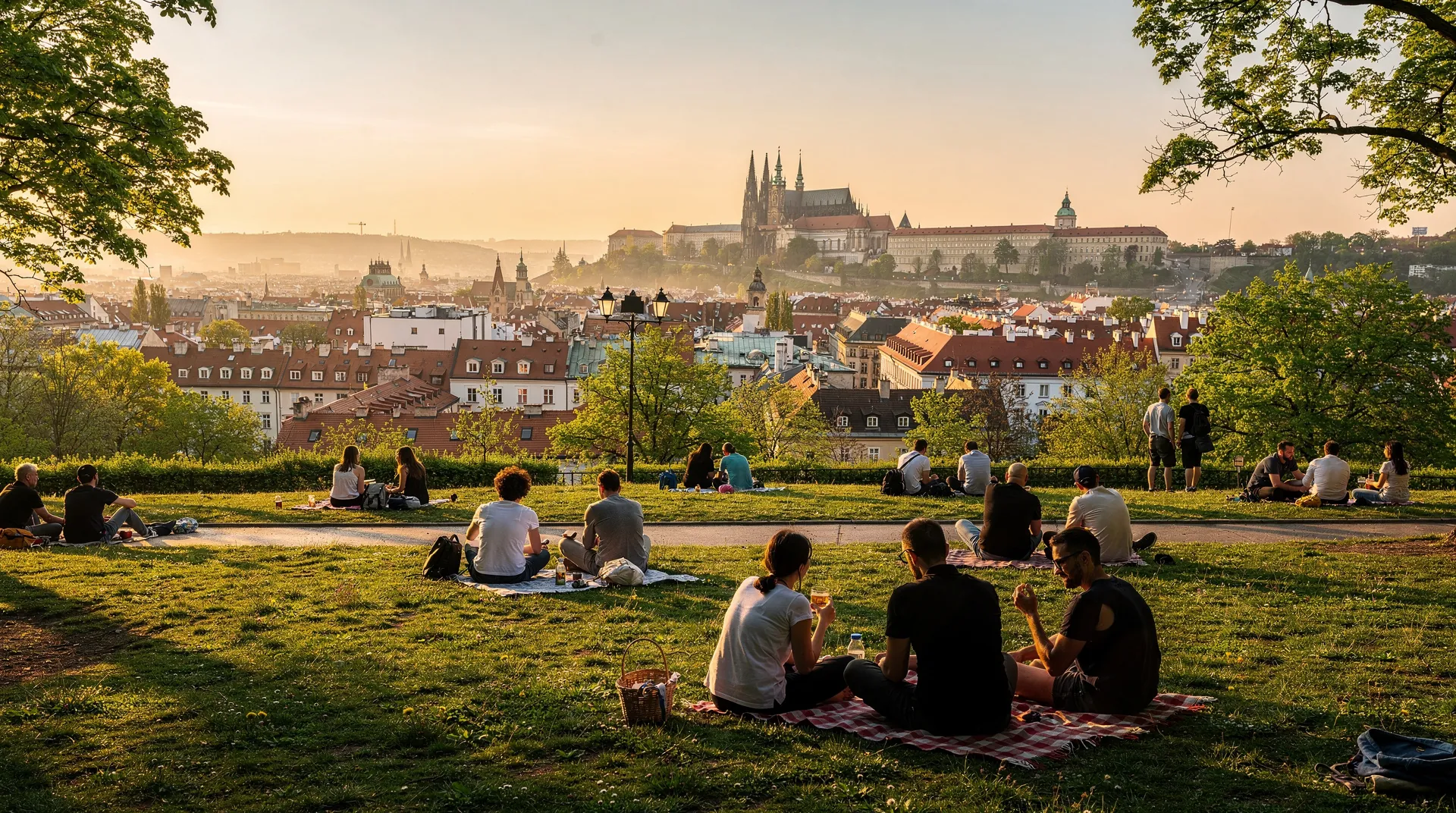
The practical draws are clear: the terrace at the western end of the park has the best free panorama of central Prague — a single long view taking in Staroměstské náměstí (Old Town Square), the spires of Týn Church, the tower of the Old Town Hall, the curve of the Vltava with Čechův most (Čech Bridge) in the foreground, and the hills of Malá Strana and Hradčany behind. The panorama is arguably better than the view from Petřín because you’re looking across at the Old Town rather than away from it.
Worth visiting: for the panorama (free, 10 minutes), for the beer garden (open May–September), for a walk. Not worth a dedicated trip if you’re short of time and focused on monuments.
| At a glance | |
|---|---|
| Where | Letenské sady, above Prague Castle and the Vltava, on the edge of Holešovice |
| Cost | Free (beer garden and food are separate, at normal café prices) |
| Time needed | Around 20–30 minutes for the panorama; 1–2 hours with the beer garden |
| Getting there | Tram to Čechův most or Letenské náměstí, then a ~10-minute uphill walk |
| Best time | Sunset for the panorama; weekend afternoons (May–Sept) for the beer garden |
The story of Letná
The Letná plateau above the left bank of the Vltava has been used for public gatherings since at least the 18th century. In 1858 the city laid out the current park, planting the linden and maple allées that characterise the upper plateau. The terrace with its river view became a popular promenade.
In 1955, the Communist government erected on the Letná terrace the largest Stalin monument in the world — a granite structure 15.5 metres tall and 22 metres wide, depicting Stalin at the head of a group of figures representing workers, soldiers, and intellectuals. It was called “the line for meat” by Prague residents because of the queue of stone figures. The monument was demolished in 1962 following Khrushchev’s de-Stalinisation campaign. The pedestal remained.
In 1991, a giant red metronome was installed on the pedestal — designed by Vratislav Karel Novák as a temporary installation. It became permanent. The metronome (approximately 23 metres tall when including the pedestal) swings at a slow, mechanical pace and serves as the park’s signature visual element. Beneath the pedestal, a network of underground chambers dating from the Stalin monument construction is occasionally used for art installations and events.
The most historically significant event on the Letná plateau occurred in November 1989, at the height of the Velvet Revolution: approximately 800,000 people gathered here on 26 November — one of the largest demonstrations in Czech history — to demand the end of Communist rule. The speeches given from the terrace that day effectively announced the fall of the regime.
What to do at Letná
The panorama terrace
The terrace at the western end of the park, directly below the metronome, is the primary destination. The bench areas along the terrace edge face south and east over the Old Town, providing an unobstructed view of central Prague. In the early morning the light is excellent for photography; at sunset, the western sky behind you casts warm light on the city below. The view is free and requires no admission.
The beer garden (Letňanský zámeček / Letenský zámeček)
The beer garden occupies a small neo-Gothic hunting lodge on the park’s northern edge, approximately 400 metres from the metronome. Open from roughly May through September, with outdoor seating that expands across the terrace in warm weather. Serves draft beer (Kozel is the main pour), wine, and simple Czech food. One of the most pleasant outdoor drinking venues in Prague — the atmosphere is entirely local and unpretentious. No reservations; arrive early on weekend afternoons.
The skate park
A concrete skate park beneath the terrace on the east side of the plateau is a permanent fixture of Prague’s urban culture. The skaters here are regulars; the spot is one of the city’s established skateboarding sites. The surrounding concrete banks and rails attract practitioners year-round.
Cycling and running
Letná is a significant cycling node: paths connect to the Vltava riverside cycle route, to Holešovice, and to Stromovka park further north. On summer evenings the upper allées are used by runners who prefer the flat plateau to the hilly streets below. No bikes are permitted in the formal garden sections near the eastern end of the park.
Tennis and sports facilities
The eastern end of the park has tennis courts, a football pitch, and other sports facilities managed by the city. Less interesting for tourists but worth knowing if you’re in Prague for an extended stay.
Tickets and access
Letná is entirely free and accessible 24 hours a day, every day of the year. There are no gates, no admission charges, and no restrictions on access. The beer garden and restaurant operate on commercial terms when open.
Which tour to book nearby
For a bike tour that uses the Vltava riverbank path and passes through Letná and Stromovka:
Prague Vltava parks and beer gardens bike tourFor an e-bike or regular bike city tour that covers Prague’s parks and panoramas:
Prague bike or e-bike city tour with local guideFor a walking tour that gets off the tourist trail and shows you the Prague that locals use:
Prague hidden gems walking tour with local guideHow to get there
Tram: Lines 1, 8, 15, 25, and 26 stop at Čechův most or Letenské náměstí, both on the southern edge of the park. From the stop, walk uphill through the park to the terrace — approximately 10 minutes.
On foot from Old Town Square: Cross Čechův most (Čech Bridge) on foot — about 10 minutes from the square — then climb the steps at the bridge’s northern end directly to the Letná plateau.
Metro: No direct metro connection. The closest stations are Hradčanská (Line A, green) or Vltavská (Line C, red), both requiring a 10–15 minute walk to the terrace.
Cycling: The riverbank cycle path passes below Letná. Access via the stairs and ramps at the bridge approaches.
Photographer’s note
The best photograph from the terrace requires arriving at sunrise in summer (around 05:00–06:00 in June) or in the golden hour before sunset. In both cases the light is low and directional, catching the spires and rooftops of the Old Town with warm colour while avoiding the harsh flat light of midday.
For the metronome itself: shoot from below, looking up, in the morning when the light falls on the east-facing side of the pendulum. The urban background (the Holešovice warehouse district visible from this angle) provides an interesting juxtaposition.
In winter, on the rare occasions when snow covers the park, the contrast between the white plateau and the red rooftops below makes for unusual images.
The Stalin monument: what stood here and why it was demolished
The giant Stalin monument erected on the Letná terrace in 1955 is one of Prague’s defining communist-era stories — not because it still exists, but because of the trajectory from erection to demolition.
The decision to build it was made in 1949, two years after the Communist takeover in Czechoslovakia. The design competition was won by Otakar Švec, a Czech sculptor who had not previously worked in the Soviet monumental style. The monument was built from 1950 to 1955 — the longest construction project of the Stalinist period in Czechoslovakia — and unveiled on 1 May 1955, at a ceremony broadcast nationally. It depicted Stalin at the head of a group of figures: workers, a soldier, a farmer, a scientist — the standard iconography of Soviet heroic realism. The granite structure was 15.5 metres tall and 22 metres wide.
Three months after the unveiling, Khrushchev’s “secret speech” to the Soviet Congress denounced Stalin’s cult of personality and crimes. Czechoslovak authorities found themselves the owners of the largest Stalin monument in the world at the moment when Stalin was being repudiated by the Soviet Union itself.
Švec committed suicide in 1955, before the monument was completed — the reasons were never officially acknowledged but are generally attributed to the pressures of the project.
Demolition was authorised in 1962. The monument was blown apart with explosives over several controlled demolition sessions. The pedestal was left standing because removing it would have required far more extensive earthworks. The metronome installed in 1991 is on the original Stalin pedestal.
November 1989: what happened here
The Letná rally of 26 November 1989 was one of the decisive moments of the Velvet Revolution. Seventeen days before, police had violently dispersed a student demonstration in Národní třída, triggering the wave of protests that would end Communist rule. By 26 November, Civic Forum (Občanské fórum) — the opposition movement organized by Václav Havel — had established negotiations with the government and the general strike of 27 November was being organised.
The Letná gathering was not the first large demonstration of the Velvet Revolution (Václavské náměstí had hosted several hundred thousand people in previous days), but it was the largest. An estimated 700,000 to 800,000 people were present on the plateau and on the approaches — the largest single gathering in Czech history. The speakers included Havel, who read a statement by Miloš Jakeš’s replacement as Communist Party leader, and Alexandr Dubček, the symbol of the 1968 Prague Spring who had been in internal exile since the Soviet invasion, now returning to public life before a crowd that treated his appearance as both vindication and prophecy.
The rally’s significance was less the specific speeches (negotiations had already reached the point where Communist power was effectively over) and more the physical statement: that this many people could stand peaceably in this place and demand the end of a regime was itself a demonstration of what the regime could no longer do. Within weeks, the first free elections in 40 years were scheduled.
Standing on the terrace today, looking out over the same view those 800,000 people faced in November 1989, is a specific kind of experience.
The Letná neighbourhood: where to eat and drink
The immediate vicinity of the park has undergone significant gentrification since 2010. The streets south of the park (primarily Milady Horákové and its side streets) now have a dense concentration of cafés, restaurants, and bars popular with the Letná–Bubeneč demographic.
Café Savoy (Vítězná 5, a 15-minute walk south from the park via Čechův most): The grandest café in Malá Strana’s edge district, with a restored Art Nouveau interior and an above-average brunch menu. Not in Letná technically but on the natural route.
Café Jedna (on Letná): A neighbourhood café near the park’s eastern end, popular with the local creative community. Good single-origin coffee.
The Letenský zámeček beer garden itself: For a half-litre of Kozel in the park, this remains the primary option. Open May–September, outdoor seating expanding across the hilltop terrace on warm evenings.
Veltlin (Letohradská 9): A natural wine bar in the Letná neighbourhood, run by people who know Czech and Moravian natural wine better than almost anyone in Prague. A good stop for the evening after a park walk.
Frequently asked questions about Letná Park
Is Letná Park free?
Yes, entirely free and always accessible. No admission charge, no gate.
What is the giant metronome in Letná?
A monumental kinetic sculpture installed in 1991 on the pedestal where the world’s largest Stalin monument stood until its demolition in 1962. Designed by Vratislav Karel Novák. The pendulum swings continuously when the mechanism is operating.
Where is the Letná beer garden?
The main beer garden (Letenský zámeček) is on the northern edge of the park, about 400 metres east of the metronome terrace. Open May–September, weekends and warm weekday evenings from approximately noon.
Is Letná Park good for families?
Yes. The flat upper plateau is good for cycling and running. The panorama terrace is stroller-accessible. There is a small playground near the eastern end of the park.
What event took place at Letná in 1989?
On 26 November 1989, at the height of the Velvet Revolution, approximately 800,000 people gathered on the Letná plateau for a demonstration demanding the end of communist rule. It was one of the largest gatherings in Czech history. The speeches given from the terrace that day are considered a turning point in the revolution.
How long does it take to walk across Letná Park?
The main east-west axis of the park (from Letenské náměstí to the eastern sports facilities) is about 1.5 km — 20 minutes walking at a comfortable pace. The terrace walk from the western staircase to the metronome is about 400 metres.
Is Letná better than Petřín Hill for views?
Both are free and both are worth doing if time allows. Letná looks across the river toward the Old Town skyline, which most visitors find more photogenic; Petřín Hill looks over Malá Strana and Prague Castle from a wooded hillside and has a paid lookout tower for an even higher vantage point.
Can I bring a picnic to Letná?
Yes — the upper plateau is a popular picnic spot for locals, especially on the grass near the terrace. Nothing stops you bringing your own food and drink, even with the beer garden operating nearby.
The view from the terrace: what you can see and from where
The Letná terrace panorama faces south and southeast, giving a view across the Vltava and over central Prague. Key landmarks visible from the terrace, identified left to right from the westernmost point:
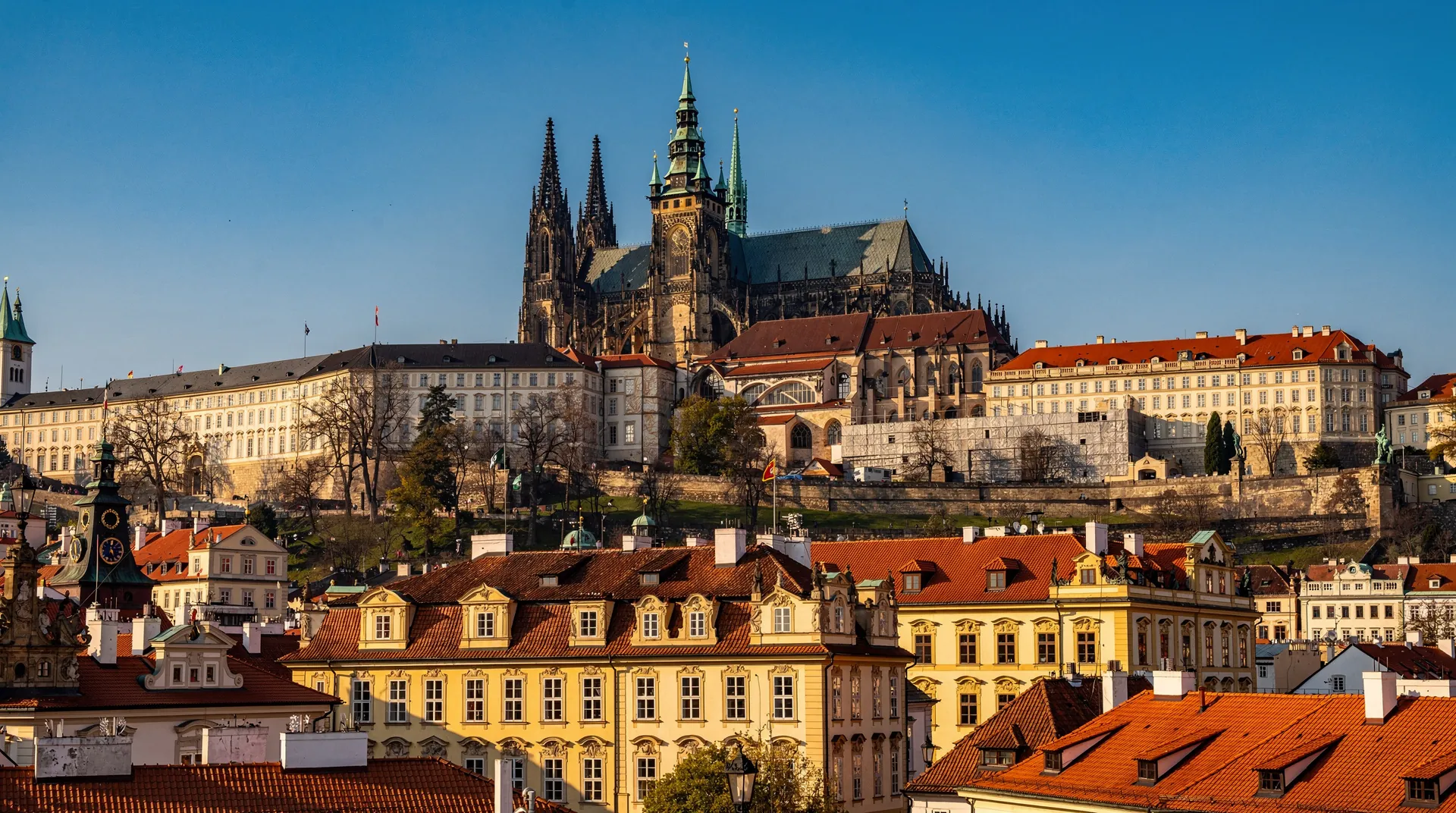
Far left (west): Prague Castle and Hradčany — the castle silhouette, with the spires of Katedrála sv. Víta (St Vitus Cathedral) rising above the palace roofline. Petřín hill is to the right of the castle, with the steel Petřín Tower visible on the hilltop.
Centre-left: Malá Strana rooftops, the green dome of Chrám sv. Mikuláše (St Nicholas Church) prominent among them. The multiple towers of Charles Bridge (Karlův most) crossing the river.
Centre: The Vltava itself, with Čechův most (Čech Bridge) in the foreground — the view from Letná looks directly down onto this bridge. Across the river, the dense roofscape of Staré Město (Old Town). The spires of Chrám Panny Marie před Týnem (Týn Church) are typically the most easily identified landmark in the Old Town skyline.
Centre-right: The Old Town Hall Tower with the Astronomical Clock; beyond it, the dome of the Czech National Museum at the far end of Václavské náměstí (Wenceslas Square).
Far right (east): Žižkov and the television tower — Žižkovská televizní věž — easily visible at 216 metres, with the crawling baby figures just visible in good binoculars or a telephoto lens.
This visual survey of the city from a single viewpoint is, for orientation purposes, the best free asset in Prague. Fifteen minutes with a city map on the Letná terrace will orient most visitors better than 30 minutes with a guidebook.
Practical info at a glance
- Address: Letenské sady, 170 00 Praha 7 (Letná district)
- Opening hours: Always open, 24/7
- Price: Free
- Beer garden: Letenský zámeček, open May–September approx.
- Nearest tram: Letenské náměstí or Čechův most (multiple lines)
- Nearest metro: Hradčanská (Line A) or Vltavská (Line C) — 15 min walk each