Why Stromovka is the park Praguers use but tourists miss
| Where | Holešovice, 170 00 Praha 7 |
| Cost | Free, no tickets |
| Time needed | 1–2 hours for a walk; a half-day if combined with the zoo and Troja Chateau |
| Getting there | Tram 1, 8, 15, or 25 to Výstaviště (park’s southern entrance), or metro line C to Nádraží Holešovice + 10 min walk |
| Best time | Weekday mornings or September–October for the best light and fewest crowds |
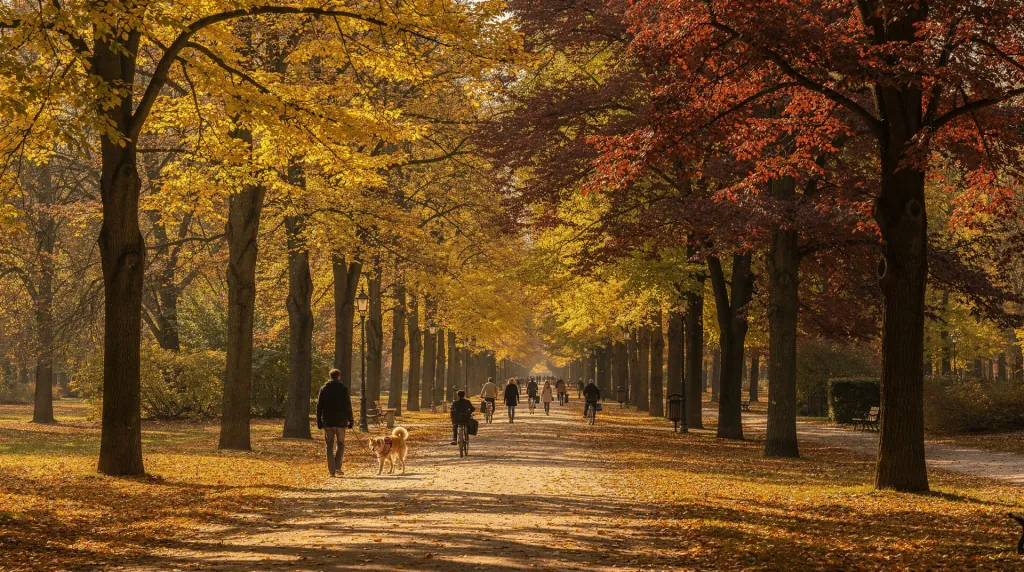
Stromovka is where Prague residents go when they want to be outside without being among tourists. The park covers 95 hectares in Holešovice, roughly 3 km north of Old Town, and on a Sunday morning in April or October it fills with precisely the demographic you’d expect from a city’s largest green space: retired couples on bicycles, parents with children feeding the ducks, young people with dogs, runners on the gravel paths. It’s the city’s living room, in the non-metaphorical sense.
From a tourist perspective, Stromovka has no specific landmark or monument that justifies a dedicated trip. What it offers is scale, quiet, and trees: 95 hectares of mature parkland with ponds, allées, a summer palace, and connections to the zoo and Troja Chateau further north. Worth combining with those attractions if you’re heading to Troja. Worth visiting independently if you need an unhurried green morning away from the centre.
The story of Stromovka
The park’s formal name is Královská obora — the Royal Enclosure. It was established in the 13th century by Přemysl Otakar II as a hunting ground and royal game preserve. Deer, boar, and game birds were maintained here for royal hunts. The park was adjacent to the Bubeneč and Letná hunting territories and formed part of a larger complex of royal countryside north of the Vltava.
The Habsburgs continued using the hunting grounds after they became rulers of Bohemia in 1526. Emperor Rudolf II (1552–1612), who moved the imperial court to Prague and transformed the city into a centre of arts and sciences, had the park redesigned in the Renaissance manner with formal gardens, a pond system, and a summer palace (Místodržitelský letohrádek — the Viceroy’s Summer Palace, now the seat of the Czech National Library’s map collections). Rudolf also had a tunnel built to bring water from the Vltava to supply the ponds — an impressive piece of 16th-century hydraulic engineering whose stone portal survives in the park near the eastern entrance.
The hunting grounds were gradually converted to a public park in the early 19th century, following the pattern of similar royal parks across Europe. The current layout — wide gravel allées, lawn areas, the main pond, the canal — dates largely from the 1830s redesign. The name Stromovka (from strom, tree) came into common use in the 19th century as the park’s informal name and eventually displaced the formal designation.
The park escaped significant damage in World War II and the communist period, though some structures deteriorated. Recent decades have seen restoration of the summer palace, replanting of damaged tree sections, and improvements to the pond management system.
What to do and see in Stromovka
The main pond
The central pond, fed by the original Rudolf II canal system, is the park’s focal point. Willows trail into the water; ducks and swans are permanent residents. The pond is not swimmable but is attractive for walking the perimeter. Rental rowboats are occasionally available in summer from a small operator near the southern bank.
The Viceroy’s Summer Palace (Místodržitelský letohrádek)
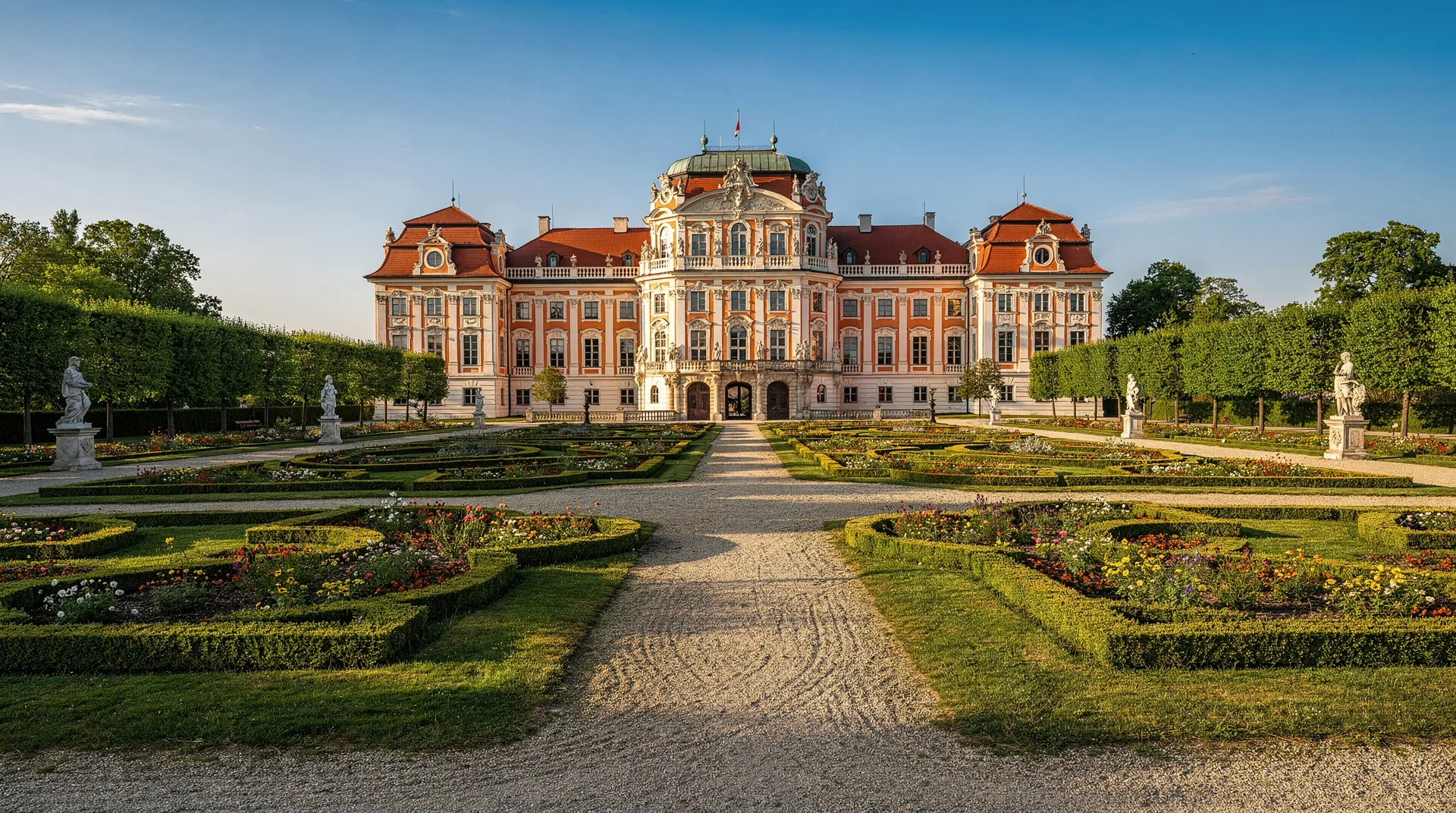
The small Renaissance-Baroque summer palace on the park’s northern edge dates from the 17th century (rebuilt after the Thirty Years’ War). It was used by the Habsburg Viceroy of Bohemia as a summer residence. Currently it serves as administrative premises for the Czech National Library and is not generally open to the public. The exterior — white painted facade, low hip roof, formal garden remnants — is visible from the path.
Rudolf II’s water tunnel
Near the eastern entrance to the park, the stone portal of Rudolf II’s Vltava-to-park aqueduct tunnel is preserved as a heritage monument. It dates from 1593. Small, easily missed, but historically significant as a demonstration of the hydraulic engineering projects the emperor commissioned during Prague’s Renaissance golden age.
The western forest section
The western third of the park is less formal than the central allées — more densely planted, with paths winding through mature oak and chestnut woods. This section is the quietest part of the park on busy days and connects to the Výstaviště (Exhibition Grounds) complex on the south side.
Connections to the zoo and Troja
A path along the Vltava bank connects Stromovka to the Prague Zoo and Troja Chateau further north (approximately 2 km). This riverside route is one of the best cycling paths north of the city centre and makes a natural itinerary for a Stromovka → Zoo → Troja day.
Tickets and access
Stromovka is entirely free. There are no gates, no admission charges, and no restricted areas (the summer palace grounds may have limited access depending on current use). The park is open 24 hours.
Which tour to book if you’re heading north
For a bike tour combining the Vltava riverbank parks including Stromovka:
Prague river and park bike tour to Troja ChateauFor a bike or e-bike city tour that covers Prague’s parks and riverside paths:
Prague Vltava parks and beer gardens bike tourFor a private or small-group e-bike tour covering the park districts:
Prague bike or e-bike city tour with local guideHow to get there
Metro + walk: Nádraží Holešovice (Line C, red), then walk west approximately 10 minutes through the Holešovice streets to the park’s eastern entrance.
Tram: Lines 1, 8, 15, or 25 to Výstaviště, directly at the park’s southern entrance.
Cycling: The riverbank cycle path from the city centre (following the Vltava north) reaches the park’s eastern edge in approximately 15 minutes from Čechův most.
Photographer’s note
Stromovka is at its most photogenic in autumn (October–November), when the mature linden and chestnut trees turn yellow and orange against the grey sky. The main allée from the eastern entrance, photographed looking west in early morning, provides the classic long-perspective tree-tunnel shot. The main pond, with reflections and willows, is good in still weather — late morning or late afternoon when the light is soft.
Spring (April–May) is the second-best season: cherry and apple trees blossom in the orchard section near the summer palace, and the new leaf colour is vivid against the dark bark of the older trees.
Holešovice and Stromovka: the neighbourhood context
Stromovka sits at the meeting point of three very different districts. To the south is Holešovice — a former industrial district that has undergone the fastest gentrification of any Prague neighbourhood in the past 15 years. Where there were warehouses and factory buildings, there are now galleries, design studios, restaurants, and the National Gallery’s Veletržní palác (Trade Fair Palace). The transformation is visible and ongoing.
To the east is Bubeneč — a quieter, more established residential neighbourhood with large early-20th-century apartment buildings housing the embassies of many countries and a significant expat community. Bubeneč has a neighbourhood café culture that is markedly different from the tourist-facing facilities near Old Town.
To the north is Troja — a semi-rural district on the right bank of the Vltava with the zoo, Troja Chateau, and a small local wine production tradition. Troja’s Vltava hills have been cultivated for viticulture since the medieval period; the terraced vineyards above the zoo are still in limited production.
Stromovka sits in the middle of this and is used by residents of all three districts. On a Saturday morning the park population is a mix of Holešovice young professionals, Bubeneč families, and visitors from further afield who have come specifically for the park.
Výstaviště (Exhibition Grounds) adjacent to Stromovka
The Výstaviště complex — the historic Prague Exhibition Grounds — directly abuts Stromovka’s south edge. Built for the 1891 Jubilee Exhibition celebrating 100 years of Bohemian industrial development, the grounds include the Průmyslový palác (Industrial Palace), the largest steel-and-glass exhibition hall in Bohemia, built in 1891 and restored multiple times since. The building is used for trade fairs, consumer exhibitions, and occasional concerts.
Also at Výstaviště: the Lunapark (amusement park), open seasonally; Maroldovo panorama, a large circular painting of the 1434 Battle of Lipany (open occasionally); and the Křižíkova fontána (Křižík Fountain), an illuminated fountain installation from 1891 that still operates in summer evenings with changing light and music programmes.
The Výstaviště complex is not a major tourist attraction but worth noting as context for the Stromovka visit. The Průmyslový palác is an interesting piece of late 19th-century industrial architecture, comparable in scale and type to London’s Crystal Palace (now demolished) or the Paris Grand Palais.
Cycling from Stromovka: the Vltava path network
One of Stromovka’s practical advantages is its position in the Vltava cycle path network. From the park’s eastern edge, the riverside path runs:
- South to the centre: approximately 4 km to Čechův most, 6 km to the National Theatre. The path follows the right bank initially, crosses at various bridges, and is primarily car-free.
- North to the zoo and Troja: approximately 2 km on the right bank path to the zoo landing stage and Troja Chateau. This stretch passes through an underdeveloped section of the riverbank with old willows and minimal infrastructure — one of the quieter cycling sections in Prague.
Bike rental is available at several points in Holešovice and near Nádraží Holešovice. Prague’s city bike system (Nextbike) has stations near the Výstaviště tram stop. A round-trip Stromovka to Troja and back by bicycle, with stops at the zoo and chateau, is a satisfying half-day.
Rudolf II and the Prague Royal Menagerie connection
Rudolf II (1552–1612) was the Habsburg emperor who made Prague the centre of the imperial court from 1583 and transformed it into one of the great European centres of art, science, and curiosity. The Stromovka park was part of a broader complex that included one of the first zoological collections in Europe — Rudolf’s famous royal menagerie at the castle gardens and the Belvedere, which housed lions, exotic birds, and other animals.
The connection to Stromovka was the game preserve: the hunting grounds provided game for the court, and the canal system that Rudolf had built to supply the Stromovka ponds with water from the Vltava was also used to irrigate the kitchen gardens supplying the castle. The hydraulic infrastructure Rudolf commissioned at Stromovka (the 1593 tunnel) was part of this broader management of the imperial landscape north of the city.
Rudolf’s Prague is a fascinating subject. The emperor’s collections — now dispersed across European museums after Swedish looting in 1648 — were among the most extraordinary in history. The Kunstkammer at Prague Castle held paintings, sculptures, mechanical automata, natural curiosities, and scientific instruments. The Rudolf II connection gives Stromovka a deeper historical resonance than the park’s quiet Sunday-walk character might suggest.
Frequently asked questions about Stromovka
Is Stromovka worth visiting as a tourist?
It depends on what you’re looking for. As a monument or landmark, no — there’s nothing specific here that you can’t see better elsewhere. As a green escape and an experience of Prague’s civic life, yes. Combine it with the zoo and Troja Chateau for a full half-day north of the centre.
What is Stromovka’s relationship to the Czech National Library?
The Viceroy’s Summer Palace in the park serves as an archive and administrative facility for the Czech National Library (Národní knihovna). The main Klementinum building in Staré Město is the public-facing part of the institution.
Can you cycle in Stromovka?
Yes — cycling is allowed on the main gravel paths and allées. The park connects to the riverbank cycle route on its eastern edge.
Is Stromovka safe at night?
Generally yes — it’s a city park used by locals and not associated with significant safety issues. Normal urban precautions apply as in any large city park.
How do you combine Stromovka with the Prague Zoo?
Walk or cycle north from Stromovka along the Vltava path. The zoo is approximately 2 km from the park’s northern edge. The Troja Chateau is just past the zoo entrance on the right. Allow a full day for the combined route.
Are dogs allowed in Stromovka?
Yes, dogs are welcome throughout the park, including off-lead in some designated sections. Normal Prague park etiquette (keeping dogs under control near play areas and other visitors) applies.
Is there anywhere to rent a bicycle near Stromovka?
Several rental shops operate in Holešovice near Nádraží Holešovice, and the city’s Nextbike system has docking stations close to the Výstaviště tram stop. Renting here is a practical way to do the full Stromovka–zoo–Troja loop without arranging a bike in advance.
Eating and drinking in the Holešovice–Stromovka area
The restaurant and café scene around Stromovka and Holešovice has expanded rapidly and now offers some of the more interesting eating in Prague outside the Old Town:
Cobra (Dělnická 2, Holešovice): A long-running wine bar and bistro in the former industrial zone. Good natural wine list, simple food. The kind of place that has been written about in serious food media.
Fofr (Osadní 35): Holešovice neighbourhood bistro with a short daily menu built around seasonal Czech produce. Lunch is the main event; dinner less consistent. Popular with the local design and tech crowd.
Kavárna co hledá jméno (Blanická 24, slightly south in Vinohrady but worth the mention): One of Prague’s better specialty coffee spots; often cited in European café rankings.
Café Imperial (Na Příkopě 15, Old Town): Not in the immediate neighbourhood but worth noting for visitors who want the most spectacular café interior in Prague — an Art Deco grand café with tiled walls and ceiling, dating from 1914. A 15-minute tram ride from Výstaviště.
For a simple lunch option near Stromovka itself: the café at the Výstaviště complex (the Industrial Palace, on the south side of the park) serves basic Czech food at reasonable prices. The setting — inside the exhibition hall — is unusual.
The park in different seasons: what changes
January–February: The park is at its quietest. Frost occasionally covers the pond; skaters sometimes appear if the ice is thick enough (rare in recent years due to milder winters). The bare trees give the park an austere quality that is not without appeal.
March–April: The first crocuses and snowdrops appear in the formal garden areas near the summer palace. Joggers and cyclists return. The pond surface reflects the early spring sky with particular clarity.
May–June: The park is at its most lush. The linden and chestnut allées are in full leaf; the formal garden parterres are replanted. Weekends fill up from around 10:00.
July–August: Summer peak. The park’s scale (95 hectares) means it never feels as crowded as Letná or Petřín. The mature trees provide significant shade. The pond is covered in floating vegetation.
September–October: The best season for photography — the allées turn gold and orange, the light is warm and low, and the park’s population is comfortable but not dense.
November–December: Quiet again. The park closes early in effective light (by 16:00 in December) and the atmosphere is reflective rather than festive.
Practical info at a glance
- Address: Stromovka (Královská obora), 170 00 Praha 7 (Holešovice)
- Opening hours: Always open, 24/7
- Price: Free
- Nearest tram: Výstaviště (lines 1, 8, 15, 25) — at the park entrance
- Nearest metro: Nádraží Holešovice (Line C) — 10 min walk