At a glance
| Where | Alšovo nábřeží, Staré Město, on the riverbank next to the Jewish Quarter |
| Cost | Concerts around €20–100 depending on programme; gallery around €8 |
| Time needed | A concert runs around 2 hours including interval; the gallery takes 45–60 minutes |
| Getting there | Metro Staroměstská (Line A), a 3-minute walk; or trams 2, 17, 18, 93 to Náměstí Jana Palacha |
| Best time | Book 2–3 weeks ahead for October–April peak season; July–August is easier to get seats |
Why the Rudolfinum deserves more than a glance from the riverbank
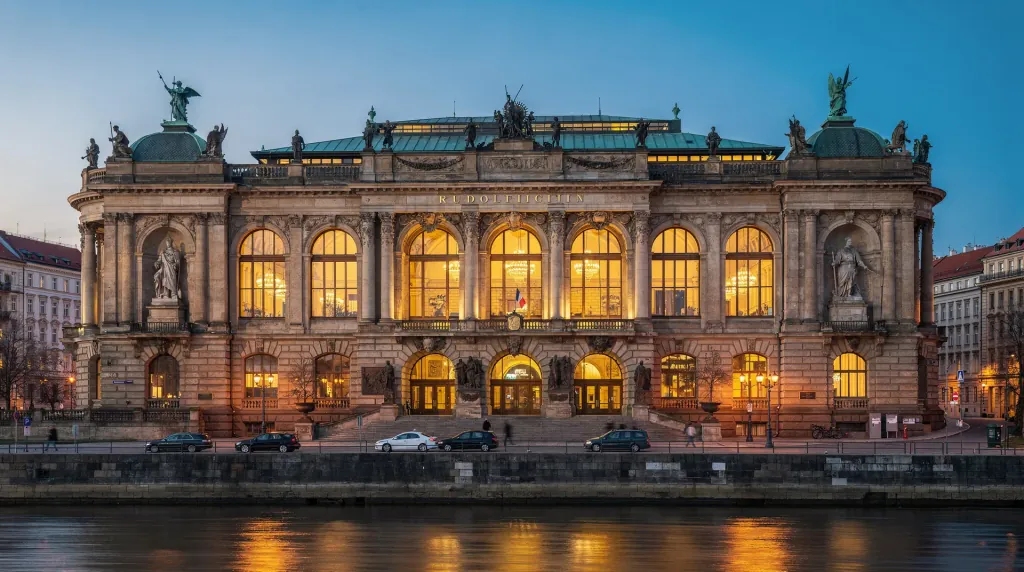
Most visitors to Prague see the Rudolfinum from across the Vltava or from the river path, admire the Neo-Renaissance facade, and move on. This is a reasonable allocation of limited time — but if you have an interest in classical music or architecture, spending an evening in Dvořák Hall is one of the most rewarding experiences Prague offers.
The building is home to one of the great European orchestras. The Czech Philharmonic — founded in 1896, with a history that includes premiers of Dvořák’s New World Symphony and works by Mahler, who conducted here — performs regularly in a hall whose acoustics are among the finest on the continent. A concert here is not just a tourist activity; it’s the real thing.
The Rudolfinum Gallery (Galerie Rudolfinum), operating in the building’s upper floor, is a separate attraction: a contemporary art space with changing exhibitions that are consistently one of the better shows in Prague’s gallery scene.
Worth it if: music, architecture, or contemporary art matters to you. Worth noting: the building is not generally open for casual sightseeing outside gallery hours. A concert is the primary reason to come.
The story of the Rudolfinum
The Rudolfinum was built between 1876 and 1884, designed by architects Josef Zítek and Josef Schulz — the same team responsible for the National Theatre on the opposite bank of the Vltava. The building was commissioned by the Czech Savings Bank as a gift to the Czech nation and named after Crown Prince Rudolf of Austria (who visited Prague during construction).
The design follows a strict Neo-Renaissance programme: a temple-like facade with a colonnade, statues of composers and artists along the roofline (a famous story claims that a Communist-era official, mistaking Dvořák’s statue for that of the Nazi composer Wagner, ordered it removed — the statue survived unharmed), and a grand staircase leading to the main hall.
The inaugural concert was held in 1885. From 1918 to 1939, the Rudolfinum served as the seat of the Czechoslovak Parliament — a use that required significant interior modifications, most of which were later reversed. The Czech Philharmonic was given permanent residency after World War II and has performed here continuously since.
The building underwent major restoration in the 1990s, restoring the original Neo-Renaissance interiors, improving the acoustic systems, and converting the upper floors to gallery space.
What to see and experience
Dvořák Hall (Dvořákova síň)
The main concert hall, named for Antonín Dvořák, seats approximately 1,200 people. The acoustic design — a classical shoebox hall with wooden surfaces, minimal absorption, and balanced reverberation — produces a warm, resonant sound particularly suited to the Romantic and 20th-century Czech repertoire that makes up much of the Philharmonic’s programme.
The Czech Philharmonic performs here throughout the season (September–June), with occasional summer concerts. Visiting international orchestras and soloists perform regularly. The programme varies from traditional subscription concerts to special events — Dvořák’s symphonies, Janáček’s operas in concert format, Martinů chamber works, and the great Germanic repertoire the orchestra performs with particular authority.
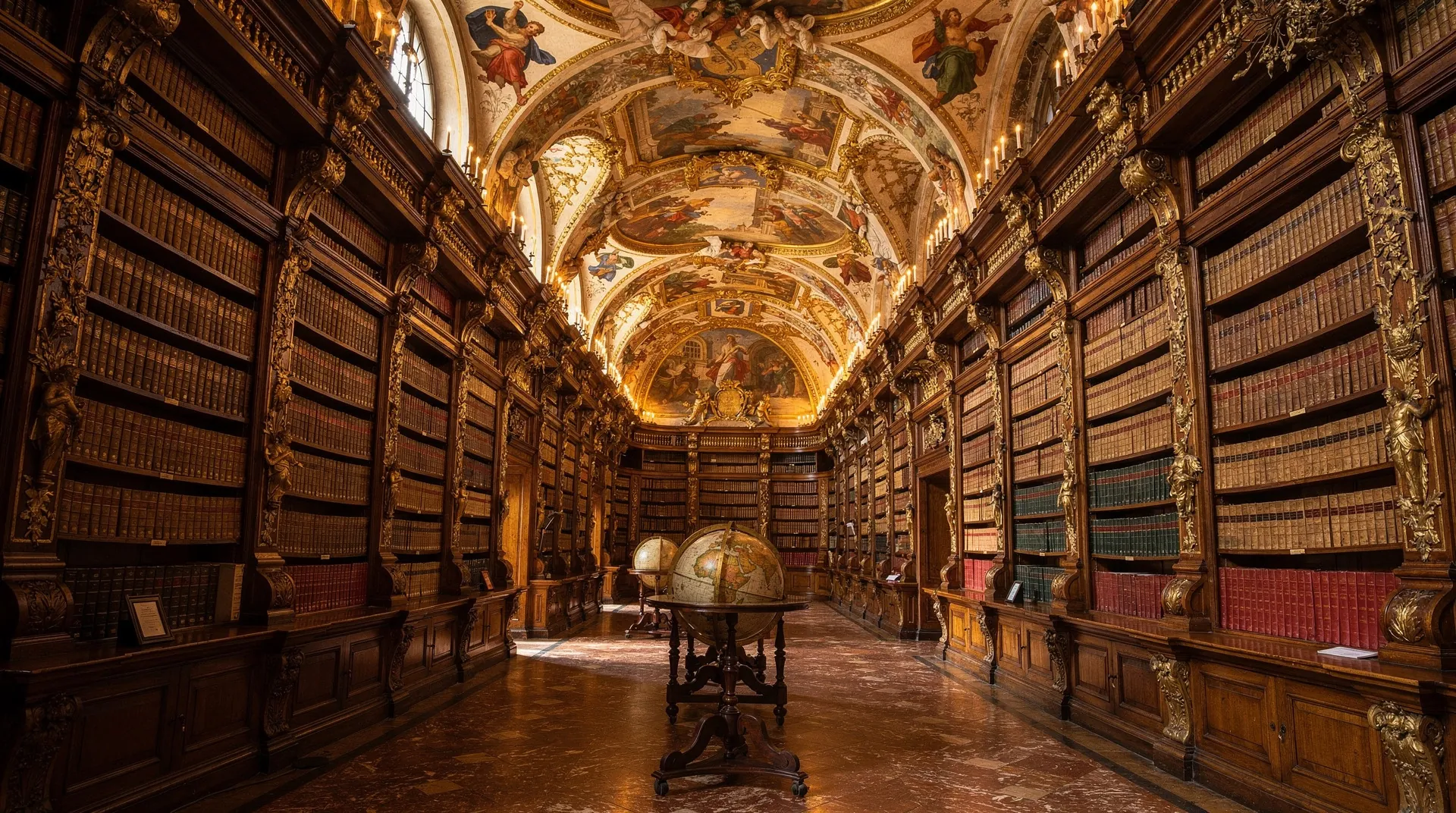
The hall itself is beautiful in the way that purpose-built concert halls of the 1880s tend to be: ornate but controlled, designed to make the listening experience the centre of attention rather than the decor.
Suk Hall (Sukova síň)
A smaller chamber music hall in the building, used for recitals and chamber concerts. Named for Czech composer Josef Suk. The acoustic is more intimate than Dvořák Hall — excellent for string quartets and solo piano recitals.
Galerie Rudolfinum
The gallery occupies the upper floor of the building and presents changing exhibitions of contemporary art, typically large-scale international shows. The space has hosted exhibitions of significant contemporary artists and is reviewed in the international art press. Entry is separate from concerts.
Hours: Tuesday–Sunday 10:00–18:00. Closed Monday. Admission approximately €8 / 200 CZK; reduced rates for students and seniors. Check the gallery website (galerierudolfinum.cz) for current exhibitions.
Tickets, timings, and price
Czech Philharmonic concerts:
- Standard tickets: ~€20–60 (500–1,500 CZK) depending on seat category and programme
- Premium seats and gala concerts: up to €100+ (2,500+ CZK)
- Book online at czechphilharmonic.cz (most reliable, full seat selection)
- Season: September–June; occasional July–August events
GYG curated concerts in Dvořák Hall:
- Various operators offer curated classical concerts (not always Czech Philharmonic) in the hall at prices typically €20–45
- These are reliable for visitors who want a Dvořák Hall experience without navigating the full Philharmonic booking system
Gallery:
- Approximately €8 / 200 CZK; reduced rates available
Book Philharmonic tickets at least 2–3 weeks in advance for the October–April peak season. July–August is easier; specific programmes sell out quickly regardless of season.
Which tour or ticket to book
For a classical concert in Dvořák Hall:
Classical music concert at the Rudolfinum, Dvořák HallFor the New Year’s concert in Dvořák Hall — one of Prague’s most popular musical events:
New Year’s Concert at Rudolfinum Dvořák HallFor the Christmas Gala Concert in Dvořák Hall:
Classical Christmas Gala Concert at the RudolfinumFor the Christmas concert programme in Dvořák Hall:
Christmas Concert at Rudolfinum Dvořák HallFor classical concerts at Smetana Hall, Municipal House — the Rudolfinum’s closest rival for prestige in Prague:
Classical concerts at Smetana Hall, Municipal HouseHow to get there
Metro: Staroměstská (Line A, green) — exit toward the river. The Rudolfinum is directly on the riverbank on Alšovo nábřeží, about 200 metres from the metro exit. The building is visible from the exit.
Tram: Multiple trams stop at Náměstí Jana Palacha (the square in front of the Rudolfinum). Lines 2, 17, 18, and 93.
On foot from Charles Bridge: Cross the bridge on the Old Town side, turn left (north) along the riverbank path. The Rudolfinum is about 400 metres north — a 5-minute walk along the Vltava embankment.
On foot from the Jewish Quarter: The Jewish Quarter (Josefov) is immediately adjacent. The Rudolfinum is on the northern edge of Josefov.
Photographer’s note
The building’s exterior is best photographed from across the Vltava — from the path on the Malá Strana side of the river, looking east. The Neo-Renaissance facade and the statues along the roofline are visible from several hundred metres, and the building looks particularly fine in golden-hour light from the west.
From the square (Náměstí Jana Palacha), the angle is too close for a full facade shot without a very wide lens. Better to photograph details: the column capitals, the statues of composers (Dvořák, Smetana, Brahms, Bach, Beethoven), or the grand staircase visible through the glass entrance doors.
Concert photography is not generally permitted during performances. The Galerie Rudolfinum allows photography in exhibitions unless individual works prohibit it.
The Czech Philharmonic’s history and international standing
The Česká filharmonie was founded in 1896 with Antonín Dvořák conducting its inaugural concert on 4 January 1896 — a programme of his own works. The orchestra has been closely identified with Czech national culture ever since. Its first significant international recognition came in the 1910s and 1920s under conductors Václav Talich and later Karel Ančerl, who built the orchestra’s reputation for Central European repertoire.
The Philharmonic’s period of greatest international influence was arguably the 1950s and 1960s under Ančerl and then Václav Neumann — the recordings from this period, particularly the Dvořák symphonies and the Janáček operas, remain benchmarks. The orchestra has had a complicated relationship with international touring during the communist period; some musicians defected during foreign tours, creating diplomatic incidents that limited the frequency of travel.
Since 1989 the orchestra has integrated into the standard international circuit. Under chief conductors including Libor Pešek, Vladimir Ashkenazy, and Jiří Bělohlávek (who died in 2017, at the height of his influence), the orchestra has maintained its reputation for Czech repertoire while broadening into the standard German and Russian canon. The current relationship with the Rudolfinum as home venue — the orchestra has performed here since 1946, with a wartime interruption — gives the building its primary reason for existence as a visitor destination.
Programming and what to expect from a concert
The Czech Philharmonic’s season runs from September through June. The standard subscription series (called the Subscription concerts, A, B, C, and D series) runs roughly weekly. Each concert is typically performed twice — Thursday and Friday — making some dates easier to get tickets for than others.
The orchestra’s greatest strengths are in Dvořák (all the symphonies, the cello concerto, the Slavonic Dances), Smetana (Má vlast, the string quartets), Janáček (the orchestral works and suites from the operas), and Martinů (the symphonies). If any of these are in the programme during your visit, these are the concerts to prioritise.
The orchestra is also strong in Brahms and Schubert — the Germanic Romantic repertoire that the Czech tradition has absorbed closely — and in 20th-century Central European works generally (Bartók, Shostakovich, Prokofiev).
Visiting international soloists and conductors perform regularly. The season’s biggest concerts — typically the opening in September and the closing in June, plus the New Year’s concert in January — are the most sought-after.
The Rudolfinum’s own website (galerie.rudolfinum.cz) publishes the full season programme in English. The Czech Philharmonic’s site (czechphilharmonic.cz) has the most complete ticketing system.
The Dvořák Hall acoustic: what to expect as a listener
Dvořák Hall is a classical shoebox hall — the oldest and most proven acoustic design for orchestral music. The room is approximately 70 metres long and 22 metres wide, with a ceiling height of 17 metres. The reverberation time at mid-frequencies is approximately 1.9 seconds, which favours the late Romantic repertoire the Czech Philharmonic plays most naturally.
The acoustic is warm rather than analytical — strings are smooth, brass is rounded, the overall blend is cohesive. This suits Dvořák extremely well; the New World Symphony in this hall is one of the standard Dvořák performances in the world. It is less ideal for very early music (Baroque needs less reverb) or for contemporary works that require precision and separation.
The best seats acoustically are in the first half of the stalls and in the central first-tier boxes. The second tier is good acoustically but the angle to the stage is slightly uncomfortable. The upper gallery (third tier) is the worst acoustic and sightline position but the cheapest.
Rudolfinum versus Prague’s other classical venues
| Venue | Home ensemble | Acoustic character | Best for |
|---|---|---|---|
| Rudolfinum (Dvořák Hall) | Czech Philharmonic | Warm shoebox hall, ideal for Dvořák and Smetana | Serious orchestral concerts, the real Philharmonic experience |
| Municipal House (Smetana Hall) | Prague Symphony Orchestra | Ornate Art Nouveau hall, slightly brighter acoustic | Art Nouveau architecture combined with music, gala events |
| National Theatre | National Theatre Opera and Ballet | Opera house acoustics, built for voice and staging | Opera, ballet, and theatrical productions rather than pure orchestral concerts |
If your priority is hearing the best Czech orchestral repertoire performed by the ensemble most associated with it, the Rudolfinum is the first choice. For opera or ballet specifically, the National Theatre is the venue built for that purpose.
Combining a Rudolfinum visit with the rest of Staré Město
The Rudolfinum sits at the edge of Staré Město, immediately next to the Jewish Quarter — the two combine naturally into a cultural half-day, with the synagogues and Old Jewish Cemetery a five-minute walk away. Before an evening concert, the Klementinum and Old Town Square are both a short walk south, making it easy to spend the afternoon sightseeing and the evening at Dvořák Hall. For visitors weighing up which classical performance to book across the city, the classical concerts guide and the opera and ballet guide cover the full range of venues and programmes.
Frequently asked questions about the Rudolfinum
Is the Rudolfinum open for visitors without a concert ticket?
The Galerie Rudolfinum (upper floor) is open to the public Tuesday–Sunday 10:00–18:00. The concert halls are not accessible outside performance times.
What is the Czech Philharmonic and how good is it?
The Czech Philharmonic (Česká filharmonie) is one of the major European orchestras, founded in 1896. It has a particularly strong reputation for Dvořák, Smetana, Janáček, and Martinů, but plays the full orchestral repertoire to a high standard. International ranking lists routinely place it in the top 20 orchestras in the world.
How do I choose seats in Dvořák Hall?
Front stalls (first third of the main floor) and the first balcony directly facing the stage are acoustically the best. The rear stalls and side seats in the upper gallery are less expensive and acoustically acceptable. Avoid seats with restricted sightlines to the stage (marked on the booking system).
Can you attend a concert at the Rudolfinum without booking in advance?
Occasionally, particularly for less-popular mid-week concerts or late-season dates. But the regular Philharmonic subscription concerts and all New Year/Christmas events sell out well in advance. Book online.
What should I wear to a concert at the Rudolfinum?
Smart casual is standard. A jacket for men is appropriate for evening concerts; formal dress is not required except for New Year’s gala events.
Is the Rudolfinum related to the National Theatre?
No — they are separate institutions. The National Theatre (Národní divadlo) is on the opposite bank of the Vltava and is primarily an opera house. The Rudolfinum is a concert hall (and gallery). Both were designed by the same architects, which accounts for the visual similarity.
Is the Rudolfinum better than Municipal House for a concert?
Both are excellent, but they suit different tastes. The Rudolfinum’s Dvořák Hall has the Czech Philharmonic as its resident orchestra and a warmer, more traditional shoebox acoustic; Municipal House’s Smetana Hall has a more ornate Art Nouveau setting and hosts the Prague Symphony Orchestra. If hearing the Czech Philharmonic specifically matters to you, choose the Rudolfinum.
Can I visit the Rudolfinum if I’m only in Prague for one day?
It’s a reasonable add-on if classical music or architecture interests you and your day includes an evening free — pair a concert with an afternoon in the adjacent Jewish Quarter or Old Town Square. If your day is fully booked with the castle and Old Town, admiring the exterior from the riverbank is enough.
The Rudolfinum Gallery: what’s on and how to visit
The Galerie Rudolfinum (galerierudolfinum.cz) is one of Prague’s better contemporary art venues — not primarily a tourist attraction but a serious exhibition space with international ambitions. The gallery occupies the building’s upper floors and presents large-scale changing exhibitions throughout the year, typically 3–4 major shows per season.
Past exhibitions have included retrospectives of significant contemporary international artists alongside focused shows on Czech and Central European art of the 20th and 21st centuries. The gallery has a notable track record of presenting artists before they achieve full international recognition; it is read seriously in the European contemporary art press.
The physical spaces — former concert halls and salons, high-ceilinged rooms with parquet floors and 19th-century architectural details — are well-adapted for large-scale contemporary work. The gallery uses the Rudolfinum’s architectural character as part of the exhibition context rather than trying to create a neutral white-cube environment.
Admission: approximately €8 / 200 CZK; reduced for students and seniors. Open Tuesday–Sunday 10:00–18:00. The gallery shop sells serious art books and publications.
For visitors who have time in Prague beyond the standard monuments, the Galerie Rudolfinum is worth checking the current programme. If the show is relevant to your interests, the Rudolfinum building adds significant value to the exhibition experience compared to a conventional gallery space.
The riverfront context: the Rudolfinum’s neighbourhood
The Rudolfinum sits at the southern end of the Josefov (Jewish Quarter) district, on the corner where Alšovo nábřeží meets Křižovnická street. The neighbourhood context:
Jan Palach Square (Náměstí Jana Palacha): The square in front of the building is named for Jan Palach, the student who set himself on fire in January 1969 in protest against the Soviet occupation of Czechoslovakia. The Faculty of Arts of Charles University (Filozofická fakulta) faces the Rudolfinum across the square. The combination of the concert hall, the university faculty, and the square’s memorial name creates a specific kind of Czech intellectual geography.
The Jewish Quarter (Josefov): Immediately adjacent to the Rudolfinum. The Old Jewish Cemetery, the Spanish Synagogue, and the other Josefov monuments are within a 5-minute walk north and east. The combination of Rudolfinum concert + Jewish Quarter walking tour is a natural cultural half-day.
The Vltava embankment walk: From the Rudolfinum north to Letná and south to the National Theatre, the Alšovo nábřeží and Rašínovo nábřeží embankment paths are among the most pleasant walks in the city. The Rudolfinum sits at the approximate northern end of the Old Town waterfront, making it a natural endpoint for a riverbank walk from the south.
Eating near the Rudolfinum: The Lokál Dlouhá (Dlouhá 33, 5 minutes on foot) is Prague’s most consistently praised Czech pub — well-priced tank Pilsner Urquell, reliable svíčková, no tourist markup. It fills up quickly at lunch; arrive before noon or after 14:00.
Practical info at a glance
- Address: Alšovo nábřeží 12, 110 00 Praha 1
- Concert hours: By programme; season September–June
- Gallery hours: Tue–Sun 10:00–18:00; closed Monday
- Concert price: ~€20–100 (500–2,500 CZK) depending on programme
- Gallery price: ~€8 / 200 CZK
- Nearest metro: Staroměstská (Line A) — 3 min walk
- Official website: czechphilharmonic.cz / galerierudolfinum.cz