| At a glance | |
|---|---|
| Where | Bohemian Switzerland National Park, ~2 hours north of Prague near the German border |
| Cost | Around €4 (100 CZK) national park entry fee per person, plus transport |
| Time needed | A full day (around 10–11 hours door to door from Prague) |
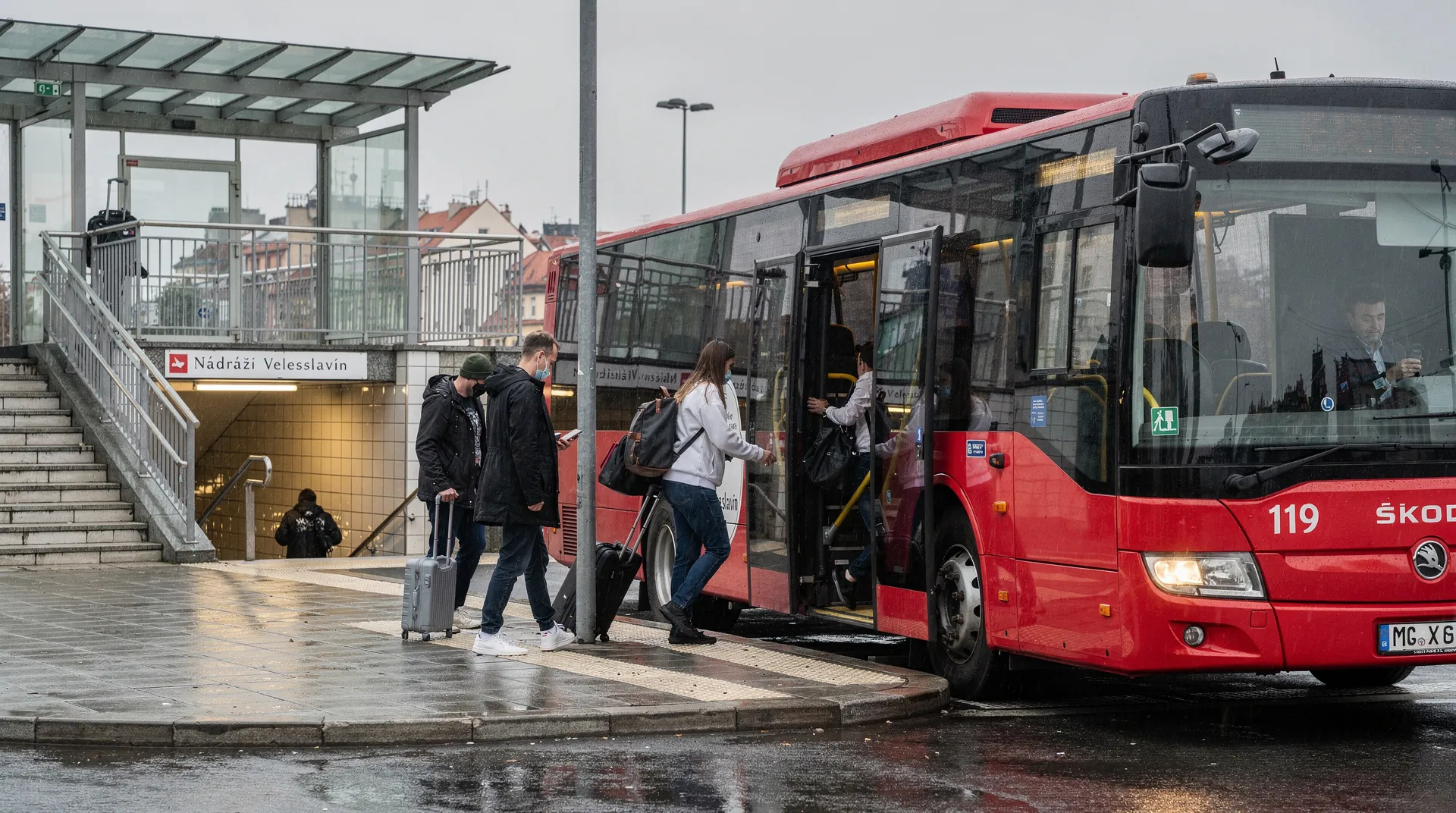
| Getting there | Train from Prague hlavní nádraží to Děčín (around 1 hour), then bus or taxi to Hřensko (around 25 minutes); or a guided day tour that handles transport |
| Best time | Spring through autumn for the main trails; check npcs.cz before any winter visit for closures |
What happened in summer 2022
You are hiking the path from Hřensko toward Pravčická brána in August 2022 and the sky is the wrong colour. Not overcast — orange. There is smoke to the west and the smell of burning pine resin everywhere. The park staff are closing the trail ahead of you. You turn around and walk back to the car park, and by the time you reach it the access road has a police barrier across it. You drive away from what will become the largest wildfire in Czech recorded history.
We didn’t actually experience this — our visit was in 2021. But many visitors in those weeks did, and their accounts describe something that seemed impossible in this rain-cooled forested corner of Central Europe. It wasn’t impossible. It happened.
In late July and early August 2022, a series of wildfires in Bohemian Switzerland National Park (Národní park České Švýcarsko) became the largest wildfire in recorded Czech history. The fires burned for approximately two weeks, consuming roughly 1,000 hectares of forest in the park and extending across the German border into Saxon Switzerland National Park (Sächsische Schweiz) in Germany, where a further 1,700 hectares burned.
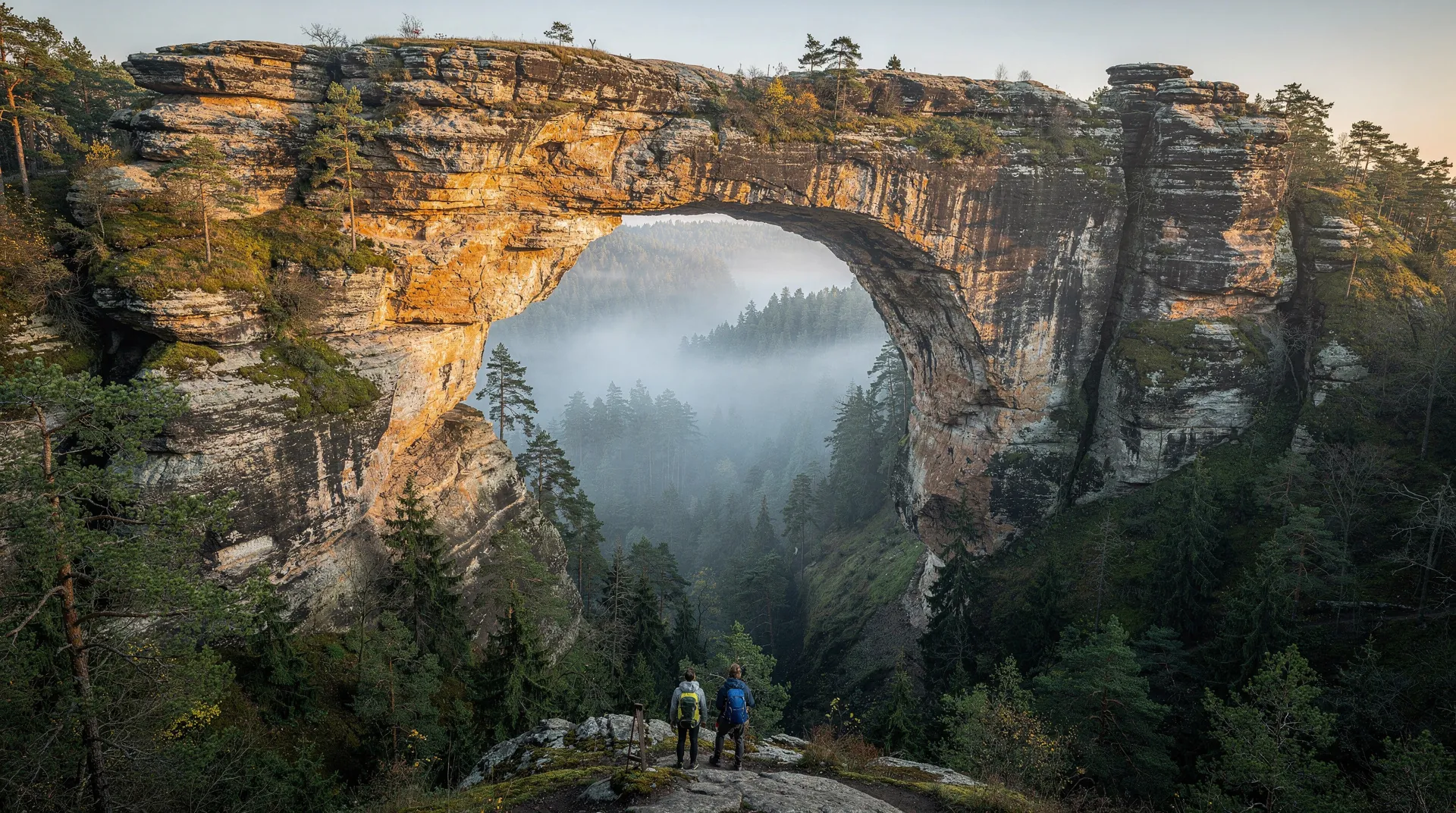
The fires required emergency deployment of 1,000+ firefighters, European civil protection assistance, and aerial support. The town of Hřensko — the gateway to the most visited parts of the park — was evacuated. The Pravčická brána, the largest natural sandstone arch in Europe and the most recognisable symbol of the region, was at one point immediately threatened.
The environmental cause was clear: an extreme summer drought (rainfall across Bohemia in 2022 was 30–40% below the long-term average), high temperatures, and the structural vulnerability of the monoculture spruce forests that had replaced the original mixed forests in the 19th and 20th centuries. Climate change made the conditions significantly more probable; the monoculture forest system made the fire significantly more destructive once it started.
Three years on, in 2025, the question visitors ask us is: is it worth going? What’s open?
What reopened and when
The recovery has been faster in some areas than others. Here is the current status as of June 2025:
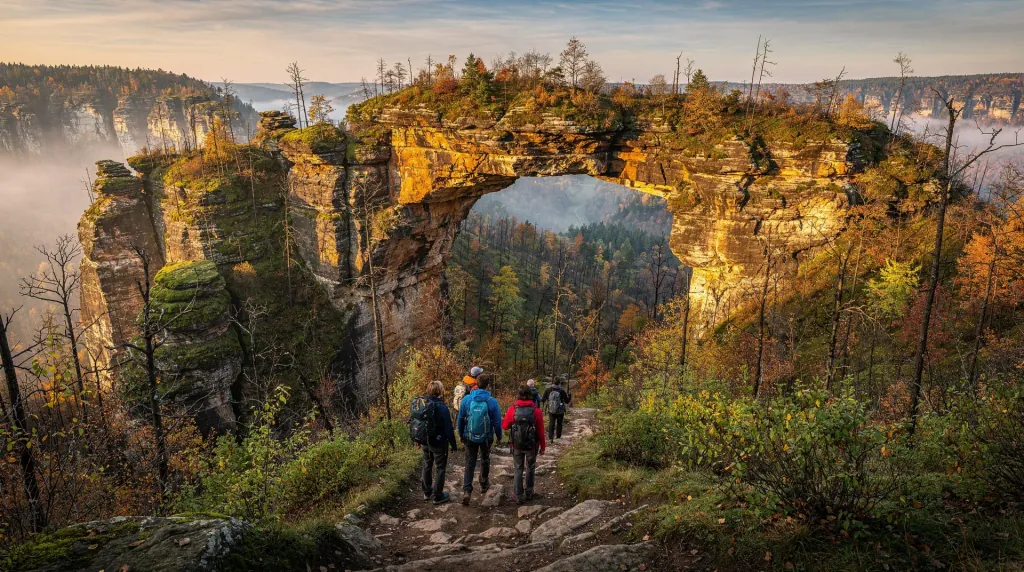
Pravčická brána (Pravcicka Gate) — open. The arch itself survived the fire unscathed (sandstone does not burn). The approach trails from Hřensko were damaged and required path reconstruction, but the primary tourist route to the arch reopened in summer 2023. The viewing area around the arch is fully operational. Entry is required (national park fee): €4 / 100 CZK per person.
Hřensko village and Kamenice gorges — open. The iconic boat rides through the narrow sandstone gorges (Divoká Soutěska and Tichá Soutěska) resumed in April 2024 after two years of partial closure for path and infrastructure repair. This is one of the highlights of the park and its reopening is significant. The boat rides through the gorges are short (20–30 minutes each) but genuinely extraordinary — the sandstone walls rise 30 metres above the narrow water channel.
Trail network — partially open. As of June 2025, approximately 70% of the pre-fire marked hiking trail network is accessible. Some high areas that sustained the most severe burn damage and are undergoing active forest regeneration management remain closed to visitors. The national park website (npcs.cz) maintains an updated map of open and closed sections.
Jetřichovice area and the high plateau — mostly open. The Jetřichovice area (accessible from the German Bastei side or from the Czech interior) sustained less fire damage than the Hřensko gorge area and reopened earlier. The Mariina vyhlídka (Mary’s View) and other plateau viewpoints are accessible.
What the fire damage looks like in 2025
Visitors who expect the park to look as it did before 2022 will find it different. The burned areas — particularly in the slopes above Hřensko and in sections of the trail network west of Pravčická brána — show the classic post-fire landscape: standing dead trees (snags), early regeneration shrubs (fireweed, raspberries, and birch seedlings), and bare-looking hillsides from a distance.
This is not ugly. Post-fire landscapes have their own ecological interest — the burned areas are significantly richer in biodiversity than the pre-fire monoculture spruce stands, and the regeneration is visually interesting in a way that dense dark spruce forest is not. The park management has made a deliberate decision to allow natural regeneration rather than replanting commercial trees, which means the recovery will be slow (decades) but ecologically significant.
The Pravčická brána itself, and the immediate gorge landscape around Hřensko, are largely as they were. The most visually impacted areas are the transition zones on the hillside approaches.
Is it worth visiting in 2025?
Yes, with clear expectations. The core attractions — the arch, the gorge boat rides, the sandstone rock towers of the Jetřichovice area — are accessible and worth the trip. The fire damage in the areas you’ll actually visit is visible but not overwhelming.
The park is simultaneously less crowded than it was pre-2022 (because some visitors are still waiting for a full reopening that is not going to happen on a fixed date — recovery is gradual) and more interesting from an ecological perspective for those who appreciate landscape change.
The recommended day trip from Prague: train from Praha hlavní nádraží to Děčín (1 hour, multiple daily departures), then bus or taxi to Hřensko (25 minutes). From Hřensko: Pravčická brána hike (2–3 hours, 7km return) or the gorge boat rides (half-day circuit). Return to Děčín, train to Prague. Total day trip time: 10–11 hours.
All-inclusive Prague to Bohemian and Saxon Switzerland day trip — guided tour option that handles transport logistics and includes a guide for both Czech and German sides of the national park.
What to watch on the Saxon Switzerland side
The German side of the national park (Saxon Switzerland / Sächsische Schweiz) also sustained significant damage in 2022. The Bastei Bridge — the most famous viewpoint in Saxon Switzerland, perched on sandstone pillars above the Elbe valley — was not directly damaged and remains fully open. The approach trails are largely restored.
Some trail sections in the burned areas on the Saxon side are still subject to safety closures due to unstable dead trees (Totholzgefahr — dead wood hazard). Always check the Nationalpark Sächsische Schweiz website before visiting the German side.
What the 2022 fires taught us
The Bohemian-Saxon Switzerland fires were a preview of what climate-driven fire risk looks like in a Central European forest context that most people assumed was immune to such events. The combination of extreme drought, high temperatures, and ecologically compromised monoculture forests created conditions that were unprecedented in the recorded history of the region.
The park management’s response — allowing natural regeneration, removing commercially planted spruce in fire-vulnerable areas, and communicating openly about the recovery timeline — has been broadly praised by ecologists. The regenerating forest in 2025 is already showing greater species diversity than the pre-fire stands.
Whether this represents an appropriate adaptation to what may become more frequent fire events in Central Europe is a question the park is actively engaged with. It is, in any case, a more interesting question than most visitors expected to find in a sandstone gorge in northern Bohemia.
What the critics of early return visits say
Some travel writers and the park management’s own communications have been cautious about encouraging large visitor volumes while recovery is ongoing. The argument: heavy footfall in regenerating burned areas damages the emerging vegetation, increases erosion risk, and displaces wildlife that is recolonising the post-fire landscape.
This is a legitimate concern. The park management has responded by channelling visitors toward the restored primary routes (Hřensko to Pravčická brána, the gorge boat rides) and keeping the damaged secondary trail network closed until recovery is stable. If you follow the official open trails, you are not a problem. If you leave marked trails to explore “more interesting” burned areas, you are.
Data: what 2019 vs 2025 looks like at the key sites
| Site | 2019 status | 2025 status | Change |
|---|---|---|---|
| Pravčická brána (arch) | Open, full access | Open, full access | No change |
| Hřensko boat gorges | Open | Open (since April 2024) | Closed 2022–2023 |
| Primary hiking trails | 100% open | ~70% open | 30% closed |
| Hřensko village | Fully accessible | Fully accessible | Some buildings still being repaired |
| Saxon Switzerland (Bastei) | Open | Open | German-side closures largely resolved |
The entry fee for the national park has been introduced since 2022: 100 CZK (≈ €4) per person per day, paid at the park entrance points. This was not charged pre-fire. The revenue funds trail restoration and ranger staffing. Budget for this in your day-trip cost.
Reader questions
“Is the gorge boat ride worth it post-fire?”
Yes, unambiguously. The gorge boat rides through Divoká Soutěska and Tichá Soutěska are the most dramatic element of the park — narrow sandstone channels where the cliffs rise 30 metres and the boat barely fits. The fire damage is not visible from inside the gorge (the gorge floor was too moist to burn). It is genuinely spectacular and fully operational since April 2024. Allow 2.5–3 hours for both gorges including the trail sections between them.
“Can children do the hike to Pravčická brána?”
Yes — the primary trail from Hřensko to the arch is approximately 5.5 km one-way and is a clear, well-maintained path with modest elevation. Allow 2–2.5 hours each way at a child’s pace. Bring water; there is limited food availability on the trail in the post-fire period (some stalls at the arch viewpoint). Return the same way or take a longer circular route (check npcs.cz for currently open circular options).
For 2026 visitors — what to expect
The park in 2026 will be approximately 75–80% of its pre-fire accessibility. The primary attractions are fully open. The visible fire damage in the burned hillside zones has softened significantly as natural regeneration accelerates — fireweed, birch, and rowan are covering the former bare slopes, which are now greener than they appeared in 2023 or 2024. The park is genuinely worth visiting; the post-fire landscape is ecologically interesting in its own right.
Book transport from Prague in advance for peak season (July–August): the Hřensko bus connections from Děčín fill up. Alternatively, the organised day tour handles all logistics and is particularly good for visitors who don’t want to navigate Czech regional bus timetables. All-inclusive Prague to Bohemian and Saxon Switzerland day trip — guided, transport included, covers both Czech and German sides of the national park. Approximately 1,500–1,800 CZK (€60–72) including transport and guide.
How this compares to other Prague day trips
Bohemian Switzerland is the longest and most nature-focused of the classic Prague day trips, which is worth weighing before you commit a full day to it. Kutná Hora, with the Sedlec Ossuary, is under an hour from Prague and fits into a half-day. Karlštejn Castle is similarly close and castle-focused rather than landscape-focused.
If you’re trying to decide between a nature day and a heritage day, our day-trip comparison guide lays out the trade-offs, and the by train vs bus vs tour breakdown covers transport logistics that apply across all of these options. Travelling with children changes the calculus too — the hike to Pravčická brána is long enough that our day trips with kids guide is worth checking before you book.
Practical tips for the 2026 visit
Wear proper walking shoes — the trail surface past the reconstructed sections is still uneven gravel and root in places, not a paved path. Bring more water than you think you need; the post-fire trail has fewer shaded rest stops than before 2022, and food availability on the route itself is limited. Cash in CZK is useful for the park entry fee and any trailside stalls; card acceptance is inconsistent this far from Prague, so check our currency and money guide before you go. If you’re combining the day with any Prague transport planning, the general logistics in our airport to city guide cover similar regional transport patterns even though this is a different route.
Related reading
The Bohemian Switzerland day trip guide has current trail status information, transport options from Prague, and practical logistics for visiting the park.