| At a glance | |
|---|---|
| Where | Grand kavárnas cluster in Nové Město and Staré Město (Slavia, Louvre, Imperial); specialty coffee is concentrated in Vinohrady |
| Cost | Around €2.50–5 for coffee; a light meal adds €10–20 |
| Time needed | 45–90 minutes for a proper sit-down; longer if you’re working |
| Getting there | Central kavárnas are walkable from Old Town Square; Vinohrady cafes are a short tram or metro ride (line A, Jiřího z Poděbrad) |
| Best time | Weekday mornings before 10:00 for the grand kavárnas (no queue); mid-morning for the Vinohrady specialty spots |
Prague’s cafe culture: what it actually is
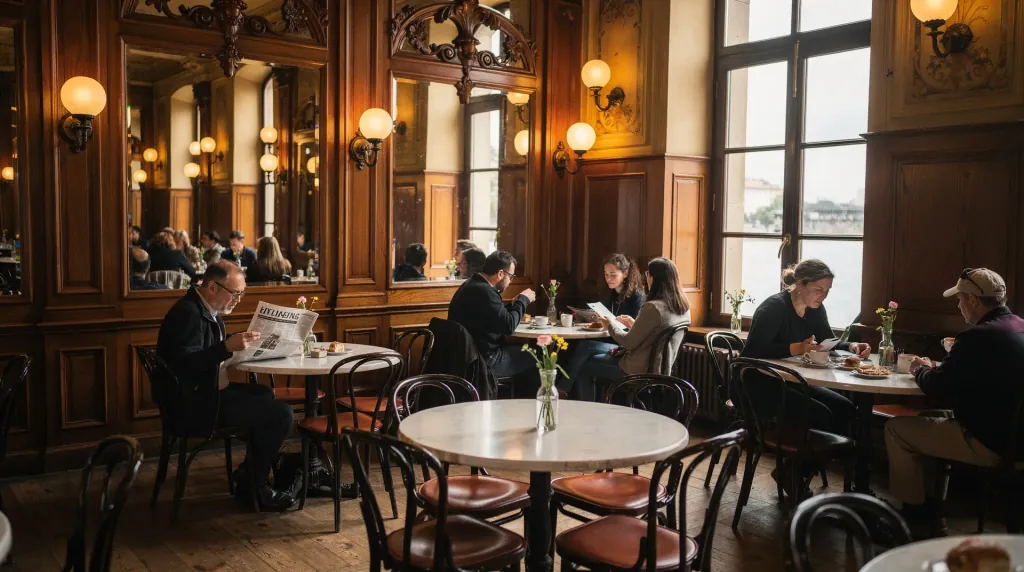
The Czech kavárna is not a coffee shop in the Northern European sense. It is a place to sit for two hours with a single coffee, read a newspaper, have an argument with a friend, or do nothing at all with complete social permission. The city’s grand cafes — Slavia, Louvre, Imperial, Savoy — are Art Nouveau and Cubist spaces that served as meeting points for Czech intellectuals, artists, and dissidents through the Habsburg era, the First Republic, and the Communist period alike.
This tradition is worth engaging with. But Prague also has a younger specialty coffee scene — serious single-origin roasters and espresso bars that match anything in Vienna or Amsterdam. Both layers exist simultaneously and serve different needs. This guide covers both.
The grand kavárnas
Café Savoy
Address: Vítězná 5, Malá Strana
Hours: Mon–Fri 08:00–22:30, Sat–Sun 09:00–22:30
Price range: Coffee €3–5 (75–125 CZK); cakes €4–7 (100–175 CZK); full breakfast €12–18 (300–450 CZK)
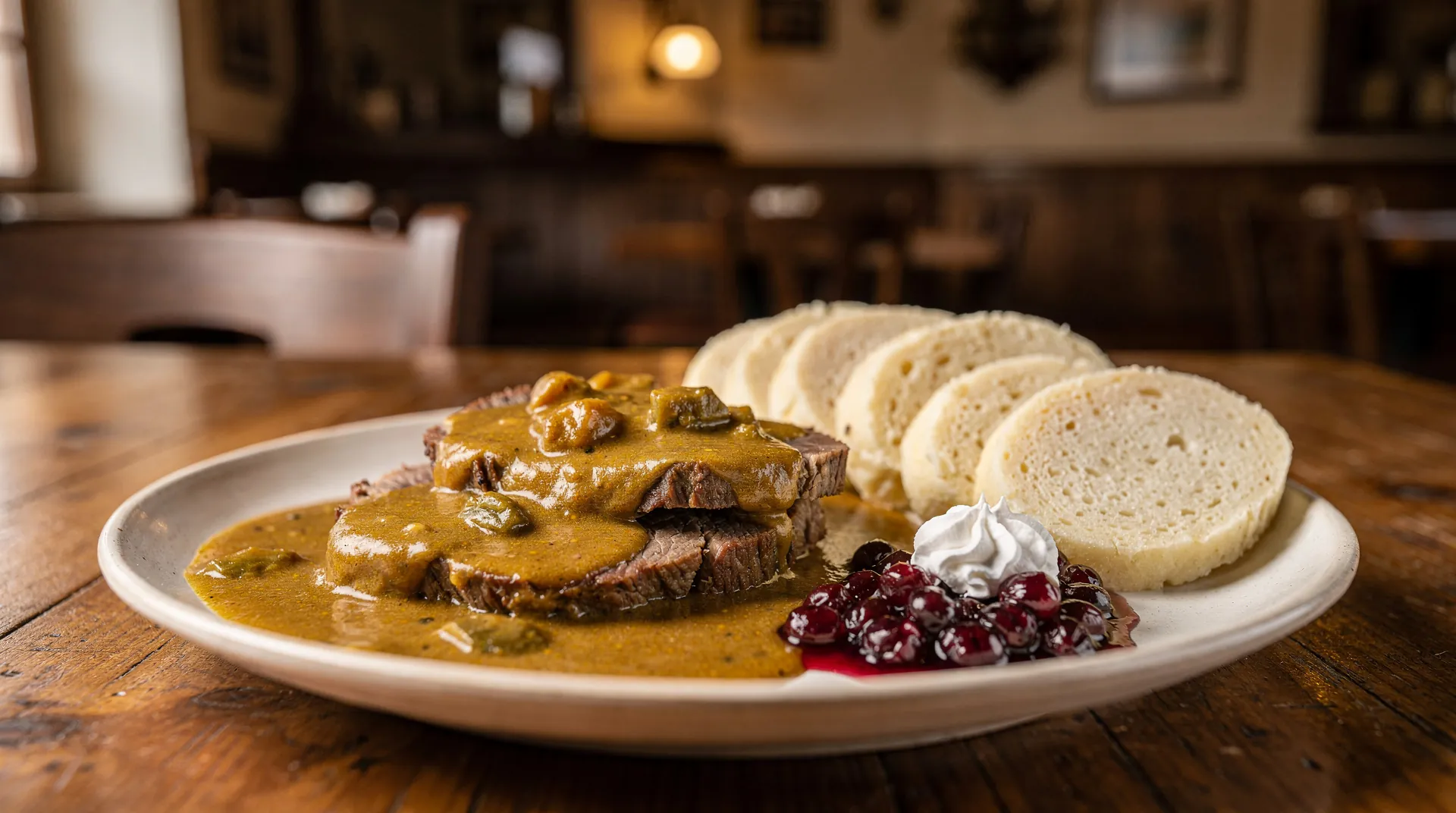
Part of the Ambiente group, Café Savoy is the most consistently executed grand kavárna in Prague. The interior is a restored Neo-Rococo space — high vaulted ceiling, painted panels, antique mirrors — and the kitchen takes both food and coffee seriously. The house pastry team makes the best croissants in Prague and the svíčková and pork tenderloin at lunch are genuinely excellent.
Go for breakfast on a weekday (arrive before 10:00 to get a seat without queuing). Order the croissant and the cortado; return for lunch if you want Czech food in a beautiful setting. Don’t go for dinner — the kitchen performs better at lighter meals.
The honest verdict: Unambiguously the best kavárna for food quality and atmosphere combined.
Café Imperial
Address: Na Poříčí 15, Nové Město
Hours: Daily 07:00–23:00
Price range: Coffee €3–5 (75–125 CZK); mains €14–22 (350–550 CZK)
The interior of Café Imperial is one of the great Art Nouveau spaces in Central Europe: the walls and vaulted ceiling are entirely covered in original ceramic tiles — hand-painted floral motifs, portrait medallions, geometric borders — from the 1914 renovation. It looks like the inside of a very expensive mosque that decided to serve Viennese coffee instead.
The food is hotel-restaurant quality (it’s attached to the Hotel Imperial) and priced accordingly. The coffee is fine. Come here for the interior and a piece of cake; don’t come for the most interesting lunch in Prague. Morning is best — the light through the tall windows is spectacular.
The honest verdict: Drink one coffee here and look at the ceiling for fifteen minutes. This is valid tourism.
Café Louvre
Address: Národní 22, Nové Město
Hours: Mon–Fri 08:00–23:30, Sat–Sun 09:00–23:30
Price range: Coffee €2.50–4 (62–100 CZK); cakes €3–6 (75–150 CZK)
The longest-operating cafe on this list — Café Louvre opened in 1902 and was a regular haunt of Franz Kafka, Albert Einstein (during his Prague professorship 1911–12), and the Prague intellectual circle of the early twentieth century. It has a billiard room, which should be used.
The interior is less dramatic than Imperial or Savoy but more liveable — the proportions are right, the booths are comfortable, and the coffee-and-cake menu is executed with the quiet competence of a place that has been doing it for 120 years. The apple strudel (jablečný závin) is better than most places you’ll try it in Prague.
The honest verdict: Best everyday kavárna — less touristy than Slavia, more liveable than Imperial, food is consistently reliable.
Café Slavia
Address: Smetanovo nábřeží 2, Staré Město (opposite the National Theatre)
Hours: Mon–Fri 08:00–23:00, Sat–Sun 09:00–23:00
Price range: Coffee €3–5 (75–125 CZK); light meals €10–16 (250–400 CZK)
The most storied address on this list. Café Slavia has been operating since 1884, sits directly across from the National Theatre on the Vltava embankment, and was the unofficial headquarters of Czech cultural and political dissent for much of the twentieth century — Havel, Hrabal, the Velvet Revolution conversation in the late 1980s. It has the best view of any cafe in Prague.
The coffee and food are fine, not exceptional. The service is occasionally indifferent in the grand Central European tradition. None of this matters much — you come for the history, the river view, and the sense of sitting inside a significant room. Order coffee, sit by the window, watch the trams pass. Worth it.
The honest verdict: Visit for the history and the view. Don’t expect culinary innovation.
Specialty coffee in Prague
EMA Espresso Bar
Address: Na Příkopě 3, Nové Město (also: Wenceslas Square area branches)
Hours: Mon–Fri 07:30–19:00, Sat–Sun 09:00–18:00
Price range: Espresso €2.50–3.50 (62–87 CZK); filter coffee €3–4.50 (75–112 CZK)
Prague’s most consistent specialty coffee operation. EMA roasts its own beans and takes extraction seriously — the espresso here stands comparison with the best in Vienna or London. The space is small and fills fast on weekday mornings; arrive early or be prepared to wait for a seat. Multiple locations across the city centre now.
Manifesto Specialty Coffee
Address: Hybernská 10, Nové Město (coffee stand within Manifesto Market)
Hours: Mon–Fri 08:00–18:00
A specialty roaster with a minimalist aesthetic and a serious approach to single-origin filter coffee. Less known than EMA, consistently excellent. Worth combining with a visit to Manifesto Market’s outdoor food stalls (see Street food in Prague).
Kavárna co hledá jméno
Address: Mánesova 87, Vinohrady
Hours: Mon–Fri 08:00–20:00, Sat–Sun 09:00–19:00
“The cafe that’s looking for a name” — still nameless after a decade of operation. This is where Vinohrady’s coffee-serious residents work from laptops on weekday mornings. Guest roasters from across Central Europe appear on rotation. The space is small, always full, and genuinely neighbourhood rather than tourist-facing. One of Prague’s best specialty coffee experiences.
Doubleshot
Address: Mánesova 66, Vinohrady
Hours: Mon–Fri 08:00–19:00, Sat–Sun 09:00–19:00
Another Vinohrady anchor. Doubleshot roasts seriously (their Yirgacheffe filter is a benchmark Czech espresso bar coffee) and has enough space to sit for an extended work session. The baristas are technically excellent.
The Kafka connection
Franz Kafka lived and worked in Prague his entire life and spent significant time in the city’s cafes — Louvre was a regular haunt, as was the Arco café (now gone) where the Prague literary circle centred on Max Brod gathered. If you’re tracing Kafka’s Prague, the Franz Kafka Museum in Malá Strana (Cihelná 2b) is the best starting point; combine it with coffee at Café Louvre for the most coherent cultural day.
There is a “Kafka Café” branding used by several tourist-oriented establishments near the Old Town. These have no authentic connection to Kafka and are tourist marketing. The authentic connections are at Café Louvre and the literary addresses in Josefov (birthplace plaque on Náměstí Franze Kafky).
Common traps in Prague cafes
Airport-style cafe chains in Old Town — Starbucks and Costa locations exist throughout the tourist zone. They are fine coffees but represent an extraordinary squandering of being in Prague. Walk two minutes further and find something better.
Kavárnas that charge for table service without warning — some tourist-zone cafes add a €1–2 “table service” charge to the bill. Legal but worth checking the menu before sitting down. Legitimate kavárnas will have this marked somewhere.
“Viennese coffee” menus that price gouge — black coffee (černá káva), coffee with cream (káva se smetanou), or Irish-style coffee with whipped cream (Irish coffee) are normal kavárna orders. If the menu shows five varieties of Viennese coffee at €8–10 each near the Astronomical Clock, move on.
Grand kavárna or specialty coffee: which to choose
| Grand kavárna | Specialty coffee | |
|---|---|---|
| Coffee quality | Fine, not exceptional | Excellent, roaster-level |
| Atmosphere | Historic, ornate, unhurried | Minimalist, work-friendly |
| Best for | A memorable sit-down experience | Serious coffee, laptop work |
| Price | €3–5 for coffee, more for food | €2.50–4.50, coffee-focused |
| Where | Staré Město / Nové Město | Vinohrady, scattered centre spots |
| Example | Café Slavia, Café Louvre | EMA Espresso Bar, Doubleshot |
If you only have time for one cafe stop in Prague, choose based on what you actually want: history and atmosphere point to Café Slavia or Café Louvre; serious coffee points to Vinohrady. Both are compatible with a short visit — see the 1-day Prague itinerary for how a cafe stop fits into a tight schedule, or the weekend Prague itinerary if you have more time to explore Vinohrady properly.
Pairing a cafe visit with the neighbourhood
Café Slavia and Café Louvre both sit within walking distance of major sights, which makes them easy to combine rather than a special detour. Café Slavia is directly opposite the National Theatre on the Vltava embankment — a natural stop after visiting Kampa Island or crossing Charles Bridge. Café Louvre is a few minutes from Wenceslas Square, so it fits naturally into a New Town walk.
The Vinohrady specialty cafes (Doubleshot, Kavárna co hledá jméno) are best combined with a wander through the Vinohrady neighbourhood itself — Art Nouveau apartment blocks, quieter squares, and a genuinely local feel once you’re a few streets off the main tram line. Take tram or metro rather than walking from the centre; it’s a 10–15 minute ride, not realistically walkable with the rest of a sightseeing day.
A modest tip (rounding up the bill, or an extra 5–10%) is appreciated at kavárnas but not obligatory in the way it is in some countries — see the tipping guide for the full picture on Czech tipping norms.
Frequently asked questions about Prague cafes
What is a kavárna?
A kavárna is the Czech word for café — specifically the Central European tradition of a sit-down coffee house where you order at the table, stay as long as you like, and are not expected to vacate your seat after the first drink. The tradition derives from the Ottoman and Viennese coffee house cultures that spread across the Habsburg Empire.
Is Czech coffee culture similar to Austrian or Hungarian?
Yes, closely related. Prague was part of the Habsburg Empire until 1918 and the kavárna tradition parallels Vienna’s Kaffeehaus culture almost exactly. The main differences are in the food accompanying coffee — Czech kavárnas typically serve both Czech pastry (strudel, koláče) and Central European bakery items. The coffee itself has historically been lower quality than Vienna’s, but Prague’s specialty coffee scene now matches or exceeds it.
What coffee drinks should I know in Czech?
Černá káva (black coffee), espresso (espresso, borrowed directly), café latte (café latte), kapucíno (cappuccino), vídeňská káva (Viennese coffee — espresso with whipped cream), and turecká káva (Turkish coffee — grounds in the cup, traditional but increasingly rare). In specialty cafes, filter káva (filter coffee) and cold brew are standard additions.
Can I work from Prague cafes on a laptop?
Most specialty cafes expect this on weekday mornings. Grand kavárnas (Slavia, Louvre, Imperial) are less explicitly laptop-friendly but won’t object to a single device with a coffee. The Vinohrady cafes (Doubleshot, Kavárna co hledá jméno) are specifically designed for this use.
Are there rooftop cafes or cafes with views in Prague?
The terrace at Café Slavia has the best standard cafe view (Vltava and National Theatre). For higher-up views, the Terrace at U Prince hotel (Staroměstské náměstí 29) overlooks the Old Town Square directly — expensive but spectacular. The Cafe at the National Museum (Václavské náměstí 68) has a rooftop section worth checking in the warmer months.
Book a walking tour that includes Prague cafe culture
Prague: Old Town, Jewish Quarter and Astronomical Clock walking tour — covers the historic neighbourhoods where Prague’s cafe culture developed, with stops near Café Louvre and Café Slavia.
Prague: hidden gems walking tour with local guide — explores off-tourist areas including Vinohrady where the city’s best specialty cafes are concentrated.