The honest guide to Czech food: what’s worth your appetite
Czech cuisine is not delicate. It is not light. It is the food of a landlocked Central European nation that spent centuries feeding farmers and miners through brutal winters — and it delivers on that brief with extraordinary consistency. The problem is that Prague’s tourist corridor has filled with mediocre versions of these dishes sold at inflated prices to visitors who don’t know better. This guide is for people who want to know better.
The good news: traditional Czech food is genuinely excellent when cooked properly. Svíčková na smetaně is one of the great beef dishes of Europe. Proper guláš, dark and thick with paprika and beef, destroys any pub stew you’ve had elsewhere. Even smažený sýr — essentially a slab of fried cheese — is deeply satisfying when done right. The bad news: “done right” and “near the tourist trail” rarely overlap. Here’s what you need to know.
| At a glance | |
|---|---|
| Where to eat well | Žižkov and Vinohrady hospody, or Lokál in Staré Město |
| Cost | Around €7–14 (175–350 CZK) per main outside the tourist zone; €18–24+ within sight of Old Town Square |
| Time needed | 45–75 minutes for a proper sit-down meal |
| Best time to order | Lunch for roast-pork dishes like vepřo-knedlo-zelo; dinner works for guláš and svíčková |
| Booking | Rarely needed except at Lokál Dlouhááá on busy evenings |
The seven dishes that define Czech cooking
Svíčková na smetaně
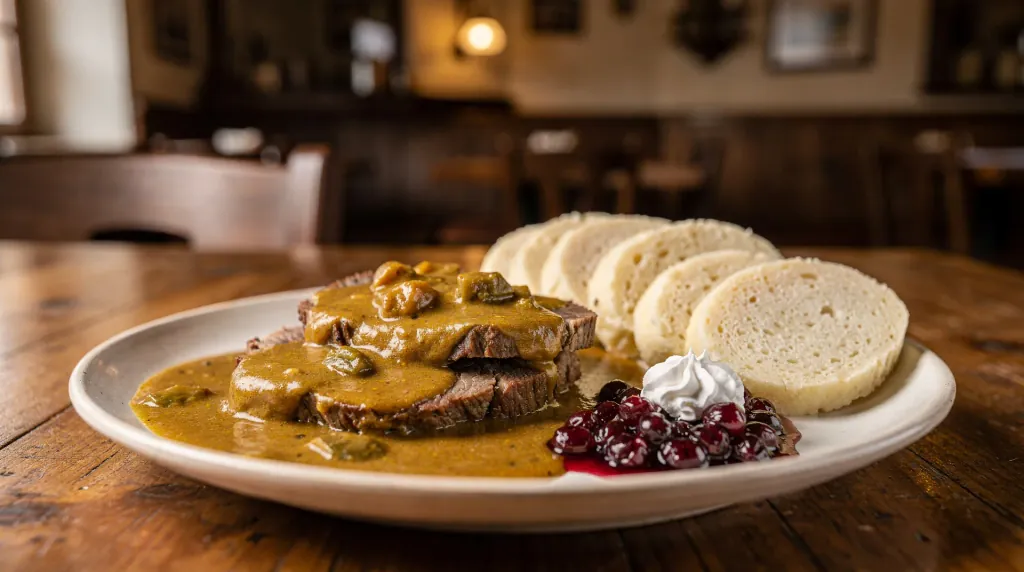
The flagship. Beef sirloin (svíčková literally means “candle” — referring to the cut’s shape), slow-marinated in root vegetables, roasted until tender, then served in a thick sour cream sauce with bread dumplings (houskové knedlíky), a spoonful of cranberry jam, and a wedge of lemon. The sauce should be pale gold, slightly sweet, slightly sour. The dumplings should be soft and yielding, ideal for soaking up every drop.
Price range: €10–16 (250–400 CZK) in a non-tourist restaurant. Expect €18–24 (450–600 CZK) anywhere near Old Town Square.
Where to try it: Lokál Dlouhááá (Dlouhá 33, Staré Město) — consistent, well-sourced, not a tourist trap. Also Restaurace U Patrona (Dražického náměstí 4, Malá Strana) for a reliable version in a beautiful setting.
Guláš
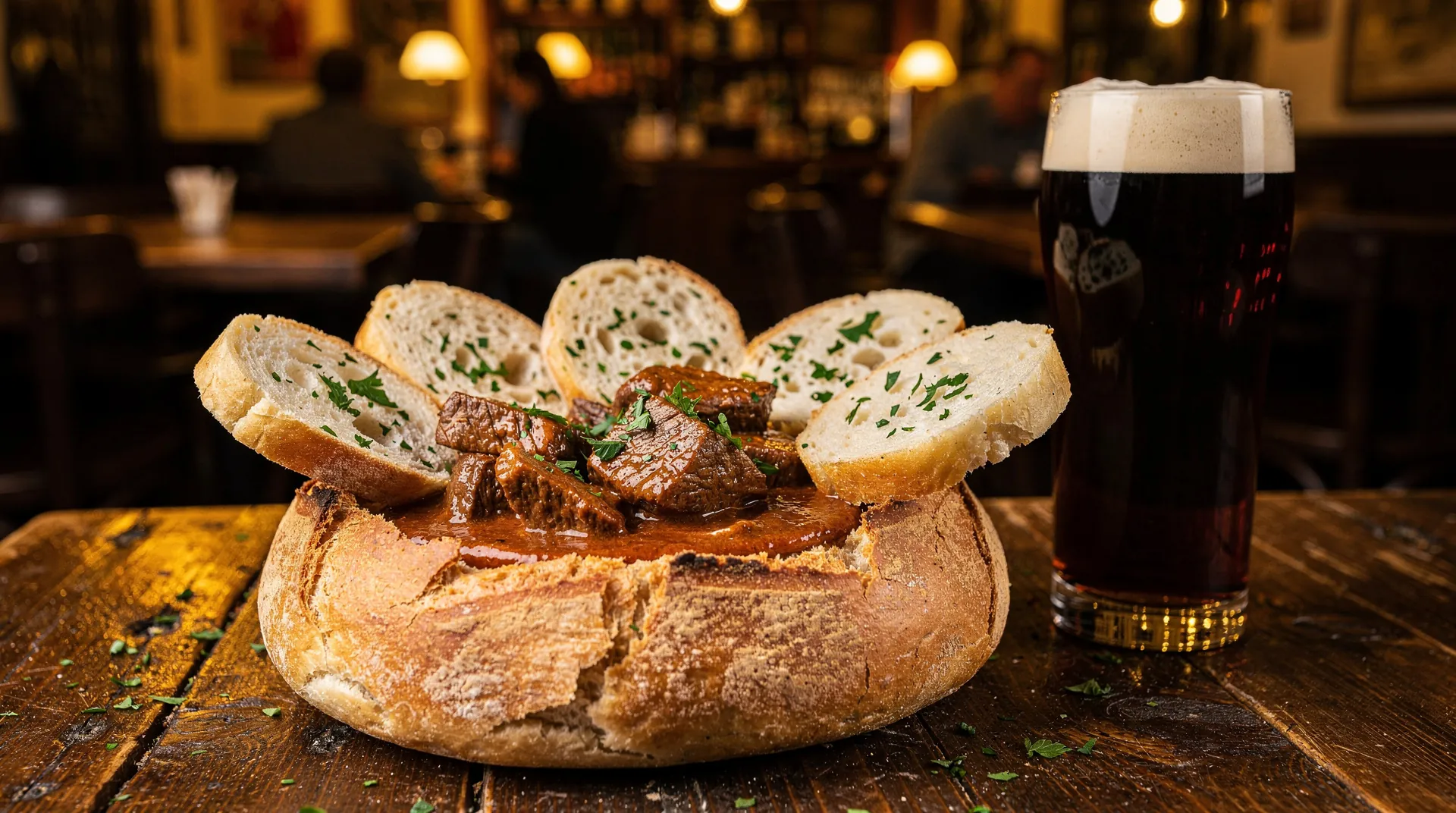
Czech guláš differs from Hungarian goulash in meaningful ways: less paprika, sometimes beef cheeks instead of shoulder, served with bread dumplings rather than egg noodles. It’s a stew that should be dark, glossy, and unapologetic. If it’s watery or orange, it’s been done wrong. The best versions are almost black from slow reduction.
Price: €8–13 (200–325 CZK) in a proper hospoda. Full guide at Czech guláš guide.
Vepřo-knedlo-zelo
The holy trinity of Czech pub food: vepřová pečeně (roast pork — usually shoulder or neck, slow-cooked until the fat renders out), knedlíky (dumplings, either bread or potato), and zelí (braised cabbage, either sauerkraut-style or sweet). Often abbreviated VKZ on menus. This is Sunday lunch food. Order it at lunch, not dinner — restaurants that care about quality roast pork early in the day.
Price: €9–14 (225–350 CZK).
Smažený sýr
Fried cheese. A slab of Eidam (Czech edam-style cheese) dipped in breadcrumbs and deep-fried, served with tartar sauce and fries or boiled potatoes. The Czech equivalent of a fish and chip shop classic — excellent drunk food, completely unpretentious, and found in every hospoda. Some places use Hermelín (Czech camembert), which is softer and more interesting. Order smažený Hermelín when you see it.
Price: €5–9 (125–225 CZK).
Bramborák
A potato pancake made with grated raw potato, garlic, marjoram, and egg. Thin, crispy, slightly greasy in the best possible way. Often served as a side or starter, sometimes with sauerkraut. Common at Náplavka farmers market on weekends. Not every restaurant serves it — when you see it, order it.
Price: €3–6 (75–150 CZK).
Utopenci
“Drowned ones” — pickled sausages (párek sausages, often cut in half lengthwise) marinated in vinegar with sliced onions, allspice, and peppercorns. A classic Czech pub snack, served cold alongside a beer. They should have been in the brine for at least a week; good versions are soft, sour, and complex. The name comes from the legend that a lockkeeper drowned and his sausages were left pickling in their brine.
Price: €2–4 (50–100 CZK).
Tlačenka
Czech brawn — head cheese made from pressed pork scraps and gelatin, sliced cold, served with vinegar and raw onion. An acquired taste that rewards the adventurous. Found in proper meat shops (řeznictví) and traditional pubs. It has no English equivalent worth invoking. Think of it as a firm, pork terrine with a pronounced vinegar finish.
Price: €3–5 (75–125 CZK).
Where to eat traditional Czech food in Prague
Lokál Dlouhááá — Dlouhá 33, Staré Město. The gold standard for unfussy, well-executed Czech food. Svíčková, guláš, fried cheese, and Pilsner Urquell on tap. No tourist theatre, no faux-antique decor. Gets loud at night but lunches are excellent. Open daily 11:00–01:00.
Hospůdka Na Schodech — Havelská 12, Staré Město. Technically in tourist territory but stubbornly local. Tiny, always full, serves the kind of svíčková your Czech grandmother might make if your Czech grandmother existed and made excellent svíčková. Cash only.
Pivovarský klub — Křižíkova 17, Žižkov. Beer hall with a serious Czech kitchen and rotating taps. The guláš here is done in proper hospoda style — dark, thick, and served with fresh rye bread. Žižkov is where Prague actually eats, and this place reflects that.
U Kalicha — Na Bojišti 12, Nové Město. Famous as the setting of Jaroslav Hašek’s Good Soldier Švejk, now inevitably touristy in ambiance but the kitchen still delivers legitimate Czech plates. Order VKZ and ignore the souvenir menu items.
Restaurace Mlejnec — Rybná 5, Staré Město. Reliable mid-range option for a sit-down Czech meal without the premium of the tourist zone. Bramborák is excellent here.
The seven dishes compared
| Dish | Style | Price range | Best time to order |
|---|---|---|---|
| Svíčková na smetaně | Cream sauce, sweet-sour | €10–16 | Any meal, classic Sunday lunch |
| Guláš | Thick, dark stew | €8–13 | Lunch or dinner |
| Vepřo-knedlo-zelo | Roast pork, cabbage | €9–14 | Lunch — best when freshly roasted |
| Smažený sýr | Fried cheese | €5–9 | Late meal, pairs with beer |
| Bramborák | Potato pancake | €3–6 | Starter, or at Náplavka market |
| Utopenci | Pickled sausage | €2–4 | Beer snack, not a full meal |
| Tlačenka | Cold pork terrine | €3–5 | Starter for adventurous eaters |
If you only have room for one, start with svíčková; if you want the pub-food deep dive, the goulash guide covers guláš in far more depth than fits here.
Pairing traditional dishes with where you’re staying
Prague’s best traditional-food neighbourhoods aren’t always where visitors stay. Žižkov has some of the most honest hospody in the city precisely because it sees fewer tourists; Vinohrady is similar with a slightly more polished edge. If you’re building a wider food itinerary around these dishes, the food tours compared guide shows which guided tastings include the core four, and the best beer halls guide covers where the beer matches the cooking.
Common traps to avoid
Anything within 50 metres of Charles Bridge or Old Town Square — prices inflate 40–80% with no quality improvement. The same svíčková you’ll pay €22 for at a terrace restaurant near the Astronomical Clock costs €11 three streets away.
“Traditional Czech cuisine” signs in English with photos — laminated picture menus are a universal sign of tourist-targeted mediocrity. A real Czech hospoda lists dishes in Czech, sometimes with German, rarely with English photos. The lack of an English menu is a quality indicator.
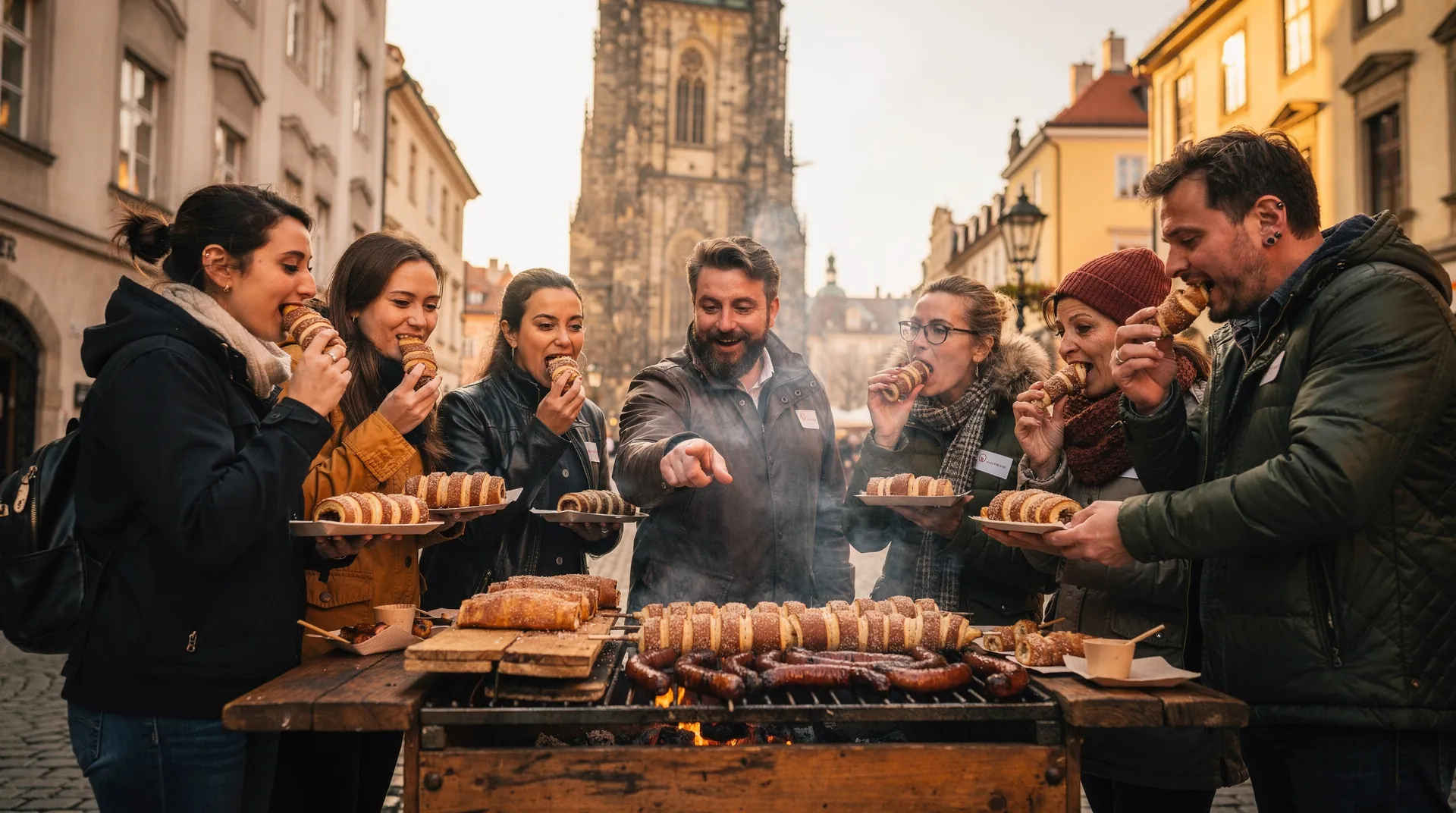
Trdelník — not a traditional Czech food (see Trdelník is not a traditional Czech food). The sugar-encrusted chimney cake stalls around Old Town are a modern tourist scam, not heritage food.
Frequently asked questions about traditional Czech dishes
Is Czech food vegetarian-friendly?
Traditional Czech cuisine is heavily meat-focused, but smažený sýr (fried cheese) is genuinely delicious and on most menus. Bramborák (potato pancake) is also vegetarian. Svíčková, guláš, and VKZ are all meat dishes. See Vegan and vegetarian food in Prague for dedicated options.
What are knedlíky and how many types are there?
Knedlíky are Czech dumplings — steamed or boiled rolls of dough, sliced like bread, served as a side dish to absorb sauces. The two main types are houskové knedlíky (bread dumplings, made with stale bread and flour) and bramborové knedlíky (potato dumplings, denser and heavier). Bread dumplings are served with svíčková; potato dumplings often accompany game dishes.
What does “hospoda” mean and how is it different from a restaurant?
A hospoda is a Czech pub — food and beer served in the same space, no distinction between bar seating and dining. The vibe is casual and communal. Restaurace implies a slightly more structured dining setting. Vinárna is a wine bar, also often serving food. In practice, the best Czech food is usually in hospody, not restaurants.
How much does a full Czech meal cost in Prague in 2026?
A main course in a tourist-zone restaurant: €14–24 (350–600 CZK). The same dish two streets away: €8–14 (200–350 CZK). In a proper Žižkov or Vinohrady hospoda: €7–12 (175–300 CZK). Add a half-litre of Czech beer (pivo) for €2–3 (50–75 CZK) outside the centre, €4–6 (100–150 CZK) in tourist areas.
What is the proper way to order Czech beer alongside food?
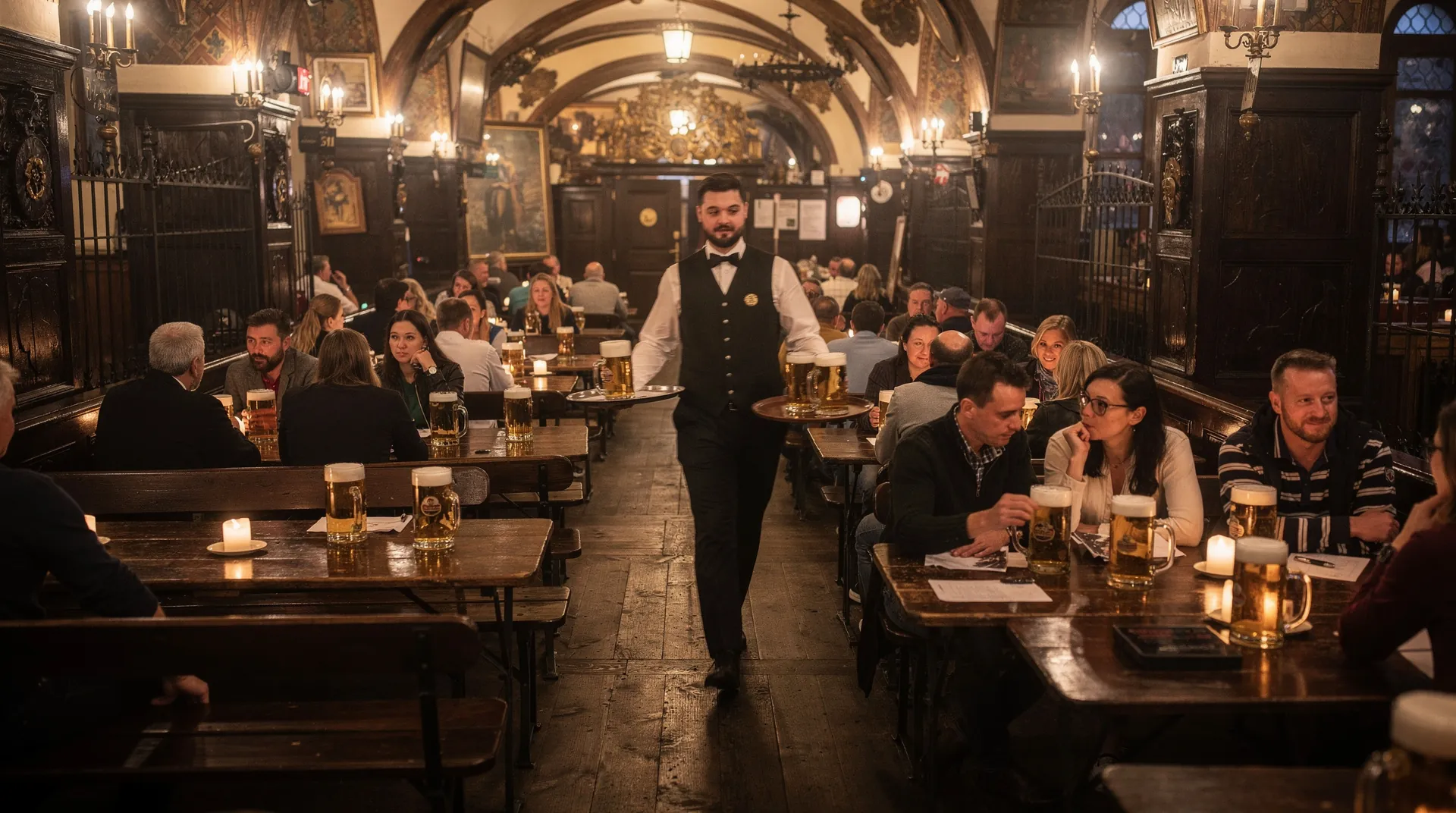
Czech pivo is served in 0.5l (půllitr) or 0.3l (malé pivo) sizes. Order the půllitr — it’s the standard and usually better value. Let the waiter know if you want more; in traditional hospody, a new beer appears on your table when the current one is nearly empty unless you place your beer mat on top of the glass to signal you’re done.
Can I find these dishes outside Prague in the Czech Republic?
Yes, and often better — smaller towns have fewer tourist restaurants and more genuine locals’ hospody. Brno, Olomouc, and Plzeň all have excellent Czech food scenes. But Prague’s best restaurants (Lokál chain, Pivovarský klub) genuinely hold their own.
What’s a typical Czech breakfast?
Not the dishes above. Czech breakfast (snídaně) is cold cuts, cheese, bread, and eggs. Hotel buffets in Prague often inflate this into an international spread. For a genuine Czech breakfast, find a bakery (pekárna) and order a fresh rohlík (crescent roll) with butter and cold cuts.
What’s the best neighbourhood to try traditional Czech food away from tourists?
Žižkov and Vinohrady are the strongest bets — both are primarily residential, which keeps hospoda prices and quality honest. Vyšehrad is another quieter option with a handful of good local places nearby.
Book a food experience in Prague
See Prague’s food scene with a guide who knows where to go:
Prague: food tour with 10 tastings of classic Czech dishes — the most comprehensive Czech food tasting tour in the city, visiting 8–10 stops across the old town.
Delicious food tour by Prague Food Tour — smaller group, more neighbourhood-focused, good for people who want context alongside the tasting.
Traditional Czech food and Prague Old Town private tour — private option for couples or families who prefer a tailored pace.