Prague street food: the honest guide
Let’s establish something immediately: the dominant street food in Prague’s tourist zones — the trdelník chimney cake spinning on heated rollers near every Christmas market, the langos (deep-fried dough) with cheese, the overpriced klobása from stalls near the Astronomical Clock — ranges from mediocre to actively bad at wildly inflated prices. None of it is particularly Czech.
The actual good street food in Prague requires about five minutes of walking from the main tourist corridor. Here’s where it is.
| At a glance | |
|---|---|
| Where | Náplavka embankment (Nové Město) for the market, Manifesto for the food court, Petrská/Dlouhá for butcher stands |
| Cost | Around €3–6 (75–150 CZK) per item at markets; tourist-zone stalls charge €4–8 (100–200 CZK) for less |
| Time needed | 1–2 hours to graze Náplavka properly; 30–45 minutes for a quick Manifesto stop |
| Getting there | Metro Palacký náměstí (C line) or tram for Náplavka; central Nové Město location for Manifesto |
| Best time | Saturday morning before 11:00 for Náplavka, before the weekend crowd arrives |
Náplavka farmers market — the best food experience in Prague
Location: Rašínovo nábřeží, Nové Město (Náplavka embankment, along the Vltava)
When: Saturday 08:00–14:00 (year-round, reduced in winter)
Getting there: Metro Palacký náměstí (C line) + short walk, or tram to Palacký náměstí
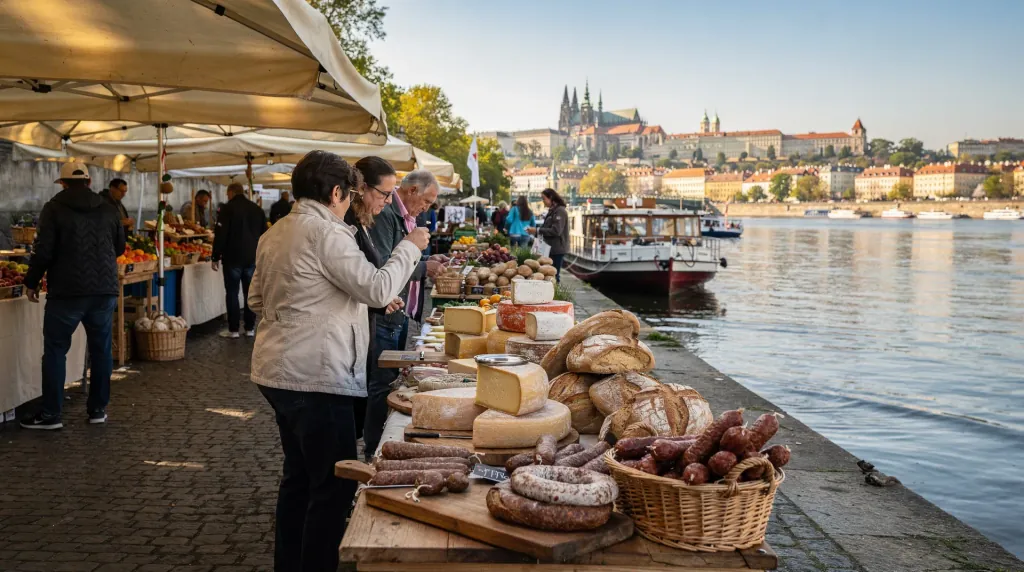
Náplavka on Saturday morning is not a tourist event. It is a genuine farmers market where Prague families and the restaurant community source their weekend produce. Czech farms from Bohemia and Moravia bring seasonal vegetables, artisan cheeses (Moravian cheese culture is underappreciated internationally), fresh bread, smoked meats, honey, pickles, and prepared food.
What to eat at Náplavka:
Bramborák — potato pancakes from the market stalls are the canonical Náplavka experience. They’re made to order, hot, crispy, served with sauerkraut and sour cream. €3–4 (75–100 CZK).
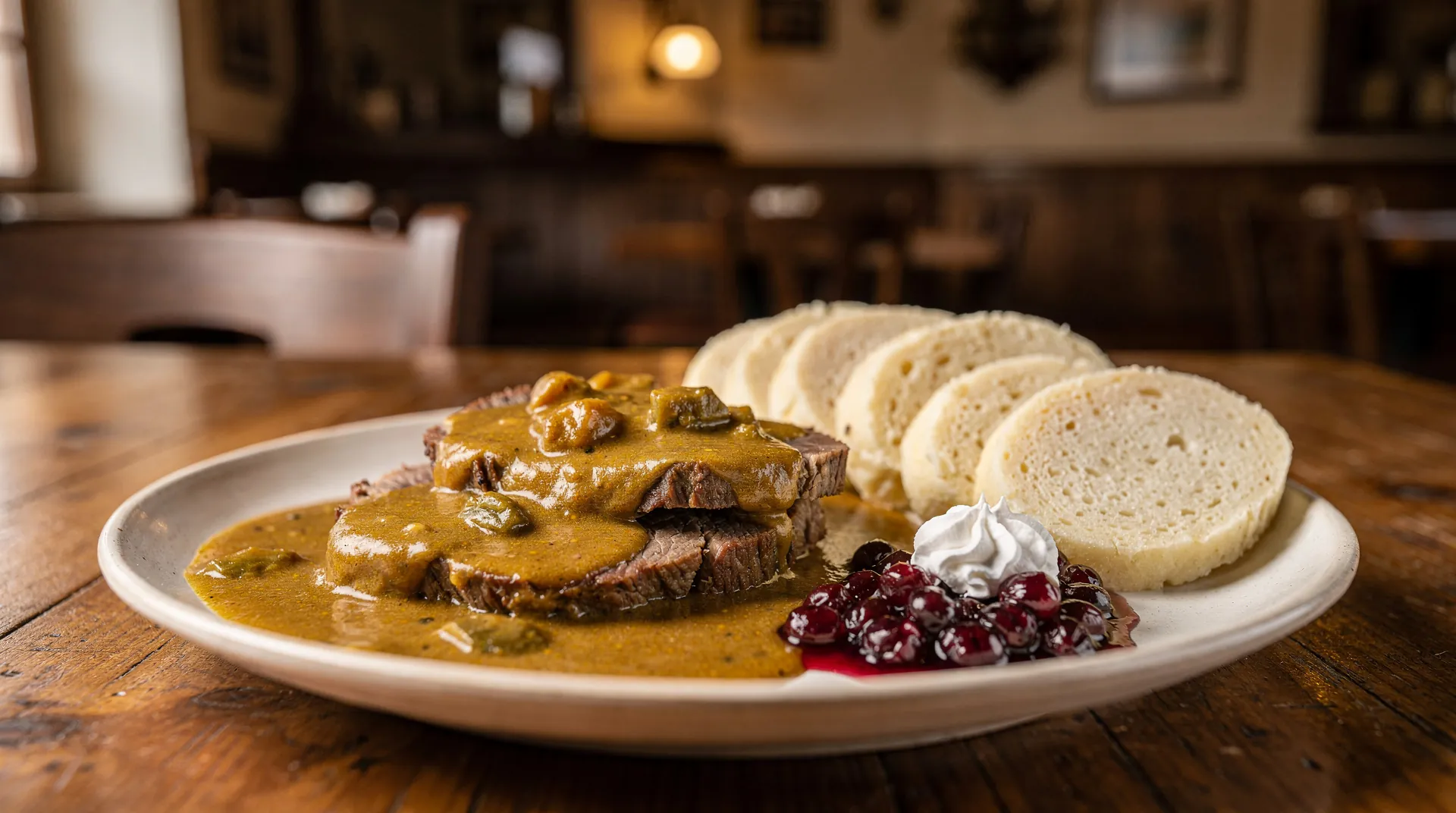
Svíčková roll — several stalls serve svíčková (the marinated beef) in a bread roll rather than the sit-down restaurant version. It’s a slightly messy but excellent portable format of the dish. €4–5 (100–125 CZK).
Klobása — Czech grilled sausage from farm-direct stalls. The commercial klobása stalls in Old Town use lower-quality meat; the Náplavka butcher stands use identifiable pork from specific farms. The difference is obvious. €3–4 (75–100 CZK).
Moravian cheese — look for the wheels of aged Moravian semi-hard cheese from the central stalls. Sold by the piece, often with bread. €2–4 per portion.
Local beer at the market — several craft beer stalls operate at Náplavka, including rotating appearances from Prague microbreweries. Beer at 09:30 in the morning at a riverside market is entirely normal in Prague. €2.50–3.50 (62–87 CZK).
Arrive before 11:00. By midday the market fills with Prague’s weekend crowd and the best stalls sell out.
Manifesto Market — the container food court
Location: Hybernská 10, Nové Město (original site); also seasonal sites in Holešovice and Dejvice
When: Mon–Fri 11:00–22:00, Sat–Sun 12:00–22:00 (check seasonally — primarily spring through autumn)
Manifesto is Prague’s permanent street food market built from shipping containers. It hosts rotating food vendors — typically 15–20 operators covering Vietnamese, Czech, Middle Eastern, Mexican, Japanese, and fusion cuisines — alongside craft beer taps and a specialty coffee stand.
The quality varies by vendor. Consistently good options include: Vietnamese pho and bánh mì (Czech-Vietnamese food culture is strong — Prague has had a significant Vietnamese community since the 1970s), smash burgers from rotating operators, and occasional Czech-modern fusion plates from local chefs.
What to order: Ask what’s been there longest — consistently-present vendors are more reliable than newcomers. The Vietnamese food is almost always the best value. Beer prices at Manifesto are reasonable (€3–4/75–100 CZK) for quality craft offerings.
The honest take: Manifesto is good but not exceptional. It’s a solid option for a relaxed lunch or evening without reservation pressure. Don’t cross town specifically for it; do use it if you’re in Nové Město and don’t want a sit-down meal.
Where to eat klobása properly
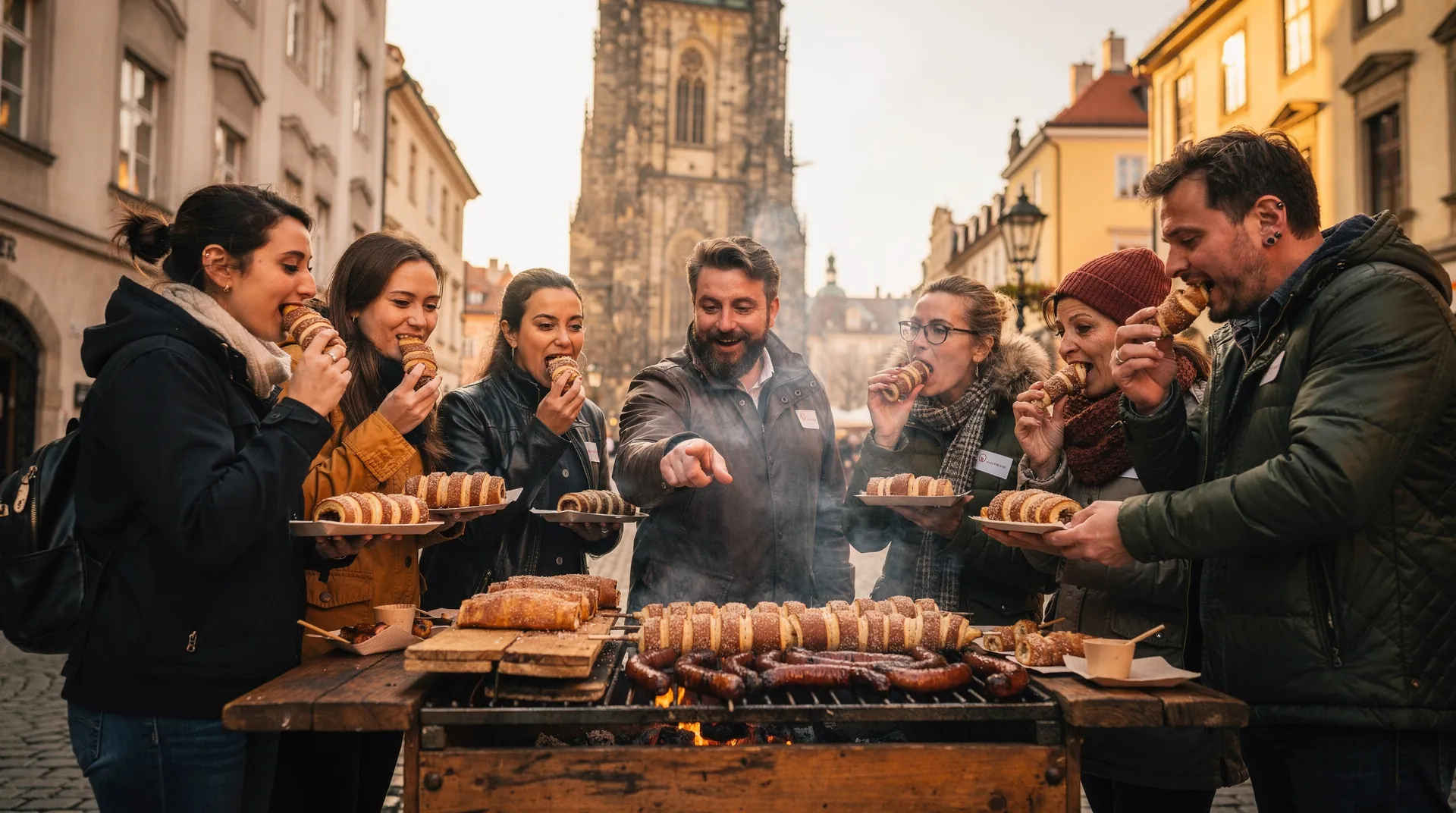
The tourist-zone klobása stalls near Old Town Square and the Astronomical Clock charge €5–7 (125–175 CZK) for a sausage that is usually a generic commercial frankfurter heated on a grill. This is a waste of money.
For proper klobása:
U Šnoků — Petrská 12, Nové Město. A butcher’s grill stand that sells farm-direct sausages, smoked meats, and prepared pork dishes to take away. The klobása here is from identified Czech farms and tastes like a different category of food from the tourist-zone alternatives. €3–4 (75–100 CZK).
Nakl. Dobroty — V Kolkovně 9, Staré Město. Butcher-delicatessen with a counter service for cold-cut sandwiches, utopenci, tlačenka, and hot sausages. One of the few genuinely good prepared-food options inside the Old Town area. €3–5 (75–125 CZK) for most items.
Naše Maso — Dlouhá 39, Staré Město. The Lokál group’s butcher shop. Premium quality, premium price — klobása starts around €5 (125 CZK) — but the quality of Czech provenance meats here is the best in the city centre. Also sells sandwiches and prepared dishes to take away.
Langos and chimney cakes: what you’re being sold
Langos is a Hungarian deep-fried dough snack, popular throughout Central Europe at fairs and markets. The versions sold in Prague’s tourist zone are fine but generic — not Czech, not particularly interesting, not worth seeking out. You can get the same thing (better) at any Central European country fair.
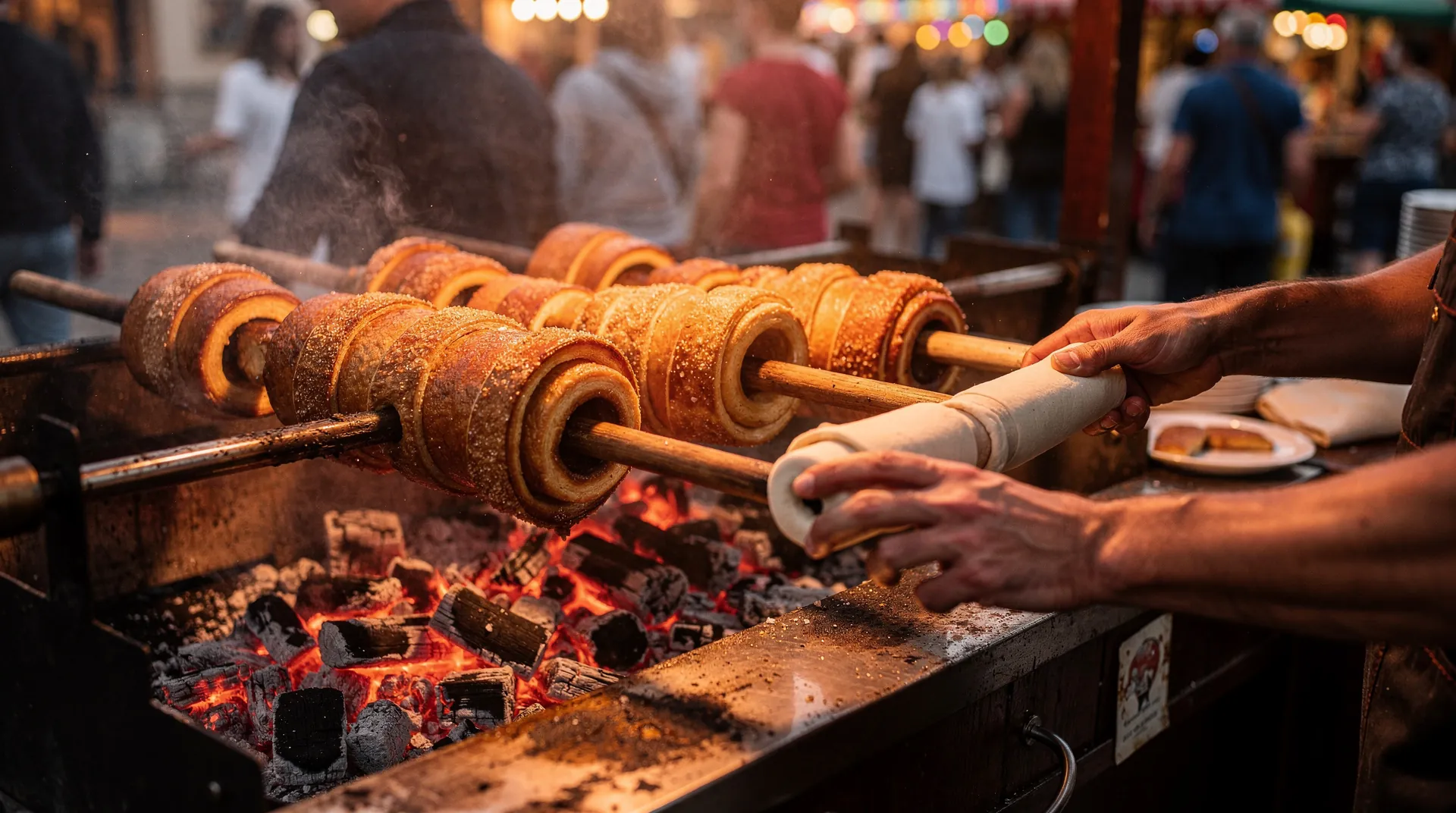
Trdelník is the chimney cake phenomenon — see the full breakdown at Trdelník is not a traditional Czech food. The summary: it’s not Czech, it’s been in Prague since roughly 2012 when entrepreneurs imported it from Slovakia, and it has no heritage connection to the city. It’s fine as a warm sugar snack; it is not “authentic Prague street food.”
Vietnamese street food in Prague
This deserves its own paragraph because it genuinely surprises visitors. Prague has had a Vietnamese community (primarily from northern Vietnam, originally arriving as guest workers in the Communist period) since the 1970s, and Czech-Vietnamese food culture is the most interesting immigrant food tradition in the country. Every Prague neighbourhood has at least one Vietnamese bistro (called “Viet” or “Vietnamese restaurant” colloquially) serving rice dishes, pho, and spring rolls at €4–7 (100–175 CZK). These are not tourist-facing and they are consistently excellent.
Look for any packed lunchtime Vietnamese spot in Žižkov or Vinohrady. The queue at noon is a reliable quality indicator.
Street food options compared
| Option | Best for | Typical spend | When it’s open |
|---|---|---|---|
| Náplavka market | Genuine local food, Czech farm produce | €10–15 for a full grazing session | Saturday 08:00–14:00 |
| Manifesto Market | Casual variety, no reservation needed | €6–10 for a meal | Daily 11:00/12:00–22:00, seasonal |
| Butcher-grill stands (U Šnoků, Naše Maso) | Best klobása and cold cuts | €3–5 per item | Weekday daytime, varies by shop |
| Tourist-zone stalls | Convenience only | €4–8 for less quality | Daily, all hours near attractions |
Building street food into a Prague day
Náplavka pairs naturally with a Saturday itinerary: market in the morning, then a walk along the river toward Vyšehrad for the views, or into Nové Město proper. If you’re building a first visit around food rather than sights, the food tours compared guide shows which guided tours include Náplavka or Manifesto as stops, and the traditional Czech dishes guide covers what to order once you sit down for a proper meal afterward.
Common traps in Prague street food
“Fresh” trdelník near attractions — they are not fresh; they sit on the spinning rollers for extended periods and are reheated. The ones that smell best are always the hottest from recent heating, not from recent baking.
Christmas market food prices — Prague’s Christmas markets (November–December) are beautiful but the food prices are 30–50% higher than the same items would cost elsewhere. The mulled wine (svařák) is good and reasonably priced; the food stalls are not the point.
Sausage on a stick at outdoor festivals — generic pork sausage on a stick (often marketed as “Czech BBQ”) with mustard is fine but unremarkable. The same money spent at Náplavka market gets you something with actual character.
Frequently asked questions about Prague street food
What is klobása and how is it different from a normal sausage?
Klobása is a Czech smoked sausage — larger than a frankfurter, made from pork (sometimes beef), flavoured with garlic, marjoram, and pepper, and either grilled or smoked over beech wood. The skin snaps when you bite it. It’s served with mustard (hořčice) and sometimes with horseradish (křen). Czech mustard is milder and slightly sweeter than German or French versions.
When does the Náplavka market run?
Saturday year-round, 08:00–14:00. In warmer months (April–October) there’s also sometimes a smaller Wednesday evening market (18:00–20:00) but this is less reliable — check local Prague event listings. Saturday morning remains the definitive Náplavka experience.
Is there good street food near Prague Castle?
The area immediately around Prague Castle (Hradčany) is thin on street food quality. The tourist stalls on the approach from Malostranské náměstí are expensive and mediocre. The best nearby option is to descend to Malá Strana proper — there are several small sandwich and klobása operations on Nerudova and the side streets that serve the local residential population.
Are there night food markets in Prague?
Manifesto Market operates until 22:00 in season. Some weekend events at Holešovice (the former abattoir complex, now a cultural centre) include night food markets, particularly in summer. The Náplavka embankment has occasional evening events from May to September with food vendors and beer — check Prague’s event calendars (e.g., Meetup Prague or the city’s own event listing at prague.eu).
What does street food cost in Prague compared to restaurant prices?
Street food at Náplavka or Manifesto runs €3–6 (75–150 CZK) per item. Tourist-zone street food stalls charge €4–8 (100–200 CZK) for inferior products. A sit-down Czech restaurant lunch outside the tourist zone costs €8–14 (200–350 CZK) for a full meal with beer. Street food is genuinely good value; tourist-zone street food is worse value than restaurant food.
Is Náplavka worth visiting if I only have one day in Prague?
If your one day falls on a Saturday, yes — it’s a genuinely different side of the city from the castle-and-bridge circuit and worth an hour even on a tight schedule. If it’s a weekday, prioritise the sights and eat at a proper hospoda instead; see the 1-day Prague itinerary for how to fit it in.
Book a street food tour in Prague
Prague: guided street food walking tour — a dedicated street food tour that covers the market stalls, butcher shops and casual-eating spots that aren’t obvious to first-time visitors.
Prague: food tasting tour of hidden gems (small groups) — small-group tour focused on non-tourist spots, good for discovering where Prague actually eats.