The great trdelník myth and why it matters
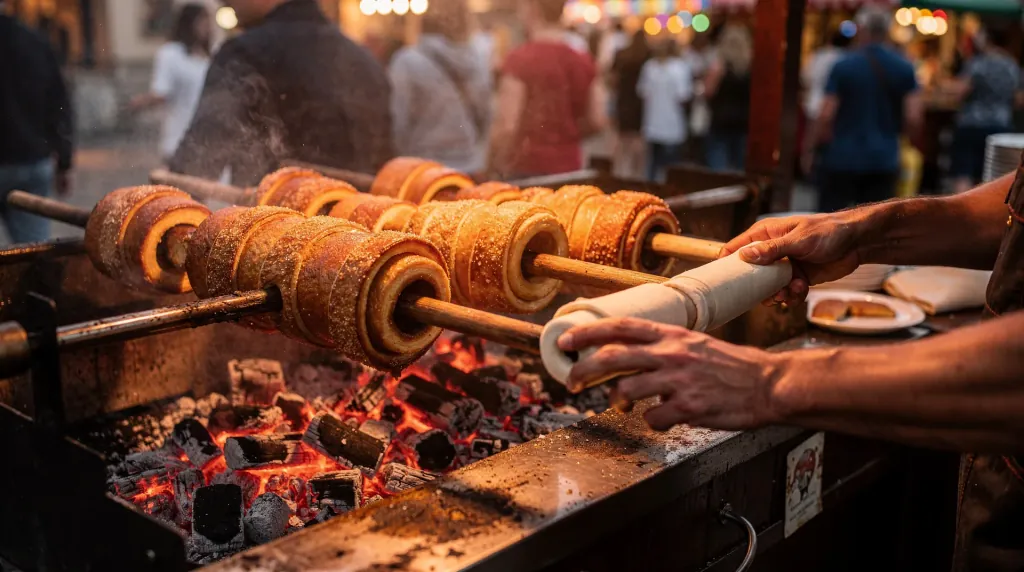
Walk through Prague’s Old Town and you will encounter, approximately every forty metres, a stall selling a spiral of sweet dough spinning on a heated roller, dusted with cinnamon sugar, sometimes stuffed with Nutella or ice cream. There will be a sign reading “Traditional Czech Chimney Cake.” The smell is genuinely excellent. The price is €3–6 (75–150 CZK). And it is not, in any meaningful sense, a traditional Czech food.
| Where to find it | Every few metres around Old Town Square, Staré Město, and near the Astronomical Clock |
| Cost | Around €3–6 (75–150 CZK) plain; €5–8 with ice cream filling |
| Time needed | 5 minutes to buy and eat; no queueing usually needed away from the Clock |
| Real heritage | Slovakia/Transylvania, not Bohemia — see below |
| Best genuine alternative | Koláče or traditional Czech dishes from a proper bakery |
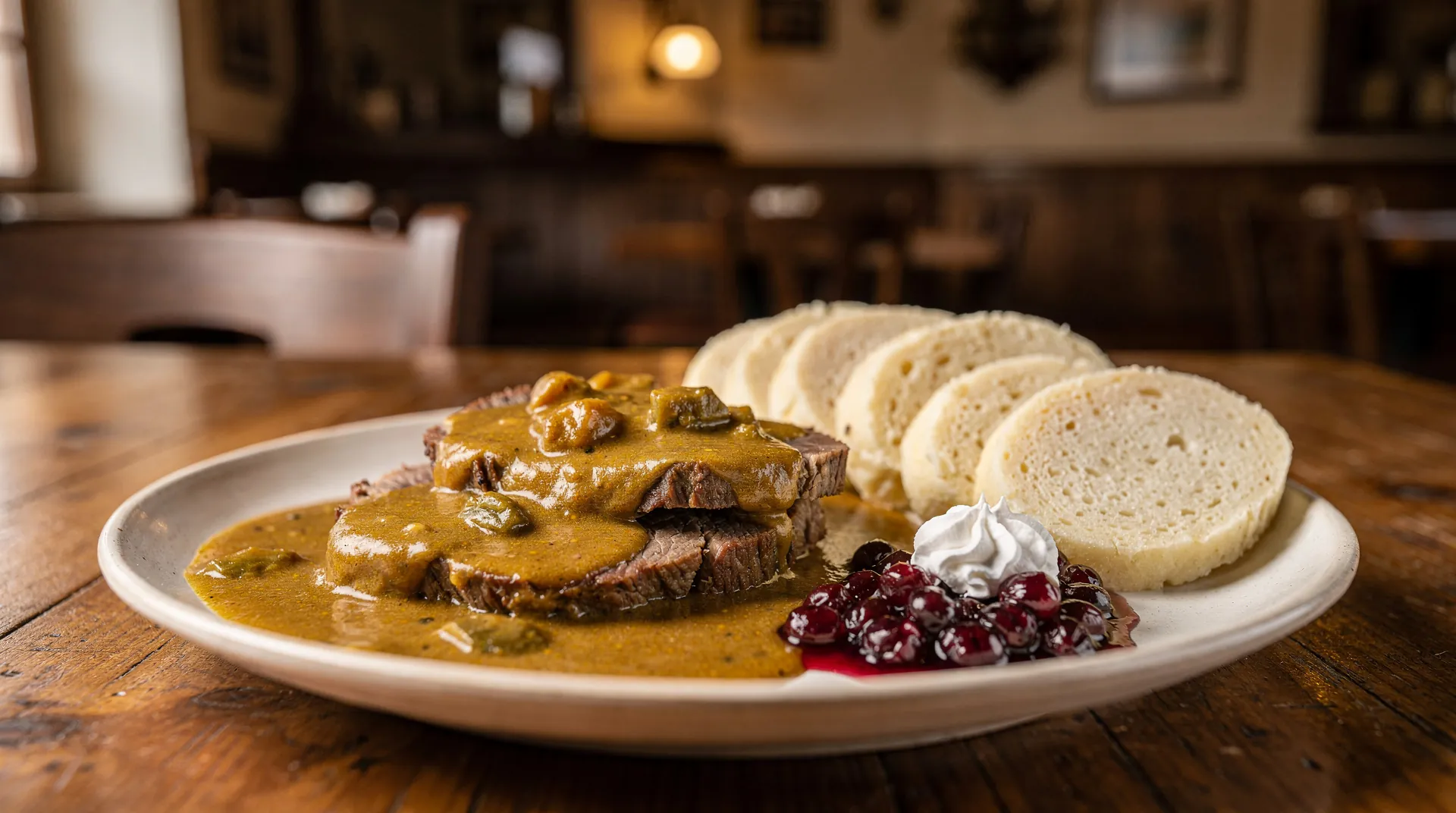
This matters because tourists are being sold a fabricated heritage as though it were the equivalent of guláš or svíčková — dishes with genuine deep roots in Czech culinary culture. The trdelník story is a case study in how tourist food ecosystems manufacture authenticity, and understanding it makes you a more interesting visitor to Prague.
Here’s the actual history.
What trdelník actually is
Trdelník (trdlo in its original form) is a real pastry with a real history — just not in Bohemia. The trdlo tradition is documented in Transylvania (in what is now Romania) from the 18th century, associated with the Saxon German communities of the region. A log of sweet yeast dough is wrapped around a wooden or metal rod (the trdlo), coated with sugar and nuts, and baked over an open fire or coals while being rotated. The result is a hollow cylinder of caramelised pastry.
From Transylvania, the tradition spread to Slovakia and Hungary, where it remains a genuine folk food with cultural roots. In Slovakia, a version called trdelník or skalický trdelník — specifically from the town of Skalica — has been produced since the 18th century and holds Protected Geographical Indication (PGI) status from the European Union. This is a real product with a real heritage.
The crucial point: the traditional production area is Slovakia and the Transylvanian-Hungarian cultural zone. Bohemia is not part of this tradition. Czech culinary history has no documented trdelník production prior to the 2000s.
When did trdelník appear in Prague?
The Prague trdelník market stall emerged as a significant phenomenon around 2010–2012, coinciding with the rapid expansion of European city breaks as a tourism category. Entrepreneurs — primarily from Slovakia and Hungary, recognising an opportunity — began setting up stalls near the Astronomical Clock and other high-traffic Prague tourist areas. The product was genuine (the pastry is a real recipe), but the “traditional Czech” marketing was invented.
By 2015, trdelník stalls had multiplied to fill almost every major tourist route in Prague Old Town. By 2020, there were an estimated 40–50 commercial trdelník operations in Prague alone, compared to near-zero before 2010.
The innovation that turbocharged the market: someone started selling trdelník stuffed with soft-serve ice cream, creating the photogenic spiral-with-ice-cream format that dominates Instagram. This variant has no heritage anywhere. It’s a post-2015 invention designed for social media shareability.
What Czech confectioners and food historians say
Czech food historians are consistently clear on this point. Jan Šmíd, food writer for the Czech newspaper Lidové Noviny, has written multiple pieces debunking trdelník’s claimed Prague heritage. The Czech culinary heritage organisations that document traditional recipes (Ministerstvo zemědělství, Asociace kuchařů a cukrářů) do not include trdelník in their inventory of Czech traditional foods.
The Slovak Ministry of Agriculture, by contrast, formally registered skalický trdelník as a traditional Slovak food. The European Commission’s GI (geographical indication) database lists it as a Slovak product.
In 2017, Prague City Hall discussed (without ultimately enacting) a proposal to regulate the use of “traditional Czech” marketing on tourist food stalls, specifically in response to the trdelník situation. The political will didn’t materialise, but the acknowledgement was telling.
What is actually traditional Czech pastry
If you want genuine Czech sweet food tradition, here’s what to look for:
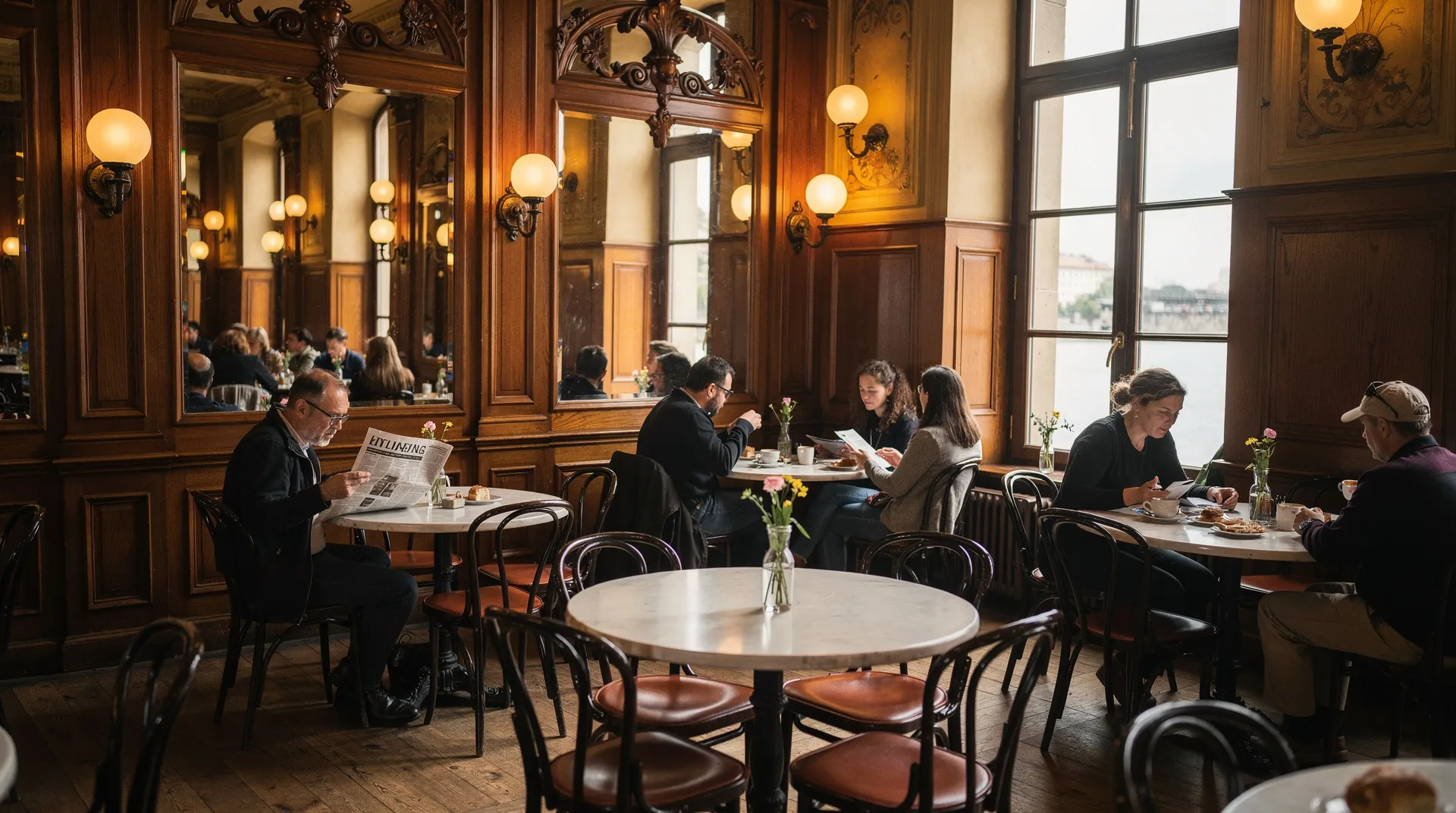
Koláče — sweet yeast pastry rounds with fillings of tvaroh (curd cheese), povidla (plum jam), or mák (poppy seeds). These have a documented history in Bohemia and Moravia going back centuries and remain a central feature of Czech family baking and bakery culture. You can find excellent koláče at Café Savoy (Vítězná 5) and in any decent Prague bakery (pekárna).
Závin (strudel) — apple, poppy seed, or cherry strudel in the Central European tradition. The Czech version is slightly different from Austrian strudel — thicker pastry, less apple per unit. Café Louvre’s apple závin is a benchmark version.
Vánočka — braided Christmas bread made with raisins, almonds, and orange peel. A specifically Czech Christmas tradition with real heritage.
Větrník — Czech cream puff (éclair format), the equivalent of the French éclair but with a slightly different pastry ratio. More cream, less chocolate. Found in any kavárna or patisserie.
Medovník — honey cake, layered with cream and walnut filling. A popular Czech pastry that has genuine Czech identity and is found everywhere from bakeries to grandmother’s kitchens.
Švestkové knedlíky — plum dumplings, a sweet variant of the dumpling tradition. Boiled dough encasing a whole plum, dusted with poppy seeds and butter. Found seasonally in traditional restaurants and some bakeries.
Is trdelník bad?
This is not a culinary complaint. The pastry itself — warm, cinnamon-spiced, chewy and caramelised — is pleasant. The ice cream variant is a perfectly reasonable street dessert. The problem is the fraudulent heritage marketing, not the product.
If you want to buy one, buy one. The best trdelník in Prague (judged purely as pastry quality) comes from operations that make fresh batches rather than keeping the dough pre-rolled and sitting: look for a stall where you can see the dough being prepared, not just reheated. Avoid stalls near the Astronomical Clock where quality has been lowest consistently.
What you should not do is conclude you’ve tasted a piece of Czech culinary heritage when you eat one. You’ve eaten a Slovak-Transylvanian pastry marketed with invented Czech heritage by entrepreneurs who recognised an opportunity. That’s a different thing.
The broader tourist food ecosystem in Prague
Trdelník is the most visible example of a broader pattern. Several other items sold in Prague’s tourist zone as “traditional Czech” have questionable or fabricated heritage:
Langos — a Hungarian deep-fried dough, a genuine Hungarian street food tradition. Not Czech. Sold everywhere in Prague tourist areas as generic Central European fair food.
Stag party pub crawl cocktails — obviously not Czech heritage but often served in bar contexts that claim to be “traditional Czech” pubs. Becherovka and Slivovitz are genuinely Czech/Moravian; most cocktail menus in tourist pubs are not.
“Medieval Czech” dinner shows — the “medieval banquet” concept at several Prague tourist restaurants presents entertainment that has no specific connection to Czech medieval food culture. They are fun theatrical evenings; they are not Czech history.
The alternative: real Czech sweet food experiences
Café Savoy (Vítězná 5, Malá Strana) — the pastry team here produces the best koláče in Prague. The curd-cheese filled version on Saturday morning is the correct reference.
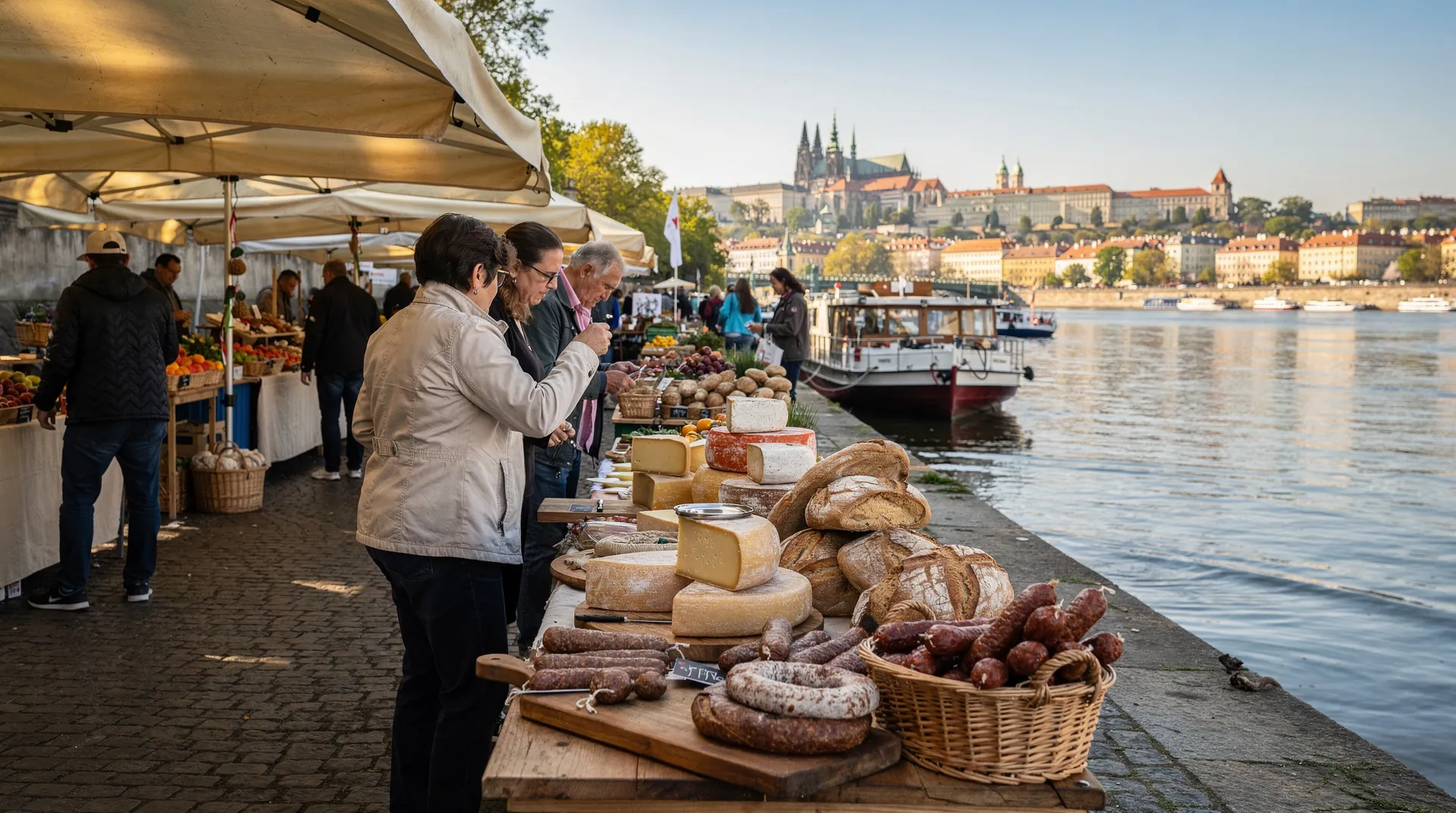
Náplavka Saturday market (Rašínovo nábřeží, 08:00–14:00) — Moravian honey stalls, fresh bread from Bohemian farms, seasonal fruit pastries. The real version of Czech food culture.
EMA Espresso Bar (Na Příkopě 3) — specialty coffee with Czech pastry, including seasonal koláče variants from local bakeries.
Trdelník vs. genuine Czech sweet pastry — a quick comparison
| Prague tourist trdelník | Skalica trdelník (Slovakia, PGI) | Czech koláče | |
|---|---|---|---|
| Real heritage | Invented Prague marketing, c. 2012 | Documented since the 18th century | Centuries old, Bohemia/Moravia |
| Where to get it right | Stalls that hand-roll dough fresh, not near the Clock | Skalica, Slovakia, or specialist Slovak bakeries | Café Savoy, any decent pekárna |
| Price | Around €3–8 | Similar, slightly less tourist markup | Around €1.50–2.50 |
| Should you eat it | Fine as a snack, not as “Czech culture” | Yes, if you’re in Slovakia | Yes — this is the real thing |
Why this keeps fooling visitors
Part of the reason the myth persists is structural: trdelník stalls are the most visible, most fragrant food experience in the highest-footfall part of Prague, so first-time visitors reasonably assume ubiquity equals authenticity. It doesn’t. The lesson generalises beyond pastry — the same caution is worth applying to “traditional” pub menus, “medieval” dinner shows, and souvenir shops near Charles Bridge claiming centuries-old provenance for recently manufactured goods. If you want a reliable filter, ask where locals actually eat: our traditional Czech dishes guide and street food guide both stick to dishes with real, documented Czech roots.
Frequently asked questions about trdelník
If I’ve already eaten trdelník, did I ruin my Prague food experience?
No. Prague’s actual food scene is rich enough that one tourist pastry doesn’t compromise anything. Eat the svíčková, visit U Zlatého Tygra, have breakfast at Café Savoy — those experiences are there regardless.
Where does the name “trdelník” come from?
From “trdlo” — the wooden spit or rod around which the dough is wound. The name describes the implement, not a Czech place or tradition. In Slovak, the same pastry is called trdelník or (in the PGI-protected version) skalický trdelník.
Is skalický trdelník actually from Slovakia worth trying?
Yes — if you’re visiting Slovakia or find a Prague operator using the authentic Skalica recipe (thicker dough, wood-roasted rather than gas-heated, no ice cream stuffing), it’s a genuinely pleasant traditional pastry. The Slovak version is meaningfully different from the tourist Prague commercial version.
Do Czech people eat trdelník?
In the same way British people occasionally buy a churro from a theme park kiosk. It’s there, you might try one, it’s not part of your culinary identity. The Czech food media and culinary professionals are fairly unified in treating Prague trdelník as a tourist phenomenon rather than a Czech food tradition.
What should I eat instead of trdelník?
For a sweet street food fix: koláče from a bakery (€1.50–2.50), a piece of medovník from Café Louvre, or Šumava forest honey on bread from the Náplavka market. For an actual warm street snack: bramborák (potato pancake, €3–4) from a market stall — that is a genuinely Czech street food tradition.
Are there any regulations on “traditional Czech food” marketing?
Not effective ones as of 2026. Czech food labelling law requires accuracy in ingredient declarations but does not specifically regulate “traditional Czech” as a marketing claim. The EU’s GI system protects specific regional products (like skalický trdelník from Slovakia) but doesn’t prevent Czech operators from marketing unrelated products with the “traditional” label. The 2017 Prague City Hall discussion produced no regulation.
Is trdelník sold anywhere else besides Prague’s Old Town?
Yes — it has spread to most Central European tourist cities (Vienna, Budapest, Kraków) over the last decade, following the same tourist-economy logic as in Prague. None of those cities have a genuine trdelník tradition either; it travels with tourism, not with local food culture.
Can I find trdelník at Prague’s Christmas markets?
Yes, and it’s genuinely more pleasant there — the cold weather makes the warm cinnamon pastry feel seasonal even if the heritage claim is still fictional. Pair it with mulled wine (svařák) for the classic Christmas market combination.
Book a food tour that tells you the truth
Prague: food tour with 10 tastings of Czech dishes — this tour includes a trdelník stop with an honest discussion of its heritage. One of the few food tours that addresses the mythology directly.
Delicious food tour by Prague Food Tour — covers genuine Czech food heritage with stops at bakeries and butchers selling products with authentic local roots.