| At a glance | |
|---|---|
| Where | East of Staré Město, along the B (yellow) metro line, between Florenc and Invalidovna |
| Cost to visit | Free to walk; lunch around €12–16 (300–400 CZK), dinner mains around €16–32 (400–800 CZK) |
| Time needed | 2–3 hours for the walk; a half-day if you’re eating a proper lunch and dinner here |
| Getting there | Metro B to Křižíkova or Invalidovna; trams 8 and 24 along Sokolovská |
| Best time | Weekday lunch for a table without booking; Friday/Saturday evening for the food scene at full tilt |
How a flood turned Karlín into Prague’s best neighborhood
In August 2002, the Vltava River flooded catastrophically. Karlín — a low-lying district on the eastern edge of the center — was underwater for weeks. Entire streets were emptied. Residents moved out. Buildings went hollow.
What followed was a decade of slow recovery that turned into something unexpected: a wholesale architectural renovation of a 19th-century industrial neighborhood, combined with a influx of young businesses — studios, galleries, restaurants, design firms — that couldn’t afford rents in Vinohrady or Nové Město. By the mid-2010s, Karlín had become the city’s most interesting neighborhood, and by the early 2020s it had become the one that serious food travelers specifically come for.
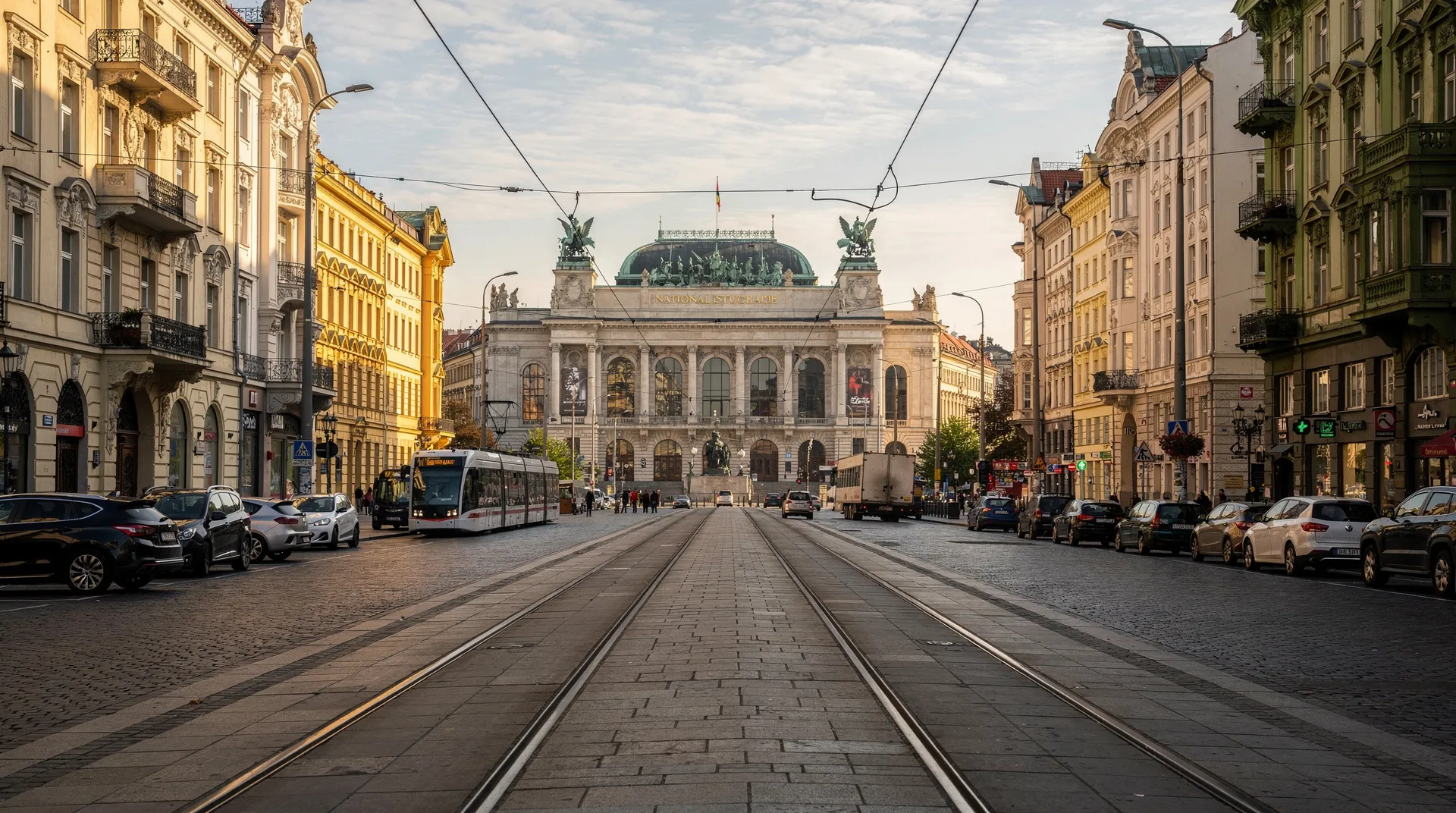
The architecture is uniformly interesting: wide Haussmann-influenced avenues, enormous renovated courtyards, factory buildings converted to offices, and the kind of intact 19th-century street facades that other European cities spent the 20th century demolishing. Walk along Křižíkova or Sokolovská and you’re in a city that looks like nobody tore anything down, because for 100 years after the floods nobody had the money to replace anything — and then someone with taste arrived with renovation money instead of demolition equipment.
How Karlín compares to nearby neighborhoods
| Neighborhood | Vibe | Best for | Distance from Karlín |
|---|---|---|---|
| Karlín | Post-industrial, food-forward, design-aware | Serious eating, architecture | Within it |
| Žižkov | Gritty, bohemian, late-night pubs | Nightlife, budget stays | 10 min uphill |
| Holešovice | Industrial-turned-cultural, riverside | Galleries, the market hall | 15 min (via the tunnel) |
| Nové Město | Commercial backbone, Art Nouveau | Theatre, shopping, value stays | 2 metro stops |
A walk through Karlín
Allow two to three hours, ideally around lunch when the restaurants are at their best.
Start at Náměstí Jiřího z Poděbrad (technically in Vinohrady, but the walk begins here) and head north on Korunní across the boundary into Karlín. The shift in character happens somewhere around Chelčického — the streets widen, the foot traffic drops, and the renovation-in-progress aesthetic becomes visible.
Walk north to Náměstí Republiky (Karlín’s own square, not to be confused with the one in Nové Město) at the corner of Bořivojova — a neighborhood square with outdoor tables and a local farmers’ market on weekend mornings. The Kostel sv. Cyrila a Metoděje (Church of Sts Cyril and Methodius) anchors the square.
Continue north on Sokolovská to Palachovo náměstí and the renovated industrial zones around Palác Invalidovna — a spectacular Baroque military hospital building from 1731, now being renovated as a mixed-use arts and residential complex.
The heart of Karlín’s food scene is concentrated around Křižíkova and the streets between Náměstí Republiky and Invalidovna metro. This is where the restaurants that food critics from Vienna and Berlin come to eat are located. Walk slowly and look at the menus.
Detour into Karlínský tunel — a pedestrian tunnel under the rail viaduct that connects Karlín to Holešovice, decorated with street art and surrounded by pop-up food stalls. Cross into Holešovice if you want to extend the walk.
Prague food tasting tour of hidden gems — small groups (3 h, from €49)Where to eat
Quick lunch
Eska on Pernerova is the neighborhood’s signature restaurant — a former industrial bakery turned Nordic-Czech bistro, with naturally leavened bread baked on site, fermented preparations, and seasonal Czech produce treated with technique. Lunch menus run €12–16 (300–400 CZK) and are exceptional value. Book ahead even for weekday lunch. Bokovka on Čáslavská is a wine bar with an excellent lunch menu focusing on natural wine and vegetable-forward cooking; mains €11–15 (275–375 CZK).
Dinner
Kalina on Náměstí Jiřího z Poděbrad (yes, technically the other square) is a French-Czech restaurant that has been one of Prague’s best for several years — classical French technique applied to Bohemian ingredients, mains €22–32 (550–800 CZK). For a different register, Bistro 8 on Sokolovská serves natural wine and market cooking in a small space with an open kitchen; reservations essential. Maso a Kobliha (technically on the Vinohrady side) has the neighborhood’s best meat work, with dry-aged Czech beef and straightforward preparations at mains €16–24 (400–600 CZK).
Cafes and bakeries
Eska’s bakery counter (open from 7 am) sells the best bread in Prague by most local reckoning — whole-grain sourdoughs, rye loaves, and pastries that justify arriving before 9 am. Kavárna Prostoru on Chelčického is a neighborhood café in a former warehouse space with excellent coffee and a calm working atmosphere. The Bake Shop on Korunní (Vinohrady border) serves the city’s most reliable croissants and cinnamon rolls.
Where to drink
Cobra on Sladkovského náměstí (technically Žižkov border but the Karlín side) is the neighborhood’s most interesting bar — natural wine by the glass, small plates, and a converted-pub atmosphere. Veltlin on Křižíkova is a wine bar specializing in Austrian Veltliner and Czech Moravian wines; low-lit, serious, quiet. U Slovanské Lipy on Tachovské náměstí is the honest Czech pub of the neighborhood — no natural wine list, just Kozel dark on draft and affordable goulash.
Prague food tour with 10 tastings of classic Czech dishes (3 h, from €49)Where to stay
Karlín’s accommodation offering is still developing — the neighborhood gentrified faster gastronomically than in terms of hotel stock. A handful of boutique apartments and smaller guesthouses operate on the main avenues. For most visitors, Karlín works better as a destination neighborhood (come to eat) rather than a base neighborhood. That said, staying here makes sense for food-focused travelers who want to be near the restaurants: the commute to the historic center is two metro stops on the B line. Hotel Residence Křižíkova is the most established local option.
Getting here and around
Metro Křižíkova and Invalidovna are both on the B (yellow) line. From Křižíkova, Florenc (the bus terminal and B/C interchange) is one stop west, and from there you’re three stops from the castle district or five stops from Holešovice. Trams 8 and 24 run through the neighborhood on Sokolovská. Walking time to Wenceslas Square is about 20 minutes. The neighborhood is mostly flat and cyclable.
Common misses in Karlín
The courtyards (dvory) between the street-facing blocks of Křižíkova and Sokolovská hide some of the best renovation work — passages through the buildings reveal interior gardens and conversions that aren’t visible from the street. Several of the neighborhood’s best cafés are accessed through these passages.
Palác Invalidovna — the 1731 Baroque military hospital — is a remarkable structure that most visitors don’t know exists. The renovation is ongoing, but the exterior and the surrounding moat are accessible and give a sense of the building’s ambition. It’s the largest Baroque secular building in Prague that isn’t a palace.
The Saturday market near Náměstí Republiky (Karlín) runs spring to autumn and is a proper neighborhood market rather than a tourist-facing one. Czech farmers, organic vegetables, decent coffee, and no trdelník.
Frequently asked questions about Karlín
Is Karlín safe to visit and stay in?
Very safe. The neighborhood’s former reputation (pre-flood era, heavy industry) has been entirely superseded by the renovation. Street crime is minimal.
How do I get from Karlín to the castle?
From Křižíkova metro, take the B line to Florenc, change to the A line toward Dejvická, and alight at Malostranská. Then walk up or take tram 22 to Pražský hrad. Total: about 20–25 minutes.
Why is Eska considered Prague’s best restaurant?
Eska combines a working bakery (some of Prague’s best bread), a lunch café, and an evening restaurant in a single converted industrial space. The cooking at dinner is Czech-Nordic — fermented, foraged, seasonal, technically careful — and the bread program alone would justify the location. It has maintained its reputation for several years without coasting.
What was Karlín before the floods?
An industrial and working-class residential neighborhood, built up in the second half of the 19th century. It had factories, workshops, tenements, and a local character that was distinct from the middle-class neighborhoods of Vinohrady and Žižkov. The 2002 flood was the catastrophe that cleared the way for what exists today.
When is the best time to visit Karlín for food?
The neighborhood is good year-round, but the spring and autumn seasons bring out the best of the farm-to-table restaurants. Summer terrace season (May–September) on Náměstí Republiky and the beer gardens along Sokolovská is excellent. Friday and Saturday evenings are when the city’s food people come here.
Is Karlín a good base if I don’t have a car or care about nightlife?
Yes, if your priority is food and transit rather than an evening scene. The B line puts you two stops from Florenc (major interchange) and a handful of stops from the historic center. But Karlín goes quiet after 9 pm — for late-night options, Žižkov is a 10-minute uphill walk.
Full day in Karlín: 9am to 10pm
8:30 — Eska bakery counter (Pernerova 49, opens 7:00) for the best sourdough bread in Prague. Breakfast pastries and coffee standing at the counter — arrive early, the range sells out. 10:00 — Walk Křižíkova from Florenc toward Invalidovna — the main commercial street of Karlín’s food scene. Look at menus. The neighbourhood’s character is in its restaurant density relative to its size.
11:00 — Palác Invalidovna exterior (Pobřežní 3) — the largest Baroque secular building in Prague, built 1731 as a military hospital. Ongoing renovation makes the interior variable, but the exterior and surrounding moat are accessible. The building’s scale is startling. 12:30 — Lunch at Eska (Pernerova 49, the restaurant proper, not just the bakery counter). Nordic-Czech bistro with naturally leavened bread, fermented preparations, seasonal produce.
Book ahead even for weekday lunch. Lunch menu €12–16 / 300–400 CZK. 14:00 — Explore the courtyards (dvory) between Křižíkova and Sokolovská — passages through the street-facing blocks reveal interior gardens and conversions. Several of the neighbourhood’s best cafés are in these courtyard passages. 15:30 — Saturday market near Náměstí Republiky (Karlín) in season — spring to autumn, a genuine neighbourhood market with Czech farmers, organic vegetables, and no trdelník.
17:00 — Coffee at Kavárna Prostoru (Chelčického, warehouse conversion, calm working atmosphere). 19:00 — Dinner at Bistro 8 (Sokolovská, natural wine and market cooking, open kitchen, reservations essential) or Kalina (Náměstí Jiřího z Poděbrad, French-Czech, excellent). 21:30 — Cobra (Sladkovského náměstí) or Veltlin (Křižíkova) for a closing drink.
Local daily rhythm in Karlín
07:00–09:00 — Eska bakery opens. The neighbourhood’s most serious food ritual happens at the bakery counter before 9am.
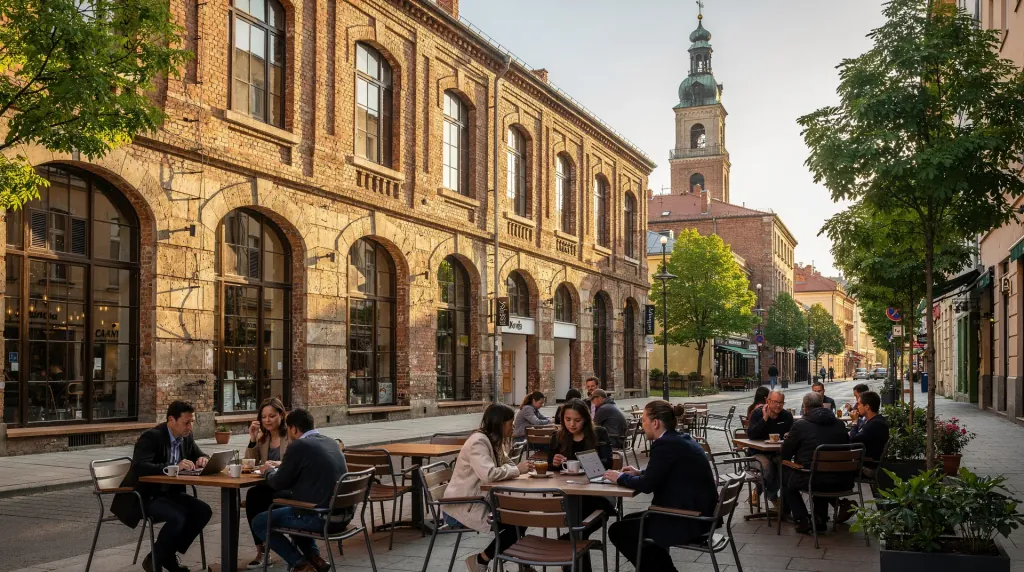
09:00–12:00 — The neighbourhood functions quietly as an office and design studio district. Cafés fill with laptops.
12:00–15:00 — The main event: Karlín’s restaurants hit their peak, food critics from Vienna and Berlin come here specifically. Eska, Bokovka, and the surrounding restaurants are operating at full capacity from 12:00 Friday and Saturday.
17:00–21:00 — Dinner service begins. This is the neighbourhood’s other peak — the food-forward evening crowd. The wine bars open, the restaurant terraces fill in warm months.
21:00–00:00 — Relatively quiet. Karlín doesn’t have a late-night pub scene like Žižkov. Cobra and Veltlin are the options for those extending the evening.
Where to stay in Karlín
Hotel Residence Křižíkova (Křižíkova 36) — the most established hotel in the neighbourhood, in the heart of the food district. From €100 / 2500 CZK. Pros: walking distance to all the best restaurants, good transport. Cons: the neighbourhood has limited hotel options; this is essentially the only dedicated hotel.
For most visitors, Karlín works better as a destination reached from accommodation in Vinohrady or Nové Město (both 2 metro stops away) rather than a base neighbourhood. The restaurant density is exceptional; the hotel stock is not yet matching.
5 specific food recommendations with addresses
Eska — Pernerova 49. Nordic-Czech bistro. Lunch €12–16 / 300–400 CZK, dinner €20–35 / 500–875 CZK. The most consistently praised restaurant in Prague. Naturally leavened bread, fermented preparations, seasonal Czech produce. Reserve ahead.
Bokovka — Čáslavská 2. Wine bar and lunch spot, natural wines and vegetable-forward cooking. Mains €11–15 / 275–375 CZK. The best natural wine selection in the neighbourhood.
Bistro 8 — Sokolovská 8. Market cooking and natural wine, mains €12–18 / 300–450 CZK. Open kitchen, small space, reservations essential for dinner.
Kalina — Náměstí Jiřího z Poděbrad 10 (Vinohrady side, adjacent). French-Czech, mains €22–32 / 550–800 CZK. One of Prague’s consistently excellent fine-dining options. Classical French technique, Bohemian ingredients.
U Slovanské Lipy — Tachovské náměstí 1. Traditional Czech pub, mains €6–10 / 150–250 CZK, Kozel dark on draft. The neighbourhood’s honest local pub for those who want a break from Nordic-Czech bistro food.
3 bar and café recommendations
Kavárna Prostoru — Chelčického 4. Warehouse-conversion café, excellent coffee, calm working atmosphere. The nomad’s neighbourhood café.
Cobra — Sladkovského náměstí 1. Natural wine by the glass, small plates, converted-pub atmosphere. Best bar in the neighbourhood.
Veltlin — Křižíkova 24. Wine bar specializing in Veltliner and Moravian wines. Low-lit, serious, quiet.
Hidden details in Karlín
The courtyard passages on Křižíkova. The Haussmann-influenced Karlín blocks have interior courtyards that are accessible through street-level passages. Some of the neighbourhood’s best café and studio space is in these courtyards — you walk through a street-facing archway into a completely separate interior world. Specifically: the building at Křižíkova 48 has a remarkable interior garden that most people pass without noticing the archway.
Palác Invalidovna’s moat. The Baroque military hospital (1731) is surrounded by a moat that is now a public pathway. Walk the moat perimeter for the full sense of the building’s scale — it was designed to house 2,000 soldiers. The largest Baroque secular building in Prague, entirely missed by most visitors because it’s not in the historic centre.
The Karlín Saturday market (near Náměstí Republiky, spring to autumn) is the neighbourhood’s best community event. Completely tourist-free, run by Czech farmers and local food producers. The coffee stall is usually the best temporary coffee in the neighbourhood.
Karlín beyond the restaurants: the design and startup scene
The same low rents that drew in ambitious kitchens in the 2010s also drew architecture studios, design agencies, and Prague’s small but growing startup scene, which is why Karlín’s weekday daytime feels distinct from its weekend character. Node5 and several converted factory floors near Pernerova house co-working spaces and small studios; you’ll notice it mainly in the density of laptop-friendly cafés and the number of well-dressed thirty-somethings on weekday lunch breaks.
This isn’t a sight to seek out specifically, but it explains why Karlín’s cafés (Kavárna Prostoru especially) function as much as workspaces as social spots, and why the neighborhood feels different from Prague’s other reclaimed-industrial district, Holešovice, which leans more toward galleries and the market hall than offices.
If you’re visiting for more than a meal, pair Karlín with a walk through the Karlínský tunel into Holešovice — the two neighborhoods share an industrial-conversion story but arrived at different results, and seeing both in one afternoon clarifies what each is actually for.
Practical at a glance
- Metro: Křižíkova (B), Invalidovna (B), Florenc (B/C — edge of district)
- Trams: 8, 24 on Sokolovská; 3, 5 on Chelčického
- Walking time to Wenceslas Square: 20 min
- Walking time to Vinohrady: 10 min (uphill)
- Vibe: Post-industrial renovation, food-focused, design-aware, young professional
- Best for: Serious food travelers, second+ visits, architecture lovers