The honest picture of Prague accessibility
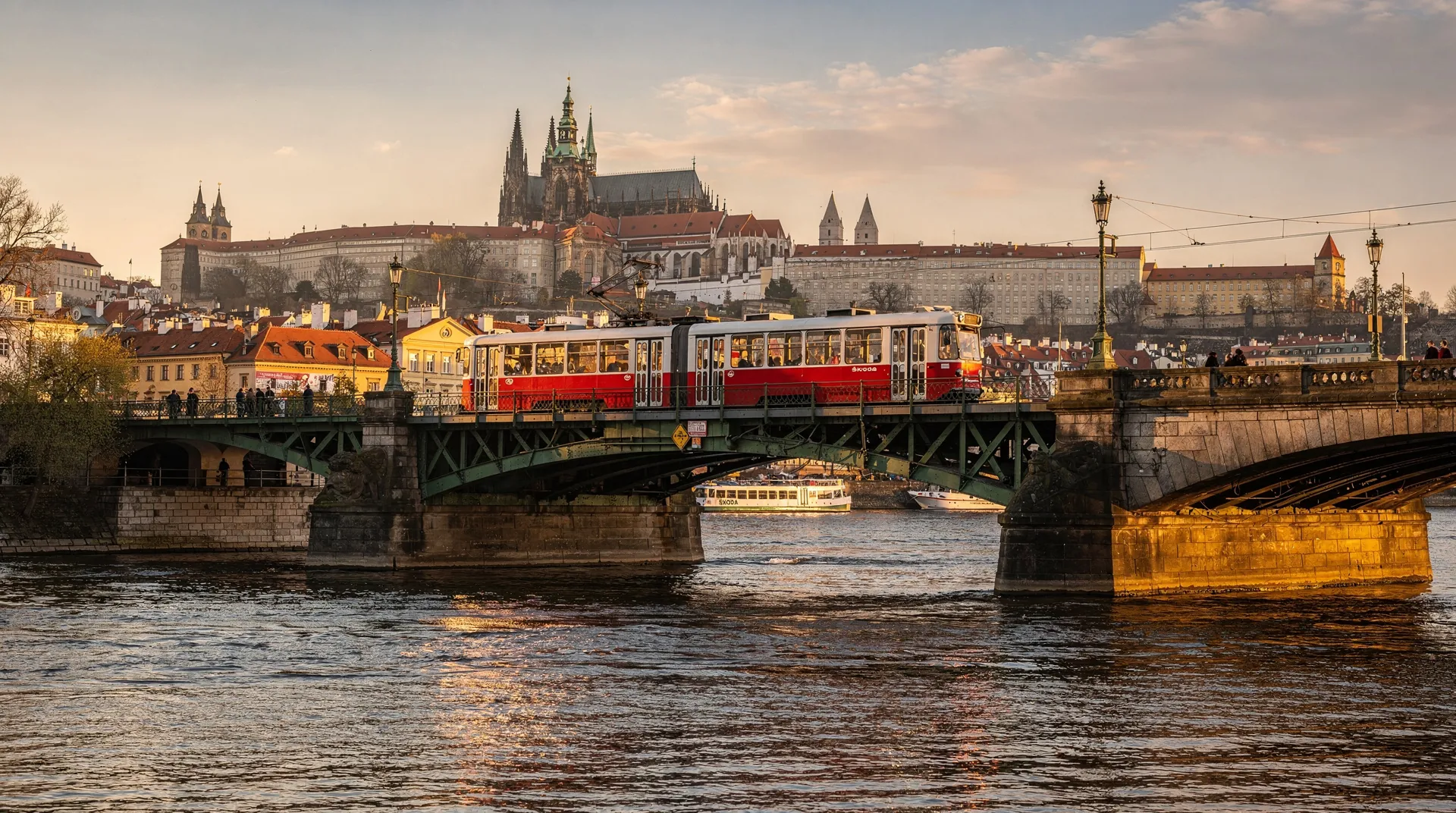
Prague is a beautiful medieval city built on hills, across a river, and paved with centuries-old cobblestones. That’s not a description designed to discourage wheelchair users or people with reduced mobility — it’s the context that makes planning essential.
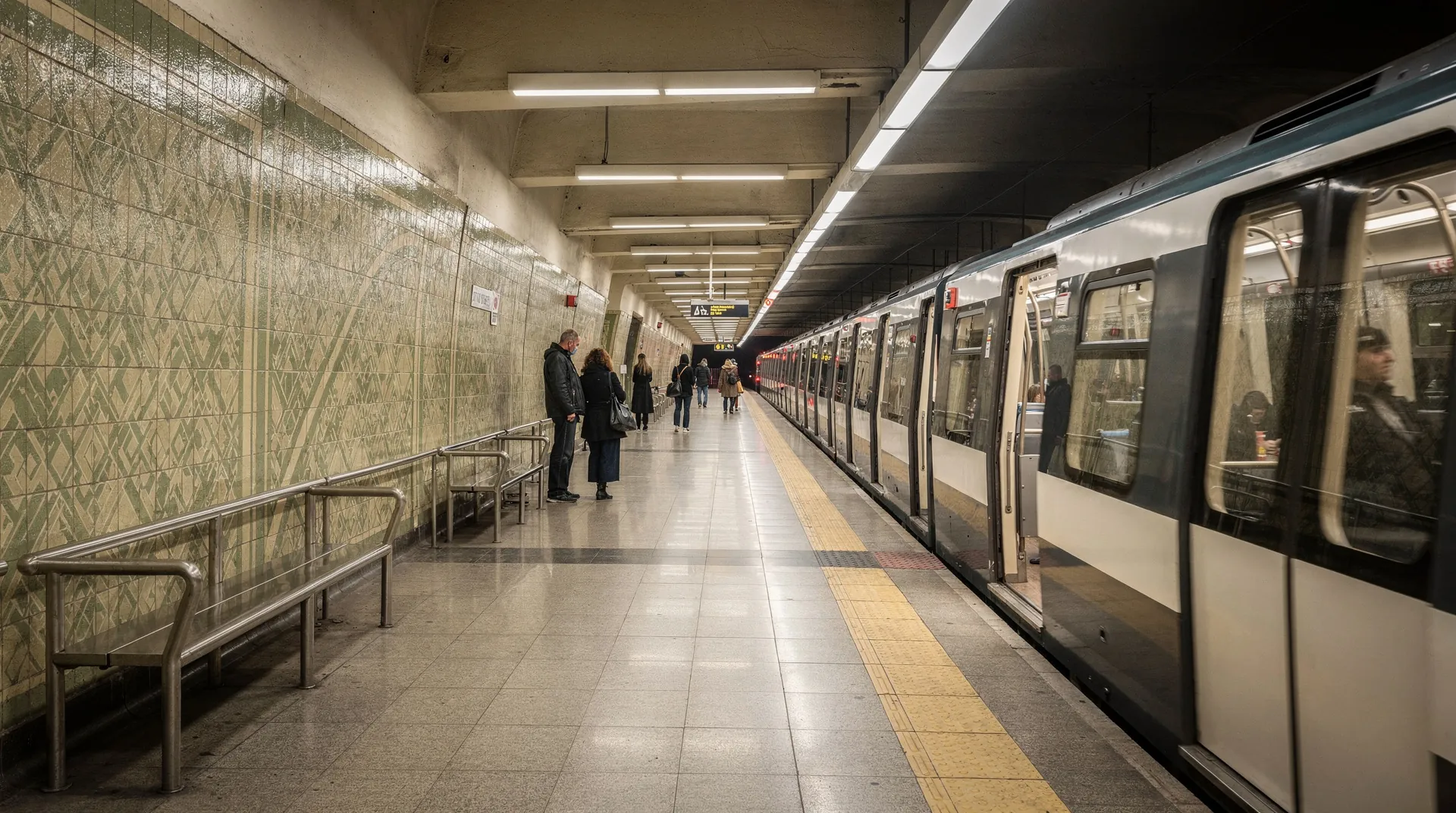
The good news: Prague has invested significantly in accessibility in the past 15 years. Modern low-floor trams cover most tourist routes. Most metro stations (48 of 61 according to DPP) are step-free. Most major tourist attractions have accessible entrances. The embankment path along the Vltava is flat and smooth. With the right information, a wheelchair user or someone with limited mobility can have an excellent visit.
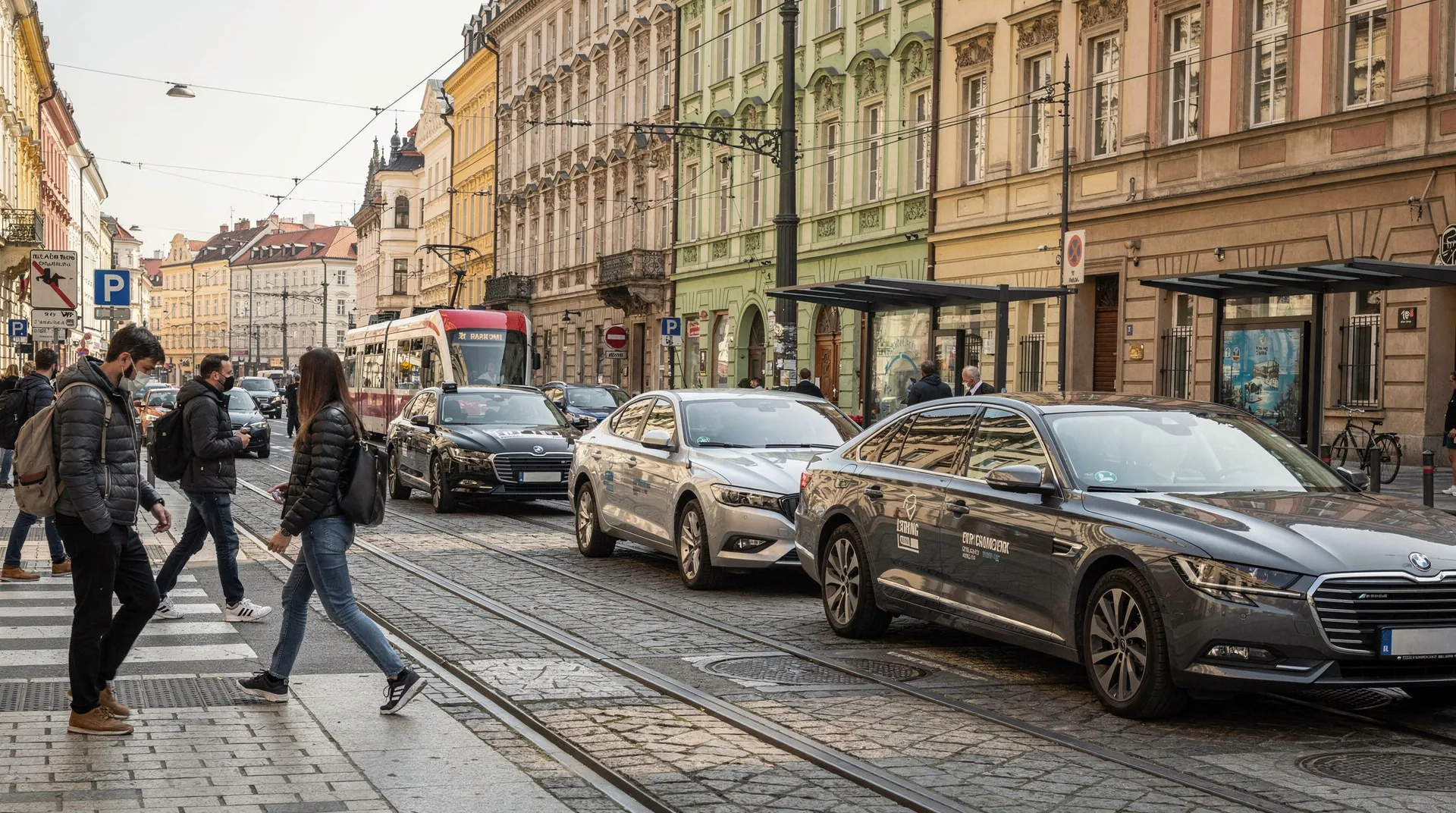
The reality: historic areas have surfaces and gradients that require route planning. Malá Strana and the castle district involve steep hills. Some attractions are in buildings where the accessible route is not the obvious entrance. The cobblestones in Old Town Square and many surrounding streets are uneven and challenging.
| At a glance | |
|---|---|
| Where | Central Prague — flattest routes along the Vltava embankment, Wenceslas Square, and Josefov |
| Cost | No extra cost for accessible metro/tram/bus; accessible taxi and private transfer typically cost more than a standard ride |
| Time needed | Allow extra time versus a standard visit — routing around hills and lift-equipped stations adds walking/rolling distance |
| Getting there | Metro lines A/B/C (48 of 61 stations step-free); low-floor trams and buses on most central routes |
| Best time | Year-round for indoor sights; spring/summer/early autumn for outdoor embankment routes when surfaces are driest |
Metro accessibility — which stations have lifts
According to the Prague Public Transit Company (DPP), the metro has 61 stations when each interchange is counted once per line, and 48 of them are step-free. 42 stations have lifts, 3 have stair-lift platforms (Nové Butovice, Smíchovské nádraží, Strašnická) and 3 are step-free by design (Depo Hostivař, Rajská zahrada, Vyšehrad). Where there is no step-free entrance, travelling by wheelchair is difficult or impossible.
Step-free stations on the official DPP list that matter most to visitors:
- Line A (green): Dejvická, Můstek (interchange with B), Muzeum (interchange with C), Jiřího z Poděbrad, Nádraží Veleslavín (airport bus connection)
- Line B (yellow): Anděl, Karlovo náměstí, Národní třída, Můstek, Florenc (interchange with C), Smíchovské nádraží, Palmovka
- Line C (red): Hlavní nádraží, Muzeum, I. P. Pavlova, Vyšehrad, Pankrác, Vltavská, Nádraží Holešovice, Florenc
Stations not on the DPP step-free list include Hradčanská, Malostranská, Staroměstská, Náměstí Míru, Flora, Želivského, Náměstí Republiky, Křižíkova, Invalidovna, Českomoravská, Kačerov and Pražského povstání. This matters for the most popular sights: the stations nearest to Old Town Square and Prague Castle are not step-free, so plan those trips by accessible tram or other transport. Check the official DPP lists per line for the current situation.
Practical note: Even where lifts exist, check the DPP page “Stav výtahů a plošin” (lift and platform status) for out-of-service equipment; DPP also offers free SMS alerts for chosen stations after registering on its website. The DPP information line is 296 19 18 17 (daily 7:00-21:00).
Trams — the most accessible surface transport
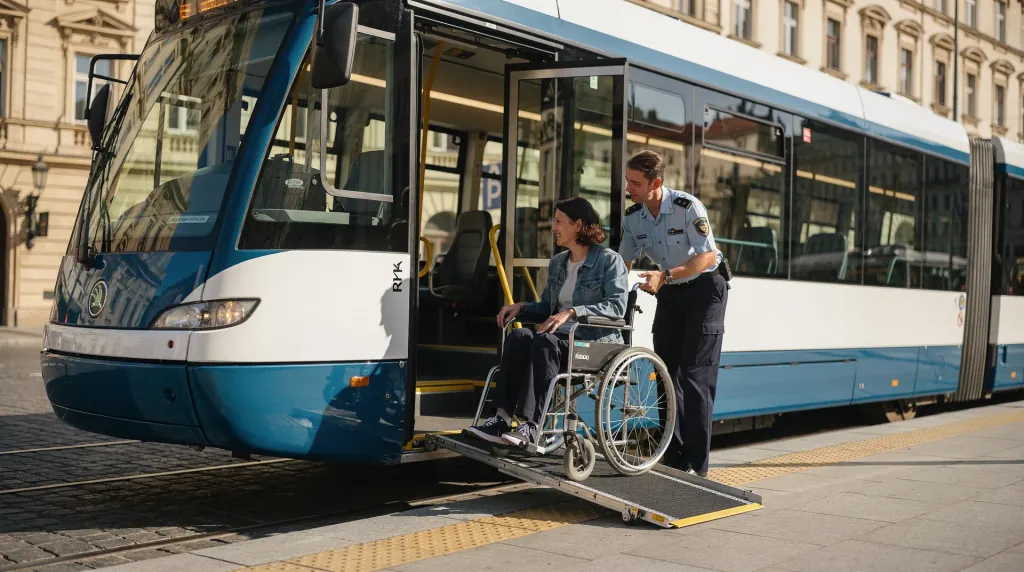
Modern low-floor trams (such as the Škoda 15T) are accessible — ramp deployment and designated wheelchair and pushchair space inside. According to PID, about half of Prague’s trams are wheelchair accessible, and DPP guarantees low-floor vehicles on marked departures of its daytime lines. Old Tatra trams have steps and are not accessible; they now mostly run on heritage line 23.
How to know if an arriving tram is accessible: The DPP real-time app shows which specific tram is approaching and its type. Accessible trams display a wheelchair symbol on the destination board.
Tram 22 (the main tourist route) is served by low-floor trams on guaranteed departures (marked with the wheelchair symbol in the stop timetables). Check the app if you need to guarantee accessibility.
Stop platform height: Many stops have raised platforms that level with low-floor trams. Some older stops still have pavement-level boarding — the ramp activates at the front or middle door. At these stops, position yourself at the front doors.
Buses
According to DPP, all buses and trolleybuses it operates are low-floor, apart from the weekend vintage line K. Check the accessibility of the airport line (trolleybus 59 to Nádraží Veleslavín) in the PID journey planner. Suburban services run by other operators may vary.
The DPP journey planner has an accessibility filter — use it to identify fully accessible routes.
Rideshare — Bolt and Uber
Both Bolt and Uber offer accessible vehicle options in Prague, though availability is more limited than standard vehicles. Bolt Assist and Uber WAV (wheelchair accessible vehicle) are available but require booking time and may have longer waits. For guaranteed accessible transfer from the airport or between distant points, pre-booking a private accessible transfer is more reliable.
Taxis: ask the taxi company directly whether it can send a wheelchair-accessible vehicle, and confirm availability before counting on it.
Accessible attractions — what works and what doesn’t
Prague Castle complex
The castle area involves hills. However, the main visitor route is manageable:
- The main gate on Hradčanské náměstí is the usual entrance. Note that Hradčanská metro station is not on the official DPP step-free list.
- St. Vitus Cathedral main nave is accessible at ground level. Upper levels and some chapels are not.
- According to Prague Castle, the Old Royal Palace, St. George’s Basilica and Golden Lane are accessible to wheelchairs; the Great South Tower of St. Vitus Cathedral and Daliborka Tower are not.
- Golden Lane (Zlatá ulička) — narrow and uneven, but the lane itself can be navigated by wheelchair, though it’s tight. Some small houses inside are not accessible.
- Recommended approach: avoid the steep Nerudova climb; use the DPP journey planner with its accessibility filter to find an accessible tram or bus to the castle. Hradčanská and Malostranská metro stations are not on the DPP step-free list.
Old Town and Josefov
Old Town Square itself has cobblestone surfaces that are uneven. The square is navigable but tiring on a manual wheelchair. Powered wheelchairs handle it better. The Jewish Quarter (Josefov) has more even surfaces on the main Pařížská street approach.
Spanish Synagogue and Old Jewish Cemetery: the synagogue is accessible; the cemetery terrain is uneven. Ask at each Jewish Museum site for the specific accessible route.
Charles Bridge
The bridge surface is cobblestone and has a slight crown. Navigable by powered wheelchair; manual wheelchair users often find it tiring. The bridge has no steps — access from both ends is flat. The Old Town Bridge Tower is not accessible (stairs only). The view from the bridge itself is fully accessible.
Wenceslas Square (Václavské náměstí)
Flat, wide, smooth surface. Fully accessible. The National Museum (Národní muzeum) at the top is accessible — lifts available to all floors.
Mucha Museum, Museum of Communism, Franz Kafka Museum
All three have accessible ground-floor entrances and lifts to upper floors. Call ahead to confirm current lift status.
Vltava river embankment
The embankment paths (rábení) on both sides of the Vltava are among the most accessible spaces in Prague — wide, flat, smooth tarmac or compacted surface, running for kilometres. This is the best place for a comfortable long roll or walk with limited mobility.
Petřín Hill
Petřín Hill is not accessible by the normal walking paths — it’s steep. The Petřín funicular (lanová dráha) reopened in September 2026 with new cars, but PID states that its stations are not fully accessible yet (upgrades are planned by 2030), so check with PID before relying on it. The top platform at Petřín has accessible paths around the observatory and mirror maze areas (some areas have steps). The Petřín Lookout Tower itself has no lift — stairs only.
Neighbourhood-by-neighbourhood accessibility
| District | Terrain | Verdict |
|---|---|---|
| Vltava embankment | Flat, smooth, wide | Best area in Prague for independent rolling or walking with limited mobility |
| Nové Město / Wenceslas Square | Flat, wide, smooth | Fully accessible, good base for a mobility-focused visit |
| Josefov (Jewish Quarter) | Mostly even on Pařížská, more uneven side streets | Good on the main approach; check specific synagogue entrances |
| Staré Město (Old Town Square) | Uneven cobblestone | Navigable but tiring; powered chairs handle it far better than manual |
| Malá Strana | Significant slopes, cobblestone | Requires route planning; avoid the steepest lanes near the castle approach |
| Hradčany (castle district) | Hilltop, hills on most approaches | Avoid the Nerudova climb; check an accessible tram or bus route |
For the full public-transport picture beyond metro lifts, the metro guide and the trams and buses guide cover routes, ticketing, and how the network fits together; the taxis, Uber and Bolt guide has more detail on booking accessible vehicles and typical wait times. If you’re travelling as a wheelchair user specifically, the wheelchair-accessible Prague guide pulls the destination-specific advice together in one place.
Booking an accessible airport transfer
Prague Airport (Václav Havel Airport) has step-free access throughout the terminals. For the transfer into the city, trolleybus 59 to Nádraží Veleslavín (with a metro lift onward connection) is the budget option, but it involves a transfer. For door-to-door certainty, pre-booking a private accessible transfer removes the uncertainty of Bolt/Uber WAV availability and the bus-to-metro transfer — worth the extra cost if you are travelling with luggage and limited time on your first day.
Practical planning resources
- DPP accessibility information: the “Barrier-free travel” section of the official DPP website lists step-free metro stations, current lift status and low-floor tram and bus information; the PID journey planner has an accessibility filter
- Disability cards: Many Prague venues give free or reduced admission to disabled visitors (for example Prague Castle for disability ID card holders and one accompanying person); check each venue’s official website for which cards it accepts
What we’d actually do
Plan your metro route around stations confirmed to have working lifts. Use tram 22 with the DPP app confirming an accessible tram is coming. Base mobility around the Vltava embankment, Václavské náměstí, and Josefov (most even surfaces). For Prague Castle, check an accessible tram or bus route rather than the hill climb. Accept that the most picturesque cobblestone alleys of Old Town are the least accessible parts — but the best viewpoints (Old Town Square, Charles Bridge, Petřín) are reachable.
Common mistakes
Assuming the historic centre is flat: Malá Strana slopes significantly. The castle area involves multiple level changes. Route-planning before arrival makes a substantial difference.
Not checking lift status before departure: Lifts at metro stations break down and are repaired on rolling maintenance cycles. The DPP app shows real-time lift status. Check before setting off.
Assuming all trams are accessible: Old Tatra trams still run on the heritage line. If you need guaranteed accessibility, check the DPP app for the arriving vehicle type or wait for the next service.
Underestimating cobblestone fatigue: Even navigable cobblestones are tiring on manual wheelchairs and uncomfortable for walking with limited mobility. Plan for shorter distances than you might cover on smooth surfaces.
Questions people actually ask
Is the Prague metro fully wheelchair accessible?
No. According to DPP, 48 of 61 stations are step-free and the programme to open the remaining ones is ongoing. The step-free stations include the main interchange points (Můstek, Muzeum, Florenc, Hlavní nádraží), but not Staroměstská or Náměstí Míru. For a visit focused on central tourist sights, accessible metro stations cover the key destinations well.
Can a power wheelchair user navigate Prague independently?
Yes, with planning. The DPP has accessible routes; the embankment and main squares are smooth; most major museums have lifts. A powered chair handles cobblestones better than a manual. The main challenges are steep streets in Malá Strana and the castle district — alternative routes exist for all major sights.
Are Prague taxis accessible for wheelchair users?
Some are — specifically accessible vehicles ordered through AAA Radiotaxi’s accessible fleet. Standard Bolt/Uber vehicles do not have wheelchair access. For guaranteed accessible taxi service, call ahead and book specifically, or use the Bolt Assist / Uber WAV option (with advance booking and a longer wait).
Is the Astronomical Clock viewing accessible?
The Old Town Hall tower (where the Astronomical Clock is located) has a lift to the viewing platform — the lift is accessible for standard wheelchairs. The clock’s hourly show is best seen from the square below — fully accessible at ground level. The tower interior has a few steps before the lift; ask at the ticket desk for the precise accessible entrance.
Are there accessible guided tours of Prague?
Yes. Several tour companies offer adapted Prague tours for visitors with mobility limitations. Private tour booking (vehicle-based or with an accessible route plan) is the most flexible — see the private walking/car tour options that can be customized for accessibility needs. Contact tour operators directly to discuss your specific requirements before booking.
Which is the most accessible neighbourhood to stay in?
Nové Město (around Wenceslas Square) or the area near the Vltava embankment. Both are flat, well-served by accessible metro stations, and put you within reach of Josefov and the main sights without the hills of Malá Strana or the castle district. See the metro guide for which nearby stations have confirmed working lifts.
Is it worth pre-booking an accessible airport transfer instead of using public transport?
For a first arrival with luggage, yes — it removes the uncertainty of bus-to-metro transfers and WAV rideshare wait times. If you’re comfortable navigating transit and travelling light, the trolleybus 59 plus metro connection is the budget option.