At a glance
| Best tourist route | Tram 22 — Vinohrady to Strahov via Old Town and Malá Strana |
| Ticket cost | Around 39 CZK/30 min, 50 CZK/90 min, 150 CZK/24h (same as metro) |
| Frequency | Every 5–8 min daytime, 10–15 min evening, 30 min on night trams |
| Night coverage | Trams 91–99, roughly midnight–05:00, hub at Lazarská |
| Getting oriented | DPP app (Jízdní řády) for live positions and direction |
Trams vs metro vs walking — when each wins
Prague’s centre is compact enough that the fastest option genuinely depends on the specific trip, not a blanket rule. For crossing the river between Old Town and Malá Strana, tram 22 or a 15-minute walk across Charles Bridge are both reasonable — the tram wins in bad weather or with tired feet, the walk wins for the views.
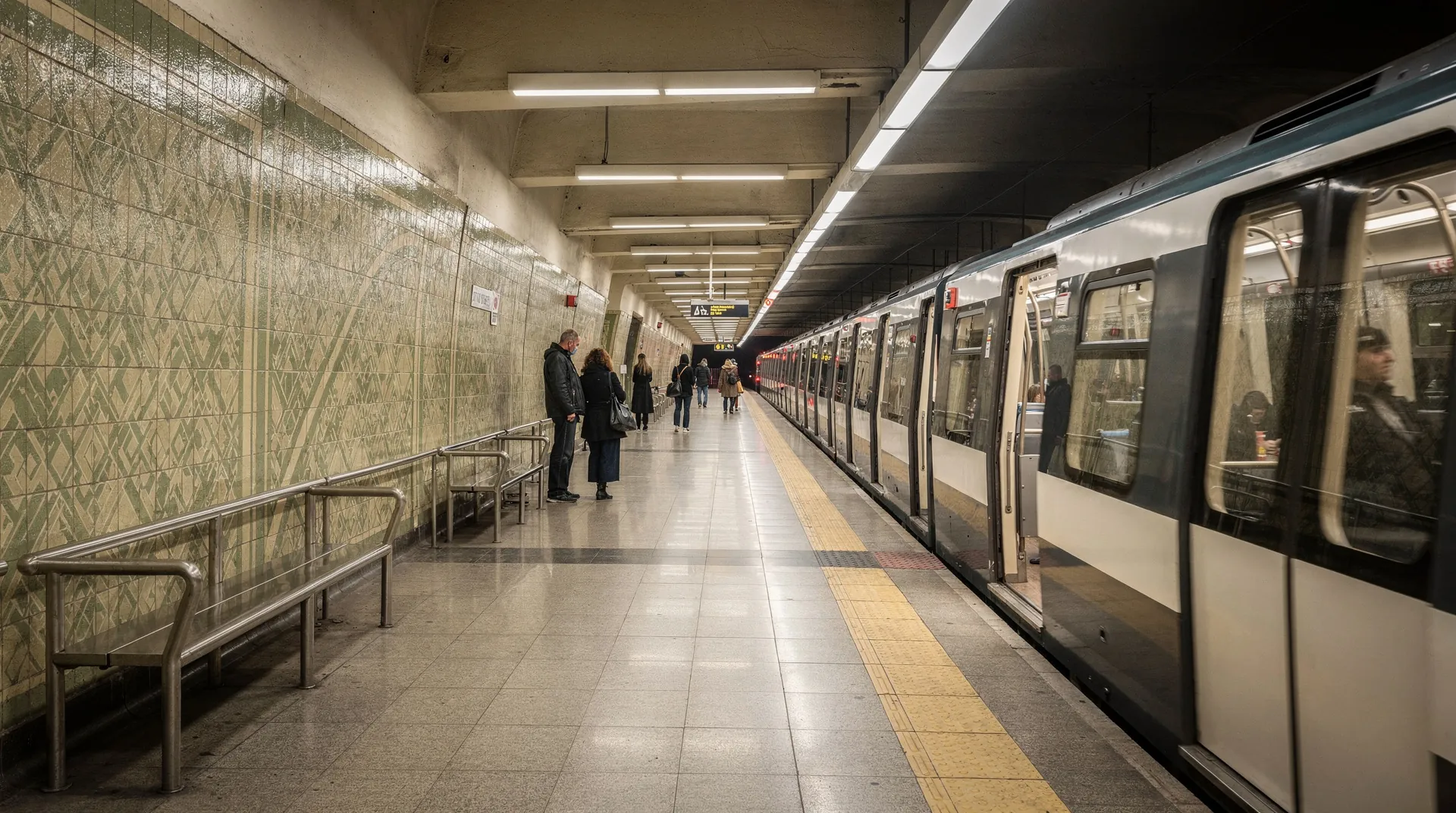
For genuinely long north-south hops (say Holešovice to Vyšehrad), the metro is close to unbeatable on speed since it isn’t affected by street traffic or tram-stop dwell time. For anything under 4–5 stops in the historic centre, walking is often just as fast once you account for the walk to the stop and the wait.
How fares and validation actually work on trams
Prague uses a proof-of-payment system — there are no ticket barriers on trams. A validator machine near each door stamps a paper ticket (or an app ticket auto-validates on purchase) with a start time; that stamp is your entire proof you paid. Plainclothes inspectors do check, and the on-the-spot fine for an unvalidated or missing ticket runs into the thousands of CZK, payable immediately or escalated. The safest habit: buy your ticket via the PID Lítačka app before boarding (it auto-timestamps), or validate a paper ticket the instant you step on — not after finding a seat.
Trams are often faster than the metro in central Prague
Prague’s tram network covers 36 daytime lines and 9 night lines, running on 142 km of track through neighbourhoods the metro doesn’t reach. For visitors, trams are often the better choice: they go door-to-door in historic districts, the views from the window are part of the experience, and they run until midnight (then handed over to night trams through to 05:00).
The fleet is a mix of old Tatra carriages from the communist era (still running on some lines) and modern Škoda low-floor trams that are fully accessible. Both use the same DPP ticketing system.
The routes tourists actually use
Tram 22 — the sightseeing tram
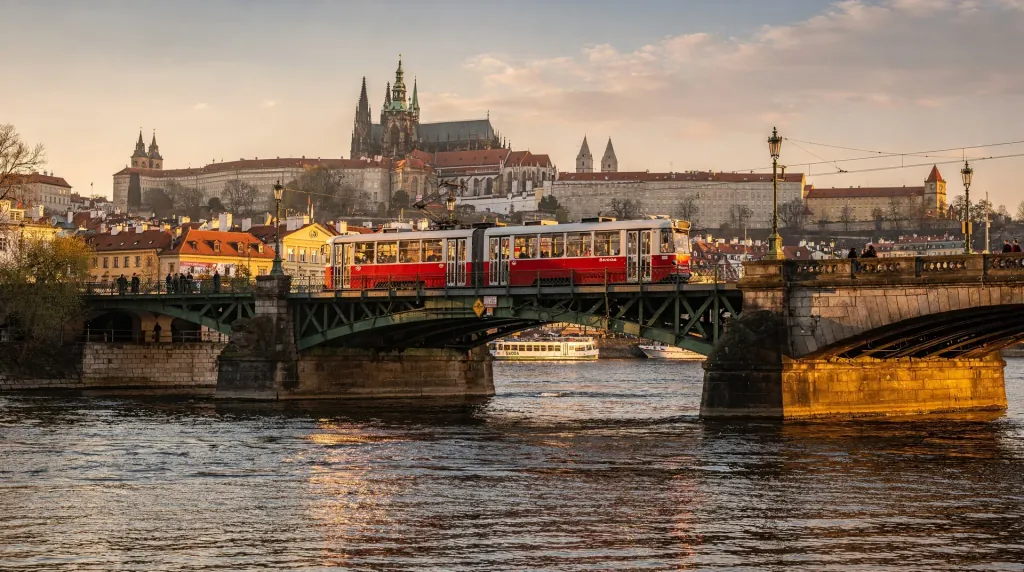
Tram 22 is the city’s most-used tourist route and for good reason: it strings together half of Prague’s major sights in one line. The route runs from Vinohradská vodárna (Vinohrady) through Náměstí Míru, I. P. Pavlova, Národní divadlo (National Theatre), past the riverside, through Malostranské náměstí, up to Pohořelec near Strahov Monastery, and ends at Bílá Hora.
Key stops on line 22:
- Náměstí Míru — Vinohrady square (good hotel base)
- I. P. Pavlova — southern end of Václavské náměstí
- Národní divadlo — National Theatre, riverside walking
- Malostranské náměstí — Heart of Malá Strana
- Malostranská — also served by metro A
- Pohořelec — Strahov Monastery (5-minute walk)
Tram 22 is also where pickpockets concentrate during peak tourist season. Keep bags in front of you, especially between Národní třída and Malostranské náměstí in summer.
Tram 17 — the riverside tram
Tram 17 runs along the right (east) bank of the Vltava from Nádraží Holešovice in the north all the way down through the city. It passes close to the National Theatre and connects Holešovice (emerging neighbourhood) with the centre. Good for getting to/from the river embankment.
Trams 2 and 14 — Žižkov and Vinohrady
These serve the residential neighbourhoods east of the city centre — Žižkov, Vinohrady, Strašnice. Useful if you’re staying east of the centre or going to the Žižkov TV Tower.
Trams 1, 8, and 25 — south of the city
These serve Smíchov, Braník, and southern districts. Less relevant for tourists unless you’re visiting the Braník brewery area or taking a longer wander south.
How trams work — the practicalities
Stops: Every stop has a white board with the stop name, line numbers serving it, and departure times. Prague has near-real-time departure boards at major stops. The DPP website and app show live positions.
Boarding: You can board at any door on modern low-floor trams. Older Tatra trams have folding steps — give way to people exiting first. Validate immediately on boarding before the tram moves.
Tickets: Same DPP tickets as the metro. See the metro guide for prices. 39 CZK for 30 minutes, 50 CZK for 90 minutes, 150 CZK for 24 hours.
Frequency: Main lines run every 5–8 minutes during the day. Evening frequency drops to 10–15 minutes. Night trams run every 30 minutes.
Direction: Trams are signed with the final stop. The DPP app (Jízdní řády) shows which direction you need and real-time arrival times.
Night trams — after midnight
The metro closes at midnight. Night trams take over until 05:00 when the daytime network restarts. Night trams are numbered 91–99 and run on 30-minute intervals.
The hub of the night tram network is Lazarská near Václavské náměstí — most lines pass through here. Night trams use the same DPP tickets as daytime services.
Key night lines:
- 91 — Sídliště Petřiny → Lazarská → Nádraží Hostivař (covers much of line 22 territory)
- 94 — Spořilov → Lazarská → Bílá Hora
- 98 — Sídliště Čimice → Lazarská → Smíchov nádraží (covers northern districts)
If you’re returning from a late night in Vinohrady, Žižkov, or Smíchov, night trams are reliable enough that you don’t need a taxi unless you’re in a hurry. If you’re in Malá Strana or the castle area past midnight, a taxi or Bolt is faster than finding the right night tram.
Buses in Prague — when you’d use them
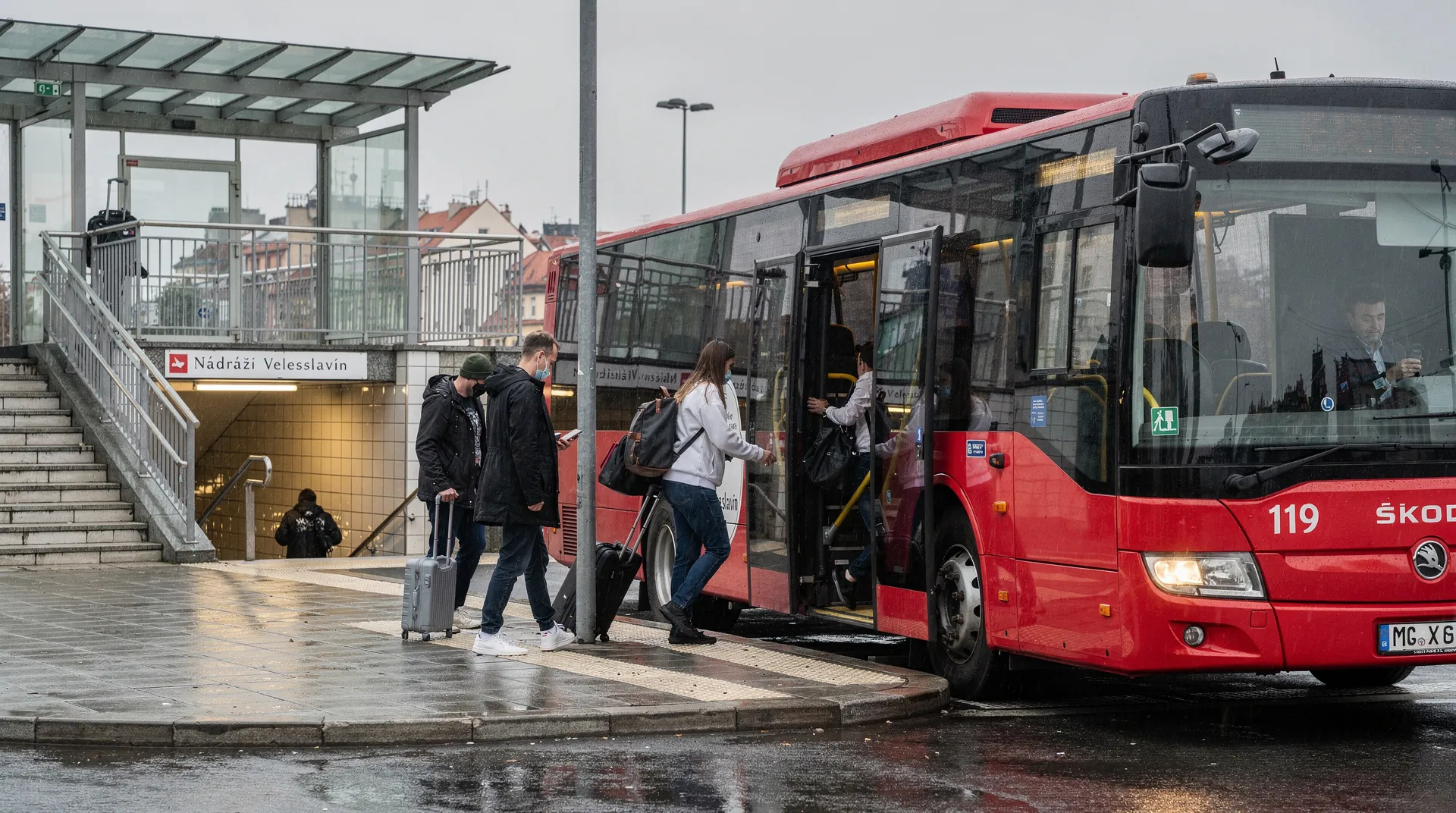
Buses (autobusy) fill in the gaps: they serve outer residential districts, the airport route (bus 119), and suburban connections. In the city centre, trams and metro are almost always preferable.
Bus 119: The airport connection to Nádrží Veleslavin (metro A). Runs every 5–10 minutes daytime, 15–20 minutes at night. See airport to city for full details.
Bus 910: Night replacement for bus 119 after midnight.
Express buses (X): Some outer suburban routes have X-prefixed numbers (X13, X15) that run fewer stops and faster. Check the DPP planner for your specific route.
Buses use the same DPP ticketing and validation system as trams and metro. Validators are at the doors; validate on boarding.
Practical tips for using Prague trams
Get the DPP app: The Jízdní řády (timetable) function shows real-time positions and will plan your journey with transfers. Better than Google Maps for understanding which specific tram to take.
Tourist trap awareness on tram 22: In summer, line 22 between Náměstí Republiky and Malostranské náměstí is essentially a tourist conveyor belt. Pickpockets know this. Two bags in front of you, not one bag behind.
Don’t hold the doors: Prague tram doors close with a buzzer — if you hear the buzzer, step back. The doors will close automatically and trying to hold them can trap you awkwardly.
Low-floor vs Tatra: Modern Škoda low-floor trams (easily identifiable by their red-grey livery and wide doors) are accessible to pushchairs and wheelchairs. Old Tatra trams have 3 steps up — they’re still operating on some lines in 2026 but being phased out.
Weather: Trams run in all weather. In heavy snow (which happens in January-February), they can be delayed but rarely cancelled. Keep 10 extra minutes of buffer in winter.
What we’d actually do
Get a 72-hour DPP pass and use trams everywhere the metro doesn’t go. Specifically: take tram 22 at least once just for the ride through Malá Strana — sit on the right side heading west for the best views over Kampa Island. Use the metro for faster cross-city travel and trams for scenic or neighbourhood journeys.
Common mistakes
Waiting for the “right” door: On modern low-floor trams, all doors are valid entry points. On older trams, front and middle doors are for boarding; rear door is usually for exiting (not enforced strictly, but it keeps flow better).
Missing the validation step: Same issue as the metro — no barriers, pure honour system, inspectors are active. Validate on every boarding of every vehicle.
Confusing tram stops that share a name with metro stations: Malostranská metro and Malostranská tram stop are in the same area but not directly adjacent. The metro is underground; the tram is street level on the same side. They connect via a short walk.
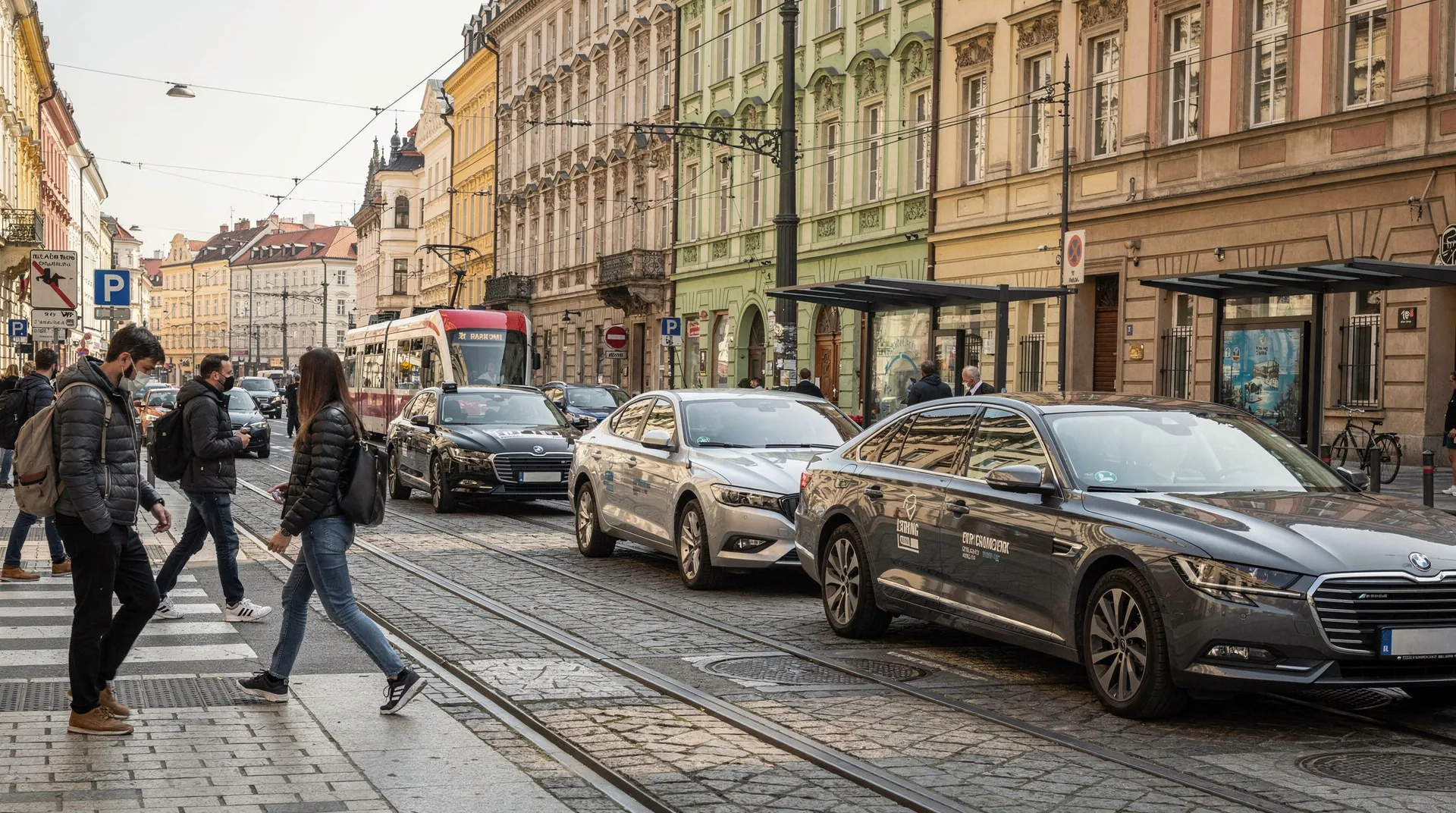
Taking buses into the centre when a tram exists: Trams are almost always faster in the city centre due to traffic priority at junctions. The bus network is designed for suburbs, not tourist sightseeing.
Questions people actually ask
Is tram 22 the only way to get to Prague Castle by public transport?
No — it’s the most scenic, but you can also take metro A to Malostranská or Hradčanská. Line 22 goes closer (Pohořelec stop) to the western entrance of the castle grounds (Strahov Gate), while the metro gets you to the main tourist entrance area with a steeper walk up Nerudova.
Do trams run on Sundays and public holidays?
Yes. Prague trams run every day of the year, including Christmas Day and New Year’s Day, on a reduced Sunday/holiday schedule (slightly less frequent than weekday peak service).
How do I know which direction a tram is going?
The destination sign on the front shows the final stop name. Compare this to the DPP map or app. At the stop, departure boards show upcoming trams with directions. If you’re unsure, use the DPP app’s journey planner which shows you exactly which direction to board.
Are Prague trams accessible for wheelchairs?
Modern Škoda trams (about 60% of the fleet in 2026) are fully accessible — low-floor, ramp or level boarding, space for wheelchairs and pushchairs. Old Tatra trams are not accessible. The DPP website shows which lines have predominantly modern rolling stock, and the real-time app shows which individual tram is arriving.
Can I bring a bicycle on Prague trams?
Bicycles are allowed on trams outside peak hours (not between 06:00–09:00 and 14:00–18:00 on weekdays). You need a bicycle ticket (16 CZK) in addition to your regular ticket. On heavily-loaded tourist routes like 22 in summer, it’s more practical to just cycle alongside rather than load the tram.
Is a single ticket or a day pass better value for a short visit?
For a single day of heavy sightseeing (4+ rides), the 150 CZK 24-hour pass is almost always cheaper than buying individual 39 or 50 CZK tickets each time, and it removes the need to think about validation windows. For a short 2–3 stop hop, a single 39 CZK ticket is fine. See the metro guide for the full fare breakdown including multi-day passes.