Why Troja Chateau deserves more than a drive-by
At a glance
| Where | Troja district, north bank of the Vltava, next to Prague Zoo |
| Cost | Around €8 / 200 CZK adult; reduced ~€5 / 125 CZK |
| Time needed | 60–90 minutes for palace and gardens |
| Getting there | Bus 112 from Nádraží Holešovice (metro C); seasonal boat from Rašínovo nábřeží |
| Best time | May–September for the gardens in bloom; weekday mornings for fewer crowds |
Trojský zámek is one of Prague’s most overlooked monuments. A fully-fledged Baroque summer palace with formal French gardens, Habsburg ceiling frescoes, and a gallery of 19th-century Czech painting — situated 4 km north of the Old Town, next to the zoo, on the bank of the Vltava. In any other European city it would be a headline attraction. In Prague, it’s a place that most visitors discover by accident when they’re already at the zoo.
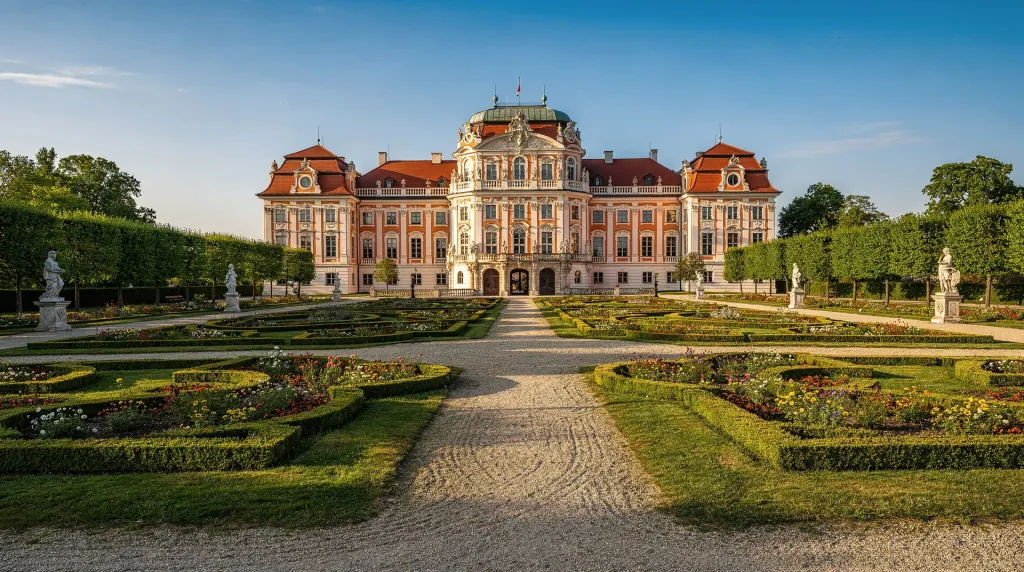
The neglect is partly geographic (it’s not on the obvious tourist trail) and partly the result of the city’s extraordinary concentration of high-quality architecture in the centre. But the palace interior — particularly the Grand Hall with its ceiling frescoes celebrating Habsburg triumph over the Ottomans, painted by Abraham Godyn between 1691 and 1697 — is genuinely exceptional. And the formal French gardens, descending the slope from the palace’s south facade in a series of terraces, are the best example of 17th-century garden design in Bohemia.
Worth the detour if you’re combining with the zoo or Stromovka. Worth the trip independently if Baroque architecture or garden history interests you.
The story of Trojský zámek
The palace was built for Count Václav Vojtěch of Šternberk between 1679 and 1691, designed by the French architect Jean-Baptiste Mathey, who brought the French Baroque vocabulary to Bohemia at a period when Habsburg nobles were competing to express their loyalty and wealth in architectural terms. The site on the right bank of the Vltava, across from the royal hunting grounds of Stromovka, was chosen for its views and its proximity to the river.
Construction of the main palace body was followed by the garden terraces and the Grand Staircase — the monumental external staircase flanking the south facade, decorated with sculptural groups representing the Titans’ battle with the Olympian gods, attributed to the German sculptors Johann Georg and Paul Heermann. The staircase is the most theatrical element of the exterior composition.
The interior fresco programme in the Grand Hall was executed by the Dutch-Flemish painter Abraham Godyn, working from 1691 to 1697. The programme celebrates Emperor Leopold I’s victory over the Turks — particularly the relief of Vienna in 1683, at which Battle of Kahlenberg the Ottoman siege was broken. The composition shows Leopold in apotheosis above Ottoman warriors in defeat, surrounded by allegorical figures of Virtue and Victory. The historical context — painted within a decade of the actual events — gives the frescoes an urgency that purely allegorical programmes lack.
The Šternberk family sold the palace in the 18th century. It passed through several owners, was used as agricultural storage in the 19th century, and was acquired by the city of Prague in the early 20th century. After restoration it was opened as a museum. The Czech painting gallery installed here focuses on Romantic and realist Czech work from the 19th century — a collection that is not the National Gallery’s first team but includes significant works by Josef Mánes and others.
What to see on site
The Grand Hall (Slavnostní sál)
The centrepiece of any interior visit. The ceiling and upper walls are covered entirely in Godyn’s Habsburg triumph fresco cycle. The compositional logic is Baroque illusionism at full stretch: figures recede into a painted sky above, soldiers and emperors inhabit the middle ground, defeated enemies sprawl in the foreground. The floor of the hall is original 17th-century stone. The room is approximately 16 by 9 metres and the fresco fills the entire vault.
The formal gardens
The south-facing terraced gardens descend from the palace in three levels, separated by decorative balustrades and stone steps. The planting follows a strict French formal pattern — clipped hedges, geometric parterre beds, gravel paths, central axis from palace door to garden gate. The gardens are at their best from May through September when the parterre plantings are in growth. In winter the geometric structure is visible but the colour palette is reduced.
The garden’s south gate opens toward the Vltava; from the lower terrace the river is visible and, beyond it, the Stromovka park.
The Grand Staircase
The external double staircase flanking the south facade is an architectural set piece: two symmetrical curved flights rising to the first-floor entrance loggia, flanked by sculptural groups (Titan versus Olympian combat) on balustrade piers. The sculpture quality is high and the composition is one of the best examples of Baroque theatrical architecture in Bohemia.
The Czech painting gallery
The upper floor rooms contain the Prague City Gallery’s 19th-century Czech painting collection: landscapes, portraits, and historical scenes by Czech Romantic and realist painters. Significant works by Antonín Mánes and Josef Mánes are present; the overall collection is of regional importance rather than international stature.
Tickets, timings, and price
Palace interior and gardens (2026 estimates):
- Adult: ~€8 / 200 CZK
- Reduced (students, seniors): ~€5 / 125 CZK
- Children under 6: free
- Gardens only: reduced ticket available
Opening hours:
- April–October: Tuesday–Sunday 10:00–17:00; closed Monday
- November–March: Saturday–Sunday only, 10:00–16:00; closed weekdays
- Last entry 30 minutes before closing
Allow 60–90 minutes for palace interior and gardens.
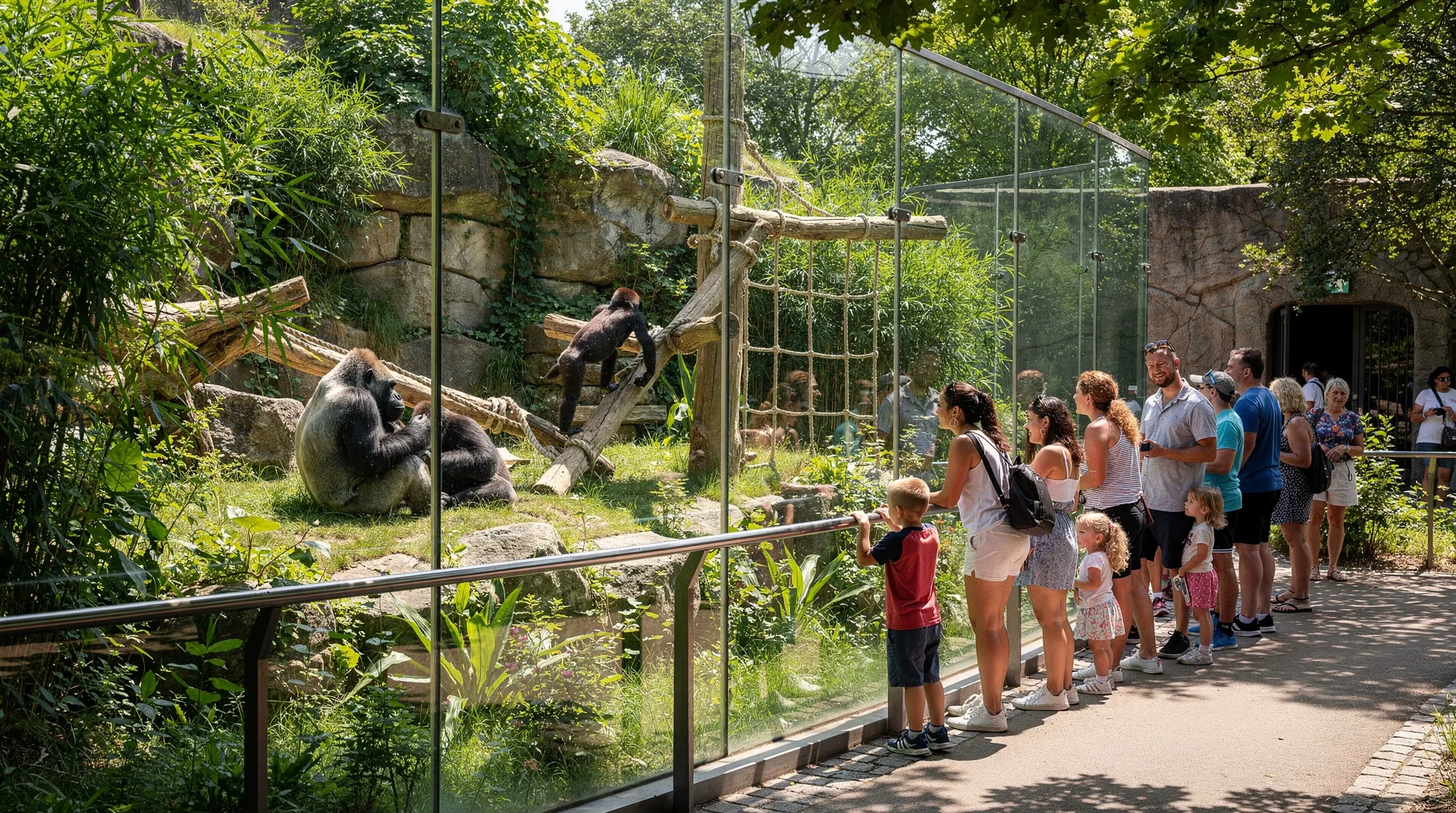
Combined with Prague Zoo: The zoo entrance is approximately 500 metres from the palace main gate. A combined day (zoo in the morning, chateau in the afternoon) is the logical approach.
Which tour to book
For a bike tour along the Vltava from the city centre to Troja — the most scenic approach to the chateau:
Prague river and park bike tour to Troja ChateauFor a combined boat ride to the zoo (which lets you disembark near the chateau):
Prague boat ride to the zoo and admissionFor skip-the-line zoo entry (if combining with the chateau):
Prague Zoo skip-the-line entry ticketFor zoo tickets with private transfer from the city centre:
Prague Zoo tickets with private transfersHow to get there
Bus: Bus 112 from Nádraží Holešovice metro station (Line C, red) stops at Zoologická zahrada, a 5-minute walk from the chateau entrance.
Boat (seasonal): Boat service from Rašínovo nábřeží to the zoo landing stage (May–October). The chateau is visible from the landing stage. Journey approximately 75 minutes from the centre.
Cycling: The riverside cycle path from Stromovka north to Troja passes the chateau entrance on the right bank. Approximately 3 km from Stromovka, 5 km from the city centre.
Car: Parking available near the chateau. The approach road through Troja can be slow on summer weekends.
Photographer’s note
The south facade photographed from the lower garden terrace — with the Grand Staircase in the foreground and the palace above — is the standard exterior composition. Shoot in the morning when the facade is in full light; by afternoon the south-facing palace front is well-lit but the staircase sculpture falls into shadow.
For the Grand Hall interior: the frescoes require a wide-angle lens and high ISO. The ceiling is approximately 10 metres above the floor. A 16–24mm lens and ISO 1600+ is the practical combination without flash (which is not permitted).
The formal garden is best photographed from above — either from the palace entrance loggia looking down into the parterre, or from the upper terrace looking south toward the river.
Baroque garden design in Bohemia: why Troja’s gardens matter
The formal French garden at Troja Chateau is the best example of 17th-century garden design in Bohemia, and understanding why requires some context about what “French garden” meant in the 1680s.
The formal garden style associated with André Le Nôtre (the designer of Versailles, Vaux-le-Vicomte, and Chantilly) reached Central Europe through the Habsburg court and its noble connections in the 1660s–1700s. The key principles: a central axis from the main building extending into the landscape, strict geometric organisation of the planting beds (parterres), clipped hedges that define space rather than grow freely, water features on the axis, and decorative sculpture at intervals. The whole composition was designed to be read from above — from the piano nobile windows of the main building — as much as experienced at ground level.
At Troja, the axis runs south from the palace’s main loggia down three terraces to a garden gate opening toward the Vltava. From the first-floor windows of the palace, the entire composition is visible: the three terrace levels, the decorative balustrades, the parterre geometry, the stone urns and figures. At ground level, the experience is more sequential — you move through spaces defined by hedges and steps, with the palace facade rising above you.
The Strahov Monastery gardens, the Wallenstein Palace gardens in Malá Strana (open to the public), and Troja are the three primary surviving examples of the Baroque garden tradition in Prague. Troja is the most intact.
Jean-Baptiste Mathey and French Baroque architecture in Bohemia
The architect Jean-Baptiste Mathey (1630–1695) is one of the most important figures in the introduction of French Baroque architecture to Bohemia. Born in Dijon, Mathey came to Prague in 1675 at the invitation of Archbishop Jan Bedřich of Waldstein and built several significant structures before his return to France in the 1690s.
His Bohemian works include the Church of the Knights of the Cross (Křížovnická, near Charles Bridge), the Tuscan Palace in Hradčany, the Slavata Palace, and the Troja Chateau. Each demonstrates his facility with the French academy style: clear geometric organisation, restrained ornament in the classical tradition, the use of the orders (Doric, Ionic, Corinthian) with academic precision.
Troja is Mathey’s largest surviving work in Bohemia. The exterior’s principal unusual feature is the Grand Staircase — the double external staircase flanking the south facade — which is not standard for French Baroque country houses but adapts the Italian palazzo tradition of external theatrical access. The sculptural programme on the staircase (Titan versus Olympian combats, attributed to the Heermann brothers) is Bavarian Baroque work that Mathey integrated into the French architectural frame.
Abraham Godyn’s fresco programme: reading the images
The ceiling frescoes in the Grand Hall by Abraham Godyn (painted 1691–1697) repay careful attention. The programme is dense with 17th-century imperial symbolism that can be read at multiple levels.
The central composition shows Emperor Leopold I in apotheosis — ascending to heaven on a cloud, surrounded by allegorical figures of Fame, Victory, and the Imperial Virtues. Below him are Ottoman military figures in various postures of defeat and submission. Specific reference is made to the 1683 relief of Vienna: the Ottoman siege of Vienna (which would have permanently altered Central European history if successful) was broken on 12 September 1683 at the Battle of Kahlenberg, and the Troja frescoes were painted within a decade of this event.
The surrounding wall paintings extend the programme: Habsburg family portraits in allegorical settings, personifications of the continents paying tribute to the Emperor, and grisaille architectural elements that extend the painted illusion into the actual room. The whole composition is designed to make the viewer feel they are witnessing a cosmic event rather than looking at a painted surface.
Understanding this programme makes the Grand Hall visit more interesting than it might otherwise be for a viewer who encounters it without context.
Frequently asked questions about Troja Chateau
Is Troja Chateau part of Prague Castle?
No — it’s a separate Baroque palace in the Troja district, managed by the Prague City Gallery. Prague Castle is a completely different institution on the opposite (west) bank of the Vltava.
Can you visit Troja Chateau without visiting the zoo?
Yes — they are separate admission sites with separate entrances. The chateau entrance is on U Trojského zámku street; the zoo entrance is a short walk north.
Is Troja Chateau open in winter?
Only on weekends (Saturday–Sunday) from November to March, 10:00–16:00. If you’re visiting in winter, check the specific calendar on the Prague City Gallery website (ghmp.cz).
Who painted the frescoes in Troja Chateau?
Abraham Godyn, a Dutch-Flemish painter working in the Baroque tradition, painted the Grand Hall ceiling frescoes between 1691 and 1697. The programme celebrates Emperor Leopold I’s victories over the Ottoman Empire.
How long does a visit to Troja Chateau take?
60–90 minutes is comfortable for the palace interior and gardens. If you walk from the chateau to the zoo and back, allow an additional 30 minutes.
Is there a café or restaurant at Troja Chateau?
A small café operates in the chateau buildings during opening hours. For a full meal, the zoo restaurants or the Troja district restaurants are the alternatives.
Do I need to book Troja Chateau tickets in advance?
No — Troja rarely reaches capacity, so walk-up tickets at the on-site kiosk are normal even on summer weekends. Advance booking only matters if you’re combining with a guided bike or boat tour, which can sell out on peak-season weekends.
Is Troja Chateau accessible by wheelchair?
The ground floor and gardens are largely accessible via ramped paths, but the Grand Staircase and some upper-floor gallery rooms are not step-free. Contact the Prague City Gallery (ghmp.cz) in advance if step-free access to the full circuit is essential.
Combining Troja Chateau with the zoo and Stromovka: a full-day route
The practical case for combining Troja Chateau with nearby attractions in a single day is strong: the distances are small, transport options are shared, and the sequence makes visual sense.
Option A: Zoo + Chateau (family-oriented): Arrive at Prague Zoo by 09:30 (skip-the-line ticket recommended for weekends). Spend the morning in the zoo — Elephant Valley, gorilla house, cable car. Exit around 13:00 for lunch at the zoo restaurant. Walk south 500 metres to Troja Chateau. Visit the palace interior and gardens (60–90 minutes). Return to the city centre by bus 112 to Nádraží Holešovice (metro C).
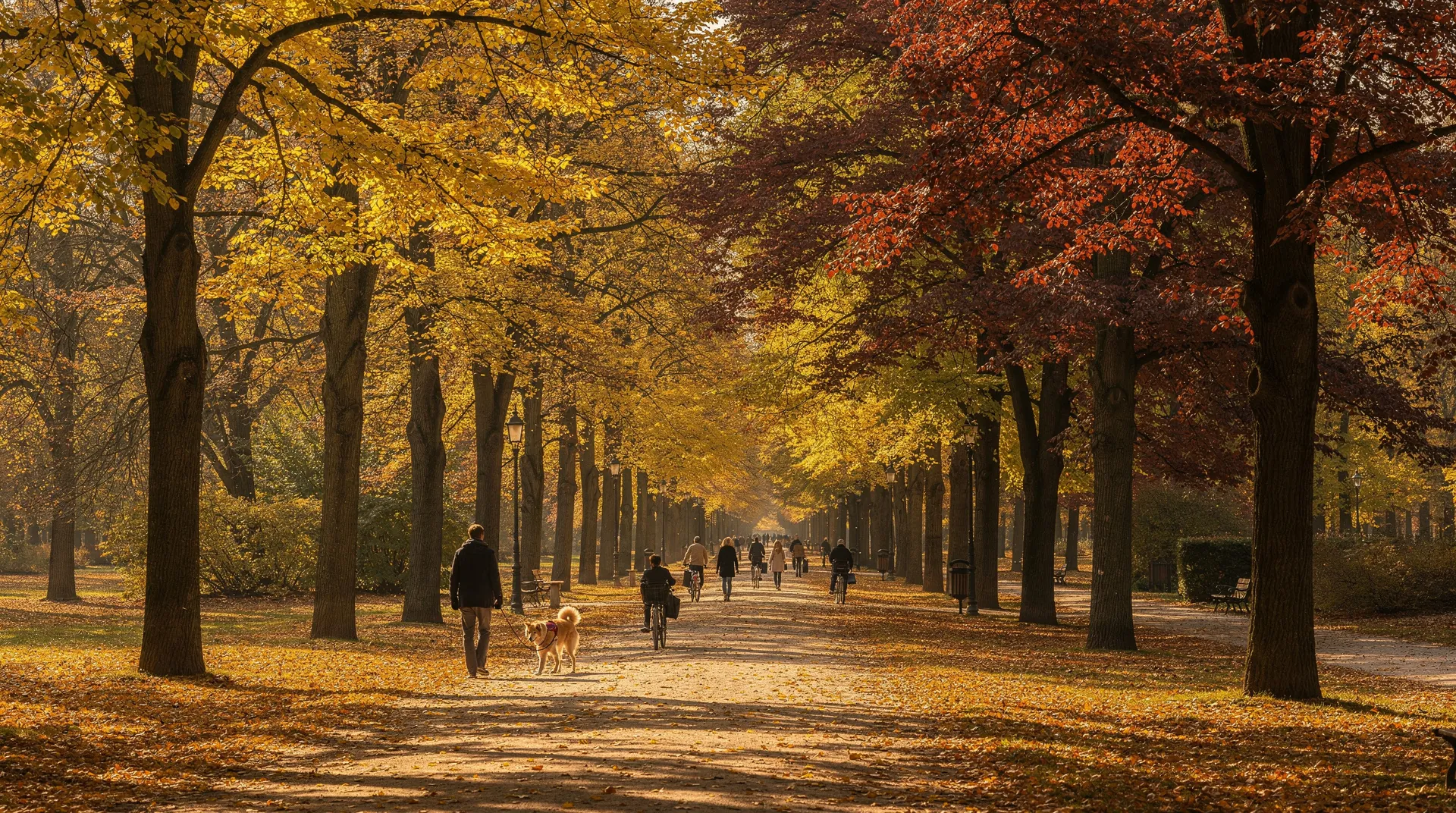
Option B: Stromovka + Troja (cycling route): Rent a bike at Nádraží Holešovice or via the city bike system. Cycle north along the Vltava right bank through Stromovka (30–40 minutes at a relaxed pace). Continue north to Troja — the riverside path passes the chateau gardens on the right. Visit the chateau (60–90 minutes). Continue 500 metres to the zoo for a final hour. Return by bus 112 or cycle back.
Option C: Boat + Troja: Take the Vltava passenger boat (PPS) from Rašínovo nábřeží in the city centre (approximately 75 minutes, May–October) to the zoo landing stage. Walk directly to the chateau from the landing. This option eliminates the bus return — either walk back to catch the return boat, or take bus 112.
The Prague City Gallery (ghmp.cz): Troja’s institutional context
Troja Chateau is managed by the Prague City Gallery (Galerie hlavního města Prahy), which also operates several other galleries across the city: the House at the Stone Bell on Old Town Square, the Colloredo-Mansfeld Palace on Karlova, the Old Town Hall and its Gallery, and the Troja Chateau.
The City Gallery’s focus is primarily on Czech art from the 19th century to the present. Troja holds the permanent 19th-century collection; more contemporary Czech art is at the Colloredo-Mansfeld Palace and the House at the Stone Bell. A combined ticket between multiple City Gallery venues is sometimes available — check ghmp.cz for current offerings.
The permanent collection at Troja is not the National Gallery’s collection (the Veletržní palác, Šternberský palác, and Schwarzenberský palác hold the major Czech and international artworks). Troja’s 19th-century Czech painting is a secondary collection — important for specialists in Czech Romantic and realist painting, less essential for general visitors to Prague’s art scene.
Combining Troja with the rest of Prague
Troja sits well outside the historic centre, so it’s worth thinking about how it fits into a wider day. Travellers who enjoy Letná Park for its riverside greenery and beer garden tend to like Troja’s gardens for the same unhurried, local pace — both are places Prague residents actually use rather than tourist checkpoints. If you’re building a itinerary around lesser-crowded architecture, pair Troja with the Baroque gardens at Strahov Monastery, which sits on the opposite side of the city and gives a useful point of comparison for how Habsburg-era religious and secular patrons each used the same garden vocabulary.
For visitors staying in Holešovice, Troja is a natural extension of the neighbourhood rather than a special trip — the bus ride is short and the district’s industrial-turned-creative character (galleries, breweries, the exhibition grounds) makes a good contrast with the palace’s 17th-century formality.
Anyone building a longer, history-themed stay might also enjoy comparing Troja’s Baroque triumphalism with the medieval and Hussite-era layers at Vyšehrad — both sites use architecture and myth to make a political point, three centuries apart. If your schedule allows a full day out of the centre, the day trip to Karlštejn Castle offers a different flavour of Bohemian castle architecture, this time Gothic rather than Baroque, and pairs naturally with an early Troja/zoo morning if you have a car.
Families combining Troja with the zoo and a full day out often ask about the best season to do so — the best time to visit Prague guide covers the trade-offs between summer crowds and winter’s reduced chateau hours in more general terms.
Practical info at a glance
- Address: U Trojského zámku 1, 171 00 Praha 7 (Troja)
- Opening hours: Tue–Sun 10:00–17:00 (Apr–Oct); Sat–Sun 10:00–16:00 (Nov–Mar)
- Price: Adult ~€8 / 200 CZK; reduced ~€5 / 125 CZK
- Getting there: Bus 112 from Nádraží Holešovice (metro C); or boat from Rašínovo nábřeží (May–Oct)
- Official website: ghmp.cz (Prague City Gallery)