The part of Prague Castle hill that tourists leave too soon
Most visitors treat Hradčany as a transit zone on the way to Prague Castle — they enter via the tram at Pražský hrad, do the castle circuit, photograph the views, and descend. That’s a mistake, because the neighborhood that surrounds and extends the castle complex is one of the quietest and most beautiful quarters in the city.
Hradčany was established as an independent town in 1320, and despite being incorporated into Prague in 1784, it retains a village-like self-containment. The streets behind the castle’s western wall — particularly Nový Svět (New World) and the lanes around the Loretánská — feel genuinely unhurried in a way that is almost impossible elsewhere in the center. The density of palaces, churches, and gardens is extraordinary even by Prague’s standards.
The neighborhood’s primary audience is Prague Castle visitors, which means that almost everyone on the main tourist axis between the castle gates and Strahov has already done the minimum and is heading back. The people who stay longer are the ones who find what this hilltop actually contains.
| At a glance | |
|---|---|
| Where | Prague Castle hilltop, Prague 1, west of Malá Strana |
| Cost to visit | Castle grounds free; Basic ticket around €18 (450 CZK); Strahov library around €9 (220 CZK) |
| Time needed | 3–4 hours for the neighborhood walk; add 2–2.5 hours for the full castle circuit |
| Getting there | Tram 22 to Pražský hrad or Pohořelec; metro A to Hradčanská (15-min walk) |
| Best time | Before 9 am for empty courtyards; after 4 pm for Golden Lane and Nový Svět without crowds |
A walk through Hradčany
This route takes three to four hours at a proper pace, starting from the tram stop at Pohořelec. For context on how Hradčany fits with neighboring districts, compare it to Malá Strana and Josefov below.
How Hradčany compares to nearby neighborhoods
| Neighborhood | Vibe | Best for | Distance to castle |
|---|---|---|---|
| Hradčany | Hilltop, monumental, quiet evenings | Depth over speed, photography | Within it |
| Malá Strana | Baroque, romantic, tourist-dense | Charles Bridge access, gardens | 15 min downhill |
| Josefov | Concentrated history, luxury shopping | Jewish heritage | 30–35 min |
| Dejvice | Quiet, residential | Long stays, airport access | 20 min |
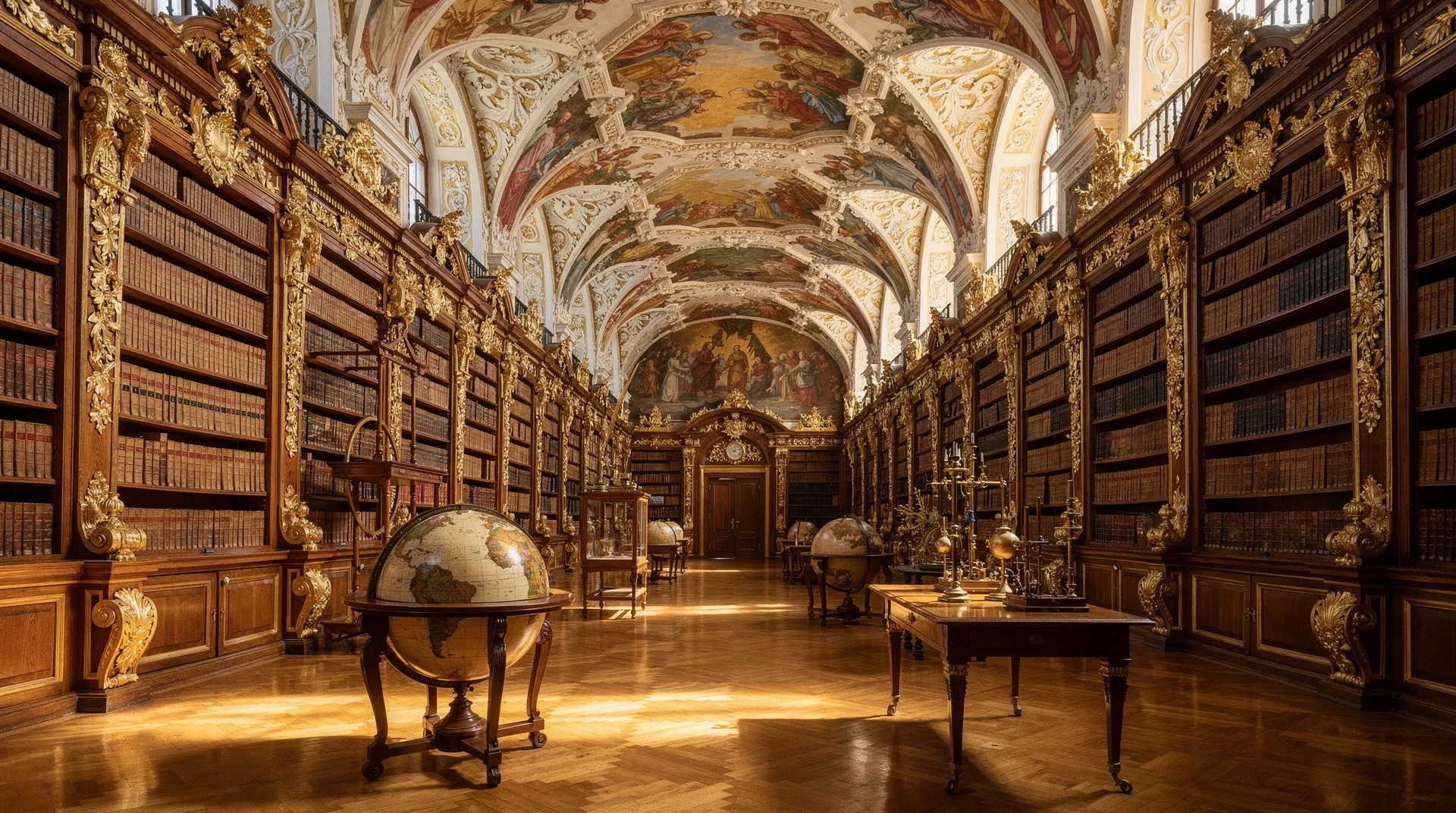
Begin at Strahov Monastery (Strahovský klášter) at the western edge of Hradčany. The Premonstratensian monastery dates to 1143, though the current buildings are largely Baroque. The Library — two halls of floor-to-ceiling ancient books, ceiling frescoes, and a corridor of natural curiosities — is genuinely among the most beautiful rooms in Europe. Tickets for the library are around €9 (220 CZK); book in advance or arrive at opening.
Walk east along Loretánská to the Loreta shrine — a Baroque pilgrimage complex built around a replica of the Santa Casa from Nazareth. The treasury contains a diamond monstrance commissioned in 1699 with 6,222 stones. The carillon plays on the hour. Less visited than it deserves, particularly in the afternoon when castle-goers are heading home.
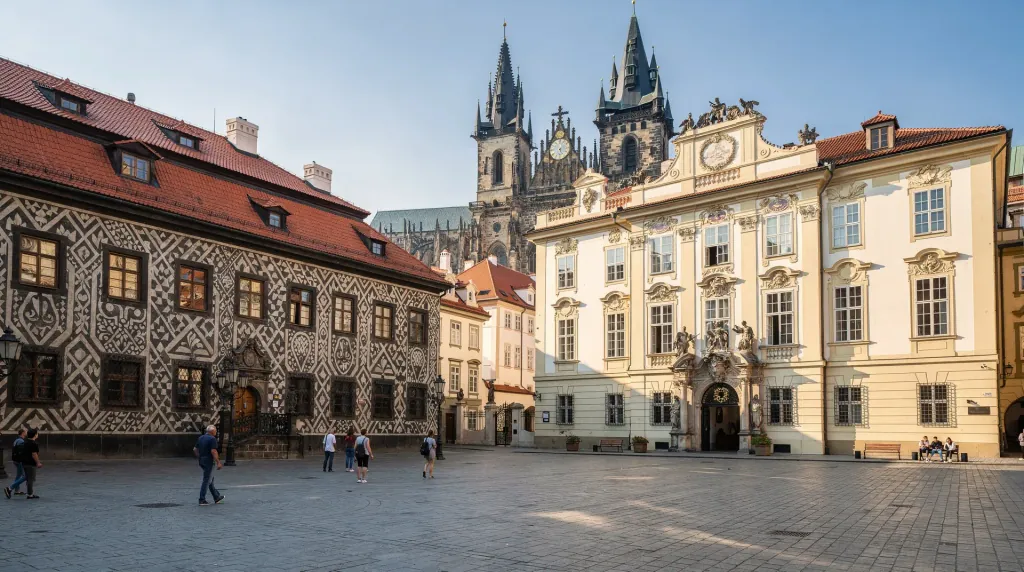
Continue east through Hradčanské náměstí (Castle Square), flanked by former palaces now housing ministries and embassies — the Schwarzenberg Palace (now the National Gallery’s Baroque collection) and the Archbishops’ Palace are the two most imposing facades.
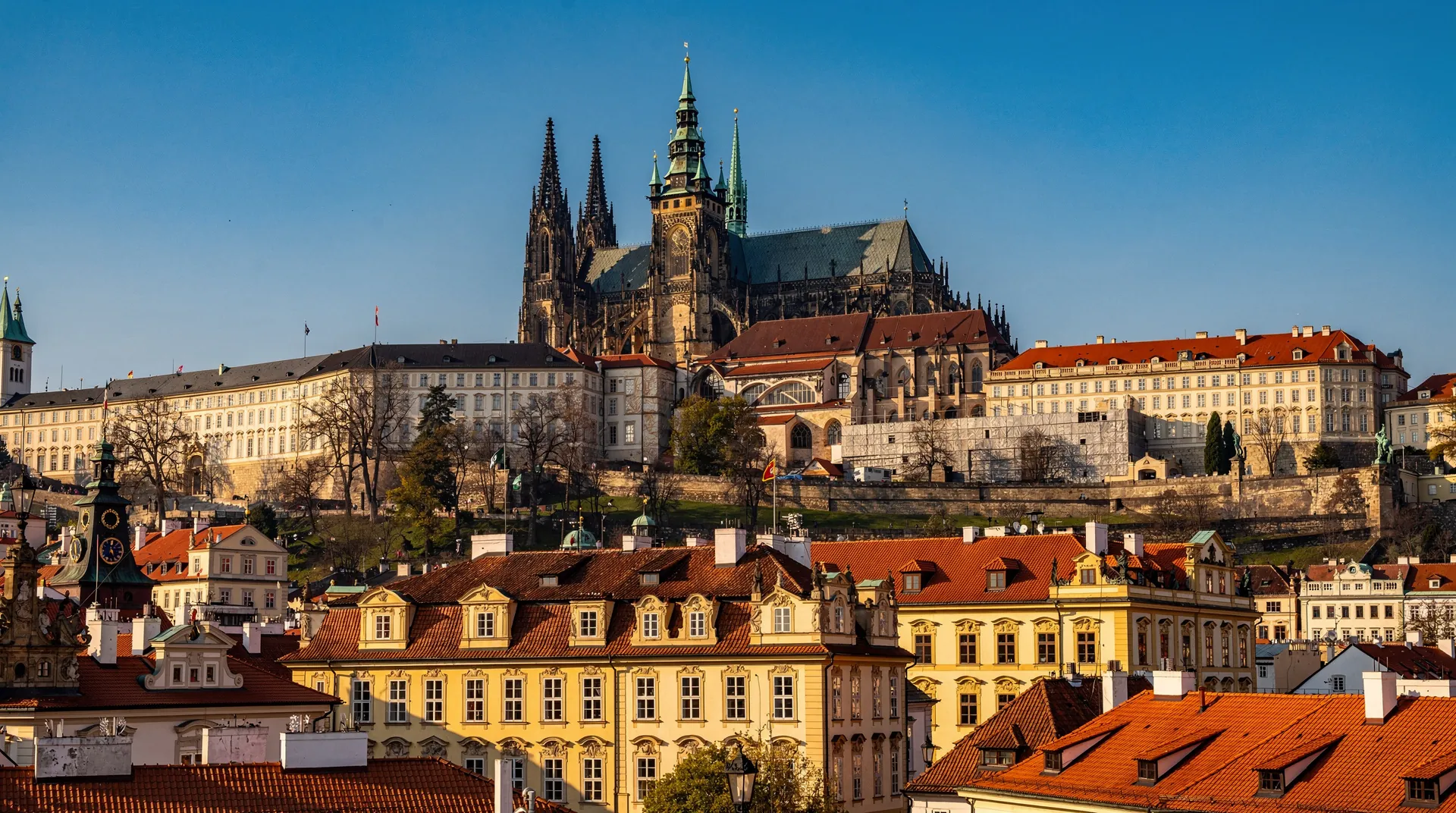
Enter the castle complex at the western gate. The Pražský hrad (Prague Castle) complex is the largest ancient castle complex in the world by area — 70,000 square meters. The key sights within: Katedrála sv. Víta (St Vitus Cathedral), the Starý královský palác (Old Royal Palace) with its remarkable Vladislav Hall, Zlatá ulička (Golden Lane), and the Lobkowicz Palace (private collection, separately ticketed, excellent).
Exit through the castle’s east gate and descend the Old Castle Steps (Staré zámecké schody) toward Malostranská metro — the steps connect castle to metro and are used daily by commuters, offering different views from Nerudova to the west.
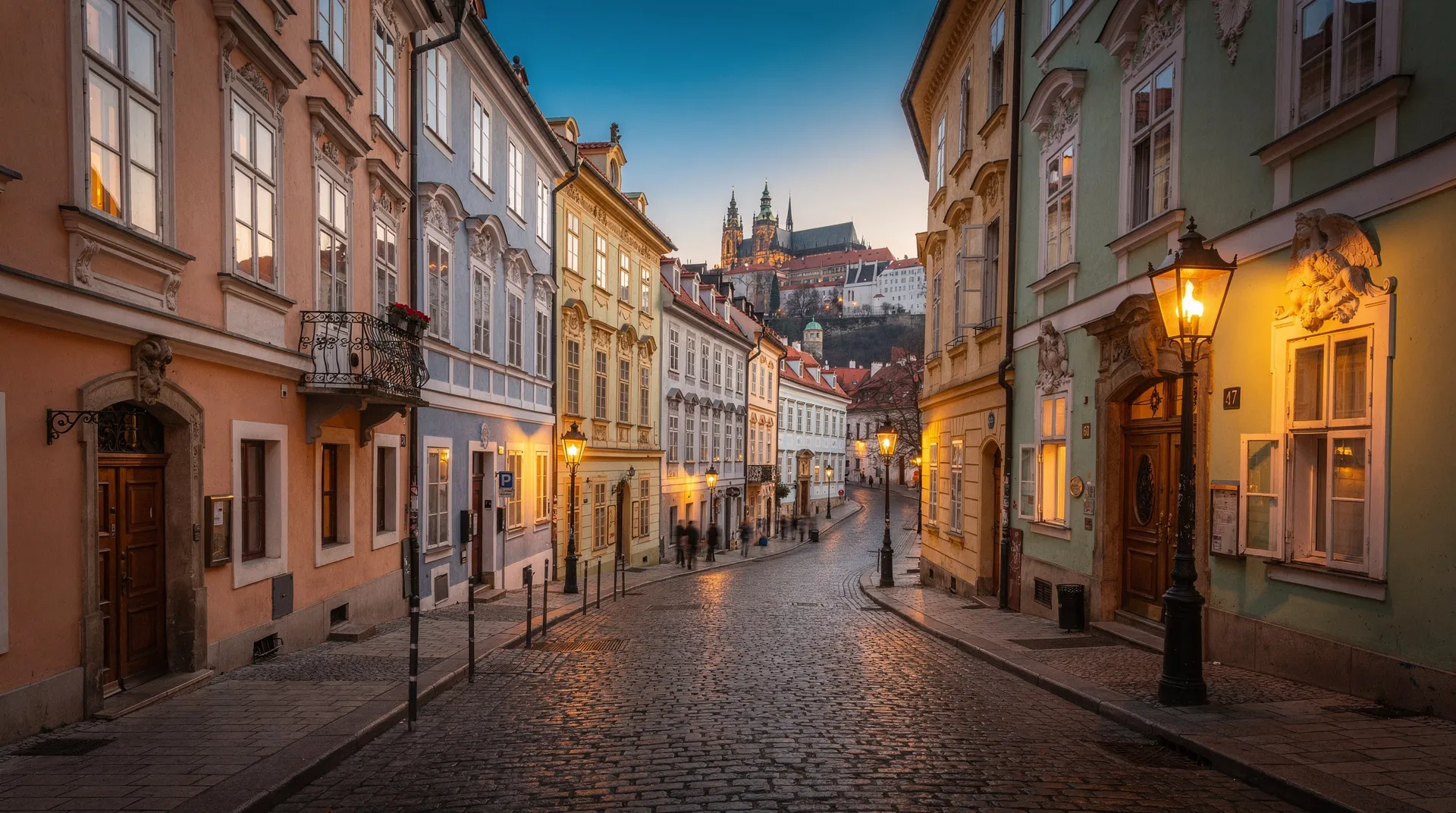
Alternatively, detour before descending into the Nový Svět lane — a cobbled alley of colored cottages that was historically the poorest part of Hradčany and is now among its most atmospheric. The astronomer Tycho Brahe reportedly lived here (at what is now the house at Nový Svět 1).
Skip-the-line Strahov Monastery and library tour (2 h, from €28)Where to eat
Quick lunch
Options in Hradčany are limited and mostly rely on the castle’s internal cafés. Café Poet inside the castle complex (Second Courtyard) is adequate for coffee and a light meal. U Zlaté hrušky on Nový Svět is the neighborhood’s best actual restaurant for lunch — a small cellar establishment with Czech game dishes and a wine list that doesn’t shame the address; mains €14–20 (350–500 CZK).
Dinner
U Zlaté hrušky is also the dinner answer — it’s essentially the only serious restaurant in Hradčany proper. Book ahead, because it has few tables and a loyal regular clientele. For a wider choice, descend to Malá Strana (15 minutes on foot) or take tram 22. Lobkowicz Palace Café inside the castle is a good option for a late afternoon plate if you’re finishing the castle circuit around 5 pm.
Cafes and bakeries
Kavárna Nový Svět at the end of the lane is a tiny, calm café that feels like it belongs to a different era — good coffee, plain cakes, and the kind of quiet that doesn’t exist anywhere near the castle gates. The Strahov Monastery Brewery (Klášterní pivovar Strahov) is technically both a café and a microbrewery — St Norbert’s amber and dark lagers are brewed on site and the courtyard terrace is one of the finest spots in Prague for an afternoon beer.
Where to drink
The Strahov Monastery Brewery is the main attraction: monastic-style dark lager and light beer on a terrace above the city, with the spires of Malá Strana visible below. Around €3.50 per half-litre (90 CZK). U Ševce Matouše on Loretánská is a traditional pub that mostly serves local workers and the occasional pilgrim; honest and cheap by castle standards.
Where to stay
Hradčany has only a handful of accommodation options, all at the upper end of the market. Hotel Savoy Prague on Keplerova is the neighborhood’s finest — a 19th-century hotel restored to its original standard, with castle views. Questenberk on Úvoz is a Baroque former hospital turned boutique hotel with exceptional views and a garden. Staying in Hradčany means very quiet evenings and castle access at opening time before the day-trip crowds arrive — for the right type of traveler, worth the premium.
Getting here and around
From the city center: tram 22 from Náměstí Míru, Národní třída, or Malostranské náměstí to Pražský hrad (for the castle west gate) or Pohořelec (for Strahov). Metro Hradčanská (A/green line) is at the northern edge of the neighborhood, a 15-minute walk from the castle gates. Walking from Malá Strana via Nerudova takes about 15 minutes from Malostranské náměstí.
Common misses in Hradčany
Zlatá ulička (Golden Lane) at dusk, after the main crowds have left at 4–5 pm, is a completely different experience. The colored cottage facades along this narrow alley — built into the castle walls in the 16th century for castle guards — are most beautiful in late afternoon light when most visitors have already departed.
The Royal Garden (Královská zahrada) north of the castle, accessible from U Prašného mostu, is one of Prague’s finest Renaissance gardens and is missed by most visitors who approach from the south. The Belvedere summer palace (Letohradek Královny Anny) at its eastern end is the finest Renaissance building in Central Europe.
The Schwarzenberg Palace on Hradčanské náměstí contains the National Gallery’s Baroque and Mannerist collection including Rubens, Cranach, and Arcimboldo — a serious collection in an extraordinary building that sees a fraction of the visitors the castle itself receives.
Prague Castle 2.5-hour guided tour with admission ticket (from €35)Frequently asked questions about Hradčany
How is Hradčany different from Prague Castle?
Prague Castle (Pražský hrad) is the fortress-palace complex. Hradčany is the neighborhood surrounding and extending beyond the castle’s western boundary — a hilltop village of palaces, monasteries, and residential lanes that has its own identity independent of the castle.
Is Prague Castle free to enter?
The castle grounds and courtyards are free. Entry to individual buildings within the castle — St Vitus Cathedral (nave free, choir ticketed), Old Royal Palace, Golden Lane, Lobkowicz Palace — requires purchasing one of several ticket combinations. The Basic ticket (Old Royal Palace, St George’s Basilica, St Vitus Cathedral, Golden Lane and Daliborka Tower) costs 450 CZK (about €18), valid for 2 days with one entry per building.
What time does the castle open?
The castle grounds are open daily from 6 am to 10 pm (year-round). Individual buildings and galleries open daily from 9 am to 5 pm year-round. The changing of the guard happens daily at noon. Arrive before 9 am to have the courtyards largely to yourself.
How steep is the walk up to Hradčany?
The tram (line 22) delivers you directly to the neighborhood, so steepness is optional. If walking from Malá Strana up Nerudova, it’s a meaningful climb — about 15 minutes of consistent uphill on cobblestones. The Old Castle Steps from Malostranská are steeper but shorter.
Can I visit Strahov Monastery without a tour?
Yes — you can visit independently during opening hours (9 am–5 pm). The library requires a ticket. The monastery church is free to enter. The brewery is open separately in the afternoon and evening.
What is on Golden Lane?
Zlatá ulička is a row of tiny cottages originally built in the 16th century for castle guards and servants. They were later occupied by alchemists (hence the name), goldsmiths, and eventually artists — Franz Kafka reportedly wrote in house no. 22 during winter 1916–1917. Today the cottages house small exhibitions and displays on castle history.
Should I stay in Hradčany or Malá Strana?
Hradčany gives you the quietest evenings and the earliest possible castle access, but almost no restaurant or nightlife choice. Malá Strana, 15 minutes downhill, offers a much wider range of dining and closer access to Charles Bridge while still feeling atmospheric. Choose Hradčany if silence and morning access matter most; choose Malá Strana for a more balanced stay.
Is it worth combining Hradčany with a day trip?
Most visitors pair Hradčany with a full Prague day rather than a day trip, since the castle circuit alone takes 2–3 hours. If you’re planning trips outside the city afterward, see the day-trip comparison guide for realistic options like Kutná Hora or Karlštejn.
Full day in Hradčany: 9am to 10pm
9:00 — Tram 22 to Pohořelec. Walk east to Strahov Monastery (Strahovský klášter) — be at the library doors at 9:00 when it opens, before the first coach tour of the day. The Theological Hall and Philosophical Hall together take 45 minutes to appreciate properly. Tickets ~€9 / 220 CZK. 10:00 — Strahov Monastery Brewery courtyard for a morning coffee (opens from around 10:00, St Norbert’s beer also available but perhaps early).
10:30 — Walk east along Loretánská to the Loreta shrine — a baroque pilgrimage complex around a replica of the Santa Casa from Nazareth. The diamond monstrance in the treasury (6,222 stones, 1699) and the Loreto carillon (plays on the hour) are the specific draws. Much less visited than it deserves. 12:00 — Continue east through Hradčanské náměstí (Castle Square) — the Schwarzenberg Palace on the north side houses the National Gallery’s Baroque collection (Rubens, Cranach, Arcimboldo; entry ~€8 / 200 CZK, often uncrowded).
13:00 — Enter Prague Castle via the western gate. Lunch at Lobkowicz Palace Café (inside the castle complex, accessible and reasonable). 14:00 — Castle circuit: Cathedral (nave free with circuit ticket), Vladislav Hall (Old Royal Palace ground floor), Golden Lane, Lobkowicz Palace (t48430 if a concert aligns). Allow 2–2.5 hours.
17:00 — Nový Svět lane — exit the castle complex westward and find this cobbled alley of coloured cottages at the foot of the castle’s northern wall. Tycho Brahe reportedly lived here; the street feels like a different century. 18:00 — Aperitif at Kavárna Nový Svět at the end of the lane. 19:00 — Dinner at U Zlaté hrušky (Nový Svět 3, Czech game dishes in a cellar restaurant, mains €14–20 / 350–500 CZK, reserve ahead). 21:00 — Return by tram 22 from Pohořelec.
Local daily rhythm in Hradčany
07:00–09:00 — The neighbourhood is entirely quiet. Castle guards change silently at the western gate. The lanes around Loretánská and Nový Svět have the feeling of a medieval town before the 20th century arrives.
09:00–11:00 — Tourist arrivals begin, primarily from the tram at Pražský hrad. The Castle complex fills quickly from 9:30 onward.
11:45–13:00 — The ceremonial changing of the guard at noon brings peak density to the main castle courtyard. This is when to be at Strahov or the Loreta instead.
13:00–16:00 — The Castle remains busy. Hradčanské náměstí and the Schwarzenberg Palace are relatively calmer.
16:00–18:00 — Tour groups depart. Golden Lane empties. The neighbourhood reclaims its silence. Best time for the Nový Svět lane and the Royal Garden if timing allows.
18:00–23:00 — The quietest evenings of any Prague neighbourhood. One restaurant, two cafés, a monastery brewery. The Castle is lit from below. The streets are yours.
Where to stay in Hradčany
Hotel Savoy Prague (Keplerova 6) — the finest hotel in Hradčany, a 19th-century building fully restored, with castle views. 55 rooms, quiet garden, excellent service. From €220 / 5500 CZK. Pros: unbeatable morning castle-access position, very quiet evenings. Cons: minimal evening entertainment options in the neighbourhood.
Questenberk (Úvoz 15) — a Baroque former hospital converted to a boutique hotel. Garden, exceptional views, 30 rooms. From €160 / 4000 CZK. Pros: extraordinary panoramic views, rare architecture, intimate scale. Cons: access on steep cobblestone streets with luggage.
Domus Henrici (Loretánská 11) — 8-room guesthouse in a 15th-century building on the quietest part of Loretánská. From €140 / 3500 CZK. Pros: most atmospheric option in Hradčany, very personal service. Cons: extremely limited.
5 specific food and drink recommendations
U Zlaté hrušky — Nový Svět 3. Mains €14–20 / 350–500 CZK. Czech game dishes, wine cellar, the neighbourhood’s one serious restaurant. Book ahead.
Kavárna Nový Svět — Nový Svět 25. Coffee €2.50–4 / 63–100 CZK. A tiny café at the end of the most atmospheric lane in Prague, serving good coffee with no tourist margin.
Strahov Monastery Brewery — Strahovské nádvoří 301. St Norbert’s dark lager €3.50 / 90 CZK per half-litre. Monastery-brewed beer on the terrace above the city. One of the finest beer locations in Europe.
Lobkowicz Palace Café — inside Prague Castle, Second Courtyard. Sandwiches and hot meals €7–12 / 175–300 CZK. The most convenient castle-internal lunch option; reasonable by castle standards.
U Ševce Matouše — Loretánské náměstí 4. Local pub, honest beer €2.50 / 63 CZK per half-litre. Where the castle workers drink after their shifts.
Hidden details in Hradčany
The Royal Garden (Královská zahrada) north of the castle, accessed from U Prašného mostu, is the finest Renaissance garden in Central Europe and is missed by the vast majority of Castle visitors who approach only from the south. The Belvedere summer palace (Letohradek Královny Anny) at its eastern end has the most beautiful exterior of any Renaissance building in the Czech Republic.
Tycho Brahe’s house on Nový Svět. The astronomer Tycho Brahe, summoned to Prague by Rudolf II in 1599, lived in the house now numbered Nový Svět 1. Brahe and his assistant Johannes Kepler worked in this neighbourhood on the observations that would become Kepler’s laws of planetary motion. The house has a plaque.
The Arcimboldo connection at Schwarzenberg Palace. Giuseppe Arcimboldo painted his famous composite portraits (faces made of fruit, vegetables, and fish) for Rudolf II’s court in Prague. Two original Arcimboldo works hang in the Schwarzenberg Palace — almost entirely unvisited because the palace is in the shadow of the Castle next door.
Prague City Highlights Private Walking Tour — private format that can be oriented toward Hradčany, the Castle district, and Malá Strana, at your pace.
Practical at a glance
- Metro: Hradčanská (A, green line) — 15 min walk to castle
- Trams: 22 to Pražský hrad (castle west gate) or Pohořelec (Strahov end)
- Walking time to Malostranské náměstí: 15 min (downhill)
- Walking time to Strahov from castle: 15 min (westward along Pohořelec)
- Vibe: Serene, monumental, village-quiet beyond the castle gates
- Best for: Castle visitors, those wanting depth over speed, photography, peaceful mornings